Category: Recommended Reading
Can Pseudonyms Make Better Online Citizens?
Erin O'Donnell in Harvard Magazine:
People socialize online more than ever: posting photos on Instagram, job-hunting on LinkedIn, joking about politics on Twitter, and sharing reviews of everything from hotels to running shoes. Judith Donath, a fellow at Harvard’s Berkman Center for Internet and Society, argues against using real names for most of these Internet interactions and relying instead on pseudonyms. A made-up handle is essential to maintain privacy and manage one’s online identity, she says. Her new book, The Social Machine: Designs for Living Online (MIT Press, 2014), also contends that well-managed pseudonyms can strengthen online communities, an idea that contradicts the conventional wisdom that fake names bring out the worst in people, allowing “trolls” to bully others or post hateful, destructive comments without consequences. Real names, such thinking goes, keep online conversations civil.
But Donath often uses a pseudonym online, not because she wants to “anonymously harass people or post incendiary comments unscathed,” as she explained in a commentary published on Wired.com this spring, but because she prefers to separate certain aspects of her life. In the age of Google, a quick search of a person’s name gathers everything he or she has posted under that name, from résumés to college party photos. As a public figure who studies how people communicate online, Donath’s academic writing can be found online under her real name. But when she writes product reviews on shopping sites such as Drugstore.com, or restaurant reviews on Yelp, she might use a pseudonym. “I would like to be known online for what I write,” she says. “I don’t necessarily feel like I need to be known for what I’ve been eating.”
More here.
A Doctor’s Malaise, and a Profession’s
Florence Williams in The New York Times:
Sandeep Jauhar’s new memoir, “Doctored: The Disillusionment of an American Physician,” tells the story of two midlife crises: the author’s own,, and that of modern American medicine, now in about its fourth decade under managed care. Both prove to be frustratingly intransigent, with only small signs of hope. “Intern: A Doctor’s Initiation” t become much better, at least not for Dr. Jauhar, who takes his first job at Long Island Jewish Medical Center and becomes the director of its heart failure program. (He is also an occasional contributor to The New York Times.) Full of ideals about saving lives and providing compassionate, ethical care, he finds himself underpaid, overworked and pressured to cut corners in every direction. describes a profession that is like so many of its patients: full of malaise and desperation. Doctors are reported to commit suicide at a higher rate than other professionals, and Dr. Jauhar cites a 2008 survey in which only 6 percent of 12,000 physicians rated their morale as positive.
Then again, Dr. Jauhar is constitutionally dissatisfied. Just ask his father, who says of his wife, the author’s mother, “Like you, she is not a happy person.” (Some of the best scenes feature the father, who comes across as comically histrionic, neurotic and self-absorbed. “If you lose your job,” he tells his son, “we are finished. I will be the first to have a heart attack!” And then he tosses in: “And make some friends, Sandeep. You have no friends.”) Then Dr. Jauhar has his wife to contend with. Also a doctor, she keeps putting off her own job to stay home with their toddler, while telling her husband to bring home more money. “Money doesn’t buy happiness,” he counters. “Yes it does!” she replies.
More here.
Tuesday Poem
Loss
Something in me repeats in an obsessive beat
that I may have lost something
or left it behind
in the café or the bookstore
where I’d been
I searched my possessions
and no loss was found
nor did I discover what had been lost
but the loss
kept asserting its existence
through palpitations and minor fits
Athenian sophists philosophized:
“A thing you haven’t lost
is necessarily in your possession
you haven’t lost a tail—therefore, you have a tail
or vice versa
what you’ve lost was necessarily yours”
but what have I lost?
I must look for my loss
in order to know what I’m looking for
is it an object or a thing or the thing
and was it mine before it was lost
or is it that some inner authority
is trying to bequeath me, like a Hellenistic sophist,
something I had never possessed
as for example a chance
as if I ever stood a chance
by Mordechai Geldman
from Halachti Shanim Le-Tzidcha
publisher: Hakibbutz Hameuchad, Mossad Bialik, 2011
Monday, September 8, 2014
CATSPEAK
by Brooks Riley
perceptions
Ryan Moritz. From the Banzu Tree. 2014.
Digital photograph.
Thanks to Ryan.
Sunday, September 7, 2014
From Normativity to Responsibility etc
Richard Marshall interviews Joseph Raz in 3:AM Magazine:
3:AM: One of the ideas you have argued for(in your 2000 Seeley Lectures)is that we ought to accept the legitimacy of difference. So you think someone can reasonably approve of normative practices that are positively hostile to each other, but that only commits one to respecting both positions and not engaging with them. Is that right, and if it is, doesn’t non-engagement itself suggest a lack of respect?
JR: Accepting, or respecting difference is of course code. What we should respect are practices, styles of life, ideals and aspirations that are valuable, or that have some good, some value in them, and we should respect them for that reason (even when we have a very imperfect understanding of their value). I put it like that for pure gold is rarely found in human affairs. Our lives are wrought of alloys of mixed quality elements, some inferior or even seriously flawed. Human practices that have value often also enshrine prejudice or superstition, and perpetuate objectionable discriminations or exclusions. In saying, as it were, that that’s life, I do not mean that we should be complacent about the unworthy aspects of our practices, or those of others. On the contrary, I suggest that we should not be complacent and should try to identify the less wholesome aspects of our own practices, as well as in those of others, distance ourselves from them and strive to rectify them.
So one reason why it is important to know about and to have a balanced view of practices we have no intention of sharing is that understanding them is close to being a precondition for understanding ourselves and our engagements with various practices. The recognition of the value in what is strange or alien to our ways anchors our humanity, protects us from smugness and intolerance. Our knowledge of and respect for other people’s practices also creates for us the opportunity to change, to come to engage with people who might otherwise appear strange or worse, and possibly also to find that we can acquire a taste for the practices that initially were so alien to us – that is the second main reason for seeking to understand and for coming to respect the value of those practices. I am not suggesting that we should for ever be looking for new friends, or for a change in our activities and tastes, merely that it is good to have the option, and the option is made real in part through understanding what it is like to take it.
In the preceding comments I emphasized the barriers between people and the hostilities that sometimes accompany them that are bred by ignorance leading to narrow and misguided understanding of the range of activities and practices that can contribute to human fulfillment, to the quality of our lives. I also implied that being unaware of the shortcomings in our own practices may well contribute to such hostilities.
More here.
The International Interest
Komala Ramachandra in Caravan (Photo: Adnan Abidi/REUTER):
OVER THE LAST FEW MONTHS, scrutiny of foreign funding for non-governmental organisations in India has been increasing. Although this trend is widely acknowledged, few commentators have pointed out that growing suspicion of NGOs that receive such funding is part of an emerging global reaction to civil society. India has joined the likes of Russia, Egypt, Israel, Venezuela, Bolivia and Ecuador in trying to silence groups that raise objections to human rights violations and environmental degradation. These governments allege that foreign-funded NGOs threaten national security, often conflating such security—which it is their duty to provide—with the economic interests of private corporations that stand to benefit from silencing democratic opposition. What these governments have not done, however, is address the substantive concerns such organisations raise about lapses in due process for those harmed by industrial projects, and about such projects’ long-term environmental impacts.
In early June, an Indian Intelligence Bureau report blaming foreign-funded environmental organisations for a significant slowdown in economic growth was leaked to the press. The report alleged that these groups were acting on behalf of foreign entities rather than in the best interests of the Indian people, and argued that foreign influence should be controlled to protect India’s “national economic security.” It cited examples of non-governmental organisations stalling investments in fields such as nuclear power, coal mining, large-scale infrastructure and genetically modified crops, and raised the spectre of what has often been called a “foreign hand” guiding NGOs.
Around the time the IB report was leaked, in Russia the Ministry of Justice registered five internationally funded NGOs as “foreign agents” under a 2012 law aimed at organisations attempting to influence state decision-making or policies. (Infringements of the statute, which is enforced partly through annual audits and surprise inspections, are punishable by thousands of dollars in fines and up to three years in prison.) A week earlier, the Russian government had issued a notice of violation to a foreign-funded human rights NGO for providing legal assistance to other groups targeted under the law.
This followed similar crackdowns around the world, by governments across the political spectrum. In late December, a high-ranking minister from the office of Bolivia’s president, Evo Morales, announced the immediate expulsion from the country of a Danish-funded rural-development NGO called IBIS, which was accused of political action against the government. IBIS had supported peoples’ organisations expressing concern about the impacts of industrial development and climate change in indigenous areas, and trying to influence democratic decision-making—activities protected under the Bolivian constitution.
More here.
The Trouble With Harvard
Steven Pinker in The New Republic:
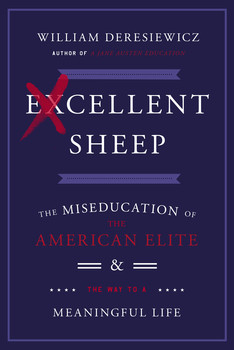
The most-read article in the history of this magazine is not about war, politics, or great works of art. It’s about the admissions policies of a handful of elite universities, most prominently my employer, Harvard, which is figuratively and literally immolated on the cover.
It’s not surprising that William Deresiewicz’s “Don’t Send Your Kid to the Ivy League” has touched a nerve. Admission to the Ivies is increasingly seen as the bottleneck to a pipeline that feeds a trickle of young adults into the remaining lucrative sectors of our financialized, winner-take-all economy. And their capricious and opaque criteria have set off an arms race of credential mongering that is immiserating the teenagers and parents (in practice, mostly mothers) of the upper middle class.
Deresiewicz writes engagingly about the wacky ways of elite university admissions, and he deserves credit for opening a debate on policies which have been shrouded in Victorian daintiness and bureaucratic obfuscation. Unfortunately, his article is a poor foundation for diagnosing and treating the illness. Long on dogmatic assertion and short on objective analysis, the article is driven by a literarism which exalts bohemian authenticity over worldly success and analytical brainpower. And his grapeshot inflicts a lot of collateral damage while sparing the biggest pachyderms in the parlor.
We can begin with his defamation of the students of elite universities. Like countless graybeards before him, Deresiewicz complains that the kids today are just no good: they are stunted, meek, empty, incurious zombies; faithful drudges; excellent sheep; and, in a flourish he uses twice, “out-of-touch, entitled little shits.” I have spent my career interacting with these students, and do not recognize the targets of this purple invective. Nor does Deresiewicz present any reason to believe that the 18-year-olds of today’s Ivies are more callow or unsure of their lives than the 18-year-olds of yesterday’s Ivies, the non-Ivies, or the country at large.
More here. See also this bloggingheads discussion between William Deresiewicz and Glenn Loury.
What The Economist should have read before suggesting that US slavery wasn’t always so bad
Chris Blattman over at his website:
First, remind me, when I’m writing my first book, to try to get The Economist to write a racially insensitive review. I’m pretty sure Edward Baptist’s sales are pretty terrific right now.
The Economist has withdrawn the offending book review and apologized (the book in question, and the article and apology). Here’s the uncontroversial bit:
Mr Baptist, an historian at Cornell University, is not being especially contentious when he says that America owed much of its early growth to the foreign exchange, cheaper raw materials and expanding markets provided by a slave-produced commodity. But he overstates his case when he dismisses “the traditional explanations” for America’s success: its individualistic culture, Puritanism, the lure of open land and high wages, Yankee ingenuity and government policies.
Nothing in history (least of all the growth of the largest economy humankind has ever known) has a single explanation. Academics like to overstate their case and need to be reined in a little.
Even so, here’s the jawdropping finale:
…Slave owners surely had a vested interest in keeping their “hands” ever fitter and stronger to pick more cotton. Some of the rise in productivity could have come from better treatment. Unlike Mr Thomas, Mr Baptist has not written an objective history of slavery. Almost all the blacks in his book are victims, almost all the whites villains. This is not history; it is advocacy.
What could have shed light on this, had The Economist writer bothered to read the literature (and had the academics bothered to write in comprehensible prose)?
First, when do employers use coercion and how well does it work? There’s a pretty new and exciting literature here:
* Violence and pain work better in labor markets where people have really poor options, and are easily controlled, like children or the least educated. You see this in child labor during British industrialization, or even in child soldiering in Uganda (my own work). Here’s a graph of how long someone stayed with a rebel army in Uganda based on his age of conscription. The paper argues that ones you can scare and indoctrinate the easiest (in this case, kids) stay longest:
More here.
John Betjeman – A Passion For Churches
Philip Larkin reads ”The Building”
Dear, though the night is gone by W H Auden
Tony Albert on Gordon Bennett
From ArtAsiaPacific:
Gordon was a real pioneer and set a precedent for political art in Australia. He spoke with an Aboriginal voice that could be universally understood—something that became more and more evident as his career grew and he started to be featured in increasing numbers of international biennials and exhibitions.
…Gordon unexpectedly and very sadly passed away on June 3 this year. A mutual friend, the curator Simon Wright, called me a few days later to let me know. It was an emotional call. Simon also wanted me to know that he and Gordon had been at lunch just the week before and had discussed my most recent letter. In 2010, I began writing letters to Gordon, inspired in part by his own letters written to Jean-Michel Basquiat. I was jolted one morning after opening the local newspaper to find an article about a prominent football coach who had used the term “black cunt” in reference to an Aboriginal player. As I read the article, Gordon’s early painting Daddy’s Little Girl II (1994) came vividly to mind. I thought of how the father in this artwork sits on his lounge chair in the corner of the living room relaxing with a smoker’s pipe in hand. Wearing a pretty Sunday dress, his blonde daughter plays with toy blocks spelling out the words “ABO,” “BOONG,” “COON” and “DARKIE,” all derogatory names regularly used against Aboriginal people. The girl points the blocks toward her father to gain his approval, love and attention. It is a small but incredibly powerful work in which Gordon brilliantly illustrates the cycle of racism, handed down and taught from one generation to the next. In my last letter to Gordon, which is also included in my artwork for the 2014 Basil Sellers Art Prize, I said:
I wanted to write to you today to thank you for instilling in me a strong sense of pride. Despite the challenges I face as a Blak [sic]man, I will never give up on the fight against racism. There are so many heroes who stand up for our people, and it is those heroes—people like you—who inspire me to carry on.
More here.
lessons in how to write
Henry Hitchings in The Guardian:
If you want to start an argument online, make an assertion about English usage. “Apostrophes are on their way out”, or “People who misuse apostrophes deserve to be guillotined”. For extra spice, add a dash of what's commonly considered solecism: “People who fret about apostrophes are, like, literally the worst thing in the world.” This gambit, of course, also works beyond cyberspace. On the page, and in conversation, we frequently observe that one person's idea of linguistic rectitude is another's of insufferable fussiness. Most of us have strong views about how best to use language; where the more intricate details are concerned, those views are often an amalgam of aesthetic taste, ingrained social prejudice, popular myth and a form of reasoning that we insist is logic though it may smell like something else.
In The Sense of Style, Steven Pinker cheerfully launches himself on to this terrain. The Harvard psychology professor is a rigorous thinker whose previous books, including The Language Instinct and The Stuff of Thought, have been distinguished by a flair for making highly technical subjects seem not just accessible but positively jaunty. Now his distaste for the deathly edicts that glut most current volumes on literary style has led him to create what he calls “a writing guide for the 21st century”. The book has two parts: in the first, Pinker identifies the techniques that make prose compelling and the bad habits that can make it soggy, and in the second he focuses on contentious points of usage, of the sort addressed by the American humorist Calvin Trillin's quip: “'Whom' is a word that was invented to make everyone sound like a butler.”
More here.
Sunday Poem
Djinn
Haunted, they say, believing
the soft, shifty
dunes are made up
of false promises.
Many believe
whatever happens
is the other half
of a conversation.
Many whisper
white lies
to the dead.
“The boys are doing reallt well.”
Some think
nothing is so
until it has been witnessed.
They believe
the bits are iffy;
the forces that bind them,
absolute.
by Rae Armantrout
from Poetry, Vol. 192. No. 3, June
publisher: Poetry, Chicago, 2008
Saturday, September 6, 2014
Outlook: Gloomy
Jacob Burak in Aeon (Photo by Springer Collection/Corbis):
I have good news and bad news. Which would you like first? If it’s bad news, you’re in good company – that’s what most people pick. But why?
Negative events affect us more than positive ones. We remember them more vividly and they play a larger role in shaping our lives. Farewells, accidents, bad parenting, financial losses and even a random snide comment take up most of our psychic space, leaving little room for compliments or pleasant experiences to help us along life’s challenging path. The staggering human ability to adapt ensures that joy over a salary hike will abate within months, leaving only a benchmark for future raises. We feel pain, but not the absence of it.
Hundreds of scientific studies from around the world confirm our negativity bias: while a good day has no lasting effect on the following day, a bad day carries over. We process negative data faster and more thoroughly than positive data, and they affect us longer. Socially, we invest more in avoiding a bad reputation than in building a good one. Emotionally, we go to greater lengths to avoid a bad mood than to experience a good one. Pessimists tend to assess their health more accurately than optimists. In our era of political correctness, negative remarks stand out and seem more authentic. People – even babies as young as six months old – are quick to spot an angry face in a crowd, but slower to pick out a happy one; in fact, no matter how many smiles we see in that crowd, we will always spot the angry face first.
More here.
Will Scotland Choose Independence?
D.D. Guttenplan in The Nation (AP Photo/Jill Lawlless):
The question on the ballot is simple—and binding: “Should Scotland be an independent country?” For most Scots, the answer is simple, too. Polls show at least 40 percent on either side, with the Noes ahead—but the Yeses gaining. “England looks like a strange country,” says Lesley Riddoch, author of Blossom: What Scotland Needs to Flourish. “That’s what you can’t see if you live in it.”
“If we split we’re no’ going to have an army, a navy or an air force—just a coast guard,” says the taxi driver who picks me up at Edinburgh’s Waverly Station. “You can only defend an island if we stick together.”
Anxiety about how Scotland would fare on its own is a common theme among No supporters—though more often expressed in terms of economics than national security. Would the Royal Bank of Scotland—which got a £46 billion bailout from the British taxpayer in 2008—have survived? Can a small country generate the jobs, and the exports, needed to prosper in the global economy?
Alex Salmond, leader of the Scottish Nationalist Party (SNP), argues that thanks to North Sea oil, “Scotland is one of the richest countries in the world, wealthier per head than France, the UK and Japan.” Speaking at a forum at Edinburgh University, Salmond’s biographer, David Torrance, dismissed such claims as “intellectually dishonest.”
Nor is Torrance sympathetic to the view that only the dead hand of London-centered rule keeps Scotland from becoming a Scandinavian-style social democracy. “All the tools required to decrease inequality—taxation, property tax, education, welfare provision—already exist,” says Torrance, pointing out that the Scottish Parliament currently controls spending on health and education, and that Labour and the Tories have both pledged greater devolution if the referendum fails.
For Better Together backers like novelist J.K. Rowling, independence is a risky distraction. “All the major political parties are currently wooing us with offers of extra powers,” said Rowling in June, announcing a £1 million donation to the No campaign. If Scotland leaves now, she warned, “we will have to deal with three bitter neighbours.”
More here.
Back to Yalta?: Stephen Cohen and the Ukrainian crisis
Nikolay Koposov in Eurozine (Photo: Zurbagan /Shutterstock.com. Source: Shutterstock):
Cohen built his reputation as a leading scholar of Russian studies in the 1970s, and his interest in Soviet history was informed by his leftist political sympathies. Cohen's focus has always been on the “lost alternatives” to Stalinism and the possibility of “socialism with a human face”. In the 1980s, he was an ardent supporter of Mikhail Gorbachev's attempt to reform Soviet society. But the more hope he invested in perestroika, the bitterer his disappointment became in Boris Yeltsin's “dismantling” of the USSR. Cohen considers Yeltsin's reforms “the worst economic and social catastrophe ever suffered by a major nation in peacetime”, and even a case of the “de-modernization” of a highly developed society. Hence his sympathy for Putin, whom he refuses to accuse of “de-democratizing” Russia simply because what Yeltsin built had (according to Cohen) nothing to do with democracy. However, the United States wholeheartedly supported Yeltsin through its “ill-conceived and ultimately disastrous crusade to transform post-communist Russia into 'the kind of Russia we want'”, or a society similar to the American one. But for Cohen, that was a purely messianic and unrealistic goal.
Cohen's critics have suggested several explanations for his praise of Putin: a desire to always go against the flow, ardent anti-Yeltsinism, or a rejection of “American imperialism” that makes him blind to the problems associated with its opponents. Some even suspect him of anti-Americanism. For his part, Cohen presents himself as a “political realist” and an American patriot whose concern is the security of the United States, which according to him has been consistently undermined by US policymakers and experts whose incompetence and “Putinophobic follies” have deprived the United States of “the best potential partner we had anywhere in the world to pursue our national security”.
This is not perhaps the most natural self-presentation for a leftist intellectual. However, it reflects the contradictory situation in which an “old-school leftist who has carried on the mental habits of decades of anti-anti-communism seamlessly into a new career of anti-anti-Putinism” can find himself. Indeed, Putin's Russia, “a country of corrupt crony capitalism […] and a repressive state that increasingly leans on a subservient church as its source of moral authority” can only “stand for everything a leftist should detest”. The “fellow travellers” of the 1930s managed to overlook the gulag because their dreams of the “radiant future” were associated with the USSR. There are no similar dreams in the present-day world: “Russia is not the vessel for their [former Soviet fellow travellers'] ideological fantasies, but merely a placeholder for their accumulated discontent”, writes Jonathan Chait.”
I value Cohen's calls for critical re-examination of US foreign policy as well as Russian history. However, this re-examination need not lead us to support an openly anti-democratic regime and identify its interests with the legitimate interests of the country it runs.
More here.
Jean-Luc Godard delivers a monologue from Hannah Arendt’s “The Nature of Totalitarianism”
Via Open Culture: