
Category: Recommended Reading
A Weapon for Readers
Tim Parks in NYRBlog:
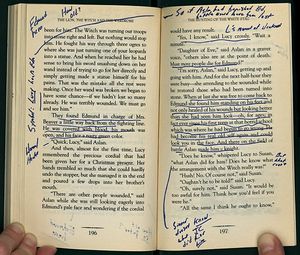
Some readers will fear that the pen-in-hand approach denies us those wonderful moments when we fall under a writer’s spell, the moments when we succumb to a style, and are happy to succumb to it, when suddenly it seems to us that this approach to the world, be it Proust’s or Woolf’s or Beckett’s or Bernhard’s, is really, at least for the moment, the only approach we are interested in, moments that are no doubt among the most exciting in our reading experience.
No, I wouldn’t want to miss out on that. But if writers are to entice us into their vision, let us make them work for it. Let us resist enchantment for a while, or at least for long enough to have some idea of what we are being drawn into. For the mindless, passive acceptance of other people’s representations of the world can only enchain us and hamper our personal growth, hamper the possibility of positive action. Some¬times it seems the whole of society languishes in the stupor of the fictions it has swallowed. Wasn’t this what Cervantes was complaining about when he began Don Quixote? Better to read a poor book with alert resistance, than devour a good one in mindless adoration.
Read the rest here.
Looking to Mars to Help Understand Changing Climates
Dennis Overbye in The New York Times:
Ten thousand times a hundred thousand dusty years ago
Where now it stands the Plain of Gold did once my river flow.
It stroked the stones and spoke in tongues and splashed against my face,
Till ages rolled, the sun shone cold on this unholy place.

“I think the short story is the atmosphere went away and the oceans froze but are still there, locked up in subsurface ice,” said Chris McKay, an astrobiologist and Mars expert at NASA’s Ames Research Center. In September a new spacecraft known as Maven, the Mars Atmosphere and Volatile Evolution mission, swung into orbit around the planet. Its job is to get a longer answer to one part of the mysterious Martian climate change, namely where the planet’s atmosphere went. One idea is that it was sputtered away by radiation and particles from the sun, known as the solar wind. Maven was designed to test that theory by measuring how fast Mars is losing atmosphere today. The results could help scientists determine what the atmosphere was like four billion years ago, and just how warm and wet the planet was.
More here.
Mamdani’s ‘holistic’ challenge: Anti-Zionists must persuade Jews they can only be safe by dismantling the Jewish state
Philip Weiss in Mondoweiss:
“The end of apartheid was a negotiated settlement,” Mamdani said. The South African anti-apartheid struggle did not succeed by military resistance so much as by education, bringing whites to understand that they would only be safe if they ceased to be settlers. They came to agree. In Israel and Palestine, the work is also educational. Israeli Jews and their western supporters have been indoctrinated in the wake of the Holocaust to believe that Jews will only be safe with a Jewish state. The majority Jewish population within the state of Israel is not yet convinced that it has an option other than Zionism. This is the real challenge. The Zionist message to the Jewish population of Israel is this, Zionism is your only guarantee against another holocaust. The opposite is the case. Jews can have a homeland in the Middle East, but their safety can only be achieved by dismantling the Jewish state, Mamdani said. His speech was a political challenge to Jewish anti-Zionists, now just a splinter, to launch a political struggle inside the Jewish community to liberate it from Zionism.
Substantial excerpts:
There was no military victory against apartheid in South Africa. I begin with that. The end of apartheid was a negotiated settlement. Boycott and collaboration are two ends of a spectrum of tactics. In the middle lie different forms of critical engagement. The Boycott was one instrument among many. To view the boycott in isolation would be misleading. To see the boycott in a larger context is to understand the politics that informed the boycott. Thus my question: What was the decisive moment of that anti-apartheid struggle in South Africa, what was the South African moment?
My argument would be the following. I believe the South African moment involved a triple shift. It was first a shift from demanding the end of apartheid to providing an alternative to apartheid.
Second, it was a shift from representing the oppressed, the black people of South Africa, the majority, to representing the whole people of South Africa.
Third, it was a turn from resisting within the terms set by apartheid to redefining the very terms of how South Africa should be governed.
More here.
Tuesday Poem
SlantYesterday, for a long while, the early morning sunlight in the trees was sufficient, replaced by a hello from a long-limbed woman pedaling her bike, whereupon the wind came up, dispersing the mosquitoes.
Blessings, all.
I'd come so far, it seemed, happily looking for so little.
But then I saw a cow in a room looking at the painting of a cow in a field -- all of which was a painting itself -- and I felt I'd been invited into the actual, someplace between the real and the real.
The trees, now, are trees I'm seeing myself seeing.
I'll always deny that I kissed her.
I was just whispering into her mouth.
by Stephen Dunn
Monday, December 8, 2014
Perceptions

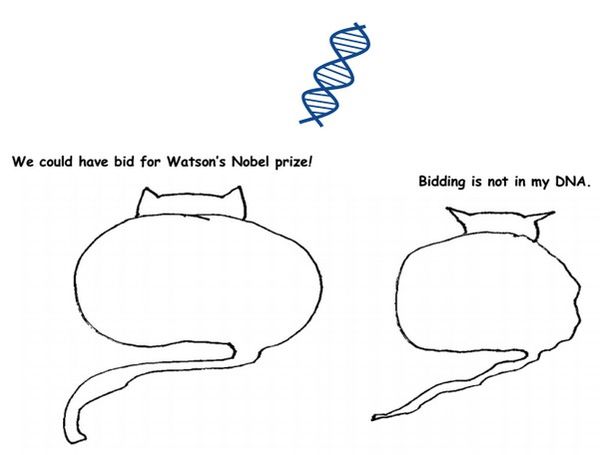
CATSPEAK
by Brooks Riley
Sunday, December 7, 2014
Poland’s Jews: Under a New Roof
Shelley Salamensky in the New York Review of Books:

Few cities would seem more suitable for a Jewish museum than Warsaw. Jews have lived in Poland for a thousand years, and by the eve of World War II made up over a third of the population of many parts of the country, including the capital. Half of all Jews who perished in the Holocaust were from Poland. Most American and European Jews can trace their roots to the region. And while many do not acknowledge it, 25,000 Polish citizens today are believed to be of at least partial Jewish heritage. But Poland’s complicated postwar history has rendered the recovery of its long Jewish legacy a thorny task.
Under the Communists, education about Poland’s Jews was suppressed. And many non-Jews—scarred by the Nazi occupation, their own great wartime losses, the Soviet takeover, ongoing destitution, and in some cases fear of losing plundered property or guilt over misdeeds—found it least painful to simply forget. The Auschwitz-Birkenau death camp was opened by the Polish parliament for tours two years after the end of the war, yet for decades little information was provided about those who suffered there. Jewish cemeteries were abandoned to overgrowth, synagogues fell into disrepair, and though some Jews remained in Poland, Yiddish theater, klezmer music, and other signs of life disappeared from the scene, as though Jews had never lived there.
More here.
Einstein’s Papers Online
Sean Carroll in Preposterous Universe:
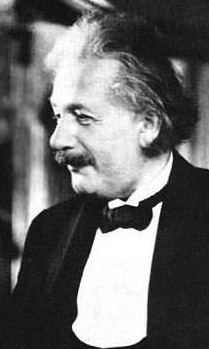
As Dennis Overbye reports in the NYT, the Einstein Papers Project has so far released 14 of a projected 30 volumes of thick, leather-bound collections of Einstein’s works, as well as companion English translations in paperback. That’s less than half, but it does cover the years 1903-1917 when Einstein was turning physics on its head. You can read On the Electrodynamics of Moving Bodies, where special relativity was introduced in full, or the very short (3 pages!) follow-up Does the Inertia of a Body Depend on Its Energy Content?, where he derived the relation that we would now write as E = mc2. Interestingly, most of Einstein’s earliest papers were on statistical mechanics and the foundations of thermodynamics.
Ten years later he is putting the final touches on general relativity, whose centennial we will be celebrating next year. This masterwork took longer to develop, and Einstein crept up on its final formulation gradually, so you see the development spread out over a number of papers, achieving its ultimate form in The Field Equations of Gravitation in 1915.
More here.
7 Habits of Highly Defective People
Daniel Tomasulo in AlterNet:

This is the one person defective people love to talk about. In the June 2013 issue of the Journal of Research in Personality, German researchers discovered that people who refer to themselves more often by using first-person singular pronouns like “I,” “me,” and “myself” are more likely to be depressed than participants who used more pronouns like “we” and “us.” The researchers studied 103 women and 15 men using psychotherapeutic interviews followed by questionnaires about depression. They found that participants who said more first-personal singular words were more depressed.
But wait — there’s more. They were also more likely to be difficult in other ways. They inappropriately self-disclose, constantly seek attention, and have difficulty being alone. (Maybe they don’t like the company.)
2. Bubble-busting. Shelly Gable and her colleagues are relationship scientists who study the patterns of communication between people. They’ve found that only supportive, encouraging comments celebrating the good news of others is what makes for a solid relationship. They call this active-constructive responding (ACR).
However, one of the communication patterns they looked at is particularly nasty. Active-destructive responders quash any good news they hear from you. Got a raise? “Most of it will be taken out in taxes.” Got a new love? “It’ll never last.” The researchers should have called these folks the Buzz Killers.
More here.
ORWELL’S WORLD
Robert Butler in More Intelligent Life:
It is now 65 years since George Orwell died, and he has never been bigger. His phrases are on our lips, his ideas are in our heads, his warnings have come true. How did this happen?
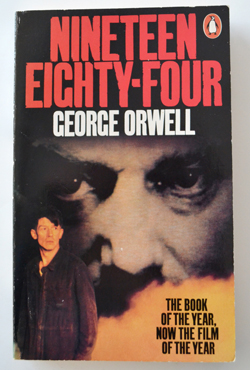
…Type “#Orwellian” into the search box on Twitter and a piece in the South China Morning Post says the Communist Party mouthpiece, the People’s Daily, has attacked the pro-democracy demonstrators in Hong Kong on the Orwellian grounds that they are “anti-democratic”. An article in Forbes magazine warns of an Orwellian future in which driverless cars catch on and computer hackers track “rich people in traffic and sell this information to fleets of criminal motorcyclists”. A story in the Wall Street Journal reports the Supreme Court judge Sonia Sotomayor warning that unmanned drones will create an Orwellian future. In a piece in Politico, Timothy Snyder, professor of history at Yale, advises, “To understand Putin, read Orwell.” By Orwell, he means “1984”: “The structure and the wisdom of the book are guides, often frighteningly precise ones, to current events.” This is just the top end of the range. Barely a minute goes by when Orwell isn’t namechecked on Twitter. Only two other novelists have inspired adjectives so closely associated in the public mind with the circumstances they set out to attack: Dickens and Kafka. And they haven’t set the terms of reference in the way Orwell has. One cartoon depicts a couple, with halos over their heads, standing on a heavenly cloud as they watch a man with a halo walk towards them. “Here comes Orwell again. Get ready for more of his ‘I told you so’.” A satirical website, the Daily Mash, has the headline “Everything ‘Orwellian’, say idiots”, below which an office worker defines the word as “people monitoring everything you do, like when my girlfriend called me six times while I was in the pub with my mates. That was totally Orwellian.”
More here.
The New Rules of Sex and Booze
Robin Wilson in The Chronicle of Higher Education:

That’s precisely what President Obama’s new campaign, “It’s On Us,” is asking them to do: “to intervene if we see someone in a risky situation.” Union College, with 2,250 undergraduates, enlisted its popular hockey team, which won last year’s Division I national championship, to sign the campaign’s pledge and encourage others to take seriously the goal of protecting students. People here think it’s working. “We’re hearing from more students concerned about what they are seeing or hearing,” says Amanda E. Tommell-Sandy, assistant director of the counseling center. “We are seeing more students sharing that they have intervened.”
More here.
Captain Beefheart & Magic Band – Sure ’nuff ‘n Yes I do
mark strand (1934 – 2014)
The Crunch (first version) by Charles Bukowski
Behavioural economics meets development policy
From The Economist:
Many of the insights of behavioural economics were based on studies of American university students and other privileged folk. But they apply with greater force to the poor—both the poor in rich countries and the more numerous inhabitants of developing ones. Behavioural economics therefore has profound implications for development. The new “World Development Report”, the flagship publication of the World Bank, considers them.
As the report shows, the poor are more likely than other people to make bad economic decisions. This is not because they are irrational or foolish but because so much is stacked against them. They are more likely to lack the basic information needed to make good choices, such as which fertiliser to use or when to apply it. They are more likely to live in societies which hold mistaken or harmful views, such as that girls should not go to school.
Conventional economic thinking assumes the poor will want to earn their way out of poverty. But as studies from countries as different as Ethiopia and France show, poverty makes people feel powerless and blunts their aspirations, so they may not even try to improve their lot. When they do, they face obstacles everywhere. They have no margin for error, making them risk averse. If they do not know where their next meal is coming from, saving and investing for the future is hard.
More here.
Sunday Poem
From The Pearl Works
Little Yang Sing, Yuzu, Hunan, Wong Wong, Imperial Siam:
all those bright syllables cascading into the bottle-bank at 5 a.m.
○
Spring. We get it.
After weeks on ice, buckets of pussy willow outside Woo Sang blossom & each evening is granted a little extra credit.
○
This is the goose-egg symbol of perfection that your perfectly pursed little lips mouthed in my direction, darling, many many moons ago.
O . . .
○
And this? The handful of coppers daylight borrows from October.
Come bright hour. Be bright. Be ours. Be extra, ecstatic, immaterial, other.
○
Glory be the carnal surface:
aluminium on flats across, blasted lime by late sun; the water cooler’s translucence, a still p.m. in the office.
Saturday, December 6, 2014
George Orwell’s luminous truths
Orwell could see things but he could also see ahead because he had such an acute interest in and understanding of the present, informed by deep knowledge of the past and of the canon of English literature. The limpidity of his prose — he said that he wished to “make political writing into an art” — could be explained by his desire to be understood, especially by the general reader.
He did not wish to obfuscate, intimidate or obscure. He despised jargon. In his great essay “Politics and the English Language” he warned against the dangers of the “inflated style” — against excessive stylistic ornamentation, long words, redundant or strained metaphor, ready-made formulation and use of the passive voice. He wanted to illuminate the times in which he lived — to show as well as tell, to report and discover rather than merely pontificate.
Both left and right have claimed him. The right because of his vigorous anti-totalitarianism, popularised in the late novelsAnimal Farm and Nineteen Eighty-Four, and because in his essays and journalism he never ceased challenging leftist conformity, the actions of those he contemptuously called the “orthodoxy-sniffers”. In a 1941 review of Malcolm Muggeridge’s The Thirties, he writes of the “shallow self-righteousness of the leftwing intelligentsia”.
more here.
To Revive the Lyric: Hoa Nguyen
Daniel E. Pritchard in The Critical Flame:
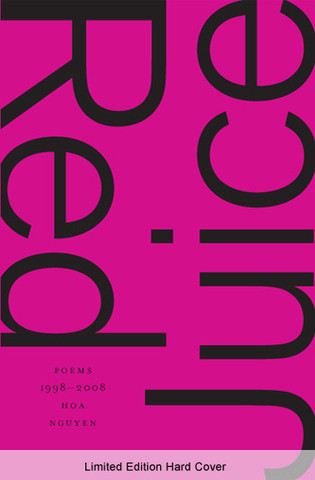
The avant-garde’s “delusion of whiteness” is the specious belief that renouncing subject and voice is anti-authoritarian, when in fact such wholesale pronouncements are clueless that the disenfranchised need such bourgeois niceties likevoice to alter conditions forged in history.
Behind her critique lies an essential conflict, which has upended and reformed modern society for centuries: what is the value of the individual within a power structure? What is the role of an individual voice? It is the Papacy against the preacher, the Tory against the Jacobin, the police against the protester: and today, within poetry culture, two traditions in conflict over the same basic paradigm.
More here.
40 Years Ago, Earth Beamed Its First Postcard to the Stars
Nadia Drake in No Place Like Home:
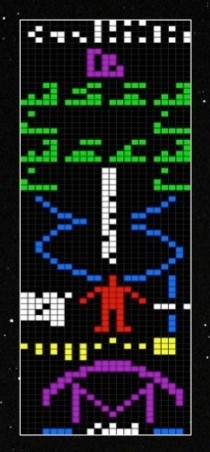
The message left our home planet on a warm and sticky mid-November day in Puerto Rico. It has been flying through the galaxy at the speed of light ever since, and in about 25,000 years will arrive at a cluster filled with more than 300,000 stars.
Unlike the radio signals that had been leaking from Earth since the late 1930s, this postcard was the first deliberate transmission to an alien civilization. Written in a way meant to be decipherable by extraterrestrial beings, the message contained some key information about the species that had sent it.
“It was a message that would actually inform anyone who did receive it that we existed, and tell them a little bit about what we were like,” says my dad Frank, who had the responsibility of constructing and sending what’s now known as the Arecibo Message. “And it was also a message to ourselves in that it showed what an intelligent civilization can do to contact other civilizations.”
He had just one month to write Earth’s first radio greeting to the stars.
It was 1974, and the Arecibo Observatory’s giant radio telescope had just gotten a major upgrade. Beamed into space by the Observatory’s powerful, one million-watt transmitter, the message would cap a ceremony marking the completion of the improvements (you can listen to it being sent, below). But it was a secret – only the ceremony’s organizers knew ahead of time what would happen, and they envisioned a transmission lasting about 3 minutes.
More here.