Keith Frankish on the Hard Problem and the Illusion of Qualia

Over at Philosophy Bites:

Subjective experience leads to the so-called 'hard problem' of consciousness: the difficulty of explaining qualia in terms of the brain. Keith Frankish discusses both the problem and a possible solution in this episode of the Philosophy Bites podcast.

Listen to Keith Frankish on the Hard Problem and the Illusion of Qualia

A Public Apology is Now the Defence Strategy of the Rich and Powerful

PAR92781

Nick Smith in Aeon (Photo by W Eugene Smith/Magnum):

Apologies interact with the law in strange ways. Let’s start with criminal law. The modern penitentiary originated in the 18th century as a place of penance: it was where society sent its outcasts to study their Bibles, experience quiet self-alienation, hear the word of Christ, and repent. Less has changed than you might think.

Between 90 and 95 per cent of all criminal convictions in the US result from guilty pleas rather than jury trials. In many if not all of the millions of cases in the US criminal justice system, courts determine punishments in part based on their sense of whether the offender is remorseful or not. We might wince at the idea of secular states engaging in the ‘soul crafting’ of the original penitentiaries, but we still expect state agents to divine the essence of the offender’s nature and offer a suitable punishment based on her badness. We are, in other words, still in the grip of old spiritual traditions. And that leaves us with an old problem.

Findings of remorse in criminal contexts typically occur in the star chambers of intuition. State officials consult their gut feelings, evaluate a few emotional cues and then render a (typically unappealable) decision about the offender’s character. On the whole, they do not explain why they find an offender’s remorse compelling. They do not disclose or defend their standards of contrition. The US Federal Sentencing Guidelines attempted to add some consistency to punishments by allowing reductions in sentences for those who ‘accept responsibility’, but, in practice, accepting responsibility has come to mean agreeing to a plea even while denying guilt. The US Supreme Court has ruled that remorse can determine whether an offender lives or dies, yet we entrust such determinations to ‘know it when I see it’ standards, as if judges and juries can look into the eyes of offenders, intuit the depths of their evil, and punish accordingly.

This discretionary latitude has predictable consequences. Regardless of their blameworthiness, rich offenders tend to get more credit for their remorse than poor ones, a generalisation that holds throughout the US criminal process. Police officers are more likely to let a warning suffice when the offender is rich. Parole boards are more likely to find that a rich inmate is sufficiently reformed. By contrast, the apologies of minorities, the poor and the mentally disabled often fail to convince.

More here.

Evading Power

41hZdJFrCZL._SY344_BO1,204,203,200_

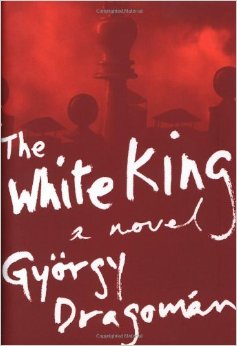
Sonja Pyykkö speaks to György Dragomán, author of “The White King”, in Eurozine:

Day-to-day reality in a communist state was defined by a long list of forbidden practices, objects and opinions, and the culture of informants that aimed to keep everyone in check. Naturally, no one knew the identity of the informants, so neighbours, distant relatives and co-workers were all suspicious by default. Keeping people in a constant state of mistrust is a form of exercising power according to the ancient principle of divide and conquer. Dragomán links this distrust to the violence of the system:

“Conversations were full of violence and nearly every subject was approached through it. A dictatorship functions just so; violence replaces communication in its entirety. Since nobody could be trusted, you were forced into this violent guessing game of whether they'll hurt you or you them. It all started very early on, I can't even remember any other type of conversation. This is all in retrospect of course, at the time it felt completely normal.”

Dragomán is very good at portraying the division between open, physical violence, and hidden violence that is apparent only on the level of speech and thought, and as a constant threat in everyday life.

“In some ways, the entire system's rhetoric was based on violence. Peace was of course a big deal and the state's rhetoric was always about peace, but there was always some battle involved. As a child I always had this terrible feeling that violence could emerge at any moment. Like in school, where during my childhood teachers still used canes. We weren't caned often, but the threat was always present. I remember this teacher, who had a broken arm in a cast. I remember the story was that he'd broken it when hitting a child. This probably wasn't true, but as a child, I believed the story completely.”

More here.

Monday, October 20, 2014

perceptions

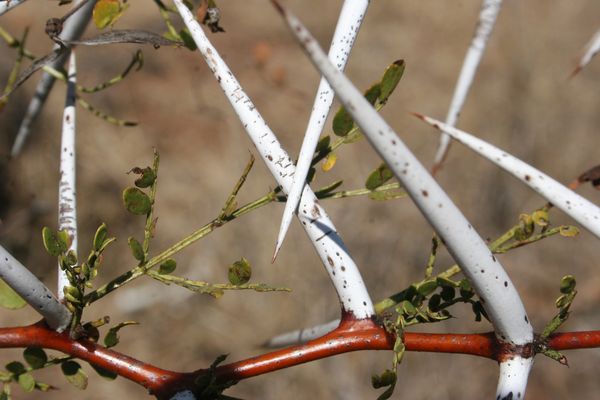
Thorns sized

Walter Johnston. Flaky Thorn Acacia. Timbavati, South Africa, 2014.

Digital photograph.

On safari in August we were told that a “gall making wasp” injects a kind of growth hormone into the thorn to make it expand (see below) and thus provide a well protected nourishing home for its eggs.

I have not been able to corroborate this. If someone else can, I'd love to learn.

Here's the best I have found:

“Myrmecophilous acacia are found in Eastern Africa and Mesoamerica …

…They develop some to most of their stipular spines into inflated, globose, ovoid, fusiform or thick cyclindrical armatures. Their spines look like galls or horns leading to species names like White swollen thorn acacia (=A. bussei), Black-galled acacia (A. malacocephala), Hairy-galled acacia (=A. mbuluensis), Bull`s Horn acacia, or Ant-galled acacia also called Whistling thorn acacia

The swollen thorns are genetically fixed. They are not randomely generated by the sting of an insect, like the galls produced by a wasp that injects her chemicals into a leaf, which then forms galls. Therefore the so-called gall-thorns are not real galls.

The fresh thorn is drilled open by an ant queen. Then it is carved out and she lays her eggs inside, starting a new colony …

The obligate mutualistic Acacia-ants (Pseudomyrex in Mesoamerica and Crematogaster in Africa) protect the plant in different ways: they fiercly attack browsing mammals, ravaging insects and epiphytic vines. They prevent any twig from neighbouring trees to touch their host – to prevent hostile ants from invading their tree. For the same reason they cut shoots of their tree that develop too far towards the canopy of neighboring trees.”

From: http://www.acacia-world.net/index.php/new-world/myrmecophilous-acacia
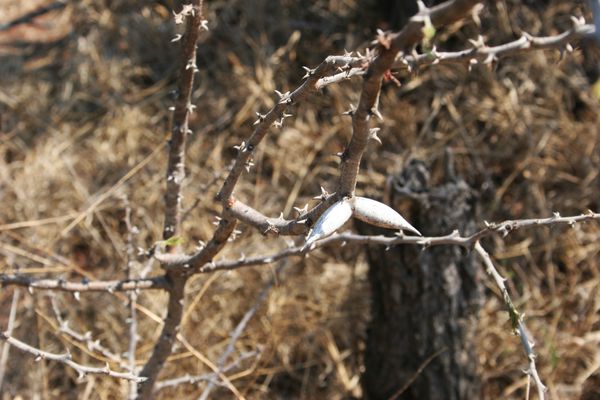
Swollen thorn

Walter Johnston. Swollen thorn of the Flaky Thorn Acacia. Timbavati, South Africa, 2014.

More on acacias here.

Photographs posted with permissin from Walter Johnston.

Sunday, October 19, 2014

In Kosovo

Justin E. H. Smith in his own blog:

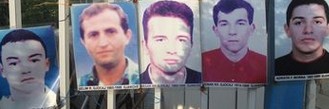
ScreenHunter_845 Oct. 19 20.42There was a war here not long ago. Mass graves were filled by the bodies of people whose loved ones, the survivors, are still walking around, selling vegetables and bus tickets, huddling and smoking. This war was the expression of a sort of popular will, and it was part of a process of geopolitical realignment that ought to be of significant interest to self-identified Westerners, yet is not. Neither Samuel Huntington, nor Sam Harris, nor Bill Maher, nor anyone even lower among the pundits whose reptilian lobes do not just kick in in moments of distress, but whose careers in fact depend on the continuous buzzing of these lobes: none of these people, I note, ever care to acknowledge, in their professional performances of Islamophobia, that what is perhaps the most Americanophile country in the world is also a Muslim country.

More here.

Books by disillusioned physicians reveals a corrosive doctor-patient relationship at the heart of our health-care crisis

Meghan O'Rouke in The Atlantic:

LeadFor someone in her 30s, I’ve spent a lot of time in doctors’ offices and hospitals, shivering on exam tables in my open-to-the-front gown, recording my medical history on multiple forms, having enough blood drawn in little glass tubes to satisfy a thirsty vampire. In my early 20s, I contracted a disease that doctors were unable to identify for years—in fact, for about a decade they thought nothing was wrong with me—but that nonetheless led to multiple complications, requiring a succession of surgeries, emergency-room visits, and ultimately (when tests finally showed something was wrong) trips to specialists for MRIs and lots more testing. During the time I was ill and undiagnosed, I was also in and out of the hospital with my mother, who was being treated for metastatic cancer and was admitted twice in her final weeks.

As a patient and the daughter of a patient, I was amazed by how precise surgery had become and how fast healing could be. I was struck, too, by how kind many of the nurses were; how smart and involved some of the doctors we met were. But I was also startled by the profound discomfort I always felt in hospitals. Physicians at times were brusque and even hostile to us (or was I imagining it?). The lighting was harsh, the food terrible, the rooms loud. Weren’t people trying to heal? That didn’t matter. What mattered was the whole busy apparatus of care—the beeping monitors and the hourly check-ins and the forced wakings, the elaborate (and frequently futile) interventions painstakingly performed on the terminally ill. In the hospital, I always felt like Alice at the Mad Hatter’s tea party: I had woken up in a world that seemed utterly logical to its inhabitants, but quite mad to me.

More here.

Bangladeshi writing in English joins a global conversation

Shougat Dasgupta in The Caravan:

ScreenHunter_844 Oct. 19 19.53Who speaks, and who is being spoken for, have always been loaded questions for postcolonial novelists. If a nation is, at least in part, imagined into being through feats of storytelling, the storyteller acquires a kind of authority over the soul, such as it is, of the nation. For a certain kind of postcolonial novelist—say, VS Naipaul—the novel must remain an unfinished business: the protagonist cannot develop beyond a certain point; he is stunted and half-formed, like his nation. For another kind of postcolonial novelist—say Hanif Kureishi—it is the former imperial centre that seems half-formed; no longer cocksure, forced to cede ground to the immigrant, or at least to the immigrant’s children, to reconcile itself to a new order. For Naipaul’s failed nationalists and doomed Third World intellectuals, emigration and self-exile is necessary penance; for Kureishi’s first generation Londoners, the baggage of their parents’ histories, the baggage of the ‘home’ country has to be sloughed off so that a new kind of English person can be created. Other postcolonial novelists writing in English have also taken up the theme of finding, creating and claiming a place in new national communities.

Ideas of home and belonging are hardly particular to postcolonial or migrant literature. Novels, from Don Quixote on, have been preoccupied with the radical act of leaving home on journeys and quests, followed by a return; the protagonist fundamentally changed, matured by having lived a little. Home and away: you need the one to recognise the other. The English novel developed in the eighteenth century, alongside an empire expanding ever further afield. Englishness was confronted by foreignness, and the outlandish travel narrative was among the most popular literary genres of the time. Stories, Edward Said wrote in Culture and Imperialism, “are at the heart of what explorers and novelists say about strange regions of the world; they also become the method colonised people use to assert their own identity and the existence of their own history.”

The novel has been a way of asserting and establishing individual and national identity, of making coherent what seems incoherent, of answering (or failing to answer) essential questions: Who are you? Where do you come from? What is your place in society? For a writer like Salman Rushdie, the loss of home can be assuaged by restoring the past “whole, in CinemaScope and glorious Technicolor,” as he wrote in the essay ‘Imaginary Homelands,’ and by creating “Indias of the mind.” Rushdie, for a while, offered hybridity, the double perspective, as a happy alternative to Naipaul’s baleful gloom.

More here.

Magic Kingdoms

Sophia Nguyen in The Point:

ScreenHunter_843 Oct. 19 19.43In the dog days of August, two books about the Ivy League landed comfortably on the New York Times bestseller list. One was William Deresiewicz’s Excellent Sheep. The other was Lev Grossman’s The Magician’s Land. Despite their disparate genres, the nonfiction tract ends up in fantasy, while the escapist entertainment roots itself in reality—and both are invested in the drama of gifted children.

Heavily quoting emails and essays from his former students at Yale, Deresiewicz’s higher-ed polemic takes down elite colleges and the adults they produce—zombies with status anxiety where their curiosity and humanity used to be. Rather than challenge students with a rigorous education, Deresiewicz argues, the Ivy League and other elite colleges now promote a narrow notion of success. It begins with admissions offices, which have become inhumanly ruthless sorting machines further stratifying the upper class. Having selected for a certain breed of strivers, the schools then encourage their students to become a conformist herd, seeking meaning in credentials. Failing to find that meaning, the hunger only intensifies.

By contrast, the Magicians trilogy is a fantasy series about young wizards. Its protagonist, Quentin Clearwater, attends a magical college and later discovers a land he’d thought was only imaginary: Fillory, a magic kingdom from his favorite childhood book. Over three books, Quentin gains and abdicates a throne, meets a dragon, learns how to wield a sword and brings his first love back from a fate worse than death. But he is also the ur-sheep: a standard-issue, passably polymathic high schooler who does nothing more or less extraordinary than gain admission to an exclusive college. Amidst all the defensive noise made by Ivy Leaguers rebutting Deresiewicz with their personal stories, the Magicians trilogy furnishes him with a kind of confirming anecdote. It may be pure coincidence that the two were published within a week of each other, but they are symbiotically linked—and so are their fates.

More here.

A Life Told with ID Photos

Ali Mobasser in lensculture:

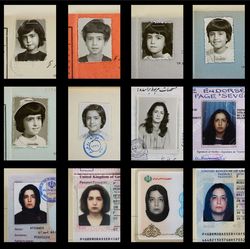
IdAfsaneh was born on the 28th of March 1957 in Tehran, Iran. She grew up with her parents and her older brother Afshin (my father). Her father was an army general who had been Chief of The National Police between 1963 and 1970 and had proceeded to become Head of Civil Defence and Deputy Prime Minister of Iran until 1979. The children lived a happy and privileged life, going to the best schools and spending their holidays in their villa by the sea.

In 1979, The Islamic Revolution of Iran changed the course of their lives forever. Their properties and assets in Iran were seized by the new establishment and my grandfather went into hiding to avoid capture and execution. Afsaneh had returned to Iran from London where she was studying to be with her mother who was dying of cancer. My grandfather, risking his life, made a visit to his wife's hospital bedside to say his final goodbye before fleeing Iran. She passed away three months later at 47. Afsaneh joined her father in the United Kingdom where they were to seek asylum. Neither were to ever return to Iran. My father arrived in London in 1983 (having separated from my mother). In the summer of 1985, at the age of eight, my mother sent me to London from Mission Viejo, California where I had been living. Afsaneh and my father raised me in Afsaneh's two bedroom flat in Putney, south-west London where I was to share a room with my father until leaving home at eighteen.

More here.

Poem with Blue Agapanthus

Noam Scheindlin in Warscapes:

Palestine-april-2011-123The 17th Century Kabbalist, Nathan of Gaza, speculated that before the world came into being, there were, in the endlessness of existence, two lights: the one, active, thinking, with the impetus to create; the other passive, concealed and full in itself. When the first light contracted itself to make room for creation, the second light resisted and remained unmoved. It is this second light that became the force we think of as evil in the world. In this new poem by Meena Alexander, which, she tells us, was written during the recent bombing of Gaza, while she was reading the poet Nellie Sachs, nothing seems to hold still, as unity and becoming vie for the world.

V.

When the instruments of war are melted into fish hooks,
When the factories of death are finally stilled
When evil is swallowed up in a hot wind
That strikes our names into the base of the uncharted sea,
A garden fed by the streams of longing will rise up.
In limestone crannies the forget- me- not takes root
And how quickly the sky- blue agapanthus,
Flower of all love, restores itself.

VI.

Search for the laurel — tree of flight and metamorphosis,
Bruised alphabets are cut into its bark,
They shine with red resin, glow in the dark.
In the shade of that tree you will find your child.
His clothing wet with sea salt
He crouches, picture book in hand, utterly bewildered,
A kite string tangled in his hair.
Go find him there, Beloved, wordless, waiting.

More here.

Sunday Poem

The Men Who Wear My Clothes

Sleepless I lay last night and watched the slow
Procession of the men who wear my clothes:
First, the grey man with bloodshot eyes and sly
Gestures miming what he loves and loathes.

Next came the cheery knocker-back of pints,
The beery joker, never far from tears,
Whose loud and public vanity acquaints
The careful watcher with his private fears.

And then I saw the neat mouthed gentle man
Defer politely, listen to the lies,
Smile at the tedious tale and gaze upon
The little mirrors in the speaker's eyes.

The men who wear my clothes walked past my bed
And all of them looked tired and rather old;
I felt a chip of ice melt in my blood.
Naked I lay last night, and very cold.
.

by Vernon Scannell

Saturday, October 18, 2014

ON GOTTLAND BY MARIUSZ SZCZYGIEŁ

GottlandMadeleine LaRue at The Quarterly Conversation:

In a series of dispatches from this tantalizing world of “more or less,” Gottland chronicles the history of the Czech Republic in the twentieth century. Each of its seventeen chapters focuses on one or more individual figures—Tomáš Bata, a self-made billionaire; Lina Baatová, an actress who became the lover of Josef Goebbels; Karel Gott, the wildly popular crooner who lends his name to the book’s title—all of whom were caught up and tangled in the unfortunate net of their country’s history. During the last century, the Czech Republic was occupied first by the Germans, then by the Russians, and now by the specters of those years. In his nuanced portrait of a nation, Szczygieł poses questions as critical to literature as they are to history: how should one act when oppressed? To what extent is compromise necessary, justified, or cowardly?

The Czechs compromised; like many small nations, they had very little choice. The alternative was annihilation. “This we know,” Szczygieł writes, “in order to survive in unfavorable circumstances, a small nation has to adapt. It has carried this down from the days of the Habsburgs and the Protectorate of Bohemia and Moravia.” The Czechs, Gottlandtestifies, have proved to be remarkably resilient—Hitler is said to have shouted in a rage, “The Czechs are like cyclists—they hunch their upper bodies, but pedal below!”—yet adaptation has had its price, and its scars are no less painful for being invisible.

more here.

Zephyr Teachout’s ‘Corruption in America’

19FRANK-master675Thomas Frank at The New York Times:

According to Teachout, however, it’s much worse than this. Our current Supreme Court, in Citizens United, “took that which had been named corrupt for over 200 years” — which is to say, gifts to politicians — “and renamed it legitimate.” Teachout does not exaggerate. Here is Justice Kennedy again, in the Citizens United decision: “The censorship we now confront is vast in its reach. The government has ‘muffle[d] the voices that best represent the most significant segments of the economy.’ ”

You read that right: The economy needs to be represented in democratic politics, or at least the economy’s “most significant segments,” whatever those are, and therefore corporate “speech,” meaning gifts, ought not to be censored. Corporations now possess the rights that the founders reserved for citizens, and as Teachout explains, what used to be called “corruption becomes democratic responsiveness.”

Let me pause here to take note of another recurring peculiarity in corruption literature: an eerie overlap between theory and practice. If you go back to that “censorship” quotation from Kennedy, you will notice he quotes someone else: his colleague Antonin Scalia, in an opinion from 2003. Google the quote and one place you’ll find it is in a book of Scalia’s opinions that was edited in 2004 by none other than the lobbyist Kevin Ring, an associate of Jack Abramoff who would later be convicted of corrupting public officials.

more here.

clive james’ Poetry Notebook: 2006-2014

Fccf09ba-bd98-4052-8910-965a62a823fcElaine Feinstein at the Financial Times:

Clive James has always written with verve about poetry, and though much of his latest book is drawn from articles already published, the material was well worth collecting. Poetry Notebook may not have the idiosyncratic range of his Cultural Amnesia (2007) but it has the same knack of entertaining his readers, even those inclined to disagree with what he says.

Reflecting on the influential critic Ian Hamilton, James remarks: “Hamilton was strongest where he found weakness”. That is not his own purpose here, except perhaps in his account of Ezra Pound’s followers, of whom I shall have more to say. What he wants to explore is the intensity of language that enables certain lines of poetry to lodge in the mind even when the rest of the poem has been forgotten. He finds these in Shakespeare, naturally, but also in Robert Frost, WH Auden and Richard Wilbur. Philip Larkin is an important presence throughout, being exemplary in his ability to write a resonant line that miraculously carries significance without contortion. There is also a whole chapter on Michael Donaghy, a thoughtful tribute to a much-loved and talented poet, who spoke all his poems by heart and died far too young.

more here.

Venerated Members: On Europe’s history of penis worship

Stassa Edwards in The New Inquiry:

Grigori Rasputin’s dick is on display at the Museum of Erotics in Saint Petersburg. Housed in a jar of formaldehyde, the member, which the museum’s owner claims he obtained from a French antiquarian, is quite sizable. Actually, it’s enormous for a human penis: Wide and meaty, it measures about a foot long. According to the museum, just gazing on the preserved member can cure a range of problems, everything from infertility to a humdrum sex life. But the specimen isn’t a human penis. It more than likely came from a horse.

It wouldn’t be the first time something inhuman was passed off as Rasputin’s dick. An earlier version circulated after Rasputin’s 1916 murder, legendary for being long and difficult: an initial failed poisoning, followed by multiple gunshots, a beating, and finally a drowning. Legend has it that in the midst of the horror show the man in charge of the grisly plot, Prince Felix Yusupov, somehow managed to castrate the mad mystic. Rasputin’s penis was supposedly scurried out of the country and ended up in the hands of Russian émigrés in Paris. There, his dick became a kind of religious relic of their vanished homeland, a potent piece of a vanished social order.

More here.

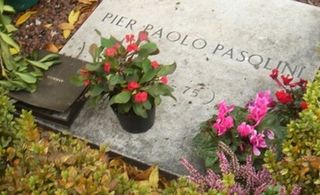
Pier Paolo Pasolini was a force against the incoherence hiding in every hypocrisy

Susan Stewart in The Nation:

ScreenHunter_841 Oct. 18 15.53Writing in 1930 with Baudelaire and, subsequently, Goethe on his mind, T.S. Eliot took up the question of what it means for a poet to possess “the sense of his own age.” While it may be true, he noted, that Goethe was the representative Enlightenment dilettante, pursuing his scattered scientific and aesthetic “hobbies,” and Baudelaire a “theological innocent,” writing as if the problem of evil had never occurred to anyone before, Eliot nevertheless concluded that “they are both…men with restless, critical, curious minds and the ‘sense of the age’: both men who understood and foresaw a great deal.”

Is there any poet in the postwar period who was driven by a sense of the age—its archaisms and barbarisms, its new looks and new media, its corollary fears and hopes—more intensely than Pier Paolo Pasolini? Born in 1922—the same year as the American poet Jackson MacLow, a year younger than the Italian poets Andrea Zanzotto and Maria Luisa Spaziani, a year older than the French poet Yves Bonnefoy—Pasolini seems of an entirely different era from his long-lived contemporaries. He is fixed in the amber of the 1960s and ’70s—not only because of his early death (murdered on the beach at Ostia on November 2, 1975, at the age of 53), but also because in his poems, films, novels, plays, journalism, criticism, drawings and paintings, he continually took the measure of his time.

More here.