
Quico Toro at Persuasion:
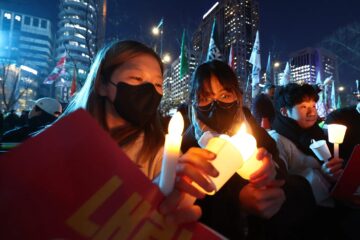 The political spasm that gripped South Korea last night has been widely seen as a portent of doom, but it need not be. Taking a page from Peru’s political playbook, Yoon Suk Yeol, South Korea’s unpopular, thin-skinned, ineffective president attempted an autogolpe, or self-coup—a power-play against the institutions of the country he was elected to lead.
Following a series of deadlocked budget negotiations with the opposition-run legislature, Yoon stunned the nation with a late-night speech declaring martial law on the flimsy pretext that the state was under threat. The move would formally put the country under military rule, suspending guarantees of free speech and assembly. Yoon sent soldiers into parliament to try to intimidate opposition lawmakers.
The power grab fell apart after a night full of drama when parliament voted to reverse the martial law decree, forcing Yoon to backtrack a scant six hours after his initial move. The near-instant collapse of this power-grab made for dramatic news footage that seemed to show a democracy spiraling into crisis. And yet, if deftly handled, the whole episode could well leave South Korea’s democracy stronger.
More here.
Enjoying the content on 3QD? Help keep us going by donating now.
 T
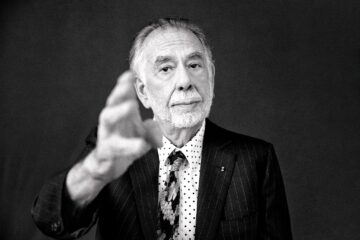
T AI has become uncannily good at aping human conversational capabilities. New research suggests its powers of mimicry go a lot further, making it possible to replicate specific people’s personalities. Humans are complicated. Our beliefs, character traits, and the way we approach decisions are products of both nature and nurture, built up over decades and shaped by our distinctive life experiences.
 V
V
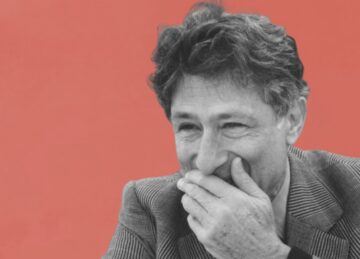 The Question of Palestine was published in 1979, one year after Said’s pivotal book Orientalism and two before Covering Islam—a trilogy that helped found post-colonial theory and develop a framework to critique the West’s stereotypical and often racist lens of the Arab and Muslim world. The Question of Palestine was particularly noteworthy for being the first English-language book to narrate the Palestinian experience and deconstruct Zionism as a settler-colonial project.
 Toi Labs TrueLoo
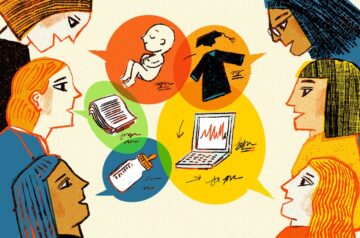 Cecilia hadn’t expected the video to resonate so deeply. She often watched online talks about her field of research. But this one didn’t just present pioneering scientific ideas; it put into words the uncomfortable reality she had been grappling with. She was nearly 30 years old and single, and she had recently interviewed for a postdoc position that would require her to uproot her life yet again. She couldn’t ignore a growing question: whether and how she would be able to have children. The talk, by anthropologist Marcia Inhorn, explored the silent struggles many highly educated women face in balancing their careers not just with motherhood, but with what comes before: relationships and planning for a family. It was an “aha!” moment. Cecilia sent it to her friend and fellow academic Erika, who responded immediately: “Why haven’t we talked about this before?”
 While behind the wheel of a car, a significant level of distraction can accompany one action in particular: phone usage. For some, this can result in severe driving impairment. It represents a serious danger hidden within the connective rhythms of our everyday lives.
 Americans say they are
 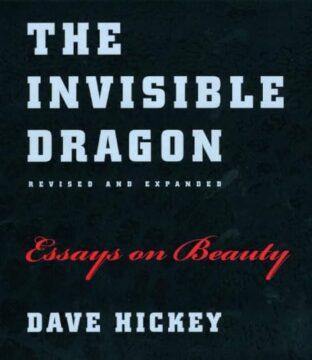 Writing in 1993, the late critic Dave Hickey described beauty as a kind of dirty word in the art world, believed to be hopelessly tainted by the market: “Beautiful art sells. If it sells itself, it is an idolatrous commodity; if it sells something else, it is a seductive advertisement.” Perhaps the clearest sign of beauty’s shifting fortune is the rehabilitation of Hickey’s own critical reputation. In his introduction to the 2023 reissue of his 1993 collection The Invisible Dragon: Essays on Beauty, he describes the paradoxical combination of renown and revulsion with which his work was met: “In the Dragon’s wake,” he writes, “the endowed lecturer was deposited unceremoniously at a Ramada Inn beside an empty highway and left to dine out of the candy machine.” (Indeed, I recall being assigned an essay from the book in a methods seminar during my first semester of graduate school back in 2010, where it was cast as a brash and unserious provocation.) But returning to The Invisible Dragon now, in anticipation of the new collection of his writings Feint of Heart, posthumously published by David Zwirner Books this past September, I wonder if he wasn’t on to something. For Hickey, the invocation of beauty didn’t represent a conservative retrenchment, but an appealing anarchy: It directly addresses itself to the beholder, requiring neither interpretive intermediaries nor ameliorative social purpose.
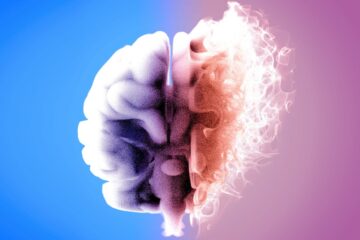 No part of our body is as perishable as the brain. Within minutes of losing its supply of blood and oxygen, our delicate neurological machinery begins to suffer irreversible damage. The brain is our most energy-greedy organ, and in the hours after death, its enzymes typically devour it from within. As cellular membranes rupture, the brain liquifies. Within days, microbes may consume the remnants in the stinky process of putrefaction. In a few years, the skull becomes just an empty cavity.
 Scientists in Boston, Massachusetts have made reprogrammed stem cells from the blood of centenarians. They plan to share the cells with other researchers to better understand the factors that contribute to a long and healthy life. Early experiments are already providing insights on brain ageing. Centenarians offer an opportunity to study