(NOT) Five African novels to read before you die

Readabook-383x325Aaron Bady in The New Inquiry:

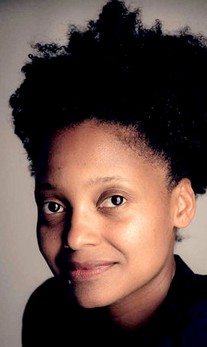
University of Leeds professor Brendon Nicholls made a list of the “Five African Novels to Read Before You Die” yesterday, and it’s a fine list, if your best-case scenario is that literate first-world types manage to read a handful of creative works from Africa in their lifetime. And let’s be real, most Westerners are not even going to do that. So his list is fine, albeit extremely predictable:Achebe and Ngugi, of course, and let’s add Ayi Kwei Armah’s most canonical novel—because we need more than one West African male novelist from the 60’s—and, hmm, oh, shoot, we need some women, so, okay, Tsitsi Dangerembga, obviously, and Bessie Head, I guess. But not the really hard Bessie Head novel, let’s try the one that won’t confuse people. DONE.

I’m giving Nicholls some good-natured sass, here (sorry dude), because, as someone who studies, reads, and teaches contemporary African literature, I’m just very bored with this list, which is a fine list, but it’s a bit, I do’t know, “Five White Writers You Should Read Before You Die: Shakespeare, Milton, Dostoyevsky, Austin, Woolf.” Does the world need another suggestion that you read Things Fall Apart? It’s a great novel, but everybody knows that, or if they don’t, there’s no hope for them anyway…

As we peer forward towards 2015, the literatures of the Africas are much more interesting than those five books and the canon-making principles they index. The old canons have become a critical crutch: Nicholls’ list is a good place to start if you want to appreciate what has been going on for the last decade; anyone worth reading will probably have read at least most of these people, and if they haven’t, the people they have read probably will have. Those writers are really helpful for appreciating what African writers are doing right now, and there’s no getting away from that. They’re also great writers…

For this reason, Nicholls list is a perfectly good place to start, as long as you don’t want to read anything written in the last three decades. If you do want to read things that were written in the last thirty years, however—maybe, for example, because you want to read things that were written in your lifetime, and you were born, say, in 1979, like me—you are in luck! I have a list for you.

Read the rest here.

PD James: She was fascinated by death all her life

Jake Kerridge in The Telegraph:

PDJamesforweb_3120694bPD James had, to quote the title of what is probably her finest novel, A Taste for Death. Only last month she attended the launch party for CJ Sansom’s latest Shardlake mystery. Picking up the hefty tome and noticing its size, she said: “This will see me out.” It’s the sort of morbid joke you would expect from someone who famously said that when she first heard the story of Humpty Dumpty, her initial response was to wonder: “Did he jump or was he pushed?” She was fascinated by death all her life. She brought that fascination to a genre, detective fiction, that had previously tended to ignore the subject. Yes, old-style detective fiction was littered with corpses, but they are principally there to provide a puzzle for the reader, and the realities of violent death are ignored.

James was one of the first writers to combine a pleasingly complicated Christie-esque mystery with the depth of literary fiction, and she was the first of these new-style crime writers to be taken to the reading public’s heart. In her novel Devices and Desires(1989) she has a character reading an old-fashioned crime novel in which there is a “detective who, despite his uncertainties, would get there in the end because this was fiction; problems could be solved, evil overcome, justice vindicated, and death itself only a mystery which would be solved in the final chapter.” The implication is clear: no such comforting falsehoods are to be expected at the end of a James novel. Everything will not be alright again once the murderer is caught. But millions of readers adored her uncompromising view of the evil lurking in ordinary life.

More here. (Note: I had the pleasure of meeting Ms. James in 1993 in Chicago and she was every bit the Grand Dame I had imagined her to be, I mourn her loss today.)

the Rembrandt effect

Clar05_3623_01T.J. Clark at The London Review of Books:

Let us call this the Rembrandt effect. It is an immensely powerful one, whose mechanics remain largely a mystery. It proved inimitable; or rather, the imitations seemed often to get the mechanics right, but mostly failed to deliver the effect. People in the 17th century appear to have wanted the effect and been willing to pay for it. Their dismal handbooks of art theory (and even more dreadful guides to the progress of the soul) had nothing germane to tell them about the picture of self on offer from the disreputable showman, with his ‘whore’ of a wife and his sordid bankruptcy, but there was apparently a thriving market for the kind of face-to-faceness he specialised in. A market for the unspeakable, we might say. Whether or not Rembrandt was bankrupt, his prices remained high. Italian noblemen and international bankers beat a way to his door – a German called Everhard Jabach, art dealer-cum-financier in Paris, seems to have been the first owner of Self-Portrait as Apostle Paul. Shades of the prison house clearly appealed.

What I now think was wrong in my previous approach to Rembrandt was my choice of terms. My essay assumed that the ‘look’ of self-portraiture was paramount, and extracted the look from the ‘face’. Rembrandt did not. His pictures – not just his self-portraits, but the whole world he shows us, predicated as it is on faces – have to do centrally with the belonging of eyes and eyesight to the unlikely cluster of ‘features’ that cling to the lower front half of the skull, exposing the brain to the world. Exposure of this kind has dangers.

more here.

why are novelists turning back to religion?

501828083_14Philip Maughan at The New Statesman:

There is also a sense that, in recent years, novelists have formed part of a rearguard action in response to the New Atheist consensus that emerged after Richard Dawkins’s God Delusion was published in 2006. The aggressive incuriosity and self-righteousness exhibited by the more militant end of the movement seemed to devalue the freedom of thought required to write a novel. “I never quite understood why you would read fiction to understand the human condition,” Dawkins surprised nobody by saying in 2013. One other thing that unites writers with believers is a sense that the truth can be story-shaped.

“It’s extremely hard to convince a New Atheist polemicist that the standard way of understanding scripture is one that allows for it to be metaphorical,” Spufford said. “It’s the fundamentalists who claim the Bible is a handbook or a scientific treatise who are the marginal ones.”

Deterministic ideas, whether theological, political or scientific, produce novels in which destinies are sewn up and moral questions tidily resolved. When Nick Hornby read Gilead, the second novel by the American writer Marilynne Robinson, he wrote in the Believer magazine: “For the first time I understood the point of Christianity – or at least, I understood how it might be used to assist thought.” He is not the only one for whom that book has had the effect of a conversion (James Wood in the New Yorker was reduced to “a fond mumbling”) – not a conversion to Christianity, of course, but to a new understanding of religion’s place in human culture and intellectual activity.

more here.

rebecca west visits america in 1924

Rebecca_west_6Rebecca West in The New Republic:

Really, it is just like that. America is a continent with which one can have innumerable love-affairs. I am not monogamous myself in my passion for the Mississippi. There are times when I think with as insistent a longing for a place named Bingham, which is in the state of Utah. It is a mining-camp. One drives in one’s automobile on noble roads planted with poplars over a green and fertile plain (it was desert till the Mormons irrigated it) to a canyon that drives a wedge into the foothills of the snow-peaked mountains. There is one long winding street of wooden houses, paintless, dilapidated; some with verandas on which men in broad hats sit in rocking chairs, spitting slowly and with an infinity of sagacity; some with plate glass windows, on which the washed-off word “saloon” still shows as a pathetic shadow, which are eating-houses of incredible bareness and dinginess, some others with plate-glass windows that show you men on high chairs with white sheets round them being shaved, and tin cans everywhere. Then at the end of the street one comes on a mountain of copper. Just that, a mountain of copper. Pyramid-shaped it is, and cut into regular terraces all the way from the apex to the base, where lies a pool of water emerald as Irish grass. It sounds the hardest thing in the world, and the terraces have as sharp an edge as a steel knife. Yet it seems a shape just taken for an instant by the ether. One feels as if one were standing in front of a breaking wave of a substance more like cloud-stuff than water, yet like the sea; for the whole hillside is luminously and transparently pale, and reticulated with mineral veins that are blue and green like sea water.

more here.

Frank Sinatra and the Lost Art of Livin’

From DelanceyPlace:

BookHe adored openly and gave not a damn who saw. In the middle of parties, amid any gathering, he blurted encomiums of love and appreciation: 'Doesn't she look radiant?', he would say of Bacall. ('I remember feeling so happy,' she said of such eruptions.) Whatever his latest elations and fancies, they were always made grandly audible: 'No one prettier has ever been in my house!' 'You're beautiful tonight!' 'You look mah-velous!' (That was in fact exactly how he said it.) Public proclamation did not faze him; after all, he sang the same sentiments on records and stages-legendarily making every woman feel that he sang only to her.

“Thus, in 1965, to his still-secret girlfriend Mia Farrow, thirty years his junior: He popped his head out of the Palm Springs swimming pool, adjacent to the golf course. And there, dripping chlorine with house guests agape, he bellowed toward her 'I love you!' Recalled one witness, 'If anyone had been on the Tamarisk seventeenth green that second, they would have had the scoop of the year.' Before becoming at age twenty-one, the third Mrs. Frank Sinatra, Mia Farrow had shorn her locks, cropped them all but off, stirring a nationwide hubbub. (She was then an ingenue on television's Peyton Place, whose mailbags lumped with outrage de coiffure.) 'But,' she later wrote, 'there was no drama, no fight with Frank, he loved my hair the minute he saw it, so I kept it short for years.' Indeed, he promptly gave her a pale yellow Thunderbird-'to match your hair.' 'I'm proud of her', he announced to everyone, crowing of her beauty and her brains and her bangs. …

More here.

Thursday, November 27, 2014

the eternal battle between the history and the meaning of Thanksgiving rages on

PI_GOLBE_THANKS_FT_001Stefany Anne Golberg at The Smart Set:

For the last thirty years of his life — the first thirty years of 20th century America — the historical genre painter Jean Leon Gerome Ferris devoted himself to capturing the history of America in paint. He called the result of this enormous task — a series of 78 scenes from the landing of Columbus to the start of World War I — The Pageant of a Nation. No one had ever seen America like this: All her heroes, great and small, presented in one complete and satisfying narrative — the most extensive series of American historical paintings by an individual artist before or since.

The paintings, wrote the authors of History of the Portrait Collection, Independence National Historical Park, were “expertly executed reproductions of the past”; Ferris on par with the best historical genre painters of his time. They were meticulously researched and crafted. And yet, the authors wrote, Ferris’ paintings said more about the era in which they were created than the events they portray. The paintings “formed a bridge between fact and fiction over which the viewers…were willing travelers.” The Pageant of a Nation, wrote the authors, confused “verity with verisimilitude.”

In one of the most widely reproduced Ferris paintings, The First Thanksgiving, the characters are just as they exist in our Thanksgiving myth. The Pilgrims don the familiar tall hats and buckles. The Wampanoag wear feathered headdresses. The women smile. The Wampanoag are serious.

more here.

The Retreat: choosing to spend Thanksgiving alone doesn’t need to mean being lonely

Susan Harlan in The Morning News:

The-retreatLast year, I opted out of Thanksgiving. I had never failed to celebrate a major holiday before. When I used to live in New York City, I was accustomed to spending Thanksgivings with friends and their families as my own family was far away in California. This usually involved waiting amongst crowds in Penn Station and then taking the train out to New Jersey. Now that I live in a small city in North Carolina, I receive generous offers of holiday festivity that usually involve large quantities of bourbon. But last year, I felt the need to be elsewhere.

So I set off.

This was not my first retreat, as I had started to call my weekend getaways. Since the beginning of the school year, I had been taking long drives over the weekends get to know North Carolina better, but also because I found myself restless at home. I didn’t necessarily have to go anywhere in particular; I just liked to drive along two-lane highways, past small-town cemeteries, BBQ joints, and rummage stores. “What are you up to this weekend?” friends would ask. “Going on a retreat,” I would reply. I found old lodges, log cabins, inns, and motels in the mountains. I brought my dog Millie, lots of books, a notebook. A flashlight and bug spray. Some groceries. Red wine. Blue rubber rain boots and several good sweaters that I left in the car.

“In the mountains, there you feel free.” So says the first speaker in T.S. Eliot’s The Waste Land, which was among the books I brought with me, along with Dylan Thomas and Walt Whitman, Isak Dinesen’s Out of Africa, and M.F.K. Fisher’s As They Were. These books were my supplies. And in the evenings, in the mountains, I did feel free, even if I knew I was not. One afternoon in late October, I sat on a bench on a sloping hillside and watched the wind blow red and yellow leaves off the trees in the distance, a declaration of the end of fall. I liked to rent cabins in the woods, and some people asked if I was scared of being murdered in one of these isolated places. Sometimes they were joking, but sometimes they weren’t. They genuinely found the idea terrifying. Before I went away for Thanksgiving, I showed a friend a picture of the cabin I had rented. She gasped.

“That looks like it should be in a horror film,” she said.

More here.

where “race blind” means “no black and Hispanic kids”

Freddie deBoer over on his blog:

Pew-Race-ChartThis is a question that people like Andrew absolutely have to answer if they want to grapple with this issue in an honest way: are you comfortable with a university system with incredibly low percentages of black and Hispanic students? With percentages of black and Hispanic students that are far lower than their averages in the population? That’s what you’re actually advocating for when you call for an end to affirmative action. We know that. We don’t have to guess. Andrew spills a lot of ink weeping for a plaintiff who won’t be able to go to Harvard. For her, the alternative was likely… going to Cornell, or Brown, or Dartmouth. (The horror! The horror!) For students like those in the UC system, the demise of race-based affirmative action can be the difference between attending a 4-year university or not at all. And if you oppose affirmative action then what, exactly, is the alternative for solving our enormous race-based economic and social inequalities? The self-same people who oppose affirmative action are the ones who oppose redistributive social programs! What makes this all so infuriating is that going to college and getting an education is exactly the way that conservatives say they want underrepresented minorities to get ahead. It’s the work hard, fly right, bootstraps vision of racial justice. I have no doubt that Andrew earnestly wants to end the massive gaps in quality of life between the races in contemporary American life. But what’s his plan? If “no” to reparations and “no” to affirmative action, 50 years after the heyday of the Civil Rights movement, how exactly do we get to racial economic equality?…

This whole debate depends on a flatly bogus notion of what college is, or what our country is. There is no such thing as meritocracy. There has never been anything resembling meritocracy. Not in colleges and not in our economy writ large. Anyone even remotely familiar with the history of our higher education system is aware that the system began as an explicit method for perpetuating received advantage. The notion of merit only began to creep in when America’s vast inequalities became too glaring to ignore. Andrew mentions the legacy of anti-Semitism in higher education and equates the current standing of Asian Americans to the past standing of Jews in that context. That’s a ludicrous comparison; our elite colleges were involved in an open and direct conspiracy to exclude Jewish students at all costs, whereas Asian American students attend US colleges far out of proportion with their overall percentage of our society. But he might stop and think about what that legacy actually tells us about our college system. No honest person with a minimum amount of understanding of our system would ever conclude that it has ever been anything resembling a meritocracy. Affirmative action has been one of the only genuine attempts to forcibly reduce the inherent inequality of our entire system. In its place, opponents propose… nothing.

Read the rest here.

critique and the genesis of modernity

51RykqblADL._SY344_BO1,204,203,200_Bo Isenberg at Eurozine:

Critique expresses the possibility that everything could have been different. By doing so, critique puts things and the order of things in a state of crisis – institutions, meanings, relationships, mental and cultural dispositions. Realities emerge as possibilities, possibilities that have materialised. In other words, critique is an expression of the equal importance of the possible and the real. InThe Man Without Qualities, Robert Musil writes that “the sense of possibility” exists alongside “the sense of reality” and that “possible realities”, not “real possibilities”, are what is really interesting.[1]

It has been said that critique is a genuinely modern disposition, just as crisis is a genuinely modern societal and mental state. The urban sociologist Robert Ezra Park wrote that the city – the ultimate manifestation of modernity, both with regards to social order and mentality – was in, or even constituted, “a permanent state of crisis”.[2]

Critique and crisis are central categories in any understanding of the modern culture. The concepts have a common etymological origin. They describe a state where nothing is yet determined but is soon to be; a state all about decisions, distinctions and discernment. The Greek word krínein meant both “subjective critique” and “objective crisis”. The concepts achieve their real significance and are filled with opportunities and potential during the modern age, from the Renaissance and Reformation up to the present.

more here.

How to Engineer the Optimally Delicious Thanksgiving Plate

Mrgan Garber in The Atlantic:

GravyThere may be an art to preparing Thanksgiving dinner, but there is an art, as well, to putting that dinner on a plate. The stakes are high: Get a little pour-happy at the moment of truth, and your turkey-to-gravy ratio gets completely upended; arrange your selections poorly, and suddenly your brussels sprouts are infiltrating your stuffing and potatoes. And then there's the cranberry sauce! Even a tiny bit of the stuff, misplaced, can turn an otherwise perfectly assembled plate into a mess of tangy hot-pink. If you, like me, have known the plight of the mis-proportioned meal, help is here. I asked Dan Pashman—author of the book Eat More Better, leader of the podcast The Sporkful, and general expert in the field of food consumption—for help engineering the optimal Thanksgiving plate. Here's his advice:

1. Use Your Mashed Potatoes as Construction Materials

Mashed potatoes, Pashman says, are “the structural backbone” of the Thanksgiving plate: “They're flexible, they're structurally sound, they're delicious, and they go well with most other things.” Everyone knows the myriad benefits of the mashed potato moat, the depression that allows your potatoes to become a lake-like storage vessel for your gravy; Pashman advises taking that basic structure and running with it. You can use potatoes, Pashman points out, “to cordon off other areas of your plate,” creating divisions that keep each food item in its place.

More here.

Inside the World’s Largest Islamist Group

1417021465kandilbrothers6_29_13gregg_carlstrom666Hazem Kandil at Dissent:

A reputation established over eight decades collapsed in less than eight months. Islamism, an ideology that carved its name from Islam, had always been synonymous with it in the minds of many. The Egyptian Muslim Brothers, who had invented and embodied this ideology since 1928, were perceived as fervent believers who went beyond practicing religion to promoting and defending it. But a gathering rebellion against the country’s first Brotherhood president changed all that.

On the eve of the 2013 popular uprising against Muhammad Morsi, Brothers organized preemptive sit-ins in several locations around the country. The biggest crowd camped around Cairo’s Raba’a al-‘Adawiya mosque. For forty days, unsuspecting Egyptians tuned in (some even strolled in) to witness for themselves what Brothers said and did. It was a rare opportunity to eavesdrop on this exceptionally discreet group. And what they saw and heard was quite different from what they were used to from the usually minted Brothers: political competitors were religiously condemned; images of Prophet Muhammad’s epic battles were conjured; biblical stories, from David and Moses to Armageddon, were invoked; allegations that Archangel Gabriel prayed at the Islamist campsite were flaunted; and sacred visions were relayed on stage night after night. This was not the vocabulary Brothers typically employed. Almost overnight, many Egyptians panicked. Who were these strangers, they wondered?

more here.

Wednesday, November 26, 2014

THE ÉMINENCE GRISE

Georg Diez in Der Spiegel via Edge:

ScreenHunter_883 Nov. 26 13.37Who is John Brockman? Even in New York, the world capital of people who know just about everybody, they are uncertain.

“Brockman, Brockman?” Shake of the head. “I don't know”, says the reporter from the New Yorker. Says the colleague of the New York Review of Books. Says the young writer who cofounded the magazine n + 1.

In the literary milieu where he is ignored more than despised, John Brockman is about as well known as the first three digits of the number Pi.

“This crowd sees everything through the lenses of culture and politics,” he says. “But an understanding of life, of the world, can only come through biology, through science.”

Ebola, stem cells, brain research—Who needs the new David Foster Wallace, the new Philip Roth?

“The great questions of the world concern scientific news,” says Brockman. “We are at the beginning of a revolution. And what we hear from the mainstream is: “Please make it go away.”

And there you are—this is how it goes with John Brockman who doesn’t like to waste time in the midst of the contradictions of the present. “Come, let's start,” he says in a good mood and puts a recording device on his desk. “I'm turning it on, you don't mind?”

He is charming, without hiding his own interests. He is proud of his life, his intelligence, without that he would have to apologize for it. He is a key figure of the late 20th and early 21st century, the éminence grise and major source of inspiration for the globally dominant culture, which he himself named as the “third culture”.

It is not Brockman, but his authors, who are well-known: Richard Dawkins, Steven Pinker, Daniel C. Dennett, Jared Diamond, Daniel Kahneman. Physicists, neuroscientists, geneticists, evolutionary biologists, fixed stars of the science age, superstars of nonfiction bestseller lists, the reason for Brockman's financial success and good mood.

More here.

Today, all you need to carve the turkey is an electric knife. In the 1600s, you needed a serious education

Heather Hess in The Smart Set:

ID_HESS_TURKE_AP_001Pity the turkey. Capons are sauced, cranes are lifted, partridges are allayed, geese arereared. Turkeys are, to use the proper historical carving vocabulary, simply cut up. The ritual carving of the turkey is one of the few vestiges of a past, glorious tradition that once wowed diners at spectacular feasts, and yet, the prosaic words for slicing up the turkey do not seem to match the grandeur of the deed.

Once, carving was held in high esteem. It was less about serving base bodily needs for nourishment and more concerned with spectacle and performance. Those who carved (and those who had carving done for them) were not concerned with where their next meal was coming from. It was a demonstration of power: the ability to muster a bountiful feast and an exhibition of control of the body (both that of the carver and of the animal carcass to be consumed). In full view of the diners assembled at the table, the carver hoisted the bird aloft with one hand, while wielding a razor-sharp knife in the other. Slices from the cooked carcass floated down to the plate.

More here.

Treating disease with fecal transplants

Emily Eakin in The New Yorker:

ScreenHunter_882 Nov. 26 13.16One morning last fall, Jon Ritter, an architectural historian living in Greenwich Village, woke to find an e-mail from a neighbor, who had an unusual request. “Hi Jon, This is Tom Gravel, from Apt. 4N,” the e-mail began. “I wanted to check in and see if you may be open to helping me with a health condition.” Gravel, a project manager for a land-conservation group, explained that he had Crohn’s disease, an autoimmune disorder that causes inflammation of the intestinal tract along with unpredictable, often incapacitating episodes of abdominal pain and bloody diarrhea. His doctor had prescribed a succession of increasingly powerful drugs, none of which had helped. But recently Gravel had experimented with a novel therapy that, though distasteful to contemplate, seemed to relieve his symptoms: fecal transplantation, in which stool from a healthy person is transferred to the colon of someone who is sick. He hoped to enlist Ritter as a stool donor.

“I realize this is really out there,” Gravel wrote. “But I think you and your family are the nicest people in our building, and I thought I might start with lucky you.”

Crohn’s disease affects as many as seven hundred thousand Americans, but, like other autoimmune disorders, it remains poorly understood and is considered incurable.

More here.

Arundhati Roy: goddess of big ideas

Andrew Anthony in The Guardian:

ScreenHunter_881 Nov. 26 13.11Like India and Walt Whitman, Arundhati Roy contains multitudes. She is, however, far from large. Small, delicately boned, a beguiling mixture of piercing dark eyes and bright easy smile, she is a warm presence. She turns 53 tomorrow and the grey tint to her curls lends depth to a still strikingly youthful face. Looking at her, it’s not hard to detect the author of the richly empathetic The God of Small Things, her debut, Booker-prize winning novel about family life in Kerala, that John Updike described as a “massive interlocking structure of fine, intensely felt details”.

That was 17 years ago and photos from that period show a captivating figure, at once shy and fiercely proud, wary and utterly self-possessed. The book was a huge international hit and the publishing world readied itself to cash in on a phenomenal new talent, galvanised by the fact that so photogenic an author would be a dream to market.

But the follow-up novel didn’t arrive. Instead Roy directed her considerable energies towards political activism, most especially in India where, despite her success, she has remained. It was a path that has led her to express solidarity with groups – such as Kashmiri separatists and Maoist guerrillas – that are seen by many Indians, with some reason, as terrorists. As a result Roy has become a controversial figure, an outspoken heroine in certain radical quarters, but loathed by large sections of Indian society, not least Hindu nationalists.

She has also become a prolific essayist and polemicist.

More here.

Our Cats, Ourselves

Razib Khan in The New York Times:

CatIT’S commonplace to call our cats “pets.” But anyone sharing a cat’s household can tell you that, much as we might like to choose when they eat in the morning, or when they come inside for the night, cats are only partly domesticated. The likely ancestors of the domestic dog date from more than 30,000 years ago. But domestic cats’ forebears join us in the skeletal record only about 9,500 years ago. This difference fits our intuition about their comparative degrees of domestication: Dogs want to be “man’s best friend”; cats, not so much. Fossils are handy snapshots of the past, but a genomic sequence is a time machine, enabling scientists to run evolutionary history backward. The initial sequence of the domestic cat was completed in 2007, but a recent study to which I contributed compared the genomes of the domestic cat and the wildcat (Felis silvestris) and sheds new light on the last 10,000 years of feline adaptations. Domestic cats are not just wildcats that tolerate humans in exchange for regular meals. They have smaller skulls in relation to their bodies compared with wildcats, and are known to congregate in colonies. But in comparison with dogs, cats have a narrower range of variation in size and form.

Wesley C. Warren, an author of the study, notes that domestic cats have excellent hunting skills, like their wild ancestors. This, too, supports the notion that cats are only semi-domesticated. Comparing the genomes of the wildcat and the domestic cat added much to what we had known. Michael J. Montague, the lead author, told me he’d anticipated that the two genomes would be very similar, but our study found a specific set of differences in genes involved in neuron development. This brain adaptation may explain why domestic cats are docile.

More here.

Geo-engineering: Climate fixes ‘could harm billions’

David Shukman in BBC:

ClimateSchemes to tackle climate change could prove disastrous for billions of people, but might be required for the good of the planet, scientists say. That is the conclusion of a new set of studies into what's become known as geo-engineering. This is the so far unproven science of intervening in the climate to bring down temperatures. These projects work by, for example, shading the Earth from the Sun or soaking up carbon dioxide. Ideas include aircraft spraying out sulphur particles at high altitude to mimic the cooling effect of volcanoes or using artificial “trees” to absorb CO2. Long regarded as the most bizarre of all solutions for global warming, ideas for geo-engineering have come in for more scrutiny in recent years as international efforts to limit carbon emissions have failed.

Now three combined research projects, led by teams from the universities of Leeds, Bristol and Oxford, have explored the implications in more detail. The central conclusion, according to Dr Matt Watson of Bristol University, is that the issues surrounding geo-engineering – how it might work, the effects it might have and the potential downsides – are “really really to doing nothing, to business-as-usual leading us to a world with a 4C rise.” The studies used computer models to simulate the possible implications of different technologies – with a major focus on ideas for making the deserts, seas and clouds more reflective so that incoming solar radiation does not reach the surface. One simulation imagined sea-going vessels spraying dense plumes of particles into the air to try to alter the clouds. But the model found that this would be far less effective than once thought. Another explored the option of injecting sulphate aerosols into the air above the Arctic in an effort to reverse the decline of sea-ice. A key finding was that none of the simulations managed to keep the world's temperature at the level experienced between 1986-2005 – suggesting that any effort would have to be maintained for years.

More here.

3QD Philosophy Prize Semifinalists 2014

The voting round of our philosophy prize (details here) is over. Thanks to the nominators and the voters for participating.

So here they are, the top 20, in descending order from the most voted-for:

  1. A Wondering Jew: The Sound of Silence
  2. Angela Roothaan: (Auto)biography and Derrida II (finished reading)
  3. Imperfect Cognitions: Epistemic Injustice and Illness
  4. Proof I Never Want To Be President (Of Anything): Work Friends
The editors of 3 Quarks Daily will now pick the top six entries from these, and after possibly adding up to three “wildcard” entries, will send that list of finalists to Huw Price for final judging. We will post the shortlist of finalists here on Monday, December 1st.