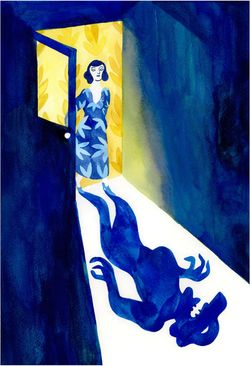
The Taliban’s Psychiatrist

Tahir Qadiry in BBC News Magazine:

Bbc“The reason they gave me for the turmoil in their minds was the uncertainty in their lives. They had no control over what was happening to them. Everything was in the hands of their commanders. They got depressed because they never knew what would happen from one minute to the next.

“Most of them hadn't seen their families for months – they hadn't seen their children who had grown big.”

Alemi found many of the soldiers wanted to die. “They told me they [wanted] to commit suicide, but couldn't because of Islamic values.”

One said: “Every time I go to the frontline, I wish someone would shoot me and bring an end to my life. But I still survive and hate this sort of living.”

“I used to treat the Taliban as human beings, same as I would treat my other patients… even though I knew they had caused all the problems in our society,” says Alemi. “Sometimes, they would weep and I would comfort them.”

One of the main problems was that Alemi's patients were often sent off on missions and could never commit to follow-up sessions.

Consultations cost the equivalent of $1 and the Taliban sometimes sent their wives and daughters to Alemi for treatment as well. “They too were suffering depression, because they wouldn't see their husbands, fathers for a long time and they didn't know what the future held for them.”

Read the rest here.

What does it mean to be an Arab atheist?

Samira Shackle in New Humanist:

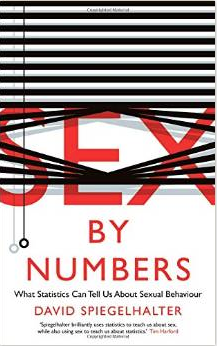
In Arab countries, openly declaring a disbelief in God is a shocking and sometimes dangerous thing to do. In his new book, “Arabs Without God”, journalist Brian Whitaker looks at the factors that lead people in this part of the world to abandon religion, and how societies dominated by faith deal with them. The book is available here. There is a Kickstarter campaign to translate the book into Arabic, which you can donate to here.

Is Arab atheism growing, and if so, why?

ArabsArab atheists have become much more visible as a result of social media. There are numerous Facebook groups – some public, some private – and others make videos of discussions which they post on YouTube. Mainstream Arab media talk more about atheism too, though it is usually presented as a social problem needing government attention, along with drug-taking and homosexuality. Atheists also seem to be growing in numbers. This may seem odd when organisations like al-Qaeda and ISIS attract so much attention, when there has been a huge growth in religiosity over the last few decades and Arab governments have been fostering sectarianism for their own political purposes, but the “new” Arab atheism found among the younger generation is partly a response to that, and also to the reactionary views of many Muslim clerics, especially in Saudi Arabia.

Another factor is that popular uprisings against dictatorship have emboldened people and made them question things more. Questioning the political system leads some to question religion too – because politics and religion in the Middle East are so closely entwined. At the same time, of course, there are many who think the solution is to have more religion, not less, and atheist activity on the internet is still tiny compared with the vast amount of religious material posted in Arabic.

More here.

Sunday Poem

Poem Ending With a Sentence by Heath Ledger
.

Each grinding flattened American vowel smashed to

centerlessness, his glee that whatever long ago mutilated his

mouth, he has mastered to mutilate

you: the Joker's voice, so unlike
the bruised, withheld, wounded voice of Ennis Del Mar.

Once I have the voice

that's
the line

and at

the end
of the line

is a hook

and attached
to that

is the soul.

by Frank Bidart
from Metaphysical Dog
Farrar, Straus & Giroux, LLC

Saturday, November 29, 2014

An Indian Original

16206.aatish-taseer1

S Prasannarajan in Open the Magazine (Photos: Raul Irani):

The word for history in Sanskrit is itihasa, the way things were. When, half way through Aatish Taseer’s new novel, Toby, Sanskrit scholar and classicist, gives us a little grammatic- al explanation of the word, it sounds as if the reader is being reminded of the historical as well as the civilisational backdrop against which the existential drama of the characters is being played out. Sanskrit—let’s ignore Smriti Irani for a while—here is language as ancestral intimacy, bonding and a memory of time, and in a novel that so effortlessly passes through the crooked alleys of Indian politics, it bridges the cracked present and the abandoned past. It is not that such authorial intervention is needed to sense the Indian ideal on which this novel, itihasa indeed in its structural expansiveness, is built. You may have to go back to his last two novels to realise how deep is Taseer’s entrapment in the idea of being Indian. In The Temple-Goers, this is what a writer who could have been Naipaul (and such a writer appears in The Way Things Were too) says about India: ‘In fact, it could be said that there is almost no other country, certainly not one so vast, where the countrymen are as acquainted with the distant reaches of the land through their pilgrimages as they are in India; perhaps no country where poor people travel more. They think nothing of jumping on a bus or train, for two or three days, to journey to Tirupathi in the south or Jagannath in the east. And this way, the religion itself is like a form of patriotism.’ The narrator of The Temple-Goers, daringly called Aatish Taseer, is in a constant struggle not to be an outsider in such a place caught between the temptations of modernity and the tensions of tradition, though his ways of being an Indian are more sophisti- cated. It is a journey of the classical mind. In his second novel, Noon, stretching from a Delhi where the stirrings of a national transformation are already discernible to a Karachi of morbid moralism, a personal quest becomes an interrupted meditation on cultural as well as political identity. The quest becomes bigger and more ambitious in his new novel; it becomes a passage to the deepest recesses of India of the mind.

It begins with a homecoming, a son’s return to India with his father’s body. It is a time when Modi is the conversation, and certain parts of Delhi, of Sunday brunches and lazy reminiscences, are kind of history- proof. For Skanda, a Sanskrit scholar, this journey is a foray into a world that shaped his own cultural sensibility— a world where, in another time, his parents were the leading protagonists in a drama in which the personal was played out on a political stage, beginning with the Emergency and ending with Ayodhya. What follows in a dual narrative is a family epic set in the upper class drawing rooms of Lutyens’ Delhi that, in its evolutionary spasms, turns into a dramatisation of the idea of India itself—its sophistication and its crassness, its perfections and its pathologies. And it is Sanskrit, an aesthetic shared by father and son, that magnifies the overwhelming sense of being Indian that runs through this novel.

More here.

The Good Zombie

JS1567816

Davia Sills in Aeon (Photo by Corbis):

The original concept of the zombie was drawn from 19th century stories about West Africa and 20th century accounts of Vodou culture in Haiti, where terrifying, drug-fuelled rites could make it seem like the living were dead, only to come back to life. In line with those tales, the earliest filmmakers showed us drugged, obedient automatons, without conscious thought or free will. In White Zombie (1932), the first feature-length zombie movie, the drugged zombie slaves do the bidding of the voodoo master ‘Murder’ Legendre (Bela Lugosi) – reflecting, perhaps, the powerlessness most Americans felt during the Great Depression, which laid people low for years.

It would take more than 30 years for the genre’s master, George A Romero, to serve up a zombie for modern times. In his seminal filmNight of the Living Dead (1968), the classic screen zombie is a walking corpse that, like the 1960s itself, breaks every taboo and is hungry for human flesh. This film also exposes underlying racial tensions in the midst of the US civil rights movement. The main character, Ben, an African American, survives a growing mob of pale, pasty zombies only to get killed by the white police force that should have protected him. That the cops fail to distinguish between Ben and a zombie illustrates the injustice of white authority, the dehumanising treatment of African Americans, and the fact that the zombie would always represent ‘the Other’ – the stranger, the outcast, the dark force in modern film.

More here.

In Transition

Wall-posts_photo-by-_vivekananda-nemana_caravan-magazine_november-2014_1

Mario Da Penha in Caravan (image Chandan Khana / AFP / Gety Images):

ON 15 APRIL, the hijra activist Laxmi Narayan Tripathi walked down the stairs of India’s Supreme Court, overwhelmed by what she had just heard. A division bench of Justices KS Radhakrishnan and AK Sikri had reversed a longstanding policy of actively excluding from public life those outside the male–female gender binary.

Since the colonial era, such individuals had been demeaned as eunuchs, dislodged from positions of political authority, dispossessed of their property and livelihoods, and finally criminalised. The justices sought to neutralise this legacy by recognising the fundamental right of citizens to choose their own gender. They asked the centre and the states to endorse these choices on birth certificates, passports, college application forms, ration cards, in public facilities and restrooms—in short, the range of services that gender our national belonging.

More radically, the judges insisted that elected representatives create plans to incorporate transgender people within India’s mammoth affirmative-action regime. “There is a growing recognition,” the court wrote in its judgement, “that the true measure of development of a nation is not economic growth; it is human dignity.”

Tripathi, who has spent 16 years working for transgender justice, was in tears after hearing the decision. “I felt that no other person of my gender would ever again go through what I have gone through,” she told me. “One of the tallest pillars of democracy in this world had given us back our rights.”

The watershed verdict in National Legal Services Authority vs. Union of India marks a fundamental shift in the country’s established norms for recognising and accommodating marginalised communities in the social and political mainstream. Affirmative action is largely pursued through reservations in educational institutions and in public employment, and these reservations are largely accorded on the basis of varna and jati. Generations of federal and state government programmes—as well as Supreme Court judgements—have confirmed the primacy of caste in the pursuit of affirmative action, even when beneficiaries are not legally Hindu. By recognising that transgender people are discriminated against because of their gender identity, and granting that such discrimination constitutes them as a distinct class, the court has unsettled this consensus. It now seems plausible that factors other than caste or ethnicity could become the basis for successful claims to affirmative action by different kinds of groups.

More here.

R.I.P. Mark Strand, 1934-2014

Joseph Brodsky used to tell this anecdote, repeated in his Nobel lecture. A journalist was interviewing him and Mark Strand and maybe John Ashberry. At some point, the journalist asked something like, “To pose the Adorno question, how can you write poetry after Auschwitz?” [The original Adorno line, taken out of context, isTo write poetry after Auschwitz is barbaric.”] To which, Mark Strand retorted, “How can you eat lunch after Auschwitz?” Over at the New York Review of Books:

My Death (1968)

Sadness, of course, and confusion.
The relatives gathered at the graveside,
talking about the waste, and the weather mounting,
the rain moving in vague pillars offshore.

This is Prince Edward Island.
I came back to my birthplace to announce my death.
I said I would ride full gallop into the sea
and not look back. People were furious.

I told them about attempts I had made in the past,
how I starved in order to be the size of Lucille,
whom I loved, to inhabit the cold space
her body had taken. They were shocked.

I went on about the time
I dove in a perfect arc that filled
with the sunshine of farewell and I fell
head over shoulders into the river’s thigh.

And about the time
I stood naked in the snow, pointing a pistol
between my eyes, and how when I fired my head bloomed
into health. Soon I was alone.

Now I lie in the box
of my making while the weather
builds and the mourners shake their heads as if
to write or to die, I did not have to do either.

TRIESTE BY DAŠA DRNDIĆ

TriesteKristine Rabberman at The Quarterly Conversation:

Jan Morris describes the city of Trieste as “an allegory of limbo,” demonstrated by its shifting political allegiances—first as a part of the Habsburg empire, then later given to Italy, briefly ruled by the Germans during World War Two, and finally given back to Italy in 1954 against the wishes of Yugoslavia. In 1943, when the Germans took over Trieste, they established a police barracks and extermination camp in the former rice mill of San Sabba. Drndić’s documentary evidence of the horrors experienced there shines a light on an often-overlooked part of the Holocaust. And the ability of local families such as the Tedeschis to blend into the majority during periods of crisis presents questions of culpability and identity. What does it mean to be Jewish? How to cope with the human toll of a commitment to national identity? Are children guilty of the sins of their parents? Are any families free from the ghosts of ancestors’ mistakes?

Throughout Trieste, Drndić provides a wealth of historical evidence: trial transcripts, interviews, photographs, music, maps, genealogical charts. This documentary evidence is presented in overwhelming detail. In one 44-page span, Drndić provides a list “of about 9,000 Jews who were deported from Italy, or killed in Italy or in the countries Italy occupied between 1943 and 1945.”

more here.

I Refuse by Per Petterson

W512813Neel Mukherjee at The Guardian:

Petterson’s great theme is time and how we experience it. This has a direct bearing on how narrative positions and unspools itself in relation to the consciousness of time, and on how a writer represents human interiority perceiving it. In one sense, this is the only true problem – or subject, if you will – of the realist novel. As Tommy asks in middle age: “Is time like an empty sack you can stuff any number of things into, does it never go just from here to there, but instead in circles, round and round, so that every single time the wheel has turned, you are back where you started.” Petterson’s signature technique lies in drawing the most zigzag line imaginable through narrative chronology but the effect is not of confusion, rather of a dense, layered complexity: it is the realist novel form’s mimetic faithfulness to life itself.

His prose, which has the quality of northern light, and the stark clarity of its winters, too, is honed to rise to this level of truth-telling. Stream-of-consciousness is a much-misunderstood term but, cleaving close to the characters’ points of view, Petterson’s long ribbons of sentences, held together by a rich, repeated use of “and”, sometimes euphorically defying grammar but always truthful and pitch-perfect, bring fresh meaning to the term and its possibilities.

more here.

The English and Their History

1b58ec88-8e2d-4e24-a9ce-fdf9d6bf546fChristopher Sylvester at the Financial Times:

There have been two massive history books published this year that deserve to be widely read. One is the English translation of The Transformation of the World: A Global History of the Nineteenth Century by the German historian Jürgen Osterhammel. The other is this compelling and intriguing analysis of English history by Robert Tombs, a Cambridge professor who is better known as a specialist in France. Both are vast in scope and full to the brim with scholarship that has been painstakingly absorbed only to be disgorged with an exhilarating mixture of conviction and lightness of touch.

Each of the seven parts of The English and Their History contains narrative chapters followed by a chapter reflecting on how the period in question has been remembered and represented. Tombs embraces transnational comparisons and demonstrates that English history and identity merit examination apart from their British perspective. By drawing on literature and art he seeks “to make memory and its creation an inherent part of the story”. Four “memory themes” predominate: the protracted legacy of the Norman Conquest; the Whig notion of progress arising out of the post-civil war settlement; the sometimes proud, sometimes toxic legacy of empire; and the myth of post-imperial decline. He demonstrates a seamless mastery of political, economic, social and cultural history, and, while even-handed in ideological terms, he offers robust judgments in hearty and often sonorous prose.

more here.

Anjelica Huston: What are men so angry about?

Chrissy Iley in The Telegraph:

Anj2_3118024bThe first time I met Huston, about 15 years ago, she wept into her white wine over her father’s death. John, who died in 1987, cast a long shadow over Anjelica, leading her to seek out other hugely charismatic men like Jack Nicholson. They were a couple for 17 years, and from the outside they seemed impossibly glamorous. They were part of the in crowd, travelling with the Rolling Stones, Andy Warhol, Marlon Brando, Harry Dean Stanton; theirs was life of models, motorbikes, and far flung film locations. But in reality, the relationship was tortuously on/off. When they eventually split for good, in 1989, she again cried in front of me and likened the break-up to a death in the family. She’d wake up and instantly wonder what his breakfast choices would be, and would he jump or dive into his pool? These were his little routines, and she was no longer a part of them.

After that we only spoke about him when I really pushed her. So it was somewhat shocking that the second volume of her memoirs, Watch Me, is in many ways a love letter to Jack. It’s as if in the process of writing the book she is no longer angry or even hurt, but for the first time understands him. “Jack is Jack,” she says with a wise smile. We are curled on to her comfy sofas in her new house in the Pacific Palisades, a suburban chic district of Los Angeles. It has a bohemian feel; beautiful art on the walls, a cat curled on the chair, and her dog – a Mexican hairless – at her side. She shared her previous home with the sculptor Robert Graham, to whom she was married from 1992 until his death in 2008. For a long time afterwards, Huston lived in his giant studio, Graham’s huge black and white charcoals and imposing figures surrounding her like ghosts. Why was she so kind to Jack? Did he read the book? “Yes,” she says enthusiastically. “I think he liked it. I hope he did.”

More here.

New Novellas About Family

Jenny Offil in The New York Times:

BookIt is hard to resist Ludmilla Petrushev­skaya’s darkly comic new collection of ­novellas, “There Once Lived a Mother Who Loved Her Children, Until They Moved Back In.” The suffocating domestic life she renders so vividly begins before you even open the book. The cover itself is cleverly claustrophobic with the title crammed above a drawing of an unhappy family staring at a picked-over roast.

This sense of scarcity and deprivation recurs in all the stories, each of them set in the bleak Soviet-era communal housing blocks, known as kommunalkas, where multiple families, sometimes related, sometimes not, were placed in a single apartment and forced to share kitchen and bathroom quarters. This system was put into place after the Bolshevik Revolution of 1917 and heralded as a way to ­address inequitable living conditions. “We have everything we want; we are very happy,” as a slogan of the time went. But the reality of communal living was often very different from its state-­sponsored ideal. The most meager of possessions were jealously guarded or fought over. It was not unheard-of for light switches to be claimed as “mine” and “yours” by feuding neighbors. The walls were thin too. In the world of the kommunalka, there was little or no privacy, and family members and neighbors could hear the goings-on of everyone around them.

More here.

Saturday Poem

Wolf Between the Trees
.

His wife, his wife,
his daughter, his daughter,
his granddaughter, her brother,
knelt in a circle
in huckleberry woods,
digging with fingers, under pine needles,
a small hole in which to place
smoking sweetgrass, optic moisture,
& by the grandson, his grandfather's ashes,
gray Douglas Woolf, fine at last,
poured from expensive plastic bag
removed from official metal box,
taken from out a brown grocery bag,
his usual appertenance.

.

Fifty steps from here
he wrote accurate prose
in his favourite ramshackle cabin,

juncos rescued from the cat & buried
under bushes, small daughters
didnt know what they were
rehearsing, now

his favourite knitted cap
has a rock in it, thrown
far as can be into the woods

as they call them back in New England
where few people came
to know he was from, gone
back there as well as here, wouldnt
you say?

.

Now the women have a picnic,
sitting close as they can to the wolf in the woods,
huckleberry cider, jack cheese, bean & chile spread,
nothing from Europe, songs from mountain folk,
holed up in dark city, sitting firm
on clear prose, tears in all their eyes,
smiles on their faces, smoke from the sweetgrass,
no airliners in the sky, no
mote in that eye.

Below Nine Mile Creek, in Wallace,
Idaho it is 99 degrees. An old man in a see-through hat
leaned on the wall outside a bar.

I said when does it warm up? He replied
moving nothing but his toothpick,
wait till next winter.

.

Doug will be up there next winter,
no romance, no spooks, meaning
no, he will not be writing a story, that is
over. If you want to visit, use your fingers,
open a book,
dig.
,

by George Bowering
from Blonds on Bikes
Vancouver: Talonbooks, 1997.

Friday, November 28, 2014

The Cretan Paradox

IC_MEIS_ELGRECO_CO_004

Morgan Meis in The Smart Set:

El Greco is confusing. He is one of the few universally acknowledged great artists of history who does not fit into any of the established art movements or categories. Given his time period (late 16th – early 17th centuries), his art should fit into the early Baroque. But it does not. One characteristic of all the artists we now call Baroque is a fidelity to the physical presence of bodies. Think of Caravaggio’s light-splashed naturalism, the glow on the cheeks of the young boy-models that he dressed up in all manner of costumes. Or think of Rubens’ fleshy obsession with the might and heft of the human form, the huge canvases like giant meat towers made of bodies laboring at some common task.

El Greco, by contrast, painted unnatural bodies. They aren’t the sorts of bodies that exist in this, our world. El Greco’s bodies are longer and stretchier than those we encounter in daily life. He portrayed the human form as you might see it in a vision or a mystical trance. He looked at painting, it would seem, in the same way that his contemporary — the great mystic Saint Theresa of Ávila — looked at prayer. They were both seeking spiritual ecstasy.

Except, there is no evidence that El Greco had any interest in spiritual visions or mystical ecstasies. Instead, he read boring tracts of Counter-Reformation theology and studied Renaissance art theory (we still have his library). El Greco was no Baroque painter, but he was no mystic either.

What to do with an artist who slips through every explanation?

More here.

Entwined Fates: A Conversation with Margaret Levi

Levi640

Over at Edge:

The thing that interests me has to do with how we evoke, from people, the ethical commitments that they have, or can be encouraged to have, that make it possible to have better government, that make it possible to produce collective goods, that make it possible to have a better society.

I'm a political scientist, political economist, so I think about this not so much from the perspective of moral reasoning, or philosophy, or psychology for that matter—though all those disciplines come into play in my thinking—but I think about it in terms of the institutional arrangements and contextual arrangements in which people find themselves. It is about those that evoke certain behaviors as opposed to other kinds of behaviors, and certain attitudes as opposed to other kinds of attitudes, that ultimately lead to actions. I'm ultimately interested not just in how the individual's mind works, but how individual minds work together to create an aggregate outcome.

To give you a much more concrete example of that: a recent book that I coauthored with John Ahlquist called, In the Interest of Others, looked at a variety of labor unions, because they are basically mini-governments, in order to understand why it was that some were getting people to act on various social justice commitments and others didn't even ask the question.

The first thing we had to think about was how much of this was self-selection. Had we just picked unions that picked people that then asked them to do what they were already willing to do? The unions that we looked at were three dockworker unions, two in the United States: the On the Waterfront Union on the East Coast, the ILA—the International Longshoremen's Association—and the more left-wing union, the ILWU—International Longshore and Warehouse Union—and a comparable union in Australia to the ILWU. We also looked at the Teamsters.

This gave us a set of organizations that, as it turns out, attracted virtually the same kind of people with the same heterogeneous mix of political attitudes and commitments to larger social justice issues. We started our investigation looking from the 1930s until the 1990s. In the early part of that story the only people who joined unions were those who needed the jobs that the unions represented. In the midst of the depression they weren't about to choose a union simply for political reasons.

More here.

Paris Envy: Frank Gehry’s Vuitton Foundation

14.-The-Fondation-Louis-Vuitton-©-Iwan-Baan

Joseph Giovannini in the LA Review of Books (image The Fondation Louis Vuitton © Iwan Baan):

IN TODAY’S EFFICIENT, RATIONALIST, COST-CONSCIOUS architecture culture, squishy, unquantifiable qualities like enchantment are off the drafting table — exiled, beyond the grid, outside the design equation. But in museum design, ineffable qualities that mystify a museum are probably the single most important factor in signaling that the building brackets an out-of-the-ordinary precinct, one that promises special objects and a special experience inside. Architecture as warm visual bath introduces visitors into an immersive experience that preconditions the way they will see the Kiefers and the Pollocks beyond. Enchantment at the front door heightens anticipation. It opens pores.

There is, of course, the Calvinist alternative: museums as Minimalist white warehouses that offer a more blunt, frontal encounter with works of art that stand alone in cool, uninflected Newtonian space. But Frank Gehry, whose Louis Vuitton Foundation museum and cultural center just opened last month, subscribes instead to what might be called architectural Catholicism. Historically, the architects of cathedrals have always used the powers of a subjective and sometimes sumptuous architecture to condition worshippers to the messages delivered inside. By the time they kneel in a pew, the environment has already persuaded them through their awakened senses to believe.

Even by Gehry’s elevated standards, no contemporary museum anywhere is more enchanting than the Louis Vuitton Foundation, inaugurated two weeks after the opening of a major retrospective of his work at the Pompidou Center. Equipped with as many glass sails as a three-master, all billowing cubistically in contradictory directions, the building lists to starboard while leaning fore, its prow sailing over a stepped cascade of lapping water. The museum seems to glide within the surrounding canopy of trees in the park, its upper sails piercing the tree line.

You are not on LSD. All sail and no boat, it’s a vision, one that provoked a perfectly sober, gainfully employed psychologist seeing the building for the first time to respond: “I nearly wept in awe. Amazed by how soft, alive and enfolding it is.”

More here.

The Loneliest Genius

4801_0c7119e3a6a2209da6a5b90e5b5b75bd

Leonard Mlodinow in Nautilus (illustration by Ralph Steadman):

Describing his life, shortly before his death, Newton put his contributions this way: “I don’t know what I may seem to the world, but, as to myself, I seem to have been only like a boy playing on the sea shore, and diverting myself in now and then finding a smoother pebble or a prettier shell than ordinary, whilst the great ocean of truth lay undiscovered before me.”

One thing Newton never did do, actually, was play at the seashore. In fact, though he profited greatly from occasional interaction with scientists elsewhere in Britain and on the Continent—often by mail—he never left the vicinity of the small triangle connecting his birthplace, Woolsthorpe, his university, Cambridge, and his capital city, London. Nor did he seem to “play” in any sense of the word that most of us use. Newton’s life did not include many friends, or family he felt close to, or even a single lover, for, at least until his later years, getting Newton to socialize was something like convincing cats to gather for a game of Scrabble. Perhaps most telling was a remark by a distant relative, Humphrey Newton, who served as his assistant for five years: he saw Newton laugh only once—when someone asked him why anyone would want to study Euclid.

Newton had a purely disinterested passion for understanding the world, not a drive to improve it to benefit humankind. He achieved much fame in his lifetime, but had no one to share it with. He achieved intellectual triumph, but never love. He received the highest of accolades and honors, but spent much of his time in intellectual quarrel. It would be nice to be able to say that this giant of intellect was an empathetic, agreeable man, but if he had any such tendencies he did a good job suppressing them and coming off as an arrogant misanthrope. He was the kind of man who, if you said it was a gray day, would say, “no, actually the sky is blue.” Even more annoying, he was the kind who could prove it. Physicist Richard Feynman voiced the feelings of many a self-absorbed scientist when he wrote a book titled, What Do You Care What Other People Think? Newton never wrote a memoir, but if he had, he probably would have called it I Hope I Really Pissed You Off, or maybe, Don’t Bother Me, You Ass.

Today we all reason like Newtonians. We speak of the force of a person’s character, and the acceleration of the spread of a disease. We talk of physical and even mental inertia, and the momentum of a sports team. To think in such terms would have been unheard of before Newton; not to think in such terms is unheard of today. Even those who know nothing of Newton’s laws have had their psyches steeped in his ideas. And so to study the work of Newton is to study our own roots.

More here.