
by Brooks Riley
Category: Recommended Reading
Sunday, August 9, 2015
Werner Herzog Narrates the Touching, Existential Journey of a Plastic Bag
Via Open Culture:
Edwidge Danticat on Mass Deportation of Haitian Families
A transcript of Amy Goodman and Juan González's interview with Edwidge Dandicat, over at truth-out:
AMY GOODMAN: Talk about the significance of what’s happening right now in the Dominican Republic, the other half of the island, Hispaniola, from where you were born, in Haiti.
EDWIDGE DANTICAT: Well, I think this—we’ve often had deportations from the Dominican Republic to Haiti, but this is the first time that they will be done with a law behind them that actually, since the law—this constitutional court decided to strip citizenship from that large number of people, has really made life much harder for Dominicans of Haitian descent, but also migrants who are on the island. So, this law not only now gives the Dominican government the power to deport mass amounts of people, but also creates an environment, a civil environment, that’s really hard for people, because, you know, others might feel now that we’ve had an increase of violence against Haitians and Dominicans of Haitian descent, because it seems like a state-sponsored open season on people who are not only—who are considered Haitians by the way they look, primarily, or by their Haitian-sounding name.
JUAN GONZÁLEZ: And most people here in the United States are not aware of this long, troubled history between the Dominican Republic and Haiti, occupying the same island. There are ultranationalists and conservatives among the Dominican Republic who still—who talk about, hearken back to what they claim was the Haitian occupation of their country, and they see a line running through historically on this issue. Could you fill us in on some of that history that’s led to what we are facing today?
EDWIDGE DANTICAT: Well, Hispaniola is shared by—the island—by Haiti and the Dominican Republic. And we share a history of colonialism and occupations, and at some point it was split between the French and the Spanish. And after the Haitian independence, there was a shift, where Haiti—and there was a—the whole island was under one rule, post-independence. And then, Dominican Republic, in 1822, there was a separation. But there are all these historical scars, where, you know, we, on the Haitian side, remember the massacre of Haitian cane workers in 1937. And then these things are brought up. But there’s also, for Americans, a common occupation of both Haiti and the Dominican Republic at the turn of the century, and both sides of the island have been marred, really, by the corporate—this other kind of occupation of the sugar industry that goes back to the beginning of the 20th century.
More here.
Strunk and White’s Macho Grammar Club
Mark Dery in The Daily Beast:
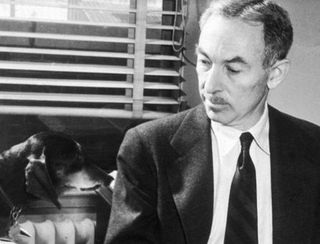
Can it really be coincidence that, smack on the first page, in a note about exceptions to one of his Elementary Rules Of Usage (“Form the possessive singular of nouns by adding ‘s…, whatever the final consonant”), Strunk gives as an example, “Moses’ laws”? The Elements of Style, more than another book, has set in stone American ideas about proper usage and, more profoundly, good style. Professor Strunk wrote his little tract as a stout defense of “the rules of usage and principles of composition most commonly violated,” the red-flag word in that sentence being “violated.”
Usage absolutists are the Scalia-esque Originalists of the language-maven set. Their emphasis on “timeless” grammatical truths, in opposition to most linguists’ view of language as a living, changing thing, is at heart conservative; their fulminations about the grammatical violations perpetrated by the masses mask deeper anxieties about moral relativism and social turbulence.
More here.
What drives our urge to explore?
Veronique Greenwood in Aeon:
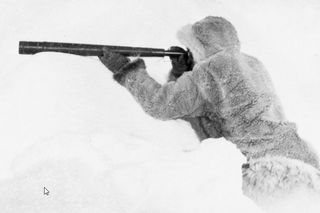
There is land out here after all; flat, low land, its highest point only 28 feet above the waves. This fragment of coral shelf is the northernmost of the British Virgin Islands, the last before the open ocean, and it has a completely different character from its gaggle of southern sisters. While they are steep green mountains rising from the sea, this place is so low that its Spanish name, Anegada, means ‘covered in water’ or ‘shipwrecked’. The other islands tend to be home to thousands of people and are serviced by commercial flights and ferries. Anegada has a boat every two days or so, and a scant few hundred inhabitants, most of them in the lone settlement called The Settlement.
Looking around at the other people on the ferry, it seems that some might be headed to jobs on the island, in its scattering of restaurants and businesses. A few are tourists come to stay in the handful of basic guesthouses and eat the sweet lobster that is a local speciality. My husband and I came out here because it was the edge of the map. He suggested it after seeing it way out on the rim of things, and I, not totally sure why we were going, made the plans.
More here.
A Ghalib Ghazal sung by Iqbal Bano – Muddat Hui Hai Yaar Ko
Artificial Intelligence Is Already Weirdly Inhuman
David Berreby in Nautilus:
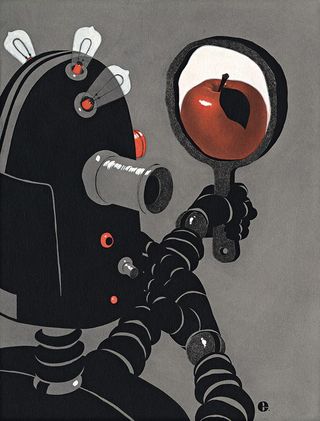
Neural nets sometimes make mistakes, which people can understand. (Yes, those desks look quite real; it’s hard for me, too, to see they are a reflection.) But some hard problems make neural nets respond in ways that aren’t understandable. Neural nets execute algorithms—a set of instructions for completing a task. Algorithms, of course, are written by human beings. Yet neural nets sometimes come out with answers that are downright weird: not right, but also not wrong in a way that people can grasp. Instead, the answers sound like something an extraterrestrial might come up with.
More here.
The republican Party Created Donald Trump
Molly Ball in The Atlantic:

As the linchpin of a GOP counter-establishment of Tea Party-oriented media and PACs, Erickson may be the most powerful conservative in America. A knowledgeable source confirmed to me last week’s report that he will soon announce his departure from RedState—Erickson’s heart is in his work as a radio host, and he will continue to write commentaries on his personal website. Trump was one of 10 presidential candidates who had accepted the invitation to speak at this year’s RedState Gathering, including Jeb Bush, Scott Walker, Marco Rubio,Ted Cruz, Mike Huckabee, Chris Christie, Bobby Jindal, Rick Perry, and Carly Fiorina.
More here.
Breathtaking Space GIF Gives Earth a New Perspective of the Moon
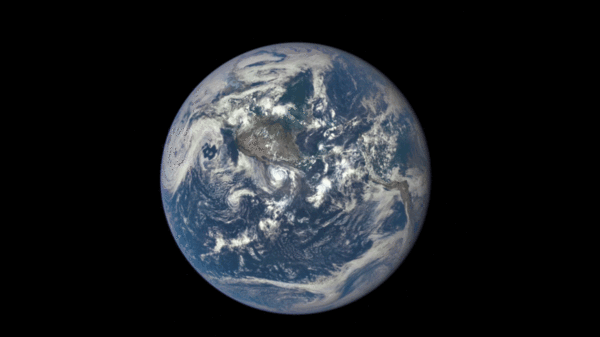
More here.
Syria Burning: Isis and the Death of the Arab Spring
Anthony Sattin in The Guardian:
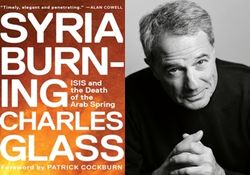
One of the problems of writing about the current situation in the Middle East, as Glass, a veteran journalist, knows only too well, is that today’s certainties are tomorrow’s laughable speculations. Iran may still refer to the US as the “Great Satan”, but the two states now share some strategic interests. Although the US used to insist that Syrian president Bashar al-Assad must step down, it is now considering the very real possibility that he could survive the war and, like America’s lamentable “red line” of chemical weapons, what was unthinkable recently could soon be the acceptable status quo. But if news moves fast, assessments have not, which is one reason why we should all read Syria Burning.
More here.
Keith Richards Explains Why Sgt. Pepper Was Rubbish
From Esquire:
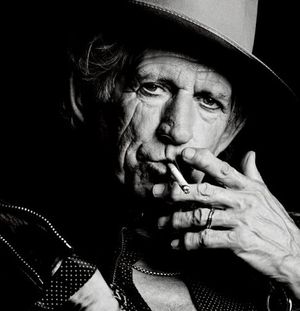
Be my guest. If you're gonna smoke anything else, we'll bring in the incense.
I brought a miniature joint, but I'm not thrusting it upon you. I just thought it would be wrong to meet you and not bring a little something.
Well, then, let's get into this thing and see. We might want to take a break.
I don't want to put you in any kind of position.
Absolutely not. I've been in every position possible, and I've always gotten out of it.
How are you holding up on the [Stones] tour?
I can handle the show. In the '60s, it was 20 minutes, in and out. Now it's two hours. I don't come off as exhausted as I used to ten years ago, because I've learned more about how to pace a show. I don't think about the physical aspects—I just expect it all to work. I'm blessed physically with stamina. The frame's still holding. I eat the same as I always have. Meat and potatoes, basically, with a nice bit of fish now and again. My wife tries to force more salad down me, but I'd rather take the pill.
More here.
Sunday Poem
The Association of Man and Woman
.Whatever badness there was,
sometimes
was not of us
but between us.Because there was goodness,
which felt like a sure base.
While badness felt only
like incidents upon it.The badness was only
the way you and I needed to behave,sometimes.
Not what we were.The badness was only
the small,
transient,
insignificant
pain,
like the tiny, instant
pain
from the prick of a rose’s thorn,
taking joy,
for a second,
away from the fragrance of the rose.by Peggy Freydberg
from Poems from a Pond
published by Hybrid Nation
.
Saturday, August 8, 2015
The false dichotomy of nature-nurture, with notes on feminism, transgenderism, and the construction of races
Massimo Pigliucci in Scientia Salon:
The occasion is provided by recent controversies concerning the delicate concepts of gender and race, where once again — as in both the cases of trigger warnings and of Islamophobia — I see well intentioned progressives needlessly (in my mind) and harshly attacking fellow progressives, or at the least, people who ought to be their natural political allies. (As in the other two cases, I will ignore contributions from the right and from libertarians, on the ground that I find them both less constructive and less surprising than those from the sources I will be discussing here.)
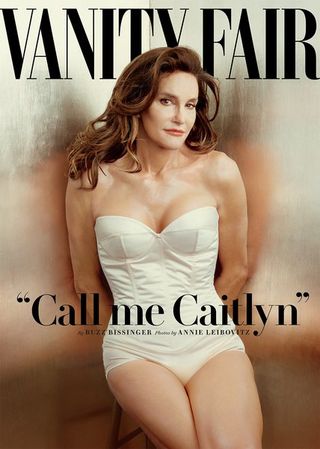
Let me start with gender. I read with fascination a New York Times op-ed piece by feminist Elinor Burkett entitled “What makes a woman?” [5] explaining why a number of feminists have issues with certain aspects of the transgender movement, and in particular why Burkett had mixed feelings about the very public coming out of Caitlyn Jenner [6].
More here.
What the nose knows
Emma Young in Mosaic:

Nick, who’s 34, can pinpoint the moment he lost his sense of smell. It was 9 January 2014. He was playing ice hockey with friends on the frozen pond at his parents’ place in Collegeville, Pennsylvania. “I’ve done it millions of times,” he says. “I was skating backwards, slowly, and I hit a rut on the ice. My feet went out from under me. I hit the back right side of my head. I was out.
More here.
In the wilderness about charlie hebdo
Kenan Malik in Padaemonium:
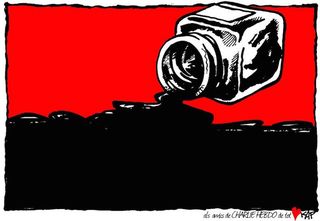
The problem with the free speech debate, Mondal suggested, is that it has become polarized between those who are for and against free speech when in fact the debate about freedom is much more difficult. Freedom, he suggested, is ‘not a straightforward issue’; One cannot simply be ‘for or against freedom’. Nor can one see freedom merely as an ‘absence of restrictions’. It is also about the ‘assumption of responsibilities’.
I wonder if Mondal would have made the same argument 200 years ago during the debate about the abolition of slavery? ‘Freedom is not a straightforward issue. One cannot simply be for or against the abolition of slavery. We have to be more nuanced in the way we look upon the issue. We cannot simply see it as a matter of an absence of restrictions. Those being offered freedom have to accept their responsibilities too.’
More here.
Christopher Walken Dance Now
Christopher Walken Dance Now from Smash TV on Vimeo.
THE LAST DAYS OF THE POLYMATH
Edward Carr in More Intelligent Life:

[Casanova] excelled in mathematics no less than in philosophy. He was a competent theologian, preaching his first sermon in a Venetian church when he was not yet 16 years old. As a violinist, he earned his daily bread for a whole year in the San Samuele theatre. When he was 18 he became doctor of laws at the University of Padua—though down to the present day the Casanovists are still disputing whether the degree was genuine or spurious…He was well informed in chemistry, medicine, history, philosophy, literature, and, above all, in the more lucrative (because perplexing) sciences of astrology and alchemy…As universal dilettante, indeed, he was perfect, knowing an incredible amount of all the arts and all the sciences; but he lacked one thing, and this lack made it impossible for him to become truly productive. He lacked will, resolution, patience.
Mindful of that sort of promiscuity, I asked my colleagues to suggest living polymaths of the polygamous sort—doers, not dabblers. One test I imposed was breadth. A scientist who composes operas and writes novels is more of a polymath than a novelist who can turn out a play or a painter who can sculpt. For Djerassi, influence is essential too. “It means that your polymath activities have passed a certain quality control that is exerted within each field by the competition. If they accept you at their level, then I think you have reached that state rather than just dabbling.” They mentioned a score of names—Djerassi was prominent among them. Others included Jared Diamond, Noam Chomsky, Umberto Eco, Brian Eno, Michael Frayn and Oliver Sacks.
More here.
Walker Percy’s Theory of Hurricanes
Walter Isaacson in The New York Times:
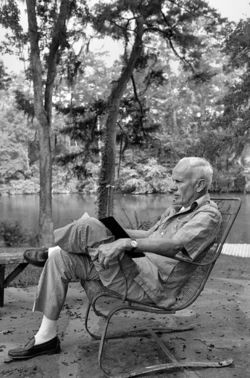
…Percy’s diagnosis was that when we are mired in the everydayness of ordinary life, we are susceptible to what he called “the malaise,” a free-floating despair associated with the feeling that you’re not a part of the world or connected to the people in it. You are alienated, detached. As Percy put it in “The Moviegoer,” “The malaise has settled like a fallout and what people really fear is not that the bomb will fall but that the bomb will not fall.” The heroes of his books, each in his own way, embark on a search for the cause and cure of this syndrome. “What is the nature of the search?” wonders Binx Bolling, the narrator of “The Moviegoer.” “The search is what anyone would undertake if he were not sunk in the everydayness of his own life.” A real-world crisis can provide a respite from the malaise.
More here.
Saturday Poem
The Final Change
.
Being blind,
the fundamental thing my sister could not tolerate,
was change.
If her panic-fluttering fingers,
groping ahead in apprehensive search
for the familiar,
touched something alien,
she would halt,freeze, and then begin to whimper softly,
in heaven knows what depth of terror.
The years went by.
Her innocent, heroic heart gave out at last.
She died.
And I grew old.
In the course of time,
one night in sudden darkness of a blackout,
I lived my sister's panic
while groping for the light switch on the wall
I knew was there but could not find.
And, with the loss of some essential faith
in what is naturally due me,
like the permanence of my breathing,
all at once my blind eyes saw my death,
as fear-ful as the thousand deaths my sister died
each time she touched the empty dark.
.
by Peggy Freydberg
from Poems from a Pond
published by Hybrid Nation
Friday, August 7, 2015
The continuing relevance of “On the Beach”
Beverly Gray in Bulletin of the Atomic Scientists:
“It frightened the hell out of me. I’m still frightened.”
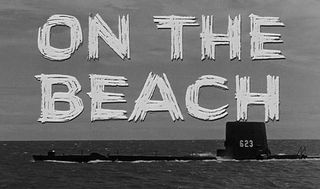
The story’s effect on Caldicott, then a 19-year-old Melbourne medical student who’d just learned about genetics and radiation, was profound. She went on to become both a pediatrician and a feisty anti-nuclear activist, an inspiration to others in the non-proliferation community and in the nuclear humanitarian initiative. She is renowned for warning, “It could happen tonight by accident,” and with the onset of nuclear winter, “We’ll all freeze to death in the dark.”
But what about the book itself and the 1959 movie made from it?
More here.