New poems by Terrance Hayes and Deborah Landau

150511_r26489-320Dan Chiasson at The New Yorker:

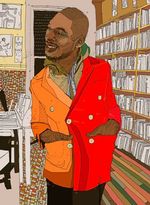
Hayes is forty-three and lives in Pittsburgh, where he is a professor of English at Carnegie Mellon. In 2010, his volume “Lighthead” won a National Book Award, and last year he received a MacArthur “genius” grant. He played basketball for Coker College, in South Carolina, where he was an Academic All-American, but he has the bounding imagination of someone fortified and defended, for years, by shyness. If you judge a poem by how big a chunk of reality it smuggles into language before returning it, transformed, you will have a hard time beating this catalogue from “Wigphrastic”:

Nonslip polyurethane patches, superfine lace,

Isis wigs, Cleopatra wigs, Big Booty Judy wigs

under the soft radar-streaked music of Klymaxx

singing, “The men all pause when I walked into the room.”

An ekphrastic poem is one that describes a work of art; “Wigphrastic” describes Ellen Gallagher’s “DeLuxe,” a portfolio of sixty works on paper that depict, among other things, vintage ads for hair straighteners and skin whiteners.

more here.

Friday Poem

Canto 28 of the Inferno

I saw it, I’m sure, and I seem to see it still:
A body with no head that moved along,
moving no differently from all the rest;

he held his severed head up by it hair,
swinging it in one hand just like a lantern,
and as it looked at us it said: ‘Alas!’

Of his own self he made himself a light
and they were two in one and one in two.
How could this be? He who ordained it knows.
.

by Dante Alligieri
from The Inferno
translated by Mark Musa, 1971

Mosque Installed at Venice Biennale Tests City’s Tolerance

Randy Kennedy in The New York Times:

VeniceVENICE — The 18th-century novelist William Beckford wrote that he couldn’t help thinking of this city’s most beloved sight, St. Mark’s Basilica, as a mosque, with its “pinnacles and semicircular arches” all “so oriental in appearance.” But despite the profound stamp that Islamic culture has left on Venice’s art and architecture over centuries, it remains one of the few prominent European cities without a mosque near its historic center, leaving Islamic residents who work there to pray in storerooms and shops amid the tourist crush. For the next seven months, however, Venice will find itself in the middle of the roiling debate about Islam’s place in Europe. On Friday, as part of the Venice Biennale, a former Catholic church in the Cannaregio neighborhood will open its doors as a functioning mosque, its Baroque walls adorned with Arabic script, its floor covered with a prayer rug angled toward Mecca and its crucifix mosaics hidden behind a towering mihrab, or prayer niche.

The transformation is the work of a Swiss-Icelandic artist, Christoph Büchel, who has become known for politically barbed provocations. But the mosque, which will serve as Iceland’s national pavilion during the Biennale, is a cultural symbol and a kind of ready-made sculpture conceived with the active involvement of leaders of the area’s Islamic population, which has been growing for many years. Against a backdrop of rising Islamophobia in Italy and fears, like those at full throttle in France, of terrorism committed in the name of Islam, Muslim leaders in Venice said they saw the proposal to create a temporary mosque in the international spotlight of the Biennale as a perfect way to communicate their desire to more fully participate in the life of their city. “Sometimes you need to show yourself, to show that you are peaceful and that you want people to see your culture,” said Mohamed Amin Al Ahdab, president of the Islamic Community of Venice, which represents Muslims of about 30 nationalities living in greater Venice.

More here.

Thursday, May 7, 2015

on police

Ph-ph-ag-baltimore-200-assist-jpg-20150505Mark Greif at n+1:

A SURPRISE OF BEING AROUND POLICE is how much they touch you. They touch you without consent and in both seemingly friendly and unfriendly ways. The friendly touch is the first surprise. A policeman allowing protesters to cross the street touches you on the arm or back as you cross. Face to face, police will put a hand on your shoulder, from the front, intimate as a dog putting his paw up. It is unnerving. Women say male police know very well how to touch, even in public sight, in ways that are professional and neutral, and also in ways that are humiliating and sexual, with no demonstrable distinction dividing the two. The police know, and you know. Like a reversal of electric polarity from protective to hostile, this conversion of mood does not only follow the policeman’s individual initiative. It traces something like an atmospheric charge among police in groups, their silent experience of a phenomenon, their habitual tactics in response.

In confrontations on a curb (when you stay on your sidewalk, because the public street is forbidden except to police), they may press lightly on your collarbone, “holding you back,” just measuring out the distance with their arms. You can even be held up in this way, if you relax.

more here.

DOES GROUNDHOG DAY HOLD THE KEY TO EXISTENCE?

Groundhog-day-drivingMichael Schulman at The Believer:

In April 2013, Robert Black, a grad student at California State University, moved into a small apartment in South Pasadena. He and his wife of ten years had decided to split up, and he found himself spending much of that summer alone. He missed his kids: Hayley, Kieran, and Saer. “I needed something structured and regular in my life,” he recalled. On August 2, Black wrote a blog post entitled “On me in 3… 2… 1…” It was a line from the 1993 film Groundhog Day, which he had vowed to watch every day for a year.

The movie, if you’ve managed to miss it, follows a Pittsburgh weatherman named Phil Connors, played with impeccable sourness by Bill Murray. While reporting on the Groundhog Day festivities in Punxsutawney, Pennsylvania, Phil gets trapped in a mysterious time loop that forces him to relive the same day over and over again. By the end of the film, he has learned to embrace humanity and the charm of small-town life, and has won the affection of his producer, Rita (Andie MacDowell).

“Phil Connors,” Black wrote his first post, “is not only a great central character for a good comedy like this—not that there are many comedies like this—but he works as an everyman and he goes through all the emotions we all do every day of our lives. There is time in the film (not to mention the many parts of his journey we don’t see on screen) for joy, for sadness, for arrogance and humility, silliness and seriousness, flippancy and philosophy.”

more here.

Knights, Corsairs, Jesuits and Spies in the Sixteenth-Century Mediterranean World

UrlFelipe Fernández-Armesto at Literary Review:

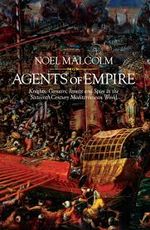
On the 'Golfing for Cats' principle, Noel Malcolm's publishers thought, presumably, that knights, corsairs, Jesuits and spies were saleable, whereas the real subject of Malcolm's new book, which might be expressed as 'A Reconstruction of the Political Activities of Members of Two Related Albanian Families in the Late Sixteenth-Century Eastern Mediterranean and Balkans', would be poor window-dressing. But good stories, well told, made bestsellers of The Finer Points of Sausage Dogs and A Short History of Tractors in Ukrainian. We can be honest about Agents of Empire without fear of impeding sales.

Malcolm's protagonists are the Bruni and Bruti dynasties, who came from Venice to settle in Ulcinj, a predominantly Albanian-speaking port on the Venetian-dominated fringe of the Adriatic, in what is now Montenegro. They inhabited and traversed a frontier zone, hovering between Ottoman and Venetian empires, Spanish and Italian spheres of influence, Christendom and Islam, Roman and Eastern Churches and Romance, Slavic, Albanian, Greek and Turkish language areas. From a historian's point of view, it was a great place to live – one of those fateful peripheries where states and civilisations rub against each other and generate seismic effects. Malcolm was wise to look to this region for better, more vivid and more revealing insights than one gets from the usual metropolitan skylines. From the dwellers' perspective, however, the homeland of the Bruni and Bruti was dangerous, unstable and racked by war, want, plague and piracy. To Malcolm's indefatigable scholarship it yields stories of triumph and tragedy as compelling as any in fiction.

more here.

Thursday Poem

Diameter
.
.

You love your friend, so you fly across the country to see her.

Your friend is grieving. When you look at her, you see that something’s missing.

You look again. She seems all there: reading glasses, sarcasm, leather pumps.

What did you expect? Ruins? Demeter without arms in the British Museum?

Your friend says she believes there’s more pain than beauty in the world.

When Persephone was taken, Demeter damned the world for half the year.

The other half remained warm and bountiful; the Greeks loved symmetry.

On the plane, the man next to you read a geometry book, the lesson on finding the circumference of a circle.

On circumference: you can calculate the way around if you know the way across.

You try across with your friend. You try around.

I don’t believe in an afterlife, she says. But after K. died, I thought I might go after her.


In case I’m wrong. In case she’s somewhere. Waiting.

.
by Michelle Y. Burke
from Poetry, March 2015

Freddie Gray

O-MARILYN-MOSBY-facebook

Adam Shatz in the LRB:

Gray was killed by a novel method: he was driven while black. Three police officers on bike patrol saw him at 8.30 a.m. on 12 April. It’s not clear why he was a person of interest, other than that he was a young black male. They made eye contact, and he ran, for reasons unknown. The officers arrested him and placed him face down. Unable to breathe, he asked for an inhaler, to no avail. The officers found a sliding knife on him, which is legal to carry, but charged him with possession of a switchblade, which isn’t. He was then shackled, placed in the back of a police wagon and driven without a seatbelt, as required by department regulations. By 8.59 a.m., he had suffered a major injury to his spinal cord. Again, he said that he couldn’t breathe and asked for medical assistance. The police waited another 25 minutes before calling for a medic. Gray died in hospital a week later.

This account of Gray’s killing was presented, in riveting, forensic detail, by Marilyn Mosby, the state’s attorney for Baltimore City, at a press conference on 1 May. Toward the end of her 16-minute speech, Mosby, a 35-year-old African-American woman, did the unthinkable: she charged six police officers with crimes ranging from murder to involuntary manslaughter. She promised justice to Gray’s parents and pleaded for peace so that she could do her work. Her press conference was as swift as it was bold. When someone dies in their custody, the Maryland police are not required to say anything until ten days later, a law that has been widely criticised by local politicians. Mosby beat the police to it, and made plain that it was unacceptable for them to leak details of the investigation. Black Baltimore, expecting an official whitewash, was electrified.

More here.

Scientists discover key driver of human aging

From KurzweilAI:

WernerA study tying the aging process to the deterioration of tightly packaged bundles of cellular DNA could lead to methods of preventing and treating age-related diseases such as cancer, diabetes and Alzheimer’s disease, scientists at the Salk Institute and the Chinese Academy of Science note in a paper published Thursday, April 30 in the journal Science. They found that the genetic mutations underlying Werner syndrome, a disorder that leads to premature aging and death, resulted in the deterioration of bundles of DNA known as heterochromatin. The discovery, made possible through a combination of cutting-edge stem cell and gene-editing technologies, could lead to ways of countering age-related physiological declines by preventing or reversing damage to heterochromatin.

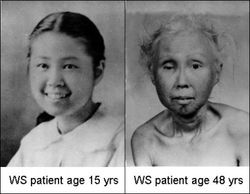
Werner syndrome is a genetic disorder that causes people to age more rapidly than normal. It affects around one in every 200,000 people in the U.S. People with the disorder suffer age-related diseases early in life, including cataracts, type 2 diabetes, hardening of the arteries, osteoporosis and cancer, and most die in their late 40s or early 50s. The disease is caused by a mutation to the Werner syndrome RecQ helicase-like gene (the “WRN gene”), which generates the WRN protein. Previous studies showed that the normal form of the protein is an enzyme that maintains the structure and integrity of a person’s DNA. When the protein is mutated in Werner syndrome it disrupts the replication and repair of DNA and the expression of genes, which was thought to cause premature aging. However, it was unclear exactly how the mutated WRN protein disrupted these critical cellular processes. “Our study connects the dots between Werner syndrome and heterochromatin disorganization, outlining a molecular mechanism by which a genetic mutation leads to a general disruption of cellular processes by disrupting epigenetic regulation,” says Juan Carlos Izpisua Belmonte, a senior author on the paper. “More broadly, it suggests that accumulated alterations in the structure of heterochromatin may be a major underlying cause of cellular aging. This [raises] the question of whether we can reverse these alterations — like remodeling an old house or car — to prevent, or even reverse, age-related declines and diseases.”

More here.

Dorothy Parker: The Softer Side of the Sharpest Wit

Ellen Meister in the Wall Street Journal:

ScreenHunter_1185 May. 07 11.44Here’s a trivia question to try out at a cocktail party: What famous figure of the Jazz Era started her career as a caption writer for Vogue, referencing Shakespeare when she described a skimpy garment with the phrase “Brevity is the soul of lingerie”?

Chances are, many will know it was Dorothy Parker. But here’s something they might not know. The famously acerbic wit, who could shatter an opponent in a single barb, had a soft heart when it came to injustice.

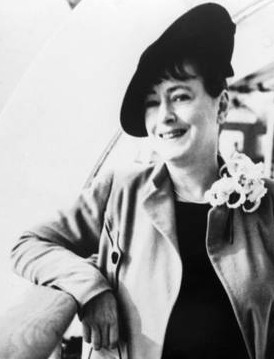
Renowned as a member of the Algonquin Round Table, Dorothy Parker was also known as a theater critic, short story writer, essayist, book reviewer, screenwriter and poet. She is famous for such withering quotes as, “This is not a novel to be tossed aside lightly. It should be thrown with great force,” and “That woman speaks eighteen languages and can’t say ‘No’ in any of them.”

As a theater critic, she wrote, “The House Beautiful is, for me, the play lousy,” and once complained that a performance by Katharine Hepburn “ran the gamut of emotions from A to B.” Parker was also known for the darkness of her poetry, which was often humorous but macabre, with its focus on death and suicide.

But her sharp tongue and dark spirit belied the tender heart that drove her activism, and inspired the surprising contents of her will.

More here.

The Limit Of What Hubble Can See

Ethan Siegel in Starts With A Bang:

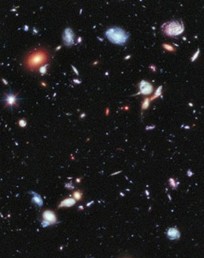
ScreenHunter_1184 May. 07 08.21With all that the Hubble Space Telescope has done — including staring at a blank patch of sky for weeks worth of time — you might think there’s no limit to how far it can see. After all, what appears to be dark, empty space is illuminated by the light from thousands upon thousands of galaxies, leading to the conclusion that there are hundreds of billions of them out there spanning the entire sky.

In fact, some of these galaxies are so faint and distant that Hubble can barelysee them. But what might surprise you is that there are two reasons Hubble’s limited in what you can see, one reason that’s obvious and one reason that’s much more subtle.

    1. Obviously: Hubble “only” has a 2.4 meter diameter mirror, meaning it can only gather as much light — as many photons — as that mirror can collect. Even over 23 days, the longest exposure of a region ever taken, that only enables it to see very bright galaxies at the greatest distances.
    2. Subtlely: the farther out we look in the Universe, the redder any object’s light will appear.

For a little while, this second point is actually a good thing!

You see, when it comes to the youngest, hottest, brightest stars, most of their light isn’t what humans perceive as visible: it’s actually ultraviolet. And as the Universe expands, with galaxies getting farther apart, the fabric of space expands along with it.

This means that photons, the individual quanta of light that exist in this spacetime — emitted from distant stars and galaxies en route to our eyes — get redshifted as well, their wavelengths stretched by the expansion of the Universe itself.

More here.

An Embarrassment at PEN

Omar Ali in Brown Pundits:

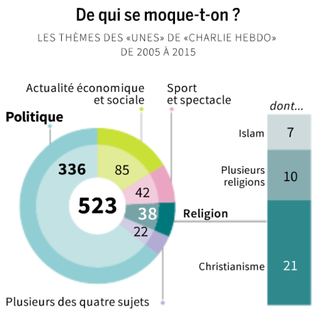
4583041_6_eeda_2015-02-25-cb61cd5-28881-1d2lvho_42bf8c0b69602866d5b18ec4dd51fdcbPEN American Center decided to honor the French satirical weekly Charlie Hebdo with an award for the magazine's courage in standing up for free speech. This is an award for courage in the face of censorship; a free speech award. It was meant to recognize the fact that CH was repeatedly threatened by groups of extremist Muslims who insisted that their particular theological rules must be respected by everyone and no one is allowed to cross their red lines. Even with their lives under threat (and the threats were always serious, not taken as a joke even before they were carried out) CH insisted on their right to satirize and comment on every subject, including the subject of Islam. In response their offices were attacked by armed fanatics and several CH staff were killed, as was one Muslim policeman of Algerian ethnic origin. It must be noted that Islam was not an obsession for CH and was not their main target by any means.

Anyway, the magazine insisted that they had the right to write about Islam in the same way as they wrote about other subjects, and they paid a heavy price. Then, with several colleagues lying dead, the magazine refused to back down and published an intelligent and eminently sane issue to show that they were not cowed. Courage is clearly something they do not lack and PEN American Center decided to honor them for this very straightforward exhibition of devotion to the cause of free speech. A cause that used to be a liberal and progressive cause and which is one of the few ways in which modern democratic society really is superior to other civilizations, past and present.

But everyone did not jump on this “free speech” bandwagon. A group of writers (including a few real stars like Michael Ondaatje, Peter Carey and Junot Diaz) announced that they were boycotting the award ceremony because CH is not a fit candidate for this award. Most writers (even most liberals) refused to join the refuseniks, but there was support, especially within the postmarxist Left.

More here.

Wednesday, May 6, 2015

CHURCHES CAN NO LONGER HIDE THE TRUTH: DANIEL DENNETT ON THE NEW TRANSPARENCY

Andrew Aghapour in Religion Dispatches:

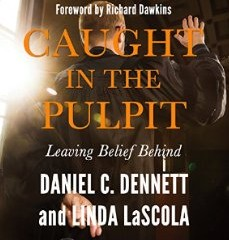
ScreenHunter_1183 May. 06 19.41If Daniel Dennett is anything, he is a champion of the facts. The prominent philosopher of science is an advocate for hard-nosed empiricism, and as a leading New Atheist he calls for naturalistic explanations of religion. Dennett is also the co-author (along with Linda LaScola) of the recently expanded and updated Caught in the Pulpit: Leaving Faith Behind, which documents the stories of preachers and rabbis who themselves came to see…the facts.

Caught in the Pulpit is a close cousin to The Clergy Project, an outreach effort to “current and former religious professionals who no longer hold supernatural beliefs”—many of whom must closet their newfound skepticism to preserve their careers and communities.

For Dennett, closeted atheist clergy are not simply tragic figures, they are harbingers of great things to come. Peppered amongst Caught in the Pulpit’s character vignettes are mini-essays in which Dennett predicts a sea change in religious doctrine and practice. Our digital information age, he argues, is ushering in a “new world of universal transparency” where religious institutions can no longer hide the truth. To survive in an age of transparency, religions will need to come to terms with the facts.

Dennett spoke recently with The Cubit about institutional transparency, the parallels between religious and atheistic fundamentalism, and the future of religion.

You describe non-believing clergy as “canaries in a coal mine.” Why does this group hold such significance for understanding the future of religion?

I think that we are now entering a really disruptive age in the history of human civilization, thanks to the new transparency brought about by social media and the internet. It used to be a lot easier to keep secrets than it is now.

In the March issue of Scientific American, Deb Roy and I compare this to the Cambrian Explosion. The Cambrian Explosion happened 540 million years ago, when there was a sudden, very dramatic explosion of different life forms in response to some new change in the world.

More here.

‘Ordinary Light: A Memoir,’ by Tracy K. Smith

Darryl Pinckney in the New York Times:

ScreenHunter_1182 May. 06 19.31In “The Souls of Black Folk” (1903), W. E. B. Du Bois defined the double consciousness of the African-American, the peculiar sensation “of always looking at one’s self through the eyes of others, of measuring one’s soul by the tape” of an alien world. The African-American ever feels his or her two-ness, “two souls, two thoughts, two unreconciled strivings; two warring ideals in one dark body.” Segregation placed a veil between the black observer and that other world, the white one. Du Bois’s description of the black individual who is yet American remained apt into the era of increased integration, as shown in various autobiographies that began to appear in the 1990s by young black people who had entered the middle class. The experience of an elite school or a profession was understood as a leaving of the black world. Now we are hearing from the children of those black parents who rent the veil. For them, the Huxtable generation, whiteness may no longer be synonymous with what it is to be American or “normal,” but to be black still means knowing how to survive on what Du Bois elsewhere identified as the “island within.”

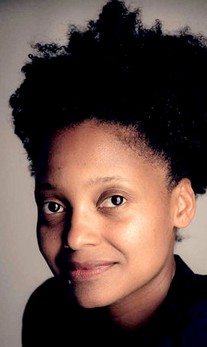
The United States remains a very segregated place. Access to the country’s resources is largely determined by where we live, starting with the schools we attend. After Tracy K. Smith’s father found his way out of the South by enlisting in the military, Smith was raised in the 1970s and ’80s in Fairfield, a Northern California town near Travis Air Force Base, where her father was stationed. The youngest of five children, Smith — who won a Pulitzer Prize in 2012 for her third volume of poetry, “Life on Mars” — grew up like an only child, her siblings already away at college by the time she began to think about her place in the world. In “Ordinary Light,” she offers her painstaking reflections on what went into the making of her, from year to year, grade level to grade level, from the chapters of “Little Visits With God” she used to read with her mother to Seamus Heaney’s great sonnet sequence “Clearances,” which Smith returned to again and again as a student at Harvard: “I heard the hatchet’s differentiated / Accurate cut, the crack, the sigh.”

More here.

The Quantum Fabric of Space-Time

Jennifer Oullette in Quanta:

ScreenHunter_1181 May. 06 19.26Brian Swingle was a graduate student studying the physics of matter at the Massachusetts Institute of Technology when he decided to take a few classes in string theory to round out his education — “because, why not?” he recalled — although he initially paid little heed to the concepts he encountered in those classes. But as he delved deeper, he began to see unexpected similarities between his own work, in which he used so-called tensor networks to predict the properties of exotic materials, and string theory’s approach to black-hole physics and quantum gravity. “I realized there was something profound going on,” he said.

Tensors crop up all over physics — they’re simply mathematical objects that can represent multiple numbers at the same time. For example, a velocity vector is a simple tensor: It captures values for both the speed and the direction of motion. More complicated tensors, linked together into networks, can be used to simplify calculations for complex systems made of many different interacting parts — including the intricate interactions of the vast numbers of subatomic particles that make up matter.

Swingle is one of a growing number of physicists who see the value in adapting tensor networks to cosmology. Among other benefits, it could help resolve an ongoing debate about the nature of space-time itself. According to John Preskill, the Richard P. Feynman professor of theoretical physics at the California Institute of Technology in Pasadena, many physicists have suspected a deep connection between quantum entanglement — the “spooky action at a distance” that so vexed Albert Einstein — and space-time geometry at the smallest scales since the physicist John Wheeler first described the latter as a bubbly, frothy foam six decades ago. “If you probe geometry at scales comparable to the Planck scale” — the shortest possible distance — “it looks less and less like space-time,” said Preskill. “It’s not really geometry anymore. It’s something else, an emergent thing [that arises] from something more fundamental.”

Physicists continue to wrestle with the knotty problem of what this more fundamental picture might be, but they strongly suspect that it is related to quantum information.

More here.

Making Do With More

Delong

J. Bradford Delong in Project Syndicate:

John Maynard Keynes was not off by much when he famously predicted in 1930 that the human race's “economic problem, the struggle for subsistence,” was likely to be “solved, or be at least within sight of solution, within a hundred years.” It will take another generation, perhaps, before robots have completely taken over manufacturing, kitchen work, and construction; and the developing world looks to be 50 years behind. But Keynes would have been spot on had he targeted his essay at his readers' great-great-great-great grandchildren.

And yet there are few signs that working- and middle-class Americans are living any better than they did 35 years ago. Even stranger, productivity growth does not seem to be soaring, as one would expect; in fact, it seems to be decelerating, according to research by John Fernald and Bing Wang, economists in the Economic Research Department of the Federal Reserve Bank of San Francisco. Growth prospects are even worse, as innovation hits gale-force headwinds.

One way to reconcile the changes in the job market with our lived experience and statistics like these is to note that much of what we are producing is very different from what we have made in the past. For most of human experience, the bulk of what we produced could not be easily shared or used without permission. The goods we made were what economists call “rival” and “excludible” commodities.

Being “rival” means that two people cannot use the same product at the same time. Being “excludible” means that the owner of a product can easily prevent others from using it. These two traits put a great deal of bargaining power in the hands of those who control production and distribution, making them ideal for a market economy based on private property. Money naturally flows to where utility and value are being provided – and those flows are easy to track in national accounts.

But much of what we are producing in the information age is neither rival nor excludible – and this changes the entire picture.

More here.

Strange Continuity

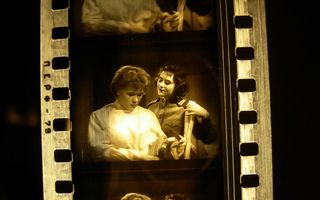
Unknown-Soviet-35mm-Film-008-960x601

Jeffrey M Zacks in Aeon (image Unknown Soviet film courtesy http://dragonflyfilms.blogspot.co.uk):

Suppose you were sitting at home, relaxing on a sofa with your dog, when suddenly your visual image of the dog gave way to that of a steaming bowl of noodles. You might find that odd, no? Now suppose that not just the dog changed, but the sofa too. Suppose everything in your visual field changed instantaneously in front of your eyes.

Imagine further that you were in a crowd and exactly the same thing was happening to everyone around you, at exactly the same time. Wouldn’t that be disturbing? Kafkaesque? In 1895 in Paris, exactly this started happening – first to a few dozen people, then to hundreds and then thousands. Like many fin-de-siècle trends, it jumped quickly from Europe to the United States. By 1903, it was happening to millions of people all over the world. What was going on? An epidemic of an obscure neurological disorder? Poisoning? Witchcraft?

Not quite, though it was definitely something unnatural. Movies are, for the most part, made up of short runs of continuous action, called shots, spliced together with cuts. With a cut, a filmmaker can instantaneously replace most of what is available in your visual field with completely different stuff. This is something that never happened in the 3.5 billion years or so that it took our visual systems to develop. You might think, then, that cutting might cause something of a disturbance when it first appeared. And yet nothing in contemporary reports suggests that it did.

Articles from the time describe the vivid impressions of motion and depth that film produced – you might have heard the story about viewers sitting down to watch the Lumière brothers’ The Arrival of a Train at La Ciotat Station (1895) and running terrified from the theatre. (Incidentally, that story is probably apocryphal, according to a 2004 report by Martin Loiperdinger of Trier University, translated by Bernd Elzer.) Other avant-garde aesthetic techniques of the time excited a furious response: think of the riot in 1913 at the premiere of Igor Stravinsky’s Rite of Spring, or – closer to the phenomenon we’re interested in – the challenge that stream-of-consciousness fiction is still felt to pose to readers.

Yet the first cinemagoers seem to have taken little note of cuts. Something that, on the face of it, ought to seem discontinuous with ordinary experience in the most literal sense possible slipped into the popular imagination quite seamlessly. How could that be?

More here.

Living in Diversity

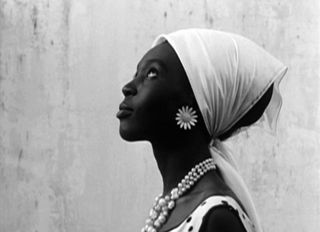
La-noire-de

Kenan Malik in Pandaemonium:

What in today’s France, asks the French writer and film maker Karim Miské, ‘unites the pious Algerian retired worker, the atheist French-Mauritanian director that I am, the Fulani Sufi bank employee from Mantes-la-Jolie, the social worker from Burgundy who has converted to Islam, and the agnostic male nurse who has never set foot in his grandparents’ home in Oujda? What brings us together if not the fact that we live within a society which thinks of us as Muslims?’

‘We are’, Miské observes, ‘reminded every day – during conversations around the coffee machine, in news reports and in magazines – that we share a part of responsibility for such phenomena as the wearing of the burqa and praying in the street… Further, it is potentially our fault if the republican pact is undermined, and if the identity of France is in danger; and, incidentally, if little Afghan girls don’t go to school or if building churches in Saudi Arabia is banned.’

In his 1945 essay Anti-Semite and Jew, Jean Paul Sartre suggested that the authentic Jew was created by the anti-Semite. Miské makes the same point about the authentic Muslim: that it is the way that the outside society treats those of North African origin that creates the idea of the authentic Muslim, and indeed of the Muslim community itself.

But while many in France look upon its citizens of North African origins not as French but as ‘Arab’ or as ‘Muslim’, many in the second generation within North African communities are often as estranged from their parents’ cultures and mores, and from mainstream Islam, as they are from wider French society. The consequence has been to create a more parochial sense of identity and a more tribal vision of Islam. And for a small group of Muslims, tribalism has led them to find their identity and an authentic Islam in Islamism.

Consider, for instance, the Kouachi brothers, responsible for the slaughter at the Charlie Hebdo offices in Paris. They were raised in Gennevilliers, a northern suburb of Paris, home to around 10,000 people of North African origin. The Kouachi brothers were not particularly religious, only rarely attended mosque, but were driven by a sense of social estrangement. They were, as Mohammed Benali president of the local mosque, put it, of a ‘generation that felt excluded and humiliated. They spoke and felt French, but were regarded as Arabic.’

Caught between a society that sees them only as Muslim, and their own alienation from mainstream Islamic organizations, some get drawn to Islamism. We can see the same story in the trajectory of other recent jihadis, from Mohammed Siddique Khan, leader of the 7/7 bombings in London, to Kreshnik Berisha, a German born of Kosovan parents, who went to fight with Islamic State, eventually returned home and become the first German homegrown jihadi to face trial.

What creates such wannabe jihadis is, to begin with at least, neither politics nor religion. It is a search for something a lot less definable: for identity, for meaning, for belongingness, for respect. Insofar as they are alienated, it is not because wannabe jihadis are poorly integrated, in the conventional way we think of integration. Theirs is a much more existential form of alienation.

More here.