Category: Recommended Reading
Tuesday Poem
My Tongue Softens on the Other Name
.
In my mother’s backyard washing snaps
above chillies and wild rosemary.
Kapokbos, cottonwool bush, my tongue softens
on the rosemary’s other name.
Brinjal, red peppers and paw-paw grow
in the narrow channel between
the kitchen and the wall that divides
our house from the Severos. At the edge
of the grass by the bedrooms, a witolyf reaches
ecstatically for the power lines.
In a corner in the lee of the house,
nothing grows.
Sound falls here.
Early in the day shadows wash
over old tiles stacked
against the cement wall.
In the cold and silence
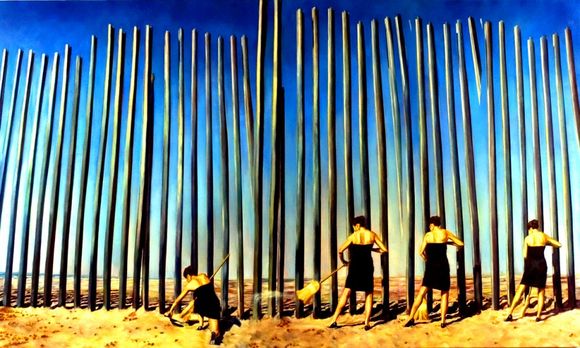
my brother is making a garden.
He clears gravel from the soil
and lays it against the back wall.
Bright spokes of pincushion proteas puncture a rockery.
For hours he scrapes into a large stone a hollow to catch
water from a tap that has dripped all my life.
Around it, botterblom slowly reddens the grey sand.
A fence made of reed filters
the wind between the wall and the house.
Ice-daisies dip their tufted heads
toward its shadows.
At night, on an upturned paint tin, he sits
in the presence of growing things.
Light wells over the rim of the stone basin
and collects itself into the moon.
Everything is finding its place.
.
.
by Gabeba Baderoon
from Illuminations: An International Magazine of Contemporary Writing
Rathasker Press, Charleston
Monday, April 6, 2015
perceptions
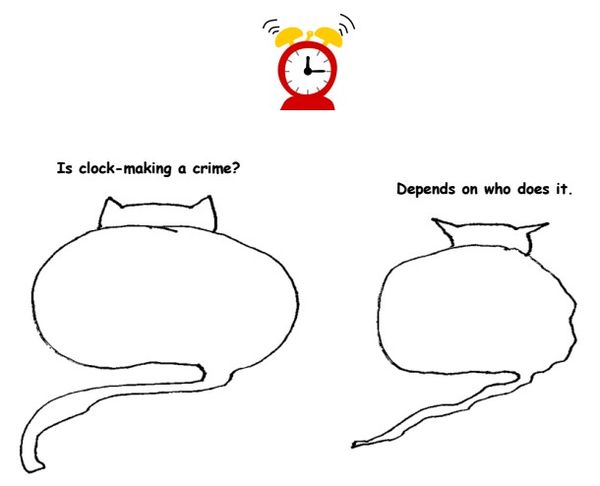
CATSPEAK
by Brooks Riley
Sunday, April 5, 2015
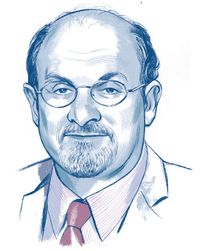
In V.S. Naipaul’s writing on Conrad, we see who he truly is
Morgan Meis in The Smart Set:
In a typical brain-spasm of deep insight, James Wood once wrote that V.S. Naipaul “is a writer who has a conservative vision but radical eyesight.” This, in an essay for The New Yorker a few years ago. The World Is What It Is: The Authorized Biography of V. S. Naipaul by Patrick French had just come out. The literary world was agog. Naipaul, never shy to air controversial opinions or disreputable thoughts, had given his biographer total access to his private life. This created some surprises. One surprise was a revelation about Naipaul’s affair with an Argentinian woman in the early 1970s. Here’s how George Packer described the episode in his review of the biography for The New York Times.
Naipaul and Margaret began an affair that set free all of his desires and fantasies. When his editor and friend Diana Athill scolded him, he replied, “I am having carnal pleasure for the first time in my life, are you saying I must give it up?” Carnal pleasure meant violence — in fact it was inextricable from beating Margaret up, degrading her in bed, turning the great man’s penis into an object of worship. How do we know these things? Because Naipaul tells them to his authorized biographer. “I was very violent with her for two days with my hand; my hand began to hurt. . . . She didn’t mind it at all. She thought of it in terms of my passion for her. Her face was bad. She couldn’t appear really in public. My hand was swollen. I was utterly helpless. I have enormous sympathy for people who do strange things out of passion.”
Reading French’s biography, some praised Naipaul’s honesty. Others felt disgust. It has always been so with Naipaul. He splits opinions, drives a wedge into what might otherwise be polite literary conversations. Nearly everyone who has read Naipaul has strong feelings about him. No side ever fully wins the debate. The Naipaul Question has been a live one for more than forty years.
More here.
The trolley and the psychopath
Sally Adee in The Last Word on Nothing:
Stop me if you’ve heard this one. A trolley carrying five school children is headed for a cliff. You happen to be standing at the switch, and you could save their lives by diverting the trolley to another track. But there he is – an innocent fat man, picking daisies on that second track, oblivious to the rolling thunder (potentially) hurtling his way. Divert the trolley, and you save the kids and kill a person. Do nothing, and you have killed no one but five children are dead. Which is the greater moral good?
This kind of thought experiment is known as a sacrificial dilemma, and it’s useful for teaching college freshmen about moral philosophy. What you maybe shouldn’t do is ask a guy on the street to answer these questions in an fMRI machine, and then use his answers to draw grand conclusions about the neurophysiological correlates of moral reasoning. But that’s exactly what some neuroscientists are doing. The trouble is, their growing body of research is built on a philosophical house of cards: sacrificial dilemmas are turning out to be exactly the opposite of what we thought they were. Guy Kahane wants to divert this trolley before it drives off a cliff.
Kahane, deputy director of Oxford’s Uehiro Centre for Practical Ethics, has never been a big fan of the sacrificial dilemma. The main problem, he says, is that it has been misapplied to situations it was never intended for.
More here.
Physicists engage in a strange debate about whether time really passes
Sean Carroll in Smithsonian Magazine:
When Albert Einstein’s good friend Michele Besso died in 1955, just a few weeks before Einstein’s own death, Einstein wrote a letter to Besso’s family in which he put forward a scientist’s consolation: “This is not important. For us who are convinced physicists, the distinction between past, present, and future is only an illusion, however persistent.”
The idea that time is an illusion is an old one, predating any Times Square ball drop or champagne celebrations. It reaches back to the days of Heraclitus and Parmenides, pre-Socratic thinkers who are staples of introductory philosophy courses. Heraclitus argued that the primary feature of the universe is that it is always changing. Parmenides, foreshadowing Einstein, countered by suggesting that there was no such thing as change. Put into modern language, Parmenides believed the universe is the set of all moments at once. The entire history of the universe simply is.
Today we would call this the “eternalist” or “block universe” view—thinking of space and time together as a single four-dimensional collection of events, rather than a three-dimensional world that evolves over time. Besides Parmenides and Einstein, this picture is shared by the Tralfamadorians, an alien race who appear in Kurt Vonnegut’s novel Slaughterhouse-Five. To a being from Tralfamadore, visiting the past is no harder than walking down the street.
This “timeless” view of the universe goes against our usual thinking. We perceive our lives as unfolding. But it has adherents even in contemporary physics. The laws of nature, as we currently understand them, treat all moments as equally real. No one is picked out as special; the laws simply say how any moment relates to the previous one and to the next.
More here.
What Did Jesus Do? Reading and unreading the Gospels
Adam Gopnik in The New Yorker:
Verhoeven, citing Crossan, offers an opening scene for a Jesus bio-pic which neatly underlines this point. He imagines a man being nailed to a cross, cries of agony, two companion crosses in view, and then we crane out to see two hundred crosses and two hundred victims: we are at the beginning of the story, the mass execution of Jewish rebels in 4 B.C., not the end. This was the Roman death waiting for rebels from the outset, and Jesus knew it. Jesus’ cry of desolation—“My God, my God, why have you forsaken me?”—though primly edited out or explained as an apropos quotation from the Psalms by later evangelists, pierces us even now from the pages of Mark, across all the centuries and Church comforts. The shock and pity of failure still resonates.
One thing, at least, the cry assures: the Jesus faith begins with a failure of faith. His father let him down, and the promise wasn’t kept. “Some who are standing here will not taste death before they see the kingdom of God,” Jesus announced; but none of them did. Jesus, and Paul following him, says unambiguously that whatever is coming is coming soon—that the end is very, very near. It wasn’t, and the whole of what follows is built on an apology for what went wrong. The seemingly modern waiver, “Well, I know he said that, but he didn’t really mean it quite the way it sounded,” is built right into the foundation of the cult. The sublime symbolic turn—or the retreat to metaphor, if you prefer—begins with the first words of the faith. If the Kingdom of God proved elusive, he must have meant that the Kingdom of God was inside, or outside, or above, or yet to come, anything other than what the words seem so plainly to have meant.
The Executioner We Can’t Live Without: special molecules that kill rotten proteins
Pamela Weintraub in Nautilus:
Last summer, as I interviewed Aaron Ciechanover, who won a Nobel Prize in Chemistry in 2004, his country was at war. Three Israeli boys had just been murdered in the West Bank by Palestinians, then a Palestinian boy had been burned to death in retribution by Israelis. While we sat in his lab at the Technion-Israel Institute of Technology in Haifa, to the north of the bombs, missiles were flying over Jerusalem and Tel Aviv, and a Gaza invasion loomed. The mounting conflict troubled but didn’t ruffle Ciechanover, one of Israel’s greatest scientists and statesmen, who patiently and colorfully explained to me one of biology’s most remarkable processes, how a molecular Pac-Man races through our bodies and devours damaged proteins.For over 40 years, Ciechanover has worked to understand these molecular machines, called shredders. Built around a core molecule called ubiquitin, shredders destroy ruined proteins so that our bodies can replace them with fresh parts and not, says Ciechanover, rot like a side of meat, “brownish-greenish and stinking,” in the sun. Ciechanover shared the Nobel Prize with Avram Hershko, his mentor at Technion, and Irwin Rose, a biochemist at the University of California, Irvine. Scientists already understood the genetic code, how genes coded for the creation of proteins. But the shredder helped control the overall process: the degradation of damaged goods, DNA repair, cell division, and immune defense. The shredder enabled biologists to see the wizard behind the screen.
In your Nobel notes, you said that you learned “to become a long books author rather than a short story writer.” What do you mean?
Science is changing, so I don’t blame the current scientists for being short-range thinkers. But I’m a risk taker. I am an adventurist. I was in medicine and I decided that I don’t want to do it. I took a big risk, but I thought that I should go after my gut feeling and after excitement and after what I really want to do. I’m not in science in order to publish. I’m in science in order to be excited by the discovery. In order to do that, you need to be a marathon runner. Mother Nature doesn’t make itself available to us easily. You need to be patient. You need to take a long risk. You need to be in the business for many years. You need to run slowly but fast—slowly in terms of patience, but fast in order to be competitive. It looks contradictory, but it’s not contradictory. And you really want to dig deep into it. You don’t want to scrape the surface and then move to another one and to another one and to another one. People ask me, “OK, so 40 years you work on ubiquitin, what’s next?” I say, “The next 20 years, if I should still survive them, will be devoted to the same very woman.” Because we are still scratching her surface. That’s the beauty of nature. You dig and dig and dig. You’ll never come to an end.
More here.
A General Feeling of Disorder
Oliver Sacks in the New York Review of Books:
Nothing is more crucial to the survival and independence of organisms—be they elephants or protozoa—than the maintenance of a constant internal environment. Claude Bernard, the great French physiologist, said everything on this matter when, in the 1850s, he wrote, “La fixité du milieu intérieur est la condition de la vie libre.” Maintaining such constancy is called homeostasis. The basics of homeostasis are relatively simple but miraculously efficient at the cellular level, where ion pumps in cell membranes allow the chemical interior of cells to remain constant, whatever the vicissitudes of the external environment. More complex monitoring systems are demanded when it comes to ensuring homeostasis in multicellular organisms—animals, and human beings, in particular.
Homeostatic regulation is accomplished by the development of special nerve cells and nerve nets (plexuses) scattered throughout our bodies, as well as by direct chemical means (hormones, etc.). These scattered nerve cells and plexuses become organized into a system or confederation that is largely autonomous in its functioning; hence its name, the autonomic nervous system (ANS). The ANS was only recognized and explored in the early part of the twentieth century, whereas many of the functions of the central nervous system (CNS), especially the brain, had already been mapped in detail in the nineteenth century. This is something of a paradox, for the autonomic nervous system evolved long before the central nervous system.
More here.
Buckley, Kerouac, Sanders and Yablonsky discuss Hippies
not wanted (1949)
sally forrest (1928 – 2015)
Sunday Poem
……………………… —Paul Simon, Graceland
Changing Times
Pot noodle. A mug of Batchelor’s instant soup,
amaze me nearly as much as
microwaves, my new laptop and the
enduring power of Coltrane’s A Love Supreme
and Miles’ Kind of Blue.
It’s not that I have lowered standards
with a too grateful palate
or that much espoused masculine
fascination for new toys and old jazz.
But I am learning to taste my life
without judgement. I think.
.
from Kalakuta Republic
publisher: Saqui, 2000
Saturday, April 4, 2015
To imagine, to hope, to transcend, to transform
Kenan Malik in Pandaemonium:
I gave a talk at the launch at London’s Institut Français of Libraries without Borders, the charity inspired by Patrick Weil that aims to increase global access to books and libraries. Also speaking were Ian McEwan, Lisa Appignanesi, Barbara Band and Patrick Weil himself. Here is a transcript of my talk:
Let me begin with a story not of a library or a book but of a grand piano. The one grand piano in Gaza, that was discovered still intact in a theatre destroyed by an Israeli missile during last year’s war. A piano that has been restored string by string, hammer by hammer, by Claire Bertrand, a young French music technician who travelled to Gaza specially to bring the piano back to life, in a project financed by Daniel Barenboim.
Last week, the piano formed the centerpiece of a concert, in which 15-year old Sara Aqel, the star pupil in Gaza’s only music school, performed Beethoven’s 19th sonata. Why in a land so devastated by war, in which tens of thousands are homeless, in which hospitals can barely function, in which food is often scarce, and which for many feels like a vast prison, should so much fuss be made of one piano?
Because to be human is more than simply to survive, or to seek food and shelter. It is also to imagine, to hope, to dream, to transcend, to transform.
Music in a place like Gaza, in the words of Lukas Pairon, from Music Fund, the charity that helped restore the grand piano, ‘is a form of rebellion against being narrowly defined as living beings who only want the basic things – food, protection, security – who are only in survival mode.’ Or as Sara Aqel put it, ‘Music might not build you a house or give you your loved-ones back. But it gives you joy.’
More here.
Elon Musk: Burning Fossil Fuels Is the ‘Dumbest Experiment in History, By Far’
Jason Koebler in Motherboard:
Elon Musk, founder of Tesla and SpaceX, and chairman of SolarCity, and the guy who dreamt up the hyper loop, says we shouldn't need an environmentally motivated reason to transition to clean energy. We're probably going to run out of oil sometime; why find out if we can destroy the world while we do it, if an alternative exists?
“If we don't find a solution to burning oil for transport, when we then run out of oil, the economy will collapse and society will come to an end,” Musk said this week during a conversation with astrophysicist and Cosmos host Neil deGrasse Tyson.
“If we know we have to get off oil no matter what, we know that is an inescapable outcome, why run this crazy experiment of changing the chemical composition of the atmosphere and oceans by adding enormous amounts of CO2 that have been buried since the Precambrian Era?” he added. “That's crazy. That's the dumbest experiment in history, by far.”
Tyson sounded surprised: “Can you think of a dumber experiment?” he asked Musk.
“I honestly cannot. What good could possibly come of [staying on oil],” Musk said.
Musk, with his supercharger stations, SolarCity (his solar energy company), his electric car company that will soon rely on a “Gigafactory” to create its batteries, has a huge financial stake in the future of clean energy. He stands so much to gain from the clean energy boom in part because he's realized that not only are fossil fuels dirty, they're unnecessary—and of finite supply.
More here.
Saturday Poem
I Saw Myself
.
I saw myself
a ring of bone
in the clear stream
of all of it
and vowed,
always to be open to it
that all of it
might flow through
and then I heard
”ring of bone” where
ring is what a
bell does
.
by Lew Welch
from Ring of Bone, Collected Poems 1950-1971
Grey Fox Press, 1979
A Book In The Darkness
Charles Simic in NYRB blog:
One of the compensations of being an insomniac in a snowbound house full of books is that I can always find something to read and distract myself from whatever mood I’m in. When it gets real bad, I roam the dark house with a flashlight like Hamlet’s father’s ghost, pull books off the shelves, open them at random or thumb the pages until I find something of interest, and after reading it, either go back to bed happy or grope for another book.
…What I need to look at, I told myself another night, is Boethius’ The Consolation of Philosophy, which the respected scholar and statesman wrote while awaiting execution in 524 in Pavia on trumped-up charges. It’s a story of a man, unjustly suffering and bemoaning his fate, having extended conversations with Philosophy, who appears to him as a highborn lady and tells him that wisdom and happiness may be found even in adversity, since it frees us from bondage to transient, earthly things, or something like that. Unfortunately, I couldn’t find the book, so I had to console myself with David Hume, the famously obese eighteenth-century Scottish philosopher of whom his admiring contemporaries said that he cracked every chair he sat in. Leafing through hisOn Human Nature and the Understanding, I found this little parable:
Should a traveler, returning from a far country, bring us an account of men wholly different from any with whom we were ever acquainted, men who were entirely divested of avarice, ambition, or revenge, who knew no pleasure but friendship, generosity, and public spirit, we should immediately, from these circumstances, detect the falsehood and prove him a liar with the same certainty as if he had stuffed his narration with stories of centaurs and dragons, miracles and prodigies.
Hmm, I thought to myself after I read it, this reminds me a bit of those reports of Soviet Union under Stalin penned by some Parisian intellectual or a description by one of our own politicians of American Exceptionalism. As a sedative, however, it wouldn’t do. I’d get so excited thinking about the various ways Hume’s parable could be rewritten to make it more suitable to our present circumstances and I’d be up for a week.
Read the rest here.
REVIVING ANTAL SZERB
Malcolm Forbes at The Quarterly Conversation:
Antal Szerb’s lithe, lively, and wholly endearing fiction is peopled by male dreamers on spiritual journeys of self-discovery. Each one sets out on his respective mini-mission with good intentions but knows from the outset that there are only so many harsh truths he can withstand. In this respect, all Szerb’s protagonists seem to have heeded the advice of Greene’s Dr. Hasselbacher at the beginning of Our Man in Havana: “You should dream more, Mr. Wormold. Reality in our century is not something to be faced.”
Dr. János Bátky, the narrator of Szerb’s first full-length novel, The Pendragon Legend(1934), is a Hungarian academic on sabbatical in Great Britain. When he is invited to the Welsh castle of the Earl of Gwynedd he is dragged into a world of family intrigue, superstition, treachery, and murder. After enough nocturnal escapades and jangled nerves he yearns to beat a retreat to London, “Back to the British Museum, to the impregnable calmness of books.” “You speak like someone who has no ideals,” the enchanting Cynthia tells him. “True,” Bátky replies, “I am a neo-frivolist.” Bátky appears again in a short story from the same year, “A Dog Called Madelon.” His unwillingness to accept humdrum normality is made clear in the first paragraph.
more here.
In defence of Christianity: Despite a tidal wave of prejudice and negativity, faith remains the foundation of our civilisation
Michael Gove in The Spectator:
Praying? What kind of people are you?
Well, the kind of people who built our civilisation, founded our democracies, developed our modern ideas of rights and justice, ended slavery, established universal education and who are, even as I write, in the forefront of the fight against poverty, prejudice and ignorance. In a word, Christians. But to call yourself a Christian in contemporary Britain is to invite pity, condescension or cool dismissal. In a culture that prizes sophistication, non-judgmentalism, irony and detachment, it is to declare yourself intolerant, naive, superstitious and backward. It was almost 150 years ago that Matthew Arnold wrote of the Sea of Faith’s ‘melancholy, long, withdrawing roar’ and in our time that current has been replaced by an incoming tide of negativity towards Christianity. In his wonderful book Unapologetic, the author Francis Spufford describes the welter of prejudice the admission of Christian belief tends to unleash. ‘It means that we believe in a load of bronze-age absurdities. It means that we don’t believe in dinosaurs. It means that we’re dogmatic. That we’re self-righteous. That we fetishise pain and suffering. That we advocate wishy-washy niceness. That we promise the oppressed pie in the sky when they die… That we build absurdly complex intellectual structures, full of meaningless distinctions, on the marshmallow foundations of fantasy… That we destroy the spontaneity and hopefulness of children by implanting a sick mythology in young minds…’
And that’s just for starters. If we’re Roman Catholic we’re accessories to child abuse, if we’re Anglo-Catholics we’re homophobic bigots curiously attached to velvet and lace, if we’re liberal Anglicans we’re pointless hand-wringing conscience–hawkers, and if we’re evangelicals we’re creepy obsessives who are uncomfortable with anyone enjoying anything more louche than a slice of Battenberg.
More here.