
Seva Gunitsky at Persuasion:
 To truly feel the force of America’s cultural attraction you have to be born outside of it. The natives see the cracks up close and learn to take the whole thing for granted. Growing up in the Soviet Union in the 1980s, none of my friends had to be convinced of America’s appeal. Its jeans-clad, Ray-Ban-wearing, moon-dancing cultural exports were the opposite of propaganda. They were the natural overflow of a society so confident in its own desirability that it never had to make a case for itself.
That dominance is what the Civilization video games once called a “cultural victory.” I’m not talking about soft power, a much-abused concept that, in seeking to be policy-relevant, folded in American political values and U.S. foreign policy as part of its definition. The dominance I’m talking about is not built on government-funded exchanges or diplomatic initiatives, but on the organic triumph of a society’s language, art, music, media, consumer brands and, on a deeper level, its norms and aesthetics.
For decades, this was America’s most formidable and least appreciated strategic asset.
More here.
Enjoying the content on 3QD? Help keep us going by donating now.
 I spoke with several people like Marisa — people whose love lives were disordered, even dangerous, until they began identifying as love addicts.
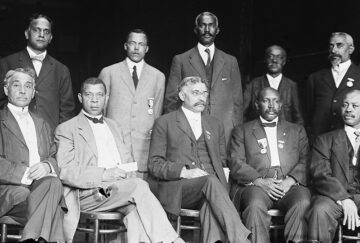 The term “identity politics” was first popularized by the 1977
  “Is this boring?”
  The depiction of ordinary places, and of the changing seasons and skies which shadow or illuminate them, is at the core of Susan Owens’s comprehensive and touching Constable’s Year. Near the beginning she quotes from one of Constable’s letters, proof that everything he saw and painted was based on his native Stour valley in Suffolk, and the intensity of observation developed there in boyhood:
 A parasitic species of ant from Japan is the first ever found to have done away with both males and female workers – instead, every individual is a queen that tries to take over the nests of other species.
 James Robinson is a professor at the University of Chicago and a co-winner of the Nobel Prize in Economics in 2024. Jim has been a friend for many decades and was for some time my colleague in Berkeley. This conversation is in 2 parts. Below you’ll find four questions by me and Jim’s response to them. The second part, consisting of four more questions and his answers, will be posted next week. I should mention here that by ‘institutions’ economists generally mean the social rules, conventions and other elements of the structural framework of socio-economic interaction.
 Having authored a multitude of fiction and nonfiction works, Howard University alumna and professor