
Peter Davidson at Literary Review:
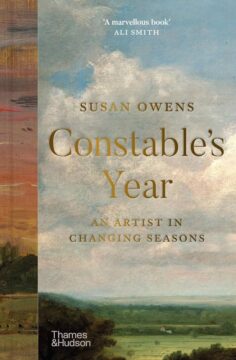 The depiction of ordinary places, and of the changing seasons and skies which shadow or illuminate them, is at the core of Susan Owens’s comprehensive and touching Constable’s Year. Near the beginning she quotes from one of Constable’s letters, proof that everything he saw and painted was based on his native Stour valley in Suffolk, and the intensity of observation developed there in boyhood:
… the sound of water escaping from mill-dams, etc., willows, old rotten planks, slimy posts, and brickwork, I love such things … those scenes made me a painter and I am grateful.
Owens’s book brings alive the degree to which Constable’s apprehension of nature was grounded in his apprenticeship to his father, who was a farmer, miller and barge-owner. Constable had been out in all weathers, watching the skies for signs of rain. He knew the year week by week, the movements of flocks and clouds, the slow ripening of the grain to harvest. When he paints a boy straining to guide a barge under a bridge in Flatford Mill: Scene on a Navigable River, you know that he has set his own feet firmly, and strained his own young shoulders, to fix a pole in the bank of the Stour and heave a great barge forward. Unlike many of his contemporaries, Constable never painted English landscape under generically golden, pseudo-Italian skies.
more here.
Enjoying the content on 3QD? Help keep us going by donating now.