
Category: Recommended Reading
Memory problems? Go climb a tree
From KurzweilAI:

The aim of this study was to see if proprioceptive activities completed over a short period of time can enhance working memory performance, and whether an acute and highly intensive period of exercise would yield working memory gains. The UNF researchers recruited adults ages 18 to 59 and tested their working memory. Next, they undertook proprioceptively dynamic activities, designed by the company Movnat, which required proprioception and at least one other element, such as locomotion or route planning.
More here.
Tuesday, August 4, 2015
the essential horror of the long hallway

After I exhausted the late-night timer recordings on my VCR, I began borrowing obscure titles from older friends. I covered my eyes during The Beyond, a particularly gruesome Italian film set in Louisiana. When the movie ended and I turned off the television, I froze. I realized what scared me the most: that long walk down the silent hallway back to my bedroom. My brothers had moved out. My sister was home from college, but was on the phone in her room. My parents had gone to sleep after trying to convince me that I should do the same. I did what any kid with an overactive imagination would: I sprinted down the hallway, shut my door, and dove into bed.
When I built up enough nerve to actually finish all of the horror movies I rented or borrowed, it became obvious that hallway scenes are an essential element of American and international horror films. Hallways are tight, narrow, walled, made for transit — and yet sometimes our most sensitive moments are out in the hall, doors closed behind us. Hallways are places for tense encounters, confusion, and fear.
Here are eight essential hallways from horror films.
more here.
Behind the Lens of Women’s ‘Nudies’
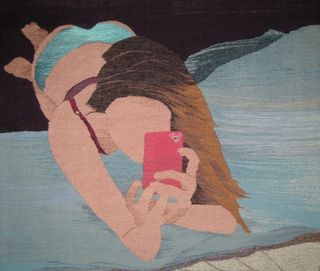
Nishita Jha in The Wire (image ‘Nudes 9’, by Erin M. Riley (2013)):
For a lot of women my age, our first encounter with what ‘young girls were like’ came in 2004, when a now-infamous MMS (multi-media messaging) clip of a 17-year-old Delhi schoolgirl giving her classmate a blowjob went viral. Back then, very few of us owned camera phones, and the internet was a place we visited for only a few hours a day. We had little to no awareness of child pornography, or that ideas like consent applied not just to our bodies, but also to the photographic and video documentation of them.
Despite this, something about the story felt very wrong. A boy had filmed a girl in a private moment, but screen grabs of the clip, with the girl’s face clearly visible, were splashed all over the news. The video was also made available for sale on baazee.com (India’s version of eBay), and everyone across the country seemed to have seen it (disclosure: I haven’t, and I suggest you don’t either).
This was clearly an outright violation of privacy, but the outrage in our homes, schools and newspapers was focussed on the fact that children from ‘good families’ (read: upper class homes) were having oral sex — and worse, they were filming themselves while doing it. Though the act itself was consensual and there were no legal consequences, there were other, unspoken punishments that taught us who was really at fault. The boy, who held the camera but whose face we’d never seen, missed his next cricket match. The girl left school, and eventually, the country.
Several years later, a Hindi film used the MMS ‘scandal’ as a backstory to explain why its female lead grew up to become a sex worker, adding a scene in which her father kills himself after learning his daughter was caught having sex on tape.
This, then, is the lesson we learned: as young girls, our sexual pleasure was always illicit. If caught, we would be shamed and punished for our desires — in ways that boys were not.
More here.
Erdoğan’s Bloody Gambit

Max Zirngast in Jacobin:
On July 20 a suicide bombing took the lives of thirty-one socialists in Suruç. A delegation of the Federation of Socialist Youth Associations (SGDF) was on its way to Kobanê to help with the reconstruction of the city, and build a library and a playground.
The massacre took place in the yard of the Amara Cultural Center, a meeting point for those who flock to the Turkish border to show solidarity with the struggle in Kobanê or even cross the border. During a public declaration, a twenty-year-old ISIS supporter blew himself up amid some three hundred people.
The result: thirty-one dead and many more injured — a brutal and heinous attack on socialists from Turkey who stand in solidarity with the Kurdish national liberation movement and are struggling against Turkey’s ruling Justice and Development Party (AKP) party — a party which by now basically is the state.
Prime Minister Ahmet Davutoğlu and President Recep Tayyip Erdoğan expressed their condolences, but Erdoğan neither cut his trip to Cyprus short, nor did he declare a day of national mourning (as was declared after King Abdullah of Saudi Arabia passed away earlier this year).
International messages of condolence were mostly addressed to Erdoğan, and the Western media near-unanimously stated that “ISIS terror has now struck Turkey as well.” It was sometimes added that the attack may have been an act of revenge after a small number of ISIS supporters were detained a few weeks before, and Turkey was seemingly finally showing some motivation to join the fight against ISIS. However, this attack did not hit “Turkey” or her state institutions, but socialists, mostly young, who were expressing solidarity with the Kurdish struggle.
As was soon to become clear, this attack was only the prelude to a flurry of frenetic events unfolding in the days following the massacre, initiating a new phase in Turkey — state of emergency and war. War, directed not against ISIS, but against the revolutionary left and the Kurdish national liberation movement.
More here.
A Science of Literature
Ben Merriman in Boston Review:
To the extent that digital projects do have clear goals, they tend to yield recognizably humanist products, such as a new edition of a book, a map of the places discussed in a narrative, or attribution of authorship to a formerly anonymous text.
The literary scholar Franco Moretti and his colleagues, most notably Matthew Jockers, are exceptions: their project of “distant reading,” developed steadily over more than a decade, has an ambitious, nontraditional goal. In its strongest formulation, it seeks to explain long-term patterns of literary stability and change through the quantitative study of all surviving literary texts. Forms of change include large developments, such as the rise and fall of novel genres, already recognized by critics, but also many small shifts, such as changes in sentence structure, the gradual emergence of themes, or the increased use of locative prepositions, which are readily detected with statistics but mostly unnoticeable to a human reader. Jockers’s nascent work on novel plots, which suggests that nearly all novels conform to a half dozen basic structures, derives from many small measurements concerning the emotional sentiment of individual sentences.
This is an unmistakably scientific aspiration. Unfortunately, few scientists, or social scientists, have taken notice of this body of work, while humanists have responded to it in a remarkably partisan fashion. The main difficulty is that two distinct issues have been blurred. The first is legitimate disagreement about the goals of humanistic inquiry. But both critics and proponents tend to jump straight to a second, larger conflict about the transformation of the university and the proper place of the humanities in education and intellectual life. These are important value questions; however, the work of these digital humanists should not be expected to answer them.
The results of this earnest scientific project are mixed.
More here.
Inside Inside Out
Kerri Smith in Nature:

The colours of emotions drench this film: golden for Joy and green for Disgust, for instance. They tintRiley’s experiences, which are delivered to HQ like bowling balls, and thence dispatched to be enshrined in memory or forever forgotten. Many travel along tubes to long-term storage, a maze of high shelves resembling the folds of cortex when seen from above. “Let’s get those memories down to long-term!” trumpets Joy, as Riley falls asleep at the end of a happy day. I found this a compelling portrayal of memory processing: neuroscientists know that memories spend a little time in the hippocampus, where they are made, before some are shuttled to the cortex for long-term storage.
More here.
Steven Pinker reviews Jerry Coyne’s new book
Steven Pinker in Current Biology:

Though in the ensuing decade a growing sliver of the population has become disenchanted with religion, the majority of Americans still believe in God. Indeed, even many intellectuals — including scientists — are not ready to let go of religion. Few sophisticated people, of course, profess a belief in the literal truth of the Bible or in a God who flouts the laws of physics. But whether it comes from a loyalty to family and tribe, a fear of alienating purse-string-holding politicians and foundations, or a reluctance to concede that nerdy scientists might be right about the most fundamental questions of existence, many intellectuals have proclaimed that the new atheists have gone too far and that key components of religion are worth salvaging.
The backlash against the New Atheists has given rise to a new consensus among faith-friendly intellectuals, and their counterattack is remarkably consistent across critics with little else in common. The new atheists are too shrill and militant, they say, and just as extreme as the fundamentalists they criticize. They are preaching to the choir, and only driving moderates into the arms of religion. People will never be disabused of their religious beliefs, and perhaps they should not be, because societies need unifying creeds to promote altruism and social cohesion. Anyway, most people treat religious doctrine allegorically rather than literally, and even if they do treat it literally, it’s not these folk beliefs that serious thinkers should engage with, but rather the sophisticated versions of religion worked out by erudite theologians.
More here.
Notes on Abdullah Hussain: HM Naqvi remembers a master of Urdu realism
H. M. Naqvi in Scroll:
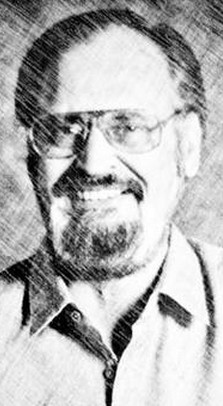
It was not as if Abdullah Sahab didn't care what people made of him, and it was not if he didn't care for company, but he didn't suffer fools, didn't care for crowds. Once he told me, “Lots of people come…you know, scores of people…I don't know them, never seen them ‒ they have never heard of me, probably, and never read a word that I have written, and they just want to come and have they their picture taken…In the last few months, there must have been thousands and thousands…It's ridiculous…It's like taking a picture of Humayun's tomb.”
More here.
Tuesday Poem
Pasco, Barabara
.
.
I find I am descending in a propeller plane upon Pasco
.
.
I find I am descending in a propeller plane upon Pasco
in the state of Washington. I accept this;
I have reasons for participating in the experiential sequence
that has brought me here. Down below the land is printed
with huge circles, doubtless an irrigation system,
doubtless it makes sense. There are people who understand it
living with dignity in square houses
and the result possibly is one billion radishes.
Now some so-called time has passed. This nation
is a huge nation in which the infinity of for example
Washington State
is just one segment of an even less thinkable hugeness
and yet zim zim zim zim United Airlines has me
here in my Eastern metropolis
with its ten thousand makers of third-rate pizza
uncannily far from the possible radishes of Washington State.
The taxi driver experiments with narrow streets
to shorten our detour caused by sports fans and he says
the Eagles will out-tough the Steelers.
I defer to his judgment, I am conserving my powers.
After “a while” I have this unsettlingly smooth tuna salad
with a pale pickle
in a drugstore designed by Dwight D. Eisenhower,
reading a few poems by David Rivard. I have thoughts.
Information, Evolution, and intelligent Design – With Daniel Dennett
Truly I Say To You Today That Bono Is An Asswipe
Albert Burneko in The Concourse:

Here is a sentence: This past Wednesday, Bono spoke at an Amnesty International ceremony at Ellis Island, celebrating the 40th anniversary of John Lennon receiving his green card. Here is another sentence: John Lennon did not immigrate to the United States through Ellis Island, Amnesty International had nothing to do with his immigration to the United States, and Bono never knew him. Nevertheless, a tapestry was unfurled, depicting, with metaphoric incoherence, Manhattan as a Lennon-piloted yellow submarine shining its light on Liberty Island, which is not Ellis Island. Bono spoke, and claimed Lennon and the Beatles as Irishmen—because Lennon’s derelict father may or may not have been descended from the Irish, and for the more important reason that nothing in American culture is better public relations than making a too-big deal of flimsy, possibly spurious Irish heritage.
(To be honest, I don’t much care about which part of the British Isles rightly may claim John Lennon’s ancestry. He mostly was a self-promoting misogynist checkbook activist who imagined no possessions from one of the most exclusive addresses in the history of planet earth, so whichever country wants him can have him. This is beside the point, which is that Bono sucks.)
More here.
Monday, August 3, 2015
Perceptions

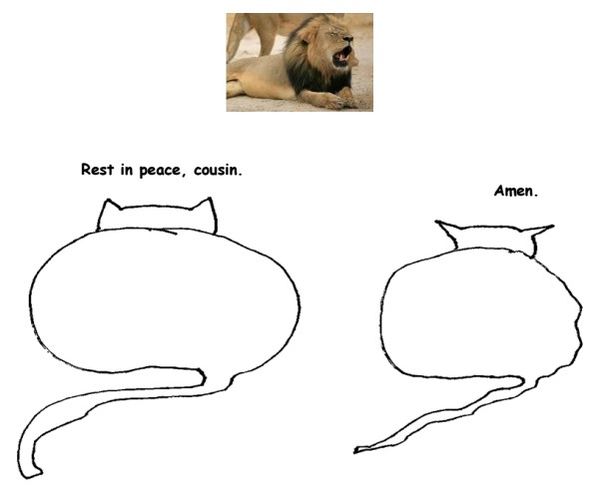
CATSPEAK
by Brooks Riley
Sunday, August 2, 2015
Being A Woman: Who Gets To Decide?
Barbara J. King in NPR:

Even so, there's no doubt this ruling represents a step forward for women like Chand who refuse to alter their bodies by chemical or surgical means in order to conform to arbitrary biological standards of what it means to be a woman. Also this week, a young man named Gavin Grimm from Gloucester, Va., was profiled in a piece by The New York Times editorial board. Grimm, whom I have met and talked with, is a transgender teenager who was assigned female status at birth but who now identifies as male. Originally, when he asked to use the male restroom at his high school, all went smoothly. Then, parents got wind of the fact and the small semi-rural county where I live exploded. I attended (and briefly spoke at) last fall's school board meeting about the issue, a gathering accurately described by the Times in this passage:
“Gavin Grimm sat quietly in the audience last November as dozens of parents at a school board meeting in Gloucester County, Va., demanded that he be barred from using the boys' restrooms at school. They discussed the transgender boy's genitals, expressed concern that he might expose himself and cautioned that being in a men's room would make the teenager vulnerable to rape. One person called him a 'freak.'”
More here.
Life after Faith
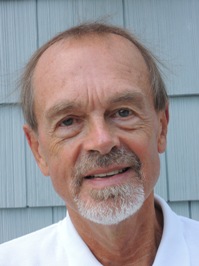
Richard Marshall interviews Philip Kitcher in 3:AM Magazine:
3:AM: You’ve written books on science in a democratic society, living with Darwin, the ethical project and an invitation to Joyce’s Finnegan’s Wake. This is a broad field of interests and captures the flavour of your philosophical position where you argue for the importance of both science and humanities. How did your philosophical career begin? Were you always asking questions, reading and thinking?
Philip Kitcher: I rather stumbled into philosophy. When I began my undergraduate career at Cambridge, I studied mathematics (pure and applied, with a dash of theoretical physics). Under the British system, I’d had to specialize at age 15, and I found it very hard to decide between mathematics and literature (English, French, and German). After two years of undergraduate study, it was clear that I was bored by the regime of problem-solving required by the Cambridge mathematical tripos. A very sensitive mathematics don recommended that I talk to the historian of astronomy, Michael Hoskin, and the conversation led me to enroll in the History and Philosophy of Science for my final undergraduate year. I’d originally intended to concentrate in history of science, but reading Thomas Kuhn’s The Structure of Scientific Revolutions prompted me to switch to philosophy of science. Despite the fact that I hadn’t done any serious philosophy as Princeton understood it, I was accepted as a graduate student in the philosophy side of Princeton’s HPS program (now defunct). I struggled at first, but eventually managed to correct some of my initial ignorance.
But I think that, all along, I was occupied by a range of questions, often different from those fashionable in the professional philosophy of the past half century, that have sometimes troubled philosophers in the past. It’s taken me several decades to work out my own philosophical agenda, and it is, as your question suggests, wide. Some people would probably describe it as quite weird. Maybe this interview will dissolve some of that sense of weirdness.
More here.
A Dream Undone

Jim Rutenberg in The New York Times:
The fundamental promise of American democracy is that every citizen gets a vote, but delivering the franchise from on high and in the face of violent local opposition has always been a complicated legal proposition. The 13th Amendment freed the slaves, and the 14th Amendment gave them citizenship. But the key to Reconstruction was the 15th Amendment, ratified in 1870, which did something far more radical, not just guaranteeing (male) former slaves the right to vote but giving Congress the authority to enforce that right state by state, an authority that to this day many legislators see as a drastic intrusion into local affairs.
The new laws immediately enfranchised more than 700,000 black Southerners. Although blacks made up just 13 percent of the overall United States population, they made up 36 percent of the South’s population and a much higher percentage in some states, including a majority in Mississippi and South Carolina. Their enfranchisement was a shock to the political system that almost exclusively benefited Republicans, the party of Lincoln.
Like its former Confederate neighbors, North Carolina sent several black Republicans to Congress. In the state’s General Assembly, legislators with the support of black Republicans wrote a new state Constitution in 1868 that created state-supported public schools; apportioned state representation based on population rather than wealth — a setback for the 1 percent of that era, the plantation owners; and, eventually, instituted a property tax.
Democrats throughout the South responded to the growing influence of black legislators with a brutal effort to suppress the black vote, enforced by the Ku Klux Klan and its many paramilitary imitators, who kept blacks from election polls at gunpoint and whipped or lynched many who resisted. The Southern Democrats ran on an open message of white supremacy and quickly retook statehouses, city halls and courthouses throughout the South. Within 15 years of the Civil War’s end, Reconstruction was just a memory. What followed was deconstruction: the era of Jim Crow, the poll tax, the literacy test, double primaries and a host of other mechanisms that blocked the black vote. For decades, most black citizens in the South had no practical right to vote.
More here.
The God quest: why humans long for immortality
Philip Ball in New Statesman:
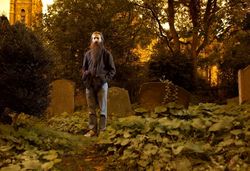
It is surprising, perhaps alarming, that we know so little about ageing.
More here.
Philosophy in a Divided World
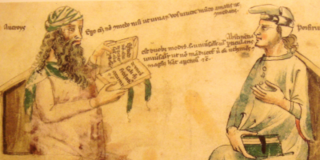
An interview with Carlos Fraenkel, over at 5 Books:
Can philosophy save the Middle East?
I think it can contribute to diminishing tensions, but I don't think it can save the Middle East. My wife sometimes jokingly says I should take down ISIS and that would guarantee me the Nobel Prize. But some people really have these very inflated expectations of philosophy and think it's a panacea that can solve every problem. I don't think so.
One example of where I think it can actually make a positive contribution is a series of workshops I did over the last few years. The first one took place at a Palestinian university in East Jerusalem. I co-taught a class there with the Palestinian intellectual and philosopher Sari Nusseibeh, who was also the president of the university. The basic idea was to read texts by Plato and the medieval Muslim and Jewish philosophers who build on Plato, and develop a philosophical interpretation of Islam and Judaism.
We started with Plato and one of the questions we discussed was 'Is violence justified?' That's obviously a key question of both sides of the conflict in Israel-Palestine. Nusseibeh himself is a prominent advocate of non-violent resistance against the Israeli occupation, but non-violence is not a very popular idea among the average Palestinian citizen. Understandably: people get hit, they want to hit back. Nusseibeh argued that non-violence might be a more efficient means to achieve the ends that Palestinians want to achieve, namely ending the occupation and gaining sovereignty. His argument was that Israel is a kind of enlightened occupier, like the British in India. Non-violent resistance doesn't always work, but it does work in some contexts. It worked in India and he thinks it would also work in Palestine.
We had a very interesting discussion about that when we read Plato's Republic, because one of the key virtues that Plato advocates in the Republic is self-control, he thinks it's something every human being should develop. Without self-control, you cannot live according to the instructions of reason because your emotions will always push you to do things that go against reason. We discussed how self-control can help you not to hit back when you're facing an aggressor, knowing that not hitting back will actually serve your purpose better. You hold back your anger, you take the hit and you do something that will be more efficient to defeat your opponent. I think you can see there how this philosophical idea of living according to reason via self-control can make a positive contribution in this particularly fraught Middle-Eastern context. Does that mean philosophy can save the Middle East?
More here.
Say goodbye to the weirdest border dispute in the world
Adam Taylor in the Washington Post:
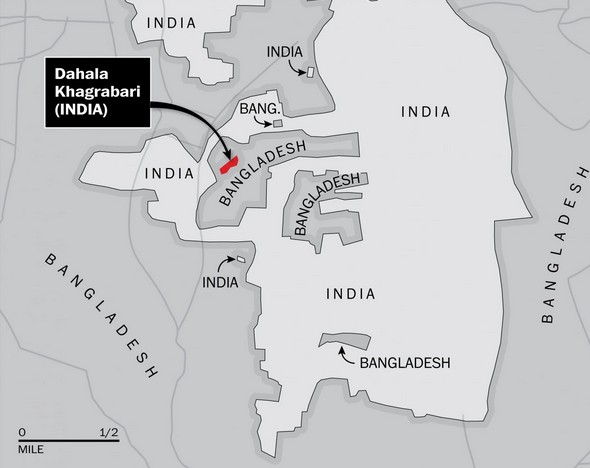
Just after midnight Saturday, one of the most perplexing border disputes in the world officially ended. India and Bangladesh began the exchange of over 160 enclaves – small areas of sovereignty completely surrounded on all sides by another country – and in so doing ended a dispute that has lasted almost 70 years.
This act will have a major effect on the lives of more than 50,000 people who resided in these enclaves in Cooch Behar. Where they had been surrounded by a country they didn't have citizenship in for decades, now they will finally gain access to things like schools, electricity and health care.
For curious cartographers and others obsessed with geopolitical oddities, however, it's an end of an era. The exchange between India and Bangladesh means that the world will not only lose one of its most unique borders, but it will also lose the only third-order enclave in the world – an enclave surrounded by an enclave surrounded by an enclave surrounded by another state.
More here. [Thanks to Ali Minai.]