
Enjoying the content on 3QD? Help keep us going by donating now.
Category: Recommended Reading
A Private Coup: Guatemala, 1954
Matthew Wills at JSTOR Daily:
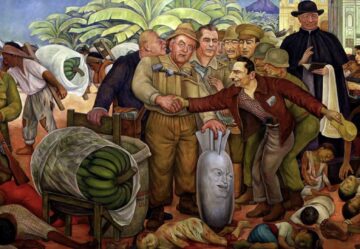 When people point to the US-influenced historical causes underlying emigration from Central America, Guatemala is one of the case studies. It’s also an example of the “private sources of US foreign policy,” as historian Max Holland puts it in his examination of businessman William Pawley’s role in the coup.
Pawley (1900–1977) had a “high-profile career as an international salesman, businessman, aviation entrepreneur, ambassador, financier, transit and sugar magnate, philanthropist, and special presidential envoy.” Less well known: his “covert activities on behalf (and sometimes despite) the U.S. government.” Official State Department documents about the Guatemala coup barely mention Pawley, who was instrumental in advocating for military action and in supplying coup forces with airplanes.
By then, Pawley was an old hand when it came to covert airpower.
More here.
Enjoying the content on 3QD? Help keep us going by donating now.
Pico Iyer — The Urgency of Slowing Down
Enjoying the content on 3QD? Help keep us going by donating now.
Pico Iyer Explores Inner Landscapes
Anderson Tepper at the NY Times:
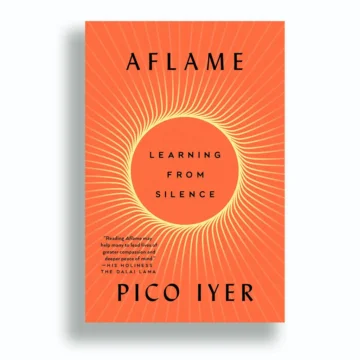 Pico Iyer seems to have spent his life in motion, shuttling between homes in Japan and the United States, not to mention journeys to Ethiopia, Tibet, Cuba and beyond. But there’s one place he’s gone to seek out stillness ever since he was young: the Santa Barbara Vedanta Temple. Perched in the hills above his childhood home, the temple offers sweeping views of the bucolic California town and the ocean shimmering in the distance, and it provided Iyer with an early sense of refuge, he said.
“I think we’re all seeking out places of quiet, to retrieve something we’ve lost,” Iyer said, sitting in the temple gardens in late October, not far from where, as a teenager, he heard Christopher Isherwood lecture on Hinduism. “Even as a kid, when all I wanted was action and excitement, something brought me here, to the quietest place I knew.” If Iyer’s career has been built on a restless investigation of far-flung corners of the globe, this is the perfect spot to pause and reflect on his new work, “Aflame: Learning From Silence,” an examination of arrival — not departure — and the art of sitting still.
more here.
Enjoying the content on 3QD? Help keep us going by donating now.
The Autonomy Trap
James Wood in Plough:
 I remember the moment I told myself I would never talk to my dad again. I was sixteen years old, and my dad’s adoptive parents had just surprised me with my first car: a bright yellow used Geo Tracker (that I would soon trade for a truck). After a slight disagreement, we split into separate vehicles to drive back to my mother’s house. In the other car my dad was drinking while driving my little brother, and I drove my new car with his new wife. When we arrived at my mom’s, she chastised my dad because we were much later than expected (at this time we did not have cellphones) and she noticed the alcohol on his breath. He got out and yelled at her. And then he took my keys and told me he was going to tell my grandparents I didn’t want the car. For the first time in my life, I gave verbal expression to the anger I had internalized for years: “Get out of here. You can’t treat us like this. We don’t need you.”
I come from a stock of relationship-quitters.
More here.
Enjoying the content on 3QD? Help keep us going by donating now.
OpenAI Upgrades Its Smartest AI Model With Improved Reasoning Skills
Will Knight in Wired:
 OpenAI today announced an improved version of its most capable artificial intelligence model to date—one that takes even more time to deliberate over questions—just a day after Google announced its first model of this type. OpenAI’s new model, called o3, replaces o1, which the company introduced in September. Like o1, the new model spends time ruminating over a problem in order to deliver better answers to questions that require step-by-step logical reasoning. (OpenAI chose to skip the “o2” moniker because it’s already the name of a mobile carrier in the UK.)
“We view this as the beginning of the next phase of AI,” said OpenAI CEO Sam Altman on a livestream Friday. “Where you can use these models to do increasingly complex tasks that require a lot of reasoning.”The o3 model scores much higher on several measures than its predecessor, OpenAI says, including ones that measure complex coding-related skills and advanced math and science competency. It is three times better than o1 at answering questions posed by ARC-AGI, a benchmark designed to test an AI models’ ability to reason over extremely difficult mathematical and logic problems they’re encountering for the first time.
More here.
Enjoying the content on 3QD? Help keep us going by donating now.
The Tragic Lives of Richard II and Henry IV
Kathryn Hughes at The Guardian:
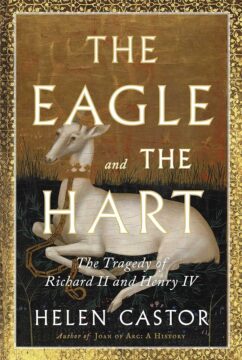 ‘Richard II tried first being a Good King and then a Bad King without enjoying either very much. Then being told he was unbalanced, he got off the throne whereupon his cousin Lancaster (spelt Bolingbroke) quickly mounted the throne and said he was Henry IV, Part 1.” This, anyway, is how it goes in 1066 and All That, the classic parody of garbled schoolroom rote-learning. And while Helen Castor, a historian of great nuance and meticulous scholarship, would not put it quite so baldly, this remains pretty much the through-line of her luminous 600-page study of the Plantagenet cousins who between them generated the plots for three of Shakespeare’s history plays.
The Hart of Castor’s title is Richard II, who came to the throne at the age of 10 in 1377 and never stood a chance. His early accession was a consequence of his father’s death the previous year. Edward, the Black Prince, had led England to its first big win in the hundred years war at the Battle of Crécy, after which France gave up a third of itself to England. And now in his magnificent place came this thin-skinned, spoilt, effeminate boy. Harts – male deers – are generally depicted in heraldry as beefy, bulky, russety animals with a forest of antlers.
more here.
Enjoying the content on 3QD? Help keep us going by donating now.
Friday Poem
The lingual life of a New Year
many times, this morning I absorbed
the fricative glottal as h in the happy
hit me with the strength of a history;
Mesopotamians up to Roman sought
a contradictory blessing of Janus
the trail of passion, ingraining
hiatal pretexts of rituals, our
survival is so temporal, so this
carnivalesque of the desire of living
amidst the debris of children
bombed in Syria and Gaza, headlines
for eternity bursting on lips, fireworks
over the waters of Oceania, I see on
the screen of my cell phone choked
with messages, so I scroll down
while the dog in the street
as Auden said after the bone,
the lover is dead, pulling along a
hearse a burial with a fricative glottal.
by Rizwan Akhtar
Institute of English Studies
Punjab University, Lahore
Enjoying the content on 3QD? Help keep us going by donating now.
Thursday, January 2, 2025
Code Name Puritan: Norman Holmes Pearson at the Nexus of Poetry, Espionage, and American Power
Benjamen Walker in the Los Angeles Review of Books:
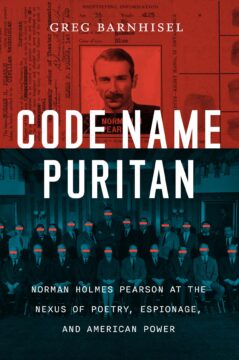 During the 1950s and ’60s, Norman Holmes Pearson was one of Yale’s most successful and beloved professors. On the first day of each term, he would crab-walk to the front of the class, his misshapen body—the result of a childhood fall—on full display. Former students often remarked that the uneasy silence of that first day gave way to a dramatic crescendo of applause following Pearson’s lectures. One such student, journalist Thomas Wolfe, called Pearson “the most superbly theatrical teacher I have ever seen.”
Norman Pearson was also a secret agent, code name Puritan.
That’s the title Greg Barnhisel gives to his new intellectual biography of Pearson, a key figure behind the “Cold War alliance between higher education, the national-security state, and US propaganda operations.” For Barnhisel, whose previous book Cold War Modernists: Art, Literature, and American Cultural Diplomacy (2015) also examined this alliance, Pearson is one of its most important operatives.
Born into an upper middle-class family in Gardner, Massachusetts, in 1909, Norm followed his brother Alfred first to Phillips Andover Academy and then to Yale, but while Alfred returned home to work in the family’s dry goods business, Norm had no desire to leave academia.
More here.
Enjoying the content on 3QD? Help keep us going by donating now.
H5N1: Much More Than You Wanted To Know
Scott Alexander at Astral Codex Ten:
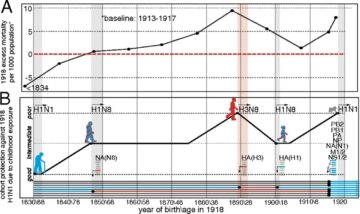 Flu is a disease caused by a family of related influenza viruses. Pandemic flu is always caused by the influenza A virus. Influenza A has two surface antigen proteins, hemagglutinin (18 flavors) and neuraminidase (11 flavors). A particular flu strain is named after which flavors of these two proteins it has – for example, H3N2, or H5N1.
Influenza A evolved in birds, and stayed there for at least thousands of years. It crossed to humans later, maybe during historic times – different sources give suggest dates as early as 500 BC or as late as 1500 AD. It probably crossed over multiple times. Maybe it died out in humans after some crossovers, stuck around in birds, and crossed over from birds to humans again later.
During historic times, the flu has followed a pattern of big pandemics once every few decades, plus small seasonal epidemics each winter. The big pandemics happen when a new strain of flu crosses from animals into humans. Then the new strain sticks around, undergoes normal gradual mutation, and once a year immune response decays enough / mutations accumulate enough to cause another small seasonal epidemic (Why is this synced to the calendar year? See here for more).
More here.
Enjoying the content on 3QD? Help keep us going by donating now.
Why Don’t Railroads Need Expansion Joints? How Thermite turned the clickety-clack of railroads into seamless, silent tracks
Enjoying the content on 3QD? Help keep us going by donating now.
How Criminal Justice Helped Break American Democracy
David A. Sklansky in the Politics and Rights Review:
 Shortly after the recent election, the New York Times reported the results of a new study documenting a deep and pervasive pessimism among the American public, cutting across ideological lines. Only a quarter of Americans think the country’s best days are ahead, only one in ten thinks the government represents them well. This is broadly true both of Trump supporters and of the half of the country that voted against him. “In a sense,” the report concludes, “it is in the deep chords of distrust where Americans seem most united.”
Serge Schmemann, the Times editorial board member who wrote about the study, lamented that it “left unanswered the wrenching question that we must answer if things are to improve: Why? Why has America fallen into the deep malaise quantified by this study? Why are we so down on our country, our government, our prospects? Why is there so much hatred in our civil discourse?”
I offer a partial answer in my new book, Criminal Justice in Divided America: Police, Punishment, and the Future of Our Democracy. Failures of the criminal legal system helped to drive American politics toward populism, polarization, and pessimism. By the same token, the right kinds of reforms can not only make policing, prosecution, and punishment fairer and more effective; they can assist in rebuilding American democracy.
More here.
Enjoying the content on 3QD? Help keep us going by donating now.
The Worlds of Existentialism – Maurice S. Friedman (1966)
Enjoying the content on 3QD? Help keep us going by donating now.
OpenAI o3 Model Is a Message From the Future
Alberto Romero at The Algorithmic Bridge:
 Let me sum all this up because it’s too much information to process: What o3 just did is leap into uncharted territory. OpenAI trusted the trajectory and landed here. At 71.7% SWE-bench, 99.95th percentile Codeforces, 96.7 AIME, 87.7 GPQA Diamond, 25.2% FrontierMath and 87.5% ARC-AGI.
We don’t know what any of this means. We don’t know what lies further ahead. We don’t know what the next years hold. GPT-3 was four years ago for God’s sake.
Plenty of people are saying o3 is artificial general intelligence (AGI), or at least a soft form of AGI. Chollet denies the claim with an argument that reminds me of the idea that “no AGI is dumb at times.” He says beating ARC-AGI was a necessary but not sufficient condition to claim AGIness, and that there’s still research to do. I’m not sure what to think. The variance in intelligence across tasks is still high or o3 wouldn’t fail a single ARC-AGI task while striding through FrontierMath, but the last bastions resisting the unstoppable advance of AI seem to be falling one by one. Is it bitter? Is it even more bitter? I don’t know. Will new walls emerge to resist current techniques, as Chollet hopes to achieve with ARC-AGI-v2? I also don’t know.
more here.
Enjoying the content on 3QD? Help keep us going by donating now.
Box Office Poison: Hollywood’s Story in a Century of Flops
Thomas W. Hodgkinson at Literary Review:
 There are three rules for avoiding a cinematic flop. Rule one: don’t pick a title that is boring, misleading or hard to pronounce. The title wasn’t the only thing that was bad about the misfiring romantic drama Gigli (2003), starring Jennifer Lopez and Ben Affleck, but the fact that cinemagoers weren’t sure if they should be asking for ‘two tickets to Giggly’ didn’t help. Synecdoche, New York (2008) and The Hudsucker Proxy (1994) had more people reaching for their dictionaries than their wallets. But what about a title that has nothing whatsoever to do with the story?
This brings us to rule two: never give a director carte blanche. After William Friedkin won Oscars for The French Connection (1971) and broke box office records with The Exorcist (1973), Paramount pretty much let him off the leash, even down to the choice of the title for his next film, which he dubbed Sorcerer (1977). Nice one, thought fans. Something along the lines of The Exorcist, perhaps, mixing diabolical forces with titillating gore? Well, no. The film turned out to be a remake of the classic French thriller The Wages of Fear (1953). There was no sorcerer.
more here.
Enjoying the content on 3QD? Help keep us going by donating now.
Artificial Intelligence in Biology: From Neural Networks to AlphaFold
Rebecca Roberts in The Scientist:
 Previously met with skepticism, AI won scientists a Nobel Prize for Chemistry in 2024 after they used it to solve the protein folding and design problem, and it has now been adopted by biologists across the globe. AI models like artificial neural networks and language models help scientists solve a variety of problems, from predicting the 3D structure of proteins to designing novel antibiotics from scratch. Researchers press on with the refinement of AI models, addressing their limitations and demonstrating widespread applications in biology.
A major sore spot for protein biologists, the protein-folding problem has now been solved by AI, winning University of Washington biochemist David Baker and DeepMind researchers Demis Hassabis and John Jumper a Nobel Prize in Chemistry. After struggling for around two decades to determine the tertiary structure of proteins from the sequence of their amino acids, scientists established the Critical Assessment of Structural Prediction (CASP) competition in 1994 to foster collaboration in this area. In 1998, Baker’s team built the Rosetta software for protein energy configuration modelling; in fact, a few years later, the team turned their computational model into a game called Foldit to rope in volunteers to partake in solving protein structures.
More here.
Enjoying the content on 3QD? Help keep us going by donating now.
What Is Bioelectrical Intelligence? Technological Approach To Minds Everywhere
Thursday Poem
Fugitive Beauty
The term “fugitive beauty” came
to me in a letter. A friend’s wife
used it in conversation. My friend
is a painter who studied in Paris.
I sought his opinion on poetry.
Fugitive beauty, evanescent, fleeting,
as if it implied a criminality
I did not understand.
Did all art start that way —
alone, fugitive, so coiled
in its incubation that it feared
possible success or failure?
Fugitive, running away,
not standing with the norm, the herd,
not strong enough
to be judged?
Or did it mean beauty as Keats meant it?
“Truth is beauty, beauty is truth” —
a raw truth, or a new dimension of beauty,
a new adjective
to describe eagles soaring,
no parameters,
like prisoners breaking out.
Out there by itself,
not great, not mediocre,
but flying in its own space
against all normalcy, blasting off
to its own truthfulness,
Its own freedom.
by George Degregorio
from Zerilda’s Chair
White Chicken Press
Rutherford, NJ, 2009
Enjoying the content on 3QD? Help keep us going by donating now.
Wednesday, January 1, 2025
The Time Jimmy Carter Probably Saved The World And Almost Nobody Noticed
Stephen Luntz in IFL Science:
 The story starts in 1974 when Professor F. Sherwood Rowland proposed that CFCs, whose use was rapidly expanding, might pose a threat to the ozone layer. Rowland would subsequently share the 1995 Nobel Prize for Chemistry for this work, but at the time, CFC manufacturers hit back that the claims were “purely theoretical”. Technically speaking they were right. No one really knew if CFCs would actually have these effects in the upper atmosphere, a region of the planet we had barely begun to study.
Unfortunately, others pointed out, if the theory was right, damage to the ozone layer would expose the surface to so much ultraviolet radiation, little life would survive above ground or in the upper layers of the ocean. Even lifeforms not directly under threat depend on more vulnerable species for food or pollination – total ecosystem collapse was a real possibility.
Doing nothing would be the ultimate gamble.
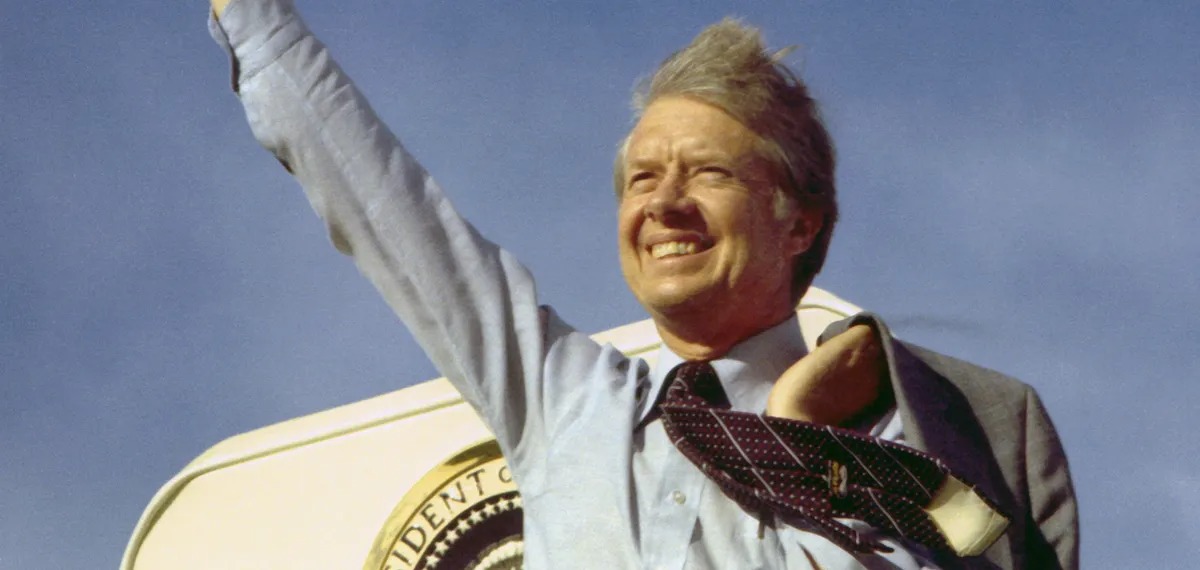
The manufacturers established lobby groups arguing no action be taken until we had proof. DuPont’s chair called the idea CFCs might damage the ozone layer “science fiction”. Carter, and the majority of the US Congress, feared by the time the evidence was in it might be too late.
More here.
Enjoying the content on 3QD? Help keep us going by donating now.
Historical Figures Brought To life by AI
Enjoying the content on 3QD? Help keep us going by donating now.