What Knausgård Reviews Look Like to People Who Haven’t Read Knausgård

Jonathan Ball, PhD, at his eponymous website:
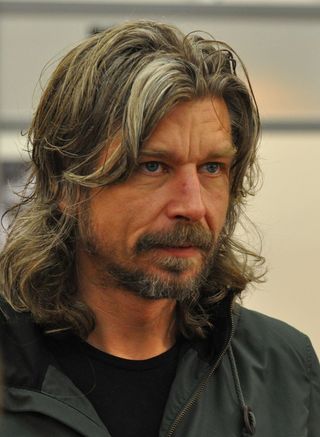
1024px-Karl_Ove_Knausgård-760x1038 (1)Karl Ove Knausgård’s new book is beyond long, and way past self-indulgent. You should read it! He can’t write well — his prose is clunky and often seems unedited. His translator’s not great. You should read it!

Knausgård seems like a horrible person, from all accounts, including his own lengthy account. He’s great! His life is not interesting, since he has done little worth writing about. Did I mention that he’s not that great a writer? Get off your ass and go get this book!

Knausgård is a whiny white male who has written a very long book whining about the struggles of being a white male today, and he titled the book after Hitler’s book. It’s sooooooo worth reading! Sorry, I meant to say a series of very long books.

A very long series of very long books, about a white dude’s struggles. All he wants to do is write super-long books, but he’s not that great a writer, so it’s hard! If you haven’t read Knausgård yet, then get crackin’, Jack! What are you waiting for?

Knausgård is kinda like Proust, except that he’s not Proust, because he can’t write that well. He’s the Proust of today! Don’t miss out!

More here.
The Secret Euphoria of Reading: On Cento Lettere a Uno Sconosciuto by Roberto Calasso

Calasso

Daniela Cascella in 3:AM Magazine:

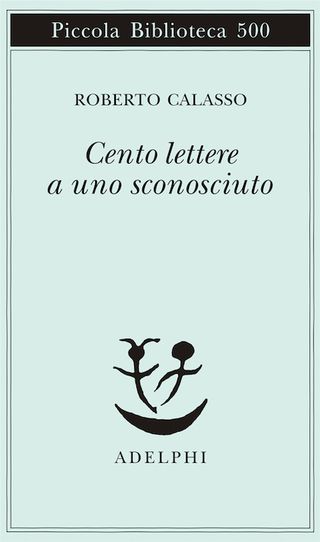
I'm reading a book that collects a hundred book blurbs. It is titled Cento lettere a uno sconosciuto. It has a pale blue gatefold cover and, to date, no English translation from Italian. A Hundred Letters to a Stranger were selected and published in 2003 from over a thousand book blurbs written for the legendary Italian publishing house Adelphi by Roberto Calasso, who became Adelphi’s editor in 1971 and who is today its president, having worked for it since its inception in 1962. As he traces the antecedent of the blurb as a literary form to the 16th-century ‘epistola dedicatoria’—namely the ‘dedicatory letter’ in which a writer would address the prince who protected and financed his work—Calasso remarks: “Today there are no princes, there is a readership … made by individuals. Each reader whose eyes fall on a book blurb reads a letter addressed to a stranger.”

Between a multiplicity of readers unknown to authors, and books unknown to readers, Calasso’s blurbs don’t connect the Adelphi publications through the logic of a plan. Instead, connections are formed through the untidier, rapturous motions of reading and of the desire to read, holding together a multitude of contingent singulars. The anti-rational quality of each encounter with a book is favoured against any rationale. Presence overrides programme, in the same manner as Adelphi’s editorial output never followed a linear path but, rather, was prompted by ardor as the path to knowledge, maintaining that books do not hold stable original meanings but prompt intermittent and changing conversations. Knowledge is mutable, knowledge is the rhythm of rapture, “America is Lolita, Lolita is America.” Many Italians of my generation will still remember this sentence, partly a distant echo of “I am Heathcliff”, partly a lightning bolt of awareness as Calasso never aims to explain the books he writes around: he thrusts the readers in amongst the very texture of language. His blurbs have no claim to introduce or contextualise: they suggest possible ways of being with books, inside them, elliptical, undone, remade in reading, incomplete, blurred — and then, again, blurbed.

I always thought of the gatefold covers that enwrap Adelphi’s books and on which Calasso’s blurbs are printed as the other side of official words, as sites of otherness. Like the words in the blurbs that they support, the gatefolds point in their very form at what is concealed and unspoken; they outline a space of further thinking and further reading, where the resonance of a book rings and calls for connections beyond the book itself. In my eyes, Adelphi’s gatefold covers always instigated explorations behind the fold of a blurb, searching for the concealed matter of thought into words, for what is unwritten, hidden.

More here.

A Dream of Secular Utopia in ISIS’ Backyard

29rojava_graphic-articleLarge

Wes Enzinna in the NYT:

The regime of President Bashar al-Assad doesn’t officially recognize Rojava’s autonomous status, nor does the United Nations or NATO — it is, in this way, just as illicit as the Islamic State. But if the reports I heard from the region were to be believed, within its borders the rules of the neighboring ISIS caliphate had been inverted. In accordance with a philosophy laid out by a leftist revolutionary named Abdullah Ocalan, Rojavan women had been championed as leaders, defense of the environment enshrined in law and radical direct democracy enacted in the streets.

But much of the information emerging from Rojava seemed contradictory and almost fantastical. To the Turkish government, the territory, which is now the size of Connecticut and has an estimated 4.6 million inhabitants, was nothing more than a front for a Turkish group known as the P.K.K., or Kurdistan Workers’ Party. Since its founding in 1978, the P.K.K., led by Ocalan, had been fighting for independence from Turkey, hoping to establish a homeland for the country’s 14 million Kurds. The effort had caused the deaths of 40,000 people, thousands of them civilians, and led to the imprisonment of Ocalan. The American State Department designated the P.K.K. a terrorist organization in 1997. Having failed in Turkey, officials claimed, the P.K.K. was trying to create a Kurdish homeland amid the disruption of war. ‘‘We will never allow the establishment of a state in Syria’s north and our south,’’ President Recep Tayyip Erdogan of Turkey said in June. ‘‘We will continue to fight in this regard no matter what it costs.’’

But to sympathetic Western visitors, Rojava was something else entirely: a place where the seeds of the Arab Spring promised to blossom into utopia. ‘‘What you are doing,’’ said Raymond Joliffe, a member of Britain’s House of Lords, during a trip in May 2015, ‘‘is a unique experiment that deserves to succeed.’’ A Dutch professor named Jan Best de Vries arrived in December 2014 and donated $10,000 to help buy books for Kurdish university students. David Graeber, a founder of Occupy Wall Street, visited that same month and wrote before his trip that ‘‘the autonomous region of Rojava, as it exists today, is one of few bright spots — albeit a very bright one — to emerge from the tragedy of the Syrian revolution.’’

More here.

70 years of speaking knowledge to power

Lawrence M. Krauss in Bulletin of the Atomic Scientists:

ScreenHunter_1522 Nov. 29 18.19As chair of the Board of Sponsors—a group initiated soon after Robert Oppenheimer and Albert Einstein helped form the Bulletin of the Atomic Scientists in 1945—I was humbled to speak at the publication's 70thanniversary dinner, where supporters once again convened, following a symposium, to explore the greatest existential challenges facing the world today.

I was tempted to begin my talk by saying happy birthday, but of course the birth of the Bulletin was not a joyous moment; rather, it was a somber one. Founded as it was by Manhattan Project scientists who “could not remain aloof to the consequences of their work,” the Bulletin had an immediate, urgent purpose, but it would be preferable to live in a world in which the Bulletin was not necessary. As pressing as the need seemed in 1945 to alert the public to the dangers of nuclear war and to stem the growth of nuclear arsenals, however, theBulletin is more necessary today than perhaps at any other time in its 70 year history.

With the development of nuclear weapons, humanity crossed a threshold: For the first time, the human race had the power to almost instantaneously and globally change the conditions for all life on our planet, and alter the environment in ways that could lead, if not to the extinction of our species, to the end of civilization as we know it.

Seventy years after the Nuclear Age began, the 21st century has brought a host of new global challenges for humanity to face.

More here.

Abhay Ashtekar: ‘Good Scientists Solve Problems, but Great Scientists Know What’s Worth Solving’

ScreenHunter_1521 Nov. 29 17.58Abhay Ashtekar is a theoretical physicist and the founder of loop quantum gravity, an increasingly popular branch of physics that attempts to unify quantum mechanics with Albert Einstein’s theory of general relativity (which celebrates its centenary this year). Currently the Director of the Institute for Gravitational Physics and Geometry at Pennsylvania State University, Ashtekar spoke to Nithyanand Rao and Swetamber Das at IIT Madras on October 7, 2015 about his inspirations, his encounters with Subrahmanyan Chandrasekhar and Roger Penrose, work on gravity and cosmology, and his criticisms of string theory.

Nithyanand Rao and Swetamber Das interview Abhay Ashtekar in The Wire:

I guess you took classes by Chandra [Subrahmanyan Chandrasekhar] as well.

Yes, I came to know him quite well. I was very fortunate. After my Ph.D., I went to Oxford to work with Roger Penrose. That was also because of Chandra. But then they asked me to come back to Chicago. So I went to Chicago again. Particularly in this second stage, I came to know Chandra and his wife very well. They were kind. They used to invite me for dinners and so on. Chandra was so reserved; he was god-like, a completely different level of human being. But then he would get into the flow of things and he would tell all the stories – his memory was just phenomenal; there is nobody who comes anywhere close to him. He would remember what he was doing in, say, August 1931 and what had happened then. He would recall it with all the details – all the people and all the names and everything. I have trouble remembering what happened yesterday! He would tell these fantastic stories.

I was really fortunate that I got this exposure to three great people, my great teachers: One was my Ph.D. advisor Robert Geroch. Chandra told me that he felt that except for John von Neumann, he has never seen anyone as brilliant as Bob; and it was true. Bob is extremely brilliant.

More here.

America’s Forgotten Female Astronauts

Elizabeth Yuko in BitchMedia:

Astronaut2Last month, an all-female Russian astronaut crew spent eight days together in a mock spaceship to determine how a group of women would interact during space travel as a test run for a 2029 mission to the moon. Sadly, at a press conference preceding the experiment, reporters opted to ask questions on how they would manage without men and makeup for eight days. “We are doing work. When you're doing your work, you don't think about men and women,” noted astronaut-in-training Anna Kussmaul. Unfortunately, this treatment of women astronauts is as old as the space program itself. In the early days of space travel, much was unknown. For example, scientists were uncertain about even the basic idea of whether a human could safely exit the earth’s atmosphere, much less would happen to the human body in space. Sending people into space was the ultimate in human experimentation.

What we did know, however, was basic physics: the more weight contained in an aircraft, the more energy and fuel will be needed to propel it from earth, sustain it in space, and safely return. Because of this, women made the best candidates for space travel. It was not rocket science: On ships heading into orbit, every ounce matters. Women in general weigh less, eat less food, consume less oxygen, and therefore required less fuel to get into space. Despite the math being in their favor, women were excluded from being considered as astronauts during NASA’s earliest days. These days, women are still a minority at NASA. The team that engineered this summer’s spectacular flyby of Pluto was 25 percent women—very likely that’s the most women on any team in NASA history.

More here.

Addicted to Distraction

Tony Schwartz in The New York Times:

SchwartzONE evening early this summer, I opened a book and found myself reading the same paragraph over and over, a half dozen times before concluding that it was hopeless to continue. I simply couldn’t marshal the necessary focus. I was horrified. All my life, reading books has been a deep and consistent source of pleasure, learning and solace. Now the books I regularly purchased were piling up ever higher on my bedside table, staring at me in silent rebuke. Instead of reading them, I was spending too many hours online, checking the traffic numbers for my company’s website, shopping for more colorful socks on Gilt and Rue La La, even though I had more than I needed, and even guiltily clicking through pictures with irresistible headlines such as “Awkward Child Stars Who Grew Up to Be Attractive.”

During the workday, I checked my email more times than I cared to acknowledge, and spent far too much time hungrily searching for tidbits of new information about the presidential campaign, with the election then still more than a year away.“The net is designed to be an interruption system, a machine geared to dividing attention,” Nicholas Carr explains in his book “The Shallows: What the Internet Is Doing to Our Brains.” “We willingly accept the loss of concentration and focus, the division of our attention and the fragmentation of our thoughts, in return for the wealth of compelling or at least diverting information we receive.” Addiction is the relentless pull to a substance or an activity that becomes so compulsive it ultimately interferes with everyday life.

More here.

Saturday, November 28, 2015

Loaded Dice

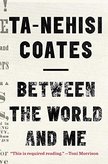
150709_SBR_Coates-COVER.jpg.CROP.original-original

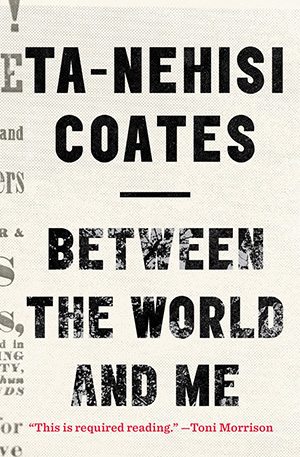
Thomas Chatterton Williams reviews Ta-Nehisi Coates's Between the World and Me in the LRB:

Soon after Michael Brown was shot in Ferguson, Missouri, a book called The Short and Tragic Life of Robert Peace was published, describing one New Jersey man’s dual existence as a top student at Yale and an incorrigible drug dealer.​1 Peace was an alarmingly precocious black boy whose mother toiled in hospital kitchens to raise the money to send him to parochial schools, where he thrived. His father, a magnetic hustler his mother refused to marry, was an active presence in his early life; he taught his son how to use his fists and decode the logic of the streets. When Peace was seven, his father was convicted of double homicide on circumstantial evidence, and sentenced to life in prison.

No one could claim that Peace had an easy path. Yet it’s also hard to deny that the institutions of US society unfailingly worked for him. Jeff Hobbs, who was Peace’s roommate at Yale, shows that at every stage of Peace’s life, his gifts were not just recognised but cultivated. He may have started selling marijuana to help his mother pay the rent, but his family didn’t have the crippling debts that frequently end any possibility of class mobility. He was the valedictorian at his prestigious high school, and a wealthy banker, moved by his speech, offered to pay all the expenses at whichever university he chose. He studied microbiology at Yale, but never stopped selling or using drugs. In 2011, at the age of 30, he was the victim of a gangland execution.

In the conversations about the deaths of Brown, Peace and numerous others who have commanded public attention in the US over the past year, there’s often a tension between the desire to attribute responsibility for actions to those who undertake them and the protective urge to downplay those same people’s responsibility for their actions. In Brown’s case, many people, including plenty of blacks, saw the predictable if gratuitous death of a young man who had committed a crime and then defied a cop; others saw this view as naive: it didn’t matter what the 18-year-old had or hadn’t done, because he wasn’t a moral agent in the first place.

In this second view, which is steadily gaining purchase in the US, Brown was a casualty of a centuries-old system of oppression that decided his fate before his parents’ parents had even met. This is the view held by Ta-Nehisi Coates, a 40-year-old journalist at the Atlantic, who makes the case most seductively in his recent memoir, Between the World and Me.

More here.

Artha: India: Philosophy

Large_jonardonganeri

Richard Marshall interviews Jonardon Ganeri in 3:AM Magazine [h/t: Yogesh Chandrani]:

3:AM: Your new book, due out this year, ‘Identity as Reasoned Choice: A South Asian Perspective’ foregrounds multi-cultural, multi-religious and multi-racial characteristics of identity in the contemporary world. You argue that identity is a matter of reasoned choice and draw on a theory retrieved from India. You discuss the role of consensus, of what you call an ‘adaptive model according to which exemplary cases provide local standards of evaluation’, the importance of dissent, historical conceptions of identity and reason from within Indian philosophy and finally how past cultures of reasoning and identity-formation may be used in a contemporary setting. Can you say something about this project?

JG: I want to move away from the notion that there is any one answer to the question of who one is, by which I mean the idea that there are fixed determiners of one’s individual identity, the sort of person one takes oneself to be, the values one endorses, the character that one has. That idea is especially dangerous in a new age of religious intolerance, when, for example, immigration officials engage in racial profiling and make inferences about a person’s values from the clothes they wear.

So I took seriously a thought in the work of Amartya Sen, Akeel Bilgrami, and others that reason goes “all the way down” as it were, meaning that there are always reasoned choices to be made about the weight someone attaches to each of the various sources of value and identity everyone has available to them. Religion is one of the most powerful sources of identity, and I see no difficulty in someone choosing to found their sense of self in their religious faith, as long as they recognise that this is a choice, and that other choices can be equally legitimate.

But I wanted to take this thought a step further, and to ask how, in the ideal conversation envisaged by a deliberative democracy, individuals can call on their various identities in making collective decisions or agreeing on common goods. My idea is that cultural inheritances supply what I called “resources of reason”, normative ways of thinking, and I think that it is important to see that each such such way of thinking provides its own techniques for acknowledging the rights and legitimacies of other ways of thinking.

So someone can come to the table as, for instance, a Jew or a Muslim, and still with a full range of ways of understanding the demands of public reason and of the deliberative practices and values of the other participants in the conversation. Drawing on my own field of expertise, I try to show how this works in the case of Indian intellectual cultures in particular, but I think exactly the same is true for East Asian, African or western sources of significance.

More here.

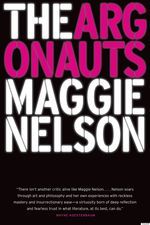
THE ARGONAUTS BY MAGGIE NELSON

ArgonautsTyler Curtis at The Quarterly Conversation:

Such is the thread that runs so exquisitely through The Argonauts, poet and critic Maggie Nelson’s memoir, for lack of a more comprehensive term. At once a meditation on queerness, language, and family, and in part a spiritual follow-up to the melancholic Bluets, Nelson’s book traverses the gap between theory and the lived experience that it so often abstracts into oblivion. She traces her relationship with artist Harry Dodge, and memories pass through critical-philosophical cogitation. We often find Nelson and Dodge in conversation, or sharing passages from Wittgenstein or Barthes, and the two spar on the function of names and categories, assimilation and resistance in X-Men, and Nelson’s neglecting the queer part of her life in her writing until now, which is effectively the starting point of this project.

Once we name something, is it irreversibly changed? Can words “do more than nominate”? At one point Nelson recalls the fervor for and against Proposition 8 in California (which made same-sex marriage illegal), and her and Dodge’s frantic journey from courthouse to courthouse to get married once it becomes clear that the ballot proposition would likely pass. But how adequate is the term “same-sex marriage,” anyway? And how many queer folk actually “think of their desire’s main feature as being ‘same-sex’”? What really makes a family unit? And what exactly are the so-called defenders of traditional marriage reallylamenting?

more here.

John Lennon imagined in ‘Beatlebone’ (or is he really?)

La-ca-jc-kevin-barry-20151129-002David L. Ulin at the LA Times:

In 1967, John Lennon bought a small island off the west coast of Ireland called Dorinish. It wasn't much of an island, just a pasture and some rocks, which, Kevin Barry tells us in his second novel, “Beatlebone,” “were harvested for ballast by the local fishing fleet.” Although Lennon wanted to establish a utopian community on Dorinish (in the early 1970s, he invited a group to start a commune on the land), he visited the island just twice.

The story is intriguing, not least because it's rare to come upon a lesser-known narrative about the Beatles — and yet the unexpected turn of Barry's novel, which imagines a 1978 trip by Lennon to Dorinish, is that it isn't really about the singer at all.Sure, there are identifying traces: This Lennon lives at the Dakota and he longs to “work again and breathe again and write again, and not be locked to the … past — that he might play again — not locked to the past — that he can write again — not locked to the past and its same old song.” But he is also tormented in ways that may have less to do with Lennon than with Barry himself.

more here.

A Life of Gore Vidal

MCGRATH-master675Charles McGrath at The New York Times:

Easily the best, most entertaining book about Gore Vidal is his 1995 memoir “Palimpsest.” But with the possible exception of “In Bed With Gore Vidal,” Tim Teeman’s 2013 tell-all, “Palimpsest” is also the least reliable of the Vidal books. Vidal was a tireless self-mythologizer, and as his title suggests, that book is a layering of rememberings, re-rememberings and mis-rememberings. In his new, much sounder biography, “Empire of Self,” Jay Parini suggests that even the account of Vidal’s idyllic romance with his high school friend Jimmie Trimble, one of the touchstones of “Palimpsest” — the story of a love so perfect and unearthly that it could never be duplicated — was most likely a fabrication.

Parini was close enough to Vidal to know when not to take him at his word. An English professor at Middlebury College, he met Vidal while on sabbatical in Italy in the mid-80s, and somewhat improbably — Parini is modest, earnest, scholarly and straight, none of which could be said about Vidal — the two became friends. “It would be fair to say, in a crude way, that I was looking for a father, and he seemed in search of a son,” Parini writes, not adding that, as so often happens, the son wound up taking care of the father to a certain extent and putting up with more than he had bargained for.

more here.

The Science of Choice in Addiction

Sally Satel in The Atlantic:

In December 1966, Leroy Powell of Austin, Texas, was convicted of public intoxication and fined $20 in a municipal court. Powell appealed his conviction to Travis County court, where his lawyer argued that he suffered from “the disease of chronic alcoholism.” Powell’s public display of inebriation therefore was “not of his own volition,” his lawyer argued, making the fine a form of cruel and unusual punishment. A psychiatrist concurred, testifying that Powell was “powerless not to drink.”

Then Powell took the stand. On the morning of his trial, his lawyer handed him a drink, presumably to stave off morning tremors. The prosecutor asked him about that drink:

Q: You took that one [drink] at eight o’clock [a.m.] because you wanted to drink?…And you knew that if you drank it, you could keep on drinking and get drunk?

A: Well, I was supposed to be here on trial, and I didn’t take but that one drink.

Q: You knew you had to be here this afternoon, but this morning

you took one drink and then you knew that you couldn’t afford

to drink anymore and come to court; is that right?

A: Yes, sir, that’s right.

The judge let stand Powell’s conviction for public intoxication.

Two years later, the Supreme Court affirmed the constitutionality of punishment for public intoxication, rejecting the idea “that chronic alcoholics … suffer from such an irresistible compulsion to drink and to get drunk in public that they are utterly unable to control their performance.”

Now, fast-forward almost half a century to the laboratory of Carl Hart, a neuroscientist at Columbia University, who has been showing that cocaine and methamphetamine addicts have a lot in common with Powell. When Hart’s subjects are given a good enough reason to refuse drugs—in this case, cash—they do so too.

More here.

Splitting the Difference: Two books confront the challenges of growing up black in America

Gene Seymour in Bookforum:

Cover00Fine. Let’s start with “Negro,” or, if one prefers, “negro.” Even with this word’s present-day, often lower-case status, there are African Americans for whom “Negro” is a trigger word for outrage or affront. Some want the word excised altogether—which, at least to this African American, displays amnesia toward (or, worse, disrespect for) our collective history. Between the years 1900 and 1970 (give or take), “Negro” defined a people in transition through two world wars, a cultural renaissance, and a social and political movement that changed everything around it. Those who defined themselves as “Negro” flew airplanes to battle fascism, made their own movies, established baseball franchises, and used their hard-won education in law, the arts, and science to pull their people ahead with them, transforming a nation that otherwise refused to see them as they were, when it chose to see them at all. Where that other “N-word” demeaned and distorted (and still does, no matter who uses it), “Negro” dignified and elevated. After the ’60s had run their course, Negroes collectively agreed to shift to “black” because the other was no longer considered sufficient, or useful. It was outdated, perhaps. But an insult? Our grandparents and great-grandparents might beg to differ, no matter what they chose to call themselves.

I am, in short, riding the same train as Margo Jefferson, who may be even more bullish on the matter than I am, certainly more lyrical: “I still find ‘Negro’ a word of wonders, glorious and terrible. . . . A tonal-language word whose meaning shifts as setting and context shift, as history twists, lurches, advances, and stagnates. As capital letters appear to enhance its dignity; as other nomenclatures arise to challenge its primacy.”

More here.

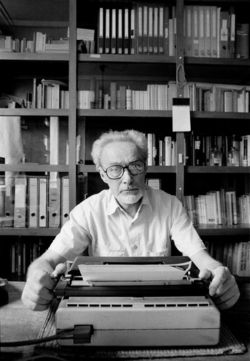
The Complete Works of Primo Levi

Edward Mendelson in The New York Times:

MendPrimo Levi studied chemistry at Turin and worked as a chemist until, at 24, he joined the Italian “partisans” resisting the Nazi occupation of northern Italy in 1943. He was arrested by Italian Fascists and turned over to the Germans, who sent him to Auschwitz — he called it the Lager, the German word for a concentration camp — where he survived partly by luck, partly because he was put to work in a synthetic-rubber factory that used prisoners as slave labor. Returning to Italy, he wrote his memoir of Auschwitz, “If This Is a Man” (1947), and worked 30 years for a paint factory while writing stories, poems, memoirs, essays, a novel and “The Periodic Table” (1975), his idiosyncratic autobiography in which each chapter was named for a chemical element and some chapters were short stories.

Levi earned world fame for the quiet, undramatic lucidity of “If This Is a Man” and for the strangely moving blend of scientific fact and quicksilver fantasy in “The Periodic Table.” In the United States his work was published haphazardly, with some books retitled for marketing purposes (“If This Is a Man” became “Survival in Auschwitz”), some printed in incomplete translations, some never translated at all. “The Complete Works of Primo Levi,” expertly edited by Ann Goldstein — and the product of six years of negotiations to bring together the translation rights — includes everything Levi published, in new or revised translations. Twenty-eight years after his death, these three handsome volumes bring into focus the breadth and coherence of his genius, and make unexpectedly clear how deeply his work as a chemist shaped his unsettling work as a moralist and his unique vision of psychology and history.

More here.