Frank Sinatra and the Scandalous but Scholarly Biography

Gopnick-Sinatra-Scandalous-Scholarly-Biography-320x324-1448393070Adam Gopnik at The New Yorker:

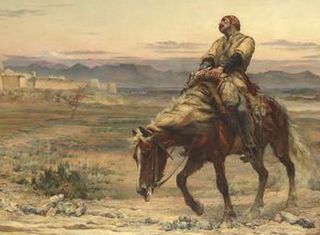
Having come out of the closet, or the casino, not long ago, as an unqualified Frank Sinatra idolater, I approached the second volume of James Kaplan’s biography of the singer (“Sinatra: The Chairman”) with what our critical mothers and fathers would have called immense trepidation, since the book would have to deal not just with the great man’s best records but with his messy entanglement with the mob and his sad, stultified later years. (I saw him perform once, toward the very end, at Madison Square Garden, and it was like seeing the dead El Cid mounted on his horse to lead the Spanish Army: noble but undeniably stiff.)

Kaplan’s book turns out to be, to continue in the old reviewers’ language, hugely readable, vastly entertaining, a page-turner, and all the rest. But it’s also interesting as a fine instance of a strikingly newish kind of thing: the serious and even scholarly biography of a much gossiped-over pop figure, where the old Kitty Kelley-style scandal-sheet bio is turned into a properly documented and footnoted study that nonetheless trades on, or at least doesn’t exclude, the sensational bits.

more here.

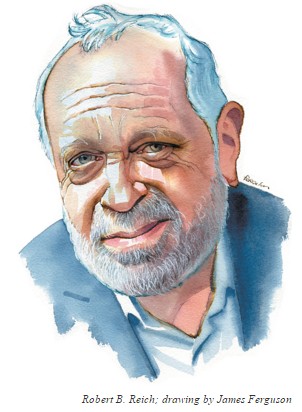
Paul Krugman reviews Robert B. Reich’s new book, “Saving Capitalism”

Paul Krugman in the New York Review of Books:

ScreenHunter_1531 Dec. 02 18.54Back in 1991, in what now seems like a far more innocent time, Robert Reich published an influential book titled The Work of Nations, which among other things helped land him a cabinet post in the Clinton administration. It was a good book for its time—but time has moved on. And the gap between that relatively sunny take and Reich’s latest, Saving Capitalism, is itself an indicator of the unpleasant ways America has changed.

The Work of Nations was in some ways a groundbreaking work, because it focused squarely on the issue of rising inequality—an issue some economists, myself included, were already taking seriously, but that was not yet central to political discourse. Reich’s book saw inequality largely as a technical problem, with a technocratic, win-win solution. That was then. These days, Reich offers a much darker vision, and what is in effect a call for class war—or if you like, for an uprising of workers against the quiet class war that America’s oligarchy has been waging for decades.

More here.

Edward Snowden meets Daniel Ellsberg, Arundhati Roy and John Cusack

Arundhati Roy in The Guardian:

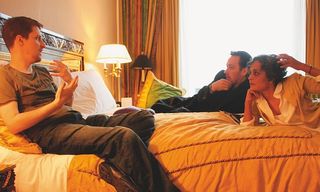
Af19e06b-434a-436f-965d-3300b5b09aca-2060x1236The opulent lobby of the Moscow Ritz-Carlton was teeming with drunk millionaires, high on new money, and gorgeous, high-stepping young women, half peasant, half supermodel, draped on the arms of toady men – gazelles on their way to fame and fortune, paying their dues to the satyrs who would get them there. In the corridors, you passed serious fistfights, loud singing and quiet, liveried waiters wheeling trolleys with towers of food and silverware in and out of rooms. In Room 1001 we were so close to the Kremlin that if you put your hand out of the window, you could almost touch it. It was snowing outside. We were deep into the Russian winter – never credited enough for its part in the second world war. Edward Snowden was much smaller than I thought he’d be. Small, lithe, neat, like a house cat. He greeted Dan ecstatically and us warmly. “I know why you’re here,” he said to me, smiling. “Why?” “To radicalise me.” I laughed.

We settled down on various perches, stools, chairs and John’s bed. Dan and Ed were so pleased to meet each other, and had so much to say to each other, that it felt a little impolite to intrude on them. At times they broke into some kind of arcane code language: “I jumped from nobody on the street, straight to TSSCI.” “No, because, again, this isn’t DS at all, this is NSA. At CIA, it’s called COMO.” “It’s kind of a similar role, but is it under support?” “PRISEC or PRIVAC?” “They start out with the TALENT KEYHOLE thing. Everyone then gets read into TS, SI, TK, and GAMMA-G clearance… Nobody knows what it is…”

It took a while before I felt it was all right to interrupt them.

More here.

Social transparency and the epistemology of tolerance

G. Randolph Mayes in The Dance of Reason:

ScreenHunter_1530 Dec. 02 18.12Last week I learned a new word- apotropaic -and darned if I haven't heard it three times since then!

Everyone is familiar with this sort of thing and has at least briefly experienced it as uncanny. It is called the Baader-Meinhof Phenomenon. Generalized, the BMP is our inclination to mistake an increased sensitivity to P for an increase in the number or frequency of P itself.

Lately I've been thinking about the BMP in relation to social transparency. The free flow of social information is a defining characteristic of the current era, and I tend to be far more sanguine about its effects than most. But I have started to think that the BMP presents a serious challenge to my optimism.

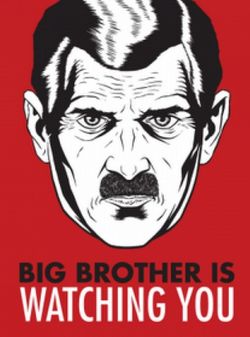
Most of my peers tend to be very possessive about their personal information. They feel like they own their beliefs, ideas, tastes, interests and habits. Consequently, they regard those who acquire knowledge of such without their permission as thieves. They are also haunted by Orwellian metaphors, and tend to react to increasing levels of social transparency in the public sphere with alarm as well. The idea of cameras at every street corner, shop window and traffic intersection feels dirty to them, despite its obvious value for public safety.

I dislike snoops as much as they do, but I distinguish between my preferences and my rights. I see unrestricted access to information as a cornerstone of liberal democracy. For me, the most fundamental human right is the right to learn. Whenever we choose to prevent or punish learning of any kind, there has to be an excellent reason for it. For some kinds of highly sensitive information these reasons exist, but they are consequentialist by nature and do not spring from any fundamental right to control information about ourselves.

More here.

Wednesday Poem

Promissory Note

If I die before you
which is all but certain
then in the moment
before you will see me
become someone dead
in a transformation
as quick as a shooting star’s
I will cross over into you
and ask you to carry
not only your own memories
but mine too until you
too lie down and erase us
both together into oblivion.
.

“Promissory Note” by Galway Kinnell
from Strong Is Your Hold
Houghton Mifflin, 2006
.

If you’re having trouble quitting smoking, maybe you can blame your DNA

PhysOrg:

NaSmokers who have tried and failed to kick their deadly habit might be able to blame their DNA. A new study finds that people with a particular version of a gene involved in the brain's reward system are more likely to succeed in quitting smoking. Compared with people who have other versions of this gene, those with the lucky DNA were more likely to abstain from cigarettes. The benefits of this genetic variant could be confirmed only for people of Caucasian descent, researchers reported Tuesday in the journal Translational Psychiatry. Smokers with East Asian ancestry were just as likely to quit, or not, with any of the three versions of the gene. The study authors didn't have enough data on black or Latino smokers to say whether the gene variant had any effect on their ability to quit smoking.

The gene in question is known as ANKK1. It happens to be right next to the DRD2 gene, which helps the brain recognize dopamine, the chemical that's produced in the brain to reinforce useful behaviors like eating and having sex. Addictive drugs, including nicotine, also cause dopamine levels to spike. One small piece of the ANKK1 gene called Taq1A seems to influence the function of DRD2. People inherit either an A1 or A2 version of this gene fragment from each of their parents. That means there are three possible genotypes: two A1s, two A2s or one of each. The researchers, from Zhejiang University School of Medicine in China, analyzed the merits of these three genotypes by combing through data in 23 studies published between 1994 and 2014. These studies looked at 11,151 current and former smokers, who were surveyed once or tracked over time. All of them allowed researchers to test their DNA to see which version of Taq1A they had. When it comes to quitting smoking, the helpful type is A2/A2. Compared with Caucasians with one or two A1s, those with two A2s had better odds of kicking the habit. Exactly how much better their odds were is not clear.

More here.

Tuesday, December 1, 2015

This might be the most controversial theory for what’s behind the rise of ISIS

Jim Tankersley in the Washington Post:

ScreenHunter_1529 Dec. 01 20.15A year after his 700-page opus “Capital in the Twenty-First Century” stormed to the top of America's best-seller lists, Thomas Piketty is out with a new argument about income inequality. It may prove more controversial than his book, which continues to generate debate in political and economic circles.

The new argument, which Piketty spelled out recently in the French newspaper Le Monde, is this: Inequality is a major driver of Middle Eastern terrorism, including the Islamic State attacks on Paris earlier this month — and Western nations have themselves largely to blame for that inequality.

Piketty writes that the Middle East's political and social system has been made fragile by the high concentration of oil wealth into a few countries with relatively little population. If you look at the region between Egypt and Iran — which includes Syria — you find several oil monarchies controlling between 60 and 70 percent of wealth, while housing just a bit more than 10 percent of the 300 million people living in that area. (Piketty does not specify which countries he's talking about, but judging from a study he co-authored last year on Middle East inequality, it appears he means Qatar, the United Arab Emirates, Kuwait, Saudia Arabia, Bahrain and Oman. By his numbers, they accounted for 16 percent of the region's population in 2012 and almost 60 percent of its gross domestic product.)

This concentration of so much wealth in countries with so small a share of the population, he says, makes the region “the most unequal on the planet.”

More here.

Can scientific knowledge be objective?

Julian Baggini in The Guardian:

B1f1f13b-278f-43e1-a66b-841776c51e39-2060x1368The physicist Richard Feynman once remarked that “philosophy of science is about as useful to scientists as ornithology is to birds”. Some of his colleagues have not been so kind. When Stephen Hawking pronounced philosophy dead in 2011, it was only the fame of the coroner that made it news.

Good scientists, however, are willing to revise their theories on the basis of new data, and Tim Lewens’s wonderful addition to the excellent Pelican Introductions series, The Meaning of Science, is all the evidence any open-minded inquirer needs to demonstrate the worth of philosophy of science.

Those who dismiss the subject usually misunderstand it. They think either that philosophy of science is an armchair pursuit – woolly metaphysics instead of hard physics – or they think the job of philosophy of science is to help train scientists do their job. Although some scientists have indeed been helped by doing some philosophy, that is not the litmus test of its value. What philosophy brings to science is an understanding of what it means, intellectually, practically, politically and ethically.

Lewens first turns his attention to what science is and what it tells us: does it describe the world as it really is, or does it merely provide useful models to help us to manipulate it? Does it make progress, or are the theories of any age destined to be shed one by one, like a snake’s skin? Is there a clear, rigorous “scientific method” or just an ad-hoc hodgepodge of various techniques?

More here.

John Allen Paulos finally confesses: “The Bush presidency was my fault”

John Allen Paulos in Salon:

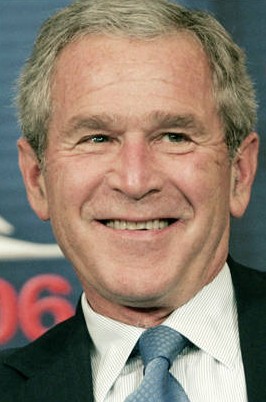
ScreenHunter_1528 Dec. 01 17.36An example of an extremely significant, decidedly unintended result of a relatively tiny event can be nightmarish. This one is, at least for me. It concerns the role I played in getting George W. Bush elected president in 2000. That I was the butterfly whose fluttering cascaded into Bush’s election still pains me. I had written an op-ed for the New York Times titled “We’re Measuring Bacteria with a Yardstick” in which I argued that the vote in Florida had been so close that the gross apparatus of the state’s electoral system was incapable of discerning the difference between the candidates’ vote totals. Given the problems with the hanging chads, the misleading ballots (in retrospect, aptly termed “butterfly ballots”), the missing and military ballots, a variety of other serious flaws and the six million votes cast, there really was no objective reality of the matter.

Later when the Florida Supreme Court weighed in, Chief Justice Charles T. Wells cited me in his dissent from the majority decision of the rest of his court to allow for a manual recount of the undervote in Florida. Summarizing the legal maneuverings, I simply note that in part because of Wells’s dissent the ongoing recount was discontinued, the case went to the U.S. Supreme Court, and George Bush was (s)elected president.

Specifically, Judge Wells wrote, “I agree with a quote by John Allen Paulos, a professor of mathematics at Temple University, when he wrote that, ‘the margin of error in this election is far greater than the margin of victory, no matter who wins.’ Further judicial process will not change this self-evident fact and will only result in confusion and disorder.”

More here.

Museums have long overlooked the violence of empire

Deana Heath in Scroll.in:

ScreenHunter_1527 Dec. 01 17.30It took Britain a century to conquer most of the Indian subcontinent, which it then dominated for a further century. The subcontinent also witnessed a partition that led, by a recent estimate, to over three million deaths, and the largest mass migration of human beings in global history. The violence of colonialism is palpable even in the most cursory rendering of India’s past. But scholars have only recently begun to examine the many forms such violence takes, the rationales behind them and their impact on Indian bodies and minds.

When the violence of South Asia’s colonial history appears in academic scholarship, it largely does so only in certain forms: narratives of rebellion and resistance, religious or ethnic violence, and cataclysmic events. Framing violence in this way displaces it onto the colonised and underestimates the endemic, everyday forms of violence through which colonialism operated. Such erasure is not unique to Indian history. It merely illustrates the ways in which violence has been written out of the history of Britain’s imperial past.

More here.

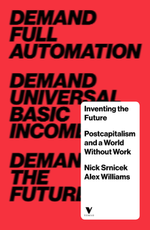
Postcapitalism and a World Without Work

Inventing_the_Future-max_221-b828e30703ba1adb8e5d348786269f05Nick Smicek and Alex Williams at Bookforum:

The central ideological support for the work ethic is that remuneration be tied to suffering. Everywhere one looks, there is a drive to make people suffer before they can receive a reward. The epithets thrown at homeless beggars, the demonization of those on the dole, the labyrinthine system of bureaucracy set up to receive benefits, the unpaid “job experience” imposed upon the unemployed, the sadistic penalization of those who are seen as getting something for free—all reveal the truth that for our societies, remuneration requires work and suffering. Whether for a religious or secular goal, suffering is thought to constitute a necessary rite of passage. People must endure through work before they can receive wages, they must prove their worthiness before the eyes of capital. This thinking has an obvious theological basis—where suffering is thought to be not only meaningful, but in fact the very condition of meaning. A life without suffering is seen as frivolous and meaningless. This position must be rejected as a holdover from a now-transcended stage of human history. The drive to make suffering meaningful may have had some functional logic in times when poverty, illness, and starvation were necessary features of existence. But we should reject this logic today and recognize that we have moved beyond the need to ground meaning in suffering. Work, and the suffering that accompanies it, should not be glorified. . . .

The dominance of the work ethic also runs up against the changing material basis of the economy. Capitalism demands that people work in order to make a living, yet it is increasingly unable to generate enough jobs. The tensions between the value accorded to the work ethic and these material changes will only heighten the potential for transformation of the system.

more here.

John zerzan: anarchy in the usa

Article_shermanZander Sherman at The Believer:

If it weren’t for the Unabomber, Zerzan probably would have continued to live and write in obscurity. But his ability to express Kaczynski’s ideas to the reading public—and his support, at the ideological level, of what Kaczynski was doing—made Zerzan what Wikipedia might call an “anarcho-celebrity.” After the Times interview ran on the front page and media interest began to build, Zerzan was invited to travel and speak all over the world, even delivering a talk at Stanford, his old alma mater. All the attention came with a downside. At home in Eugene, his house was broken into, and his address book and a pair of sneakers were stolen—for their tread. (Officially, Zerzan was never a suspect in the Unabomber case, but unofficially he appears to have been a person of interest.) After Kaczynski was discovered and dragged, bearded and feral, from the mountains of Montana to Sacramento County, Zerzan sent him a letter of introduction. Kaczynski wrote back, and the two became pen pals. Between 1997 and 1998, Zerzan visited Kaczynski in jail—the only writer allowed to do so. Even after Kaczynski was transferred and the visits stopped, Zerzan and Kaczynski traded letters until the late 2000s. Then, because of an obscure and essentially unprovable academic dispute, their friendship ended.

The debate begins ten thousand years ago, when humans stopped hunting and gathering their food and started farming it. Zerzan says that was our fall—the point where we lost contact with nature. To support his argument, he cites Marshall Sahlins, a highly respected anthropologist and professor emeritus at the University of Chicago.

more here.

The Imaginative World of William Blake

51QRtiFZJtL._SX258_BO1,204,203,200_Nicholas Roe at Literary Review:

The Compasses, a dingy pothouse in High Wycombe, was not the most likely place to encounter John Milton, Isaac Newton or Benjamin Franklin. Yet it was here, in March 1794, that Samuel Taylor Coleridge claimed to have met a man of ‘the greatest information and most original genius’. His ‘philosophical theories of heaven and hell’ and ideas of ‘daring impiety’ kept the poet awake until three the next morning. As Coleridge said to his brother, ‘Wisdom may be gathered from the maddest flights of imagination, as medicines were stumbled upon in the wild processes of alchemy.’ Reverend George Coleridge, a patient parish priest, would soon be hearing about ‘Pantisocracy’.

Is it possible that Coleridge’s genius was William Blake, author and printer of The Marriage of Heaven and Hell? We shall never know: certainly, Blake was a lifelong Londoner who rarely stepped beyond the bounds of the city. Rackety prophets and philosophers thronged the revolutionary 1790s – almost every tavern had a Bible-sodden seer with visions of the millennium. It was a decade when even mild-mannered Richard Price, a 67-year-old Unitarian, could be caricatured as an ‘Atheistical-Revolutionist’ insanely conspiring to overthrow Church and State.

more here.

What everyone should know about cut-and-paste genetics

Odling-Smee et al in Nature:

CrisprThe ethics of human-genome editing is in the spotlight again as a large international meeting on the topic is poised to kick off in Washington DC. Ahead of the summit, which is being jointly organized by the US National Academy of Sciences, the US National Academy of Medicine, the Chinese Academy of Sciences and Britain’s Royal Society and held on 1–3 December, we bring you seven key genome-editing facts.

1. Just one published study describes genome editing of human germ cells.

In April, a group led by Junjiu Huang at Sun Yat-sen University in Guangzhou, China, described their use of the popular CRISPR–Cas9 technology to edit the genomes of human embryos. Only weeks before the researchers’ paper appeared in Protein & Cell1, rumours about the work had prompted fresh debate over the ethics of tinkering with the genomes of human eggs, sperm or embryos, known collectively as germ cells. Huang and colleagues used non-viable embryos, which could not result in a live birth. But in principle, edits to germ cells could be passed to future generations.

2. The law on editing human germ cells varies wildly across the world.

Germany strictly limits experimentation on human embryos, and violations can be a criminal offence. By contrast, in China, Japan, Ireland and India, only unenforceable guidelines restrict genome editing in human embryos. Many researchers long for international guidelines, and some hope that the upcoming summit in Washington DC could be the start of the process to create them.

3. You don’t have to be a pro to hack genomes.

The CRISPR–Cas9 technology has made modifying DNA so cheap and easy that amateur biologists working in converted garages or community laboratories are starting to dabble.

More here.

Short Answers to Hard Questions About Climate Change

Justin Gillis in The New York Times:

Climateq-master1050The issue can be overwhelming. The science is complicated. Predictions about the fate of the planet carry endless caveats and asterisks. We get it. And so, as the Paris climate talks get underway, we’ve provided quick answers to often-asked questions about climate change. You can submit your own questions here.

How much is the planet heating up?

1.7 degrees is actually a significant amount. As of this October, the Earth had warmed by about 1.7 degrees Fahrenheit since 1880, when tracking began at a global scale. That figure includes the surface of the ocean. The warming is greater over land, and greater still in the Arctic and parts of Antarctica. The number may sound low, but as an average over the surface of an entire planet, it is actually high, which explains why much of the land ice on the planet is starting to melt and the oceans are rising at an accelerating pace. The heat accumulating in the Earth because of human emissions is roughly equal to the heat that would be released by 400,000 Hiroshima atomic bombs exploding across the planet every day. Scientists believe most and probably all of the warming since 1950 was caused by the human release of greenhouse gases. If emissions continue unchecked, they say the global warming could ultimately exceed 8 degrees Fahrenheit, which would transform the planet and undermine its capacity to support a large human population.

More here.

Monday, November 30, 2015

John Collins to Judge 6th Annual 3QD Philosophy Prize

Update 28 December: Winners announced here.

Update 16 December: Finalists announced here.

Update 15 December: Semifinalists announced here.

Update 10 December: Voting round now open, will close on 14 December 11:59 pm EST. Go here to browse the nominated posts and vote.

* * *

We are very honored and pleased to announce that John Collins has agreed to be the final judge for our 6th annual prize for the best blog and online-only writing in the category of philosophy. Details of the previous five philosophy (and other) prizes can be seen on our prize page.

Collins_JohnJohn Collins has a B.A. Hons. in Pure Mathematics and Philosophy from the University of Sydney (1982) and a Ph.D. from Princeton University (1991) under the supervision of David Lewis. He is an Associate Professor and the Director of Graduate Studies in the Department of Philosophy at Columbia University and an editor of The Journal of Philosophy. He works in decision theory, epistemology, and metaphysics. With Laurie Paul and Ned Hall, Collins co-edited Causation and Counterfactuals (MIT Press 2004). His most recent publications are ''Decision Theory After Lewis” in Schaffer and Loewer (eds) Blackwell Companion to David Lewis (2015), ''Neophobia'' in Res Philosophica (2015) and a review of Lara Buchak's Risk and Rationality for the Australasian Journal of Philosophy (2015). Collins is currently at work on a pair of papers on (so-called) Causal Decision Theory: ''What is the Significance of Newcomb's Problem?'' and ''Causal Decision Theory and Quasi-Transitivity.

As usual, this is the way it will work: the nominating period is now open. There will then be a round of voting by our readers which will narrow down the entries to the top twenty semi-finalists. After this, we will take these top twenty voted-for nominees, and the editors of 3 Quarks Daily will select six finalists from these, plus they may also add up to three wildcard entries of their own choosing. The three winners will be chosen from these by Dr. Collins.

The first place award, called the “Top Quark,” will include a cash prize of 500 dollars; the second place prize, the “Strange Quark,” will include a cash prize of 200 dollars; and the third place winner will get the honor of winning the “Charm Quark,” along with a 100 dollar prize.

(Welcome to those coming here for the first time. Learn more about who we are and what we do here, and do check out the full site here. Bookmark us and come back regularly, or sign up for the RSS Feed.)

The schedule and rules:

November 30, 2015:

  • The nominations are opened. Please nominate your favorite blog entry by placing the URL for the blog post (the permalink) in the comments section of this post. You may also add a brief comment describing the entry and saying why you think it should win. Do NOT nominate a whole blog, just one individual blog post.
  • Blog posts longer than 4,000 words are strongly discouraged, but we might make an exception if there is something truly extraordinary.
  • Each person can only nominate one blog post.
  • Entries must be in English.
  • The editors of 3QD reserve the right to reject entries that we feel are not appropriate.
  • The blog entry may not be more than a year old. In other words, it must have been first published on or after November 30, 2014.
  • You may also nominate your own entry from your own or a group blog (and we encourage you to).
  • Guest columnists at 3 Quarks Daily are also eligible to be nominated, and may also nominate themselves if they wish.
  • Nominations are limited to the first 100 entries.
  • Prize money must be claimed within a month of the announcement of winners.

December 9, 2015

  • The public voting will be opened.

December 14, 2015

  • Public voting ends at 11:59 PM (NYC time).

December 15, 2015

  • The semifinalists are announced

December 16, 2015

  • The finalists are announced

December 28, 2015

  • The winners are announced.

One Final and Important Request

If you have a blog or website, please help us spread the word about our prizes by linking to this post. Otherwise, post a link on your Facebook profile, Tweet it, or just email your friends and tell them about it! I really look forward to reading some very good material and think this should be a lot of fun for all of us.

Best of luck and thanks for your attention!