Mental health: The mindful way

Sabine Lou in Nature:

LotusWhen Lokesh Joshi was studying glycobiology as a postdoc at Cornell University in Ithaca, New York, he had mentors who helped to guide his research — and others who trained him in the practice of mindfulness. For up to 45 minutes each morning, in accordance with his teachers' counsel, he would sit on the carpet in a corner of his apartment, close his eyes and focus on his breathing or on the functioning of his internal organs, second by second. “This helped me find my own point of stillness — what I call grounding,” he explains. After regularly practising this morning routine, Joshi found that he could think more clearly, and that he felt better. He no longer had sweaty palms when he was about to give a talk at a conference, for example, nor did he feel anxious or defensive when a manuscript got rejected or needed major revisions. “It helped me take a step back and not react too quickly to my emotions,” he says. And on days that he did not engage in mindfulness practice, he could tell the difference — his stress levels would ratchet up and his ability to concentrate would decrease.

Now vice-president for research at the National University of Ireland (NUI) Galway, Joshi continues to practise mindfulness on a daily basis, during his 1.5-kilometre walk to and from his office. He thinks that it is a crucial soft skill for researchers, and he values it so strongly that he organized and spoke at a university conference on the subject in October. The university has also launched a lecture series and free drop-in classes on the art. Mindfulness has long been in use in the corporate, entrepreneurial and other sectors. It is more than a new-age buzzword, said speakers at the conference. “In academic circles, there is fear about mindfulness because people believe it could stop you from thinking,” says Gelong Thubten, a Tibetan Buddhist monk at the Kagyu Samye Ling Monastery near Langholm, UK, who conducted mindfulness sessions during the conference. “But we are not trying to get rid of thoughts — it is the mind that you are training. We are looking at the container, not the content.”

More here.

Tuesday, December 8, 2015

Fathers May Pass Down More Than Just Genes, Study Suggests

CarlZimmerinThe New York Times:

ZimmerScientists are investigating the epigenetics of fatherhood: how a man’s experiences can alter his sperm, and whether those changes in turn may alter his children. Credit Dann Tardif/LWA, via Corbis. A week before the operation, the man provided a sperm sample to Danish scientists. A week after the procedure, he did so again. A year later, he donated a third sample. Scientists were investigating a tantalizing but controversial hypothesis: that a man’s experiences can alter his sperm, and that those changes in turn may alter his children. That idea runs counter to standard thinking about heredity: that parents pass down only genes to their children. People inherit genes that predispose them to obesity, or stress, or cancer — or they don’t. Whether one’s parents actually were obese or continually anxious doesn’t rewrite those genes. Yet a number of animal experiments in recent years have challenged conventional thinking on heredity, suggesting that something more is at work.

In 2010, for example, Dr. Romain Barres of the University of Copenhagen and his colleagues fed male rats a high-fat diet and then mated them with females. Compared with male rats fed a regular diet, those on the high-fat diet fathered offspring that tended to gain more weight, develop more fat and have more trouble regulating insulin levels. Eating high-fat food is just one of several experiences a father can have that can change his offspring. Stress is another. Male rats exposed to stressful experiences — like smelling the odor of a fox — will father pups that have a dampened response to stress.

More here.

How the geography of London inspired Moby-Dick

Philip Hoare in the New Statesman:

ScreenHunter_1543 Dec. 08 20.16In the autumn of 1849, a young American wearing a new green coat – of which he was inordinately proud – arrived in London. He checked in to a boarding house on Craven Street, a narrow road running down from the Strand to the then unembanked Thames. The house is still there, at the end of a Georgian terrace, an improbable survivor. You may have passed the turning many times and never thought to have walked down it. Even if you had, you may not have noticed that on the wall of the end house, whose bow window still looks out on to the river, is an equally improbable blue plaque. The young American was Herman Melville and the plaque commemorates the author and his greatest creation – the wondrous phantasmagoria that is Moby-Dick, which was born in that boarding house.

That November, the writer wandered around the imperial metropolis, down its “anti-lanes” and river tunnels, from tavern to publisher’s office, trying to sell his latest book,White-Jacket. Melville had been youthfully famous from his debut, a bestselling book of sensual tales of the South Seas, Typee, first published in London, but had become increasingly obscure in his literary output. He knew he had to come up with something spectacular – “a romance of adventure, founded upon certain wild legends in the Southern Sperm Whale Fisheries”.

It is clear from Melville’s journal, one of only two such surviving documents, that his mind was already playing with these ideas.

More here.

Can counterfactuals say anything deep about the past?

Rebecca Onion in Aeon:

ScreenHunter_1542 Dec. 08 20.07What if Adolf Hitler’s paintings had been acclaimed, rather than met with faint praise, and he had gone into art instead of politics? Have you ever wondered whether John F Kennedy would have such a shining reputation if he had survived his assassination and been elected to a second term? Or how the United States might have fared under Japanese occupation? Or what the world would be like if nobody had invented the airplane?

If you enjoy speculating about history in these counterfactual terms, there are many books and movies to satisfy you. The counterfactual is a friend to science-fiction writers and chatting partygoers alike. Yet ‘What if?’ is not a mode of discussion you’ll commonly hear in a university history seminar. At some point in my own graduate-school career, I became well-acculturated to the idea that counterfactualism was (as the British historian E P Thompson wrote in 1978) ‘Geschichtwissenschlopff, unhistorical shit.’

‘“What if?” is a waste of time’ went the headline to the Cambridge historian Richard Evans’ piece in The Guardian last year. Surveying the many instances of public counterfactual discourse in the anniversary commemorations of the First World War, Evans wrote: ‘This kind of fantasising is now all the rage, and threatens to overwhelm our perceptions of what really happened in the past, pushing aside our attempts to explain it in favour of a futile and misguided attempt to decide whether the decisions taken in August 1914 were right or wrong.’ It’s hard enough to do the reading and research required to understand the complexity of actual events, Evans argues. Let’s stay away from alternative universes.

But hold on a minute.

More here.

EXISTENCE IN 40 COMPLEX STEPS

Joe Carmichael in McSweeney's:

1. Assume bodily form.
2. Assume existence.
3. Learn to feel.
4. Learn to play.
5. Begin to speak.
6. Begin to understand.
7. Become conscious.
8. Become self-conscious.
9. Fear uniqueness.
10. Seek commonality.
11. Learn to speak.
12. Learn to be understood.
13. Begin to see.
14. Begin to correlate.
15. Fear commonality.
16. Seek uniqueness.
17. Find love/faith.
18. Lose love/faith.
19. Undergo crisis.
20. Overdo reaction.

More here.

Inside the mind of John Lennon’s killer

It was 35 years ago to the day that my English teacher in high school told us John Lennon had been killed. And then he cried. This is Danielle Sloane at CNN:

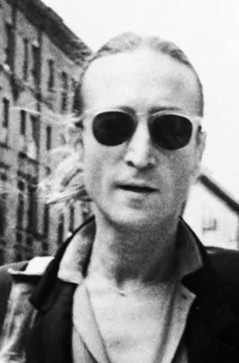
ScreenHunter_1541 Dec. 08 19.45There was a voice in his head, a gun in his hand, and John Lennon's wife right in front of him. Mark David Chapman knew exactly what he was doing when he decided to take the life of one of the world's most beloved musicians.

“When the car pulled up and Yoko got out, something in the back of my mind was going 'Do it, do it, do it,'” he said, recalling the night of December 8, 1980.

“I stepped off the curb, walked, turned, I took the gun and just boom, boom, boom, boom, boom.”

Chapman was speaking with reporter Jim Gaines in a visiting room at Attica Correctional Facility in upstate New York, three years after he killed Lennon. After initially refusing interview requests, he had finally agreed to talk.

The convicted killer sat with Gaines for hundreds of hours of exclusive taped conversations which have been obtained by CNN.

For Gaines, it was personal interest that compelled him to delve into the mystery of why Chapman killed Lennon.

More here.

Resistance to last-resort antibiotic has now spread across globe

From New Scientist:

ScreenHunter_1540 Dec. 08 19.33The last drug has fallen. Bacteria carrying a gene that allows them to resist polymyxins, the antibiotics of last resort for some kinds of infection, have been found in Denmark and China, prompting a global search for the gene.

The discovery means that gram-negative bacteria, which cause common gut, urinary and blood infections in humans, can now become “pan-resistant”, with genes that defeat all antibiotics now available. That will make some infections incurable, unless new kinds of antibiotics are brought to market soon.

Colistin, the most common polymyxin, is a last-resort treatment for infections with bacteria such as E. coli and Klebsiella that resist all other available antibiotics.

In November, Yi-Yun Liu at South China Agricultural University in Guangzhou and colleagues discovered a gene for resistance to colistin in infected livestock, meat and humans. The mcr-1 gene can pass easily between bacteria, and the researchers predicted it could soon go global.

Unknown to them, it already had.

More here.

Christopher Lasch on the family

Scialabba-Drescher-RGB-838x603George Scialabba at The Baffler:

If irony alerts had been invented before 1977, they might have saved Christopher Lasch a lot of grief. The title of his controversial book Haven in a Heartless World: The Family Besieged misled many of his critics. Lasch was widely taken to mean that a haven is what the family used to be before it was besieged by feminism and sexual liberation. Feminists retorted that this was a nostalgic fiction: the traditional family had never been any such idyll, especially for women. Lasch could only be an apologist for patriarchy, misappropriating psychoanalytic theory in a reactionary effort to restore male authority. Reviewing Lasch’s final, posthumous collection, Women and the Common Life, the usually astute Ellen Willis took him to task for his “fail[ure] to take patriarchy seriously” and his “adamant denial of any redeeming social value in modern liberalism.” No doubt this had the long-suffering Lasch growling in his grave.

Haven in a Heartless World is a densely argued book, and Lasch himself was not certain what his arguments implied, practically. (He died in his prime, at sixty-one, before he could spell out the programmatic implications of his far-reaching critique of modernity.) But far from idealizing the nuclear family, Lasch portrayed it as a doomed adaptation to industrial development. The transition from household production to mass production inaugurated a new world—a heartless world, to which the ideology of the family as a domestic sanctuary, a haven, was one response. The premodern, preindustrial family was besieged (and vanquished) by market forces; the modern family is besieged by the “helping” (which has turned out to mean “controlling”) professions.

more here.

Clarice Lispector’s complete stories

Poemas_e_poesias_de_clarice_lispector_2Colm Tóibín at the New York Review of Books:

Clarice Lispector was born in Ukraine in 1920 and taken to Brazil as an infant. Raised in Recife, the north of the country, she married a diplomat and thus spent many years traveling before returning to Brazil to live in Rio de Janeiro. In 1966 she was badly injured in a fire in her apartment. She died in 1977.

By the time of her death, she had become, Benjamin Moser writes in his biography of her, “one of the mythical figures of Brazil, the Sphinx of Rio de Janeiro, a woman who fascinated her countrymen virtually from adolescence.”* Her looks were often commented on and there was much gushing nonsense written about her. The translator Gregory Rabassa, for example, recalled being “flabbergasted to meet that rare person who looked like Marlene Dietrich and wrote like Virginia Woolf.” The poet Ferreira Gullar remarked that “she looked like a she-wolf, a fascinating wolf.” And the French critic Hélène Cixous declared that Lispector was what Kafka would have been had he been a woman, or “if Rilke had been a Jewish Brazilian born in the Ukraine. If Rimbaud had been a mother, if he had reached the age of fifty. If Heidegger could have ceased being German.”

more here.

How Jane Vonnegut Made Kurt Vonnegut a Writer

Strand-Jane-and-Kurt-Vonnegut-1-320Ginger Strand at The New Yorker:

Jane would continue to be the source of his confidence for the next twenty-five years. Many of the ideas and images for which he became known had their source in the couple’s mutual dialogue. “You ask me questions I like to answer,” he told her. In his letters to Jane he mused on the nature of time, on the dangers of science, on the existence or nonexistence of God. “The greatest man to ever live will be the one that invents the real God, and presents the World with a book of His teachings,” he wrote her in 1945. “A bible written in a Lunatic Asylum may be the answer.” It’s hard to imagine a better summary of Bokononism, the fictitious religion Vonnegut would go on to depict in “Cat’s Cradle.”

In “Timequake,” his semi-autobiographical last novel, published in 1997, Vonnegut recalls that Jane submitted a controversial thesis when she was at Swarthmore. It argued “that all that could be learned from history was that history itself was absolutely nonsensical, so study something else, like music.” He is, in essence, glossing the last line of “Slaughterhouse-Five,” where Billy Pilgrim wakes up to discover that the war has ended. He and his buddies wander outside into a springtime day. Birds are singing. “One bird said to Billy Pilgrim, ‘Poo-tee-weet?’ ” As Jane had argued, there’s no meaning to be made from a massacre, from death in industrial quantities.

more here.

Monday, December 7, 2015

Sunday, December 6, 2015

‘Based on a true story’: the fine line between fact and fiction

From Kapuscinski to Knausgaard, from Mantel to Macfarlane, more and more writers are challenging the border between fiction and nonfiction. Here Geoff Dyer – longtime master of the space between, in books such as But Beautiful and Out of Sheer Rage – argues that there is no single path to ‘truth’ while, below, writers on both sides of the divide share their thoughts…

Geoff Dyer and others in The Guardian:

2560Frontiers are always changing, advancing. Borders are fixed, man-made, squabbled about and jealously fought over. The frontier is an exciting, demanding – and frequently lawless – place to be. Borders are policed, often tense; if they become too porous then they’re not doing the job for which they were intended. Occasionally, though, the border is the frontier. That’s the situation now with regard to fiction and nonfiction.

For many years this was a peaceful, uncontested and pretty deserted space. On one side sat the Samuel Johnson prize, on the other the Booker. On one side of the fence, to put it metonymically, we had Antony Beevor’s Stalingrad. On the other, Arundhati Roy’s The God of Small Things. Basically, you went to nonfiction for the content, the subject. You read Beevor’s book because you were interested in the second world war, the eastern front. Interest in India or Kerala, however, was no more a precondition for reading Roy’s novel than a fondness for underage girls was a necessary starting point for enjoying Lolita. In a realm where style was often functional, nonfiction books were – are – praised for being “well written”, as though that were an inessential extra, like some optional finish on a reliable car. Whether the subject matter was alluring or off-putting, fiction was the arena where style was more obviously expected, sometimes conspicuously displayed and occasionally rewarded. And so, for a sizeable chunk of my reading life, novels provided pretty much all the nutrition and flavour I needed. They were fun, they taught me about psychology, behaviour and ethics. And then, gradually, increasing numbers of them failed to deliver – or delivered only decreasing amounts of what I went to them for. Nonfiction began taking up more of the slack and, as it did, so the drift away from fiction accelerated.

More here.

Rival Scientists Cast Doubt Upon Recent Discovery About Invincible Animals

A recent claim that tardigrades got a sixth of their DNA from microbes is starting to unravel.

Ed Yong in The Atlantic:

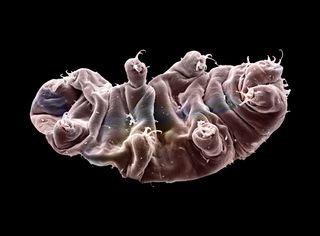
Lead_960Last Monday, a team from the University of North Carolina at Chapel Hill published the first ever genome of a tardigrade—a group of endearing microscopic animals with a reputation for being nigh-invincible. Astonishingly, as we reported last week, they found that around 6,600 of the animal’s genes—a full sixth of its genome—had jumped in from bacteria and other foreign sources. And perhaps, they speculated, this massive horizontal gene transfer (HGT) explained the tardigrade’s famed ability to withstand extreme conditions.

Just one week later, those claims are starting to unravel. A second team from the University of Edinburgh had also been sequencing the genome of the same species of tardigrade, ordered from the same supplier. And their results, released on Tuesday as a preprint paper, are totally different.

They found very few horizontally transferred genes—as few as 36, and just 500 at the very most. They concluded that their rivals had sequenced DNA from bacteria that were living alongside the tardigrades and, despite their best efforts, had mistaken the genes of those microbes for genuine tardigrade genes.

More here.

Our Shared Blame for the Shooting in San Bernardino

Adam Gopnik in The New Yorker:

Daily-News-Hes-A-Terrorist-690Only in America, as the song says—only in America are there enough mass shootings in a single week to allow pundits and philosophers to make complicated points about the nature of responsibility and guilt that elsewhere might exist only in the realm of gruesome thought experiments. Having instructed us that the first of this week’s mass shootings was free from any ideological taint at all—that the Planned Parenthood killings were the work of a lone nut, completely uninfluenced by their rhetoric—the Republican candidates then ordered us to understand that the next mass shooting was nothing but ideology, that the horrific killings in San Bernardino were, as Ted Cruz instantly insisted, an act of Islamic terrorism that should place us in a “time of war.” (That phrase either means nothing at all, since in some sense we have been in “a time of war” since at least 9/11, or else means something so doomed and horrific—full-scale permanent warfare in the Middle East—that, as the historian Andrew Bacevich has explained, it could be achieved only by changing everything once admirable about American life.)

So God bless an American tabloid for doing the work that their headlines have long done (“Ford To City: Drop Dead” comes to mind from the past)—putting a complicated point into simple language. In this case, the headline is on the cover of this morning’s New York Daily News, announcing that Syed Farook, one of the two San Bernardino killers, and a Muslim-American, is a terrorist—and that all the other mass murderers of recent memory are terrorists, too, and (many bonus points for courage here) that Wayne LaPierre, of the N.R.A., ought to be thought as one as well.

More here.

American Gun Culture’s Fiercest Foreign Critic

Uri Friedman in The Atlantic:

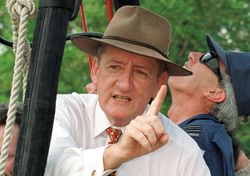
Lead_960The deadpan reaction of one BBC presenter to the shooting rampage in San Bernardino on Wednesday—“Just another day in the United States in America, another day of gunfire, panic, and fear”—got a lot of attention this week as a window of sorts into the world’s despair over the mundanity of American gun violence. But the response was quite tame compared with that of Australia’s former deputy prime minister, Tim Fischer, who on Thursday urged the Australian government to issue more dire warnings about travel to the United States. (The current Australian advisory notes, among other things, that there is “a heightened threat of terrorist attack in the United States” stemming from the conflicts in Syria and Iraq; that there has been civil unrest in places like Ferguson, Missouri; and that “the United States has a generally higher incidence of violent crime, including incidences where a firearm (gun) is involved, compared to Australia.”)

“You are 15 times more likely to be shot dead in the U.S.A. than in Australia per capita,” Fischer told the Australian Broadcasting Corporation, adding that he was therefore “sick and tired” of the U.S. government advising American travelers about potential terrorist attacks in Australia. Some context for his numbers: There are .15 fatalities in mass shootings per 100,000 people in the United States, and .01 in Australia, according to one study; the rate of homicide by firearm yields an even greater divide between the two countries. Noting that there have been more than 350 mass shootings in the United States so far this year, Fischer said that “all [are] unacceptable because the U.S. is not stepping up on the public-policy reform front.” “It’s time to call out the U.S.A,” he argued. He also had words for the National Rifle Association: “The NRA in particular needs to be called out for their unacceptable blockage of any sensible reform, including [ammunition] magazine limitation.”

More here.

Sunday Poem

.
There are two modes of awareness
one of light, one of patience.
One pierces the sea
a little with light
the other calls for penance
—with a pole or net you wait
like a fisherman for fish.
Tell me which is better,
visionary consciousness
that sees fugitive fish alive
in the ocean deep
that will not be caught,
or this tiresome job
or pulling fish from a net
and laying them dead
upon sand?

by Antonio Machado
from Times Alone
Wesleyan University Press, 1983

Hay dos modos de conciencia
una es luz, y otra, paciencia.
Una estriba en alumbrar
un poquito el hondo mar;
otra, en hacier penitencia
con caña o red, y esperar
el pez, como pescador.
Dime tü: ¿Cuál es major?
¿Conciencia de visionario
que mira en el hondo acuario
peces vivos,
fugitivos,
que no se pueden pescar,
o esa maldita faena
de ir arrojando a la arena,
muertos, las peces del mar?