TRANSPLANT MELODRAMA

Lawrence Cohen in Public Books:
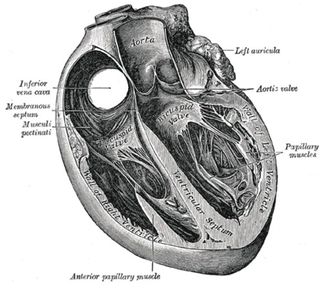
ScreenHunter_1940 May. 14 20.49Maylis de Kerangal’s Réparer les vivants, beautifully translated into English by Sam Taylor and published as The Heart, has been something of a publishing sensation in France, and beyond. I am reading it at a café by a small lake in a South Indian town, where I have just been talking to a transplant surgeon about his practice.

It is a book centering on a heart and the events set in motion when this heart becomes marked for a possible transplant. I am an anthropologist who writes about organ transplantation. The surgeon I met was a urologist; he did not work with hearts but with kidneys.

Our conversation kept returning to how transplants become public affairs and organs gain celebrity. The surgeon chairs his hospital’s Ethics Committee, and I asked him about what kinds of transplant situations get marked as ethical problems. He answered by mentioning transplants that make it into the newspapers, onto television and the Internet. There was a story just today, he said, from Bangalore, about whether HIV-positive persons should receive transplanted organs. Then there was a story not too long ago, he added, about a kidney donor who was mentally disabled: the hospital would not allow him to give a kidney to his brother because the offer could not be considered a matter of consent. He described some of the hopes and challenges of heart and liver transplants, mentioning accounts of surgeries conducted elsewhere in India that he knew of from professional meetings and from the popular press. In considering when an organ becomes an ethical problem, he did not speak of his own practice as a surgeon as much as he elaborated on his participation in a range of mass and expert publics and the ways these animated his concern.

More here.
The White House Launches the National Microbiome Initiative

Ed Yong in The Atlantic:

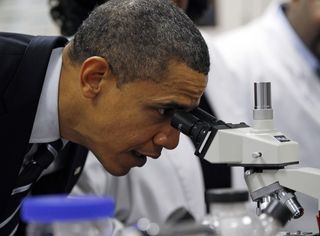
Lead_960 (1)Today, the White House is announcing the launch of the National Microbiome Initiative (NMI)—an ambitious plan to better understand the microbes that live in humans, other animals, crops, soils, oceans, and more. These miniscule organisms are attracting mammoth budgets: federal agencies are committing $121 million to the NMI over the next two years, while more than 100 universities, non-profits, and companies are chipping in another $400 million.

Essentially, America has decided to point half a billion microscopes at the planet, and look through them.

Note the “planet” bit. There’s a tendency of read “microbiome” and automatically see “human” before it. But that’s a narcissistic view. If you condense the Earth’s history into a single calendar year, then bacteria have been around since March and humans since 11:30 p.m. on December 31. From a microbe’s point of view, we are just another ecosystem, and a relatively new one at that. “If we just look at the human microbiome, we’re missing out on a lot of biology,” says Jo Handelsman, a pioneer of the modern microbiome science and the associate director for science at the White House Office of Science and Technology Policy.

Much of that biology is relevant to us. Soil microbes affect the viability of our farmlands. Plant microbes affect the yield of our crops. Oceanic microbes affect the circulating of oxygen, carbon, and other nutrients around the entire planet. The microbes of our buildings influence our exposure to disease-causing species. All of these are as important to us as the gut microbes that more directly affect our risk of obesity or inflammatory bowel disease.

More here.

 Don DeLillo’s American Dream

Jon Baskin in The Nation:

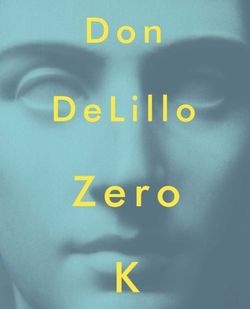
ScreenHunter_1939 May. 14 20.40Ever since Underworld, the 1997 book that marked the end of his ambitious middle period, Don DeLillo’s novels have been creepy, inconclusive, and short. Zero K, his 16th novel and a book that has the feel of a parting gesture, is no exception. Its first sentence, “Everybody wants to own the end of the world,” expresses the kind of sentiment that, if you’ve been steeped in DeLillo’s prose long enough, strikes a familiar chord. It might be profound; it might be nonsense. In any case, it has something to do with death.

The line belongs to Ross Lockhart, a billionaire Manhattan-based hedge-fund speculator. Ross is speaking to his unemployed 34-year-old son Jeffrey, who has come to visit him in a nondescript cluster of buildings, known as the Convergence, in a desert somewhere near Kyrgyzstan. Ross has brought his terminally ill second wife, Artis, to the Convergence to have her body entombed in a technologically engineered underworld, where it will be preserved until science has perfected the tools to reanimate her. Ross finds the process so exciting that, briefly, and despite being completely healthy, he elects to undergo it himself. Then, without any explanation, Ross changes his mind and returns to Manhattan. Then he changes his mind again. Father and son go back to the Convergence, and Jeffrey watches as Ross is lowered into Zero K, the special unit at the facility for healthy subjects willing to make a “certain kind of transition to the next level.” Afterward, Jeffrey wanders aimlessly around the halls of the Convergence before returning, just as aimlessly, to the streets of Manhattan.

More here.

What Trump’s Rise Means for Democracy

1462382065Trumpcartoonadapted666

Jedediah Purdy in Dissent:

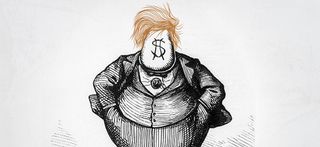
Donald Trump’s nomination for the presidency was inconceivable until primary after primary made it all but inevitable—and a mild Indiana spring evening confirmed it. It suggests to many baffled people, chiefly pundits, that they do not really understand their own country. David Brooks, for one, has announced his intent to reconnect with everyday Americans in service of “a new national narrative” to replace whatever fever-dream story has brought us here. But most of all, Trump’s elevation seems to ratify misgivings about democracy itself. If majorities rally to a blustering, bullying, conspiracy-minded, bigotry-stoking joke of a candidate and turn him into no joke at all, is majority rule really any way to run a country?

Andrew Sullivan’s long and engaging essay in New York magazine captures the major themes that we can expect to see shared in the weeks and months ahead from the right through the center-left. Sullivan, the former editor of the New Republic and a libertarian kind of British liberal, gives a systematic statement of a position he seems to share, more or less, with Brooks, the Times’ Ross Douthat, and others. Because it offers readers a way to orient themselves in this strange new political landscape, while also indulging certain widespread political prejudices and flattering the vanity of the educated, economically secure, and civic-minded, Sullivan’s account is likely to become one of the contenders for the “national narrative” of at least some commentators and many confused and rightly anxious voters.

It is also a deeply conservative, even reactionary rendering of our situation and of democracy itself. The revival of this argument, and its appeal to a certain kind of thoughtful voter, is a bid to shut down the gains the Sanders campaign has made for the left and to discredit the very idea of popular rule in favor of various kinds of elite management of politics.

Here, in short, is Sullivan’s argument.

  • We live in a “hyperdemocracy.” This means:
    1. There is almost no barrier to “the will of the people” directly entering politics and commanding, or at least seizing hold of and shaking, the state.
    2. We live in a culture of radical equality, where all kinds of identity, lifestyle, and attitude demand, and tend to get, equal respect. Even animals may be considered equal.
    3. We also live with a kind of egalitarianism of impulse and opinion: my feeling about politics is as relevant as your data or reason, and I may just decide to act on it—say, in voting for Trump, or for “the demagogue of the left,” Bernie Sanders.
  • In a hyperdemocracy, demagogues are likely to arise. They have a gift for sensing and manipulating the emotional responses of the masses, and especially for tapping into experiences of resentment, disrespect, and disappointment. They offer themselves as channels for these emotions, creating a kind of emotional politics that combines the three features of hyperdemocracy into a toxic cocktail: the thwarted wish for perfect equality and complete respect feeds angry feelings that find a vehicle in the demagogue, the destructive circuit that links the state to the ugly, angry, self-indulgent will of the people—a will driven more by feeling than by reason.
  • It is the responsibility of elites—and all citizens who still respect expertise, rationality, and self-restraint—to resist the demagogue categorically. This means lining up behind Hillary Clinton and realizing that she is all that stands between us and an “extinction-level event” for American democracy. Those who still identify with the Sanders campaign are undermining the thin reed of elite legitimacy. Moreover, as Brooks also insisted last week, elites have some self-scrutiny to do, having lost touch with the reality of much of the country, particularly the economic and cultural displacement of the white working class.

Trump’s startling, even epochal rise has led Sullivan, Brooks, Douthat, and others to revisit long-standing arguments in political thought. The concern for democracy that they express is explicitly anti-democratic in many of its premises. It supports a reading of the present moment that would shut down the radical promise of the Sanders movement, stanch the flow of fresh democratic energy and critical thought from the left, and celebrate a defensive crouch by established elites as political heroism. Whether we have come to that desperate pass depends very much on your theory of democracy.

More here.

Build-a-brain

Header_Robot-GS0946245

Michael Graziano in Aeon:

The brain is a machine: a device that processes information. That’s according to the last 100 years of neuroscience. And yet, somehow, it also has a subjective experience of at least some of that information. Whether we’re talking about the thoughts and memories swirling around on the inside, or awareness of the stuff entering through the senses, somehow the brain experiences its own data. It hasconsciousness. How can that be?

That question has been called the ‘hard problem’ of consciousness, where ‘hard’ is a euphemism for ‘impossible’. For decades, it was a disreputable topic among scientists: if you can’t study it or understand it or engineer it, then it isn’t science. On that view, neuroscientists should stick to the mechanics of how information is processed in the brain, not the spooky feeling that comes along with the information. And yet, one can’t deny that the phenomenon exists. What exactly is this consciousness stuff?

Here’s a more pointed way to pose the question: can we build it? Artificial intelligence is growing more intelligent every year, but we’ve never given our machines consciousness. People once thought that if you made a computer complicated enough it would just sort of ‘wake up’ on its own. But that hasn’t panned out (so far as anyone knows). Apparently, the vital spark has to be deliberately designed into the machine. And so the race is on to figure out what exactly consciousness is and how to build it.

I’ve made my own entry into that race, a framework for understanding consciousness called the Attention Schema theory. The theory suggests that consciousness is no bizarre byproduct – it’s a tool for regulating information in the brain. And it’s not as mysterious as most people think. As ambitious as it sounds, I believe we’re close to understanding consciousness well enough to build it.

In this article I’ll conduct a thought experiment. Let’s see if we can construct an artificial brain, piece by hypothetical piece, and make it conscious. The task could be slow and each step might seem incremental, but with a systematic approach we could find a path that engineers can follow.

More here.

THE GENE: An Intimate History

James Gleick in The New York Times:

BookAs he did in his Pulitzer ­Prize-winning history of cancer, “The Emperor of All Maladies” (2010), Mukherjee views his subject panoptically, from a great and clarifying height, yet also intimately. Framing his story are pieces of his own family history: His cousin and two of his uncles “suffered from various unravelings of the mind,” and the specter of mental illness, presumably inherited or inheritable, haunts his family and his imagination. The books form a magnificent pair. “The Emperor of All Maladies” is, as Mukherjee notes, the story of the genetic code corrupted, tipping into malignancy. The new book, then, serves as its prequel. “Nothing about the natural world, at first glance, suggests the existence of a gene,” he writes. “Indeed, you have to perform rather bizarre experimental contortions to uncover the idea of discrete particles of inheritance.” The man who performed those bizarre contortions was the monk Gregor Mendel, living in an abbey in Brno, Austria-Hungary (now in the Czech Republic). The abbey had five acres of garden. Forbidden by the abbot to experiment on field mice, Mendel began growing peas. And he did not just plant them; he made hybrids, crossing tall plants with short plants, white flowers with purple flowers, smooth pods with crumpled pods. “He began to discern patterns in the data — unanticipated constancies, conserved ratios, numerical rhythms,” Mukherjee writes. “He had tapped, at last, into heredity’s inner logic.” After almost eight plodding years he wrote a paper, which he read in 1865 to a room of farmers and botanists in Brno and published in the yearly “Proceedings of the Brno Natural Science Society.” And then — nothing. The history of science is a tangled web, not a logical arc, and for four decades Mendel’s pioneering work — “the study that founded modern biology,” as Mukherjee describes with only a touch of hyperbole — effectively disappeared. The founding of modern biology had to wait till the turn of the century. Mendel’s forgotten paper was discovered by biologists in Amsterdam, Cambridge and elsewhere. Mendel had discovered the basic unit of heredity, had proved there must be such a unit, and finally a Danish botanist, Wilhelm Johannsen, gave it a name: “gene,” he suggested — “a very applicable little word.”

What is the gene? First it was an abstraction, an enigma, “a ghost lurking in the biological machine,” Mukherjee writes. By definition the gene was the carrier of any trait that is heritable or partly heritable. One would say there are genes for eye color, height or even intelligence. But some traits are better defined than others. People have long bred dogs, for example, to be “short-haired, longhaired, pied, piebald, bowlegged, hairless, crop-tailed, vicious, mild-mannered, diffident, guarded, belligerent.”

More here.

Saturday Poem

Fishers of Men

—After Duccio di Buoninsegna

A raw blue light.
The morning moon and a small wind
hold us fast between sea and sky.
Dawn hangs exhausted
above the lake of Tiberiade,
our sails weighted down
with morning dew.
All night we caught nothing,
our aching bodies
bent beneath the heavy dark,
pliable as waves, wet wood
creaking against worn leather.
Now dog tired, we wash
our empty nets,
though all we want is a cup of wine
a dry shirt and bed.
God and miracles are far
from our minds
as we heave in the windlass
just one more time.
In this floating world
where the sea is made of words
and waves whisper covenants
as fish become men,
silver blue bodies pour though the mesh,
sardine-scales coating our hair,
our skin in luminous benediction.

by Sue Hubbard
.

Friday, May 13, 2016

Friedrich Hayek’s recollection of Ludwig Wittgenstein

F.A. Hayek in Notes on Liberty:

ScreenHunter_1948 May. 13 17.53Between the rails and the building of the railway station of Bad Ischl there used to be ample space where, sixty years ago, in the season, a regular promenade used to develop before the departure of the night train to Vienna.

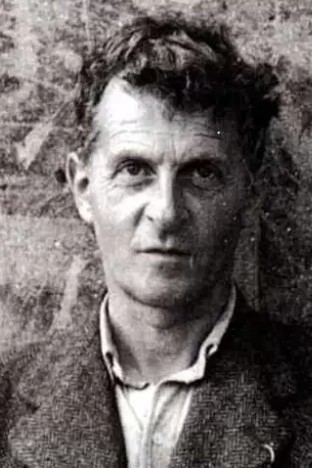
I believe it was on the last day of August 1918 that here, among a boisterous crowd of young officers returning to the front after visiting their families on furlough in the Salzkammergut district, two artillery ensigns became vaguely aware that they ought to know one another. I am not sure whether it was a resemblance to other members of our families or because we had actually met before that led us to ask the other, “Aren’t you a Wittgenstein?” (or, perhaps, “Aren’t you a Hayek?”). At any rate it led to our travelling together through the night to Vienna, and even though most of the time we naturally tried to sleep we did manage to converse a little.

Some parts of this conversation made a strong impression on me. He was not only much irritated by the high spirits of the noisy and probably half-drunk party of fellow-officers with which we shared the carriage without in the least concealing his contempt for mankind in general, but he also took it for granted that any relation of his no matter how distantly connected must have the same standards as himself. He was not so very wrong! I was then very young and inexperienced, barely nineteen and the product of what would now be called a puritanical education: the kind in which the ice-cold bath my father took every morning was the much admired (though rarely imitated) standard of discipline for body and mind. And Ludwig Wittgenstein was just ten years my senior.

What struck me most in this conversation was a radical passion for truthfulness in everything (which I came to know as a characteristic vogue among the young Viennese intellectuals of the generation immediately preceding mine only in the following university years). This truthfulness became almost a fashion in that border group between the purely Jewish and the purely Gentile parts of the intelligentsia in which I came so much to move. It meant much more than truth in speech. One had to “live” truth and not tolerate any pretence in oneself or others. It sometimes produced outright rudeness and, certainly, unpleasantness.

More here.

Watch “The Man Who Knew Infinity”: You will be performing a public service

Ashutosh Jogalekar in The Curious Wavefunction:

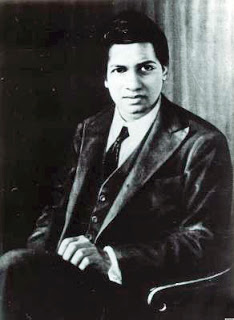
Srinivasa_Ramanujan_-_OPC_-_1Hardy calls his association with Ramanujan “the one true romantic incident of his life”, and the film does give us an idea of why he might have thought so.

The movie also does a good job dwelling on the math which is really the meat of Ramanujan’s life. To its credit it actually features an actual explanation of one of Ramanujan’s greatest accomplishments – his work on partitions with Hardy. Ramanujan’s ability to divine great theorems virtually from scratch was legendary of course, and even today mathematicians are finding gems in his books and wondering how he could figure out all these counterintuitive and novel math results based on nothing more than a high school education. Like John von Neumann Ramanujan was the ultimate autodidact, and both his and von Neumann’s accomplishments really give us a flavor of the extraordinary hidden potential that human minds hold. But one crucial aspect of Ramanujan’s personality that the film shines light on is his sheer obsession with math and the immense amount of hard work that he put in. Almost all through his adult life until his death, math was all he did. Ramanujan was a bona fide genius, no doubt about that, but the way he ate and drank and breathed and lived math makes it clear that even geniuses’ accomplishments come only from great toil and effort.

More here.

THE FREE MARKET ISN’T REALLY FREE

Robert B. Reich in Literary Hub:

ScreenHunter_1947 May. 13 16.49In order to have a “free market,” decisions must be made about:

• PROPERTY: what can be owned
• MONOPOLY: what degree of market power is permissible
• CONTRACT: what can be bought and sold, and on what terms
• BANKRUPTCY: what happens when purchasers can’t pay up
• ENFORCEMENT: how to make sure no one cheats on any of these rules

You might think such decisions obvious. Ownership, for example, is simply a matter of what you’ve created or bought or invented, what’s yours.

Think again. What about slaves? The human genome? A nuclear bomb? A recipe? Most contemporary societies have decided you can’t own these things. You can own land, a car, mobile devices, a home, and all the things that go into a home. But the most important form of property is now intellectual property—­new designs, ideas, and inventions. What exactly counts as intellectual property, and how long can you own it?

Decisions also underlie what degree of market power is permissible—­how large and economically potent a company or small group of firms can become, or to what extent dominance over a standard platform or search engine unduly constrains competition.

Similarly, you may think buying and selling is simply a matter of agreeing on a price—­just supply and demand. But most societies have decided against buying and selling sex, babies, and votes. Most don’t allow the sale of dangerous drugs, unsafe foods, or deceptive Ponzi schemes. Similarly, most civilized societies do not allow or enforce contracts that are coerced or that are based on fraud. But what exactly does “coercion” mean? Or even “fraud”?

More here.

Miss Marple and the Problem of Modern Identity

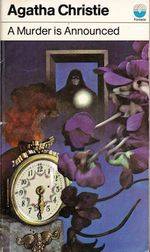
20160211_TNA47JacobsAMurderisAnnouncedAlan Jacobs at The New Atlantis:

The British passport was so “transformed” because it met, or seemed to meet, a need never mentioned in the debates over what the French and other European nations demanded. We may call it the Miss Marple problem: Setting aside foreigners, who always and instantly raise suspicions when they turn up in charming little villages like Chipping Cleghorn, how do you know that your neighbors are who they say they are?

In their introduction to a collection of essays extending the work of Raymond Williams, The Country and the City Revisited: England and the Politics of Culture, 1550–1850, Gerald MacLean, Donna Landry, and Joseph P. Ward note that “during the sixteenth century, most men and women worked in the agrarian sector and lived in the countryside, while fewer than five percent of them lived in towns. By the middle of the nineteenth century that had changed so dramatically that towns with more than 10,000 inhabitants together comprised roughly half the population of England.” And of course that trend has only continued, in England and elsewhere in the world, in the decades since. Such a trend means that places like Chipping Cleghorn will inevitably decline in population, affected as their people are by the gravitational pull of the great metropolises; but the resulting circulation of persons created will bring the occasional stranger into the village’s small orbit. The arrival of an Arnaud du Tilh, under his own name or some other, will be a regular, not an exceptional, occurrence. And what do the long-term residents do about that?

In A Murder Is Announced, Miss Marple comments that in the modern world, “People take you at your own valuation. They don’t wait to call until they’ve had a letter from a friend saying that the So-and-So’s are delightful people and she’s known them all their lives.” Why would anyone take an unknown woman at her “own valuation”?

more here.

On Dmitri Shostakovich and Emotional Rebellion

1101947241.01.LZZZZZZZKaya Genç at The Millions:

Dmitri Shostakovich was, by Julian Barnes’s reckoning, a coward. The leading composer ofJoseph Stalin and Nikita Khrushchev’s USSR, Shostakovich never stood up to power; he was a constant compromiser, accepting what was asked of him by Soviet leaders and giving speeches written by party ideologues. When Soviet Culture Commissar Andrei Zhdanov lectured Soviet artists on the merits of socialist realism and the ills of formalism, ordering them to follow the Zhdanov Doctrine (“The only conflict that is possible in Soviet culture is the conflict between good and best”), Shostakovich did not oppose this shallow culture commissar. He was even compelled to join, in a music congress in New York, the public denunciation of the Soviet Union’s leading exiled composer Igor Stravinsky. In return, Shostakovich was rewarded with every available prize the party handed out to the faithful.

The opening chapter of The Noise of Time, Barnes’s portrait of the composer, puts us on the platform of a train station. The scene seems to come directly out of an Alfred Hitchcock film. A beggar (“the man — in reality half a man”) propels himself using a strange vehicle, “a low trolley with wooden wheels” that can only be steered by wrenching at “the contraption’s front edge.” In order to avoid overbalancing, the beggar uses a “rope that passed underneath the trolley [and] was looped through the top of his trousers.”

more here.

“Crime & Punishment” at 150

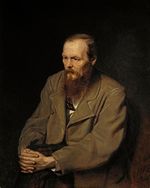
PerovGary Saul Morson at The New Criterion:

As Dante makes the punishments of hell appropriate to one’s sins, Dostoevsky has his madmen experience a hell appropriate to their philosophy. The ghosts who pay social calls on Svidrigailov are decorous, boring, and not the least bit otherworldly. In their triviality, they promise a world to come even more pointless than this one. “We always imagine eternity as something beyond our conception, something vast, vast!” Svidrigailov observes. “But why must it be vast? Instead of all that, what if it’s one little room, like an outhouse in the country, black and grimy and spiders in every corner, and that’s all eternity is?”

When Raskolnikov reproaches him with his monstrous crimes, Svidrigailov points to the oddity of a moralist murderer, but he is also ready with excuses. If, as the progressives argue, people are wholly the product of their environment, if free will is an illusion, and if crime derives solely from bad social conditions, then how, he asks, can I be personally responsible? “The question is, am I a monster or am I myself a victim?” Besides, he continues, even if I have grievously insulted others, well, “human beings in general greatly love to be insulted” because taking offense allows them to feel morally superior. Why, people even seek out ways to feel offended! My students, who know just what Svidrigailov has in mind, appreciate Dostoevsky’s relevance.

more here.

Friday Poem

What is the Sea

The sweep of a trawler net across the length of the bed,
mesh at maximum, in the tank seven hundred thousand
litres of diesel, down below bags of potatoes and onions,
shifts of thirty-five hours, sleep for four, some coffee,
agreements signed in offices in Brussels, increasing
illex squid in proportion to the water temperature
and the approvals signed in the Supreme Court, circuit
of stainless steel channels where the catch falls,
pollock, hake, permit transfers with the support
of the Ministry of Farming and Fisheries; there:
the fishing boat crosses the imaginary parallel, goes
after a stain on the screen of the detector machine,
the shoal ignorant of the notion of miles or charter,
of the made-up Fisheries Institute stats or the gap
between wages and cost of living since the year 1992,
long-tailed hake fillet, Seamen’s Union and rattail,
faked credit letters, lamps and Asian flag of convenience,
outbreak of foot and mouth in British herds, hoki,
chuck back to the very depths tons of dead cuttlefish
when langoustine (five times greater value) appears,
storage infrastructure and cold, fishing ground, that.
.

by Sergio Raimondi
from Poesía civil
publisher: Vox, Bahía Blanca
translation: Ben Bollig
First published on Poetry International

Read more »

How Sadiq Khan won the London mayoral election

George Eaton in New Statesman:

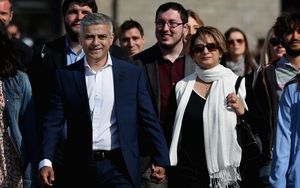
Gettyimages-528599190This time, the polls weren’t wrong. For months, as Sadiq Khan maintained his lead over Zac Goldsmith, the Labour candidate’s team were haunted by memories of the 2015 general election. The Conservatives’ unforeseen majority meant victory was never assumed. Labour MPs feared that low turnout or a “Bradley effect”, with voters shunning a Muslim candidate in the privacy of the polling booth, would destroy Khan's hopes. But his victory was just as comfortable as forecasts suggested. In the final round of voting, Khan beat Goldsmith by 57-43, the second largest margin since the mayoralty was established in 2000 (the year Ken Livingstone defeated Steve Norris by 58-42). With more than 1.3m votes, Khan achieved the biggest personal mandate of any politician in UK history. It is hard to recall that his triumph was never initially regarded as inevitable. London is a Labour city but one that has twice elected a Conservative. Many predicted that Zac Goldsmith – telegenic, green, liberal, independent-minded – would emulate Boris Johnson’s achievements. Yet the Tory candidate was not merely beaten but thrashed. After a cynical campaign that painted Khan as the friend of Islamist extremists, he suffered the worst fate for a politician: losing with dishonour.

Khan’s strategists cited four insights as central to his success. The first was that “personality matters more than policy”. Having seen Miliband defined by his opponents (“weak”, “weird”, “treacherous”), Khan’s team “set out hard and fast to paint a picture of who he was”. His election leaflets rooted his policies in his personal story: “the bus driver’s son who’ll make commuting more affordable”, “the council estate boy who’ll fix the Tory housing crisis” and “the British Muslim who’ll take on the extremists”. By the end of the campaign, journalists groaned at the mention of his bus driver father: a sure sign of success. As victorious campaigns testify, the best messaging is simple and repetitive. “The bus driver’s son” was Khan’s equivalent of the Tories’ “long-term economic plan”. By contrast, Goldsmith failed to define himself personally, allowing Labour to paint the billionaire’s son as posh and aloof. The second insight was that policy should be announced early – and then endlessly reannounced. All of Khan’s signature pledges – the fares freeze, “first dibs” on new homes, the “London living rent” – were made by January.

More here.

First eukaryotes found without a normal cellular power supply

Mitch Leslie in Science:

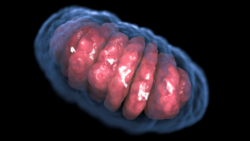
MitochondrionYou can’t survive without mitochondria, the organelles that power most human cells. Nor, researchers thought, can any other eukaryotes—the group of organisms we belong to along with other animals, plants, fungi, and various microscopic creatures. But a new study has identified the first eukaryote that has ditched its mitochondria, suggesting that our branch on the tree of life may be more versatile than researchers thought. “This is a discovery of fundamental importance,” says evolutionary biologist Eugene Koonin of the National Center for Biotechnology Information in Bethesda, Maryland, who wasn’t connected to the study. “We now know that eukaryotes can live happily without any remnant of the mitochondria.”

Mitochondria are the descendants of bacteria that settled down inside primordial eukaryotic cells, eventually becoming the power plants for their new hosts. Although mitochondria are a signature feature of eukaryotes, scientists have long wondered whether some of them might have gotten rid of the organelles. The diarrhea-causing microbe Giardia intestinalis for a time seemed mitochondria-free, but on closer investigation, it and other suspects proved to be false alarms, containing shrunken versions of the organelles. For the new study, a team led by evolutionary biologist Anna Karnkowska, a postdoc, and her adviser, Vladimir Hampl, of Charles University in Prague, checked another candidate, a species in the genus Monocercomonoides. The single-celled organism came from the guts of a chinchilla that belonged to one of the lab members. The team decided to test it because it belonged to a group of microbes that scientists posited had lost their mitochondria. When the researchers sequenced Monocercomonoides’s genome, they found no signs of mitochondrial genes (the organelles carry their own DNA). Digging deeper, they determined that it lacks all of the key proteins that enable mitochondria to function. “The definition of eukaryotic cells is that they have mitochondria,” says Karnkowska, who is now at the University of British Columbia, Vancouver, in Canada. “We overturn this definition.”

More here.

Thursday, May 12, 2016

THE IMPROVISATIONAL ONCOLOGIST

In an era of rapidly proliferating, precisely targeted treatments, every cancer case has to be played by ear.

Siddhartha Mukherjee in the New York Times:

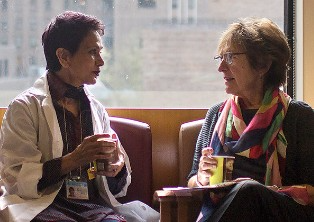
The bone-marrow biopsy took about 20 minutes. It was 10 o’clock on an unusually chilly morning in New York in April, and Donna M., a self-possessed 78-year-old woman, had flown in from Chicago to see me in my office at Columbia University Medical Center. She had treated herself to orchestra seats for “The Humans” the night before, and was now waiting in the room as no one should be asked to wait: pants down, spine curled, knees lifted to her chest — a grown woman curled like a fetus. I snapped on sterile gloves while the nurse pulled out a bar cart containing a steel needle the length of an index finger. The rim of Donna’s pelvic bone was numbed with a pulse of anesthetic, and I drove the needle, as gently as I could, into the outer furl of bone.

ScreenHunter_1944 May. 13 09.09

Dr. Azra Raza speaking to Donna M.

A corkscrew of pain spiraled through her body as the marrow was pulled, and then a few milliliters of red, bone-flecked sludge filled the syringe. It was slightly viscous, halfway between liquid and gel, like the crushed pulp of an overripe strawberry.

I had been treating Donna in collaboration with my colleague Azra Raza for six years. Donna has a preleukemic syndrome called myelodysplastic syndrome, or MDS, which affects the bone marrow and blood. It is a mysterious disease with few known treatments. Human bone marrow is normally a site for the genesis of most of our blood cells — a white-walled nursery for young blood. In MDS, the bone-marrow cells acquire genetic mutations, which force them to grow uncontrollably — but the cells also fail to mature into blood, instead dying in droves. It is a dual curse. In most cancers, the main problem is cells that refuse to stop growing. In Donna’s marrow, this problem is compounded by cells that refuse to grow up.

More here.

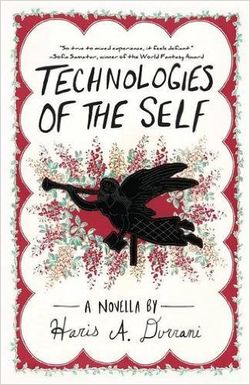
Review: “Technologies of the Self” by Haris A. Durrani

Micah Yongo in Media Diversified:

51pGYdHY7xL._SX322_BO1,204,203,200_‘A person’s identity,’ Lebanese-French author Amin Maalouf once wrote, ‘is like a pattern drawn on a tightly stretched parchment. Touch just one part of it, just one allegiance, and the whole person will react, the whole drum will sound.’

It was these words that came to mind as I finished reading Haris A. Durrani’s intriguing debut novella, Technologies of the Self: a shrewd commentary on identity and culture that masquerades so well as something else that by the time you finish reading you almost feel hoodwinked.

The story begins as a classic immigrant family drama, complete with amusing observations on life as a western millennial born to parents from differing and more traditional cultures. However, we are soon ushered seamlessly from the smell of plátanos and the rapid, witty dialogue of family members around the dining table, into some of the broader themes that are explored.

The protagonist is a young American Muslim who wrestles to reconcile the varying influences of family, faith and place. Son to a Pakistani father and Dominican mother, Jihad – or, to his Caucasian counterparts, ‘Joe’ – journeys through his own memories and those of his family as he seeks to examine the immigrant experience and understand himself in relation to it.

More here. [Thanks to H. M. Naqvi.]