
Van Gogh Can You Tell Me
van Gogh, can you tell me
where does beauty go when it dies?
van Gogh, can you tell me
why saints live on car exhaust
and are lonely as crushed acorns
while enormous suppurating blisters of men
sleep on beds made of dollars, their pillows
the breasts of fantastic women
van Gogh, can you tell me
you who made paint scream
who drew the expressions of the wind
and portrayed leaves and stars
writhing in agony
as though they were human
tell me which of the satellites
circling the earth
is mine
how many pairs of shoes does it take to
walk to infinity
do you believe the world will ever learn how to
cry in unison
van Gogh, with your skin like scorched leather
from too much time spent in the wheatfields
on your knees, shooting dice with God
over who gets to color sunset
didn’t you ever feel like an asshole
incapable of self-preservation
always crossing at the end
van Gogh, can you tell me
as the sun comes down around my ears in
chunks today
as hummingbirds hover at my window
cursing me in tiny voices
why roads drag you down them
how you are finding light in Paradise
and if you have your own easel
or if God allows you to paint on the sky
by David Lerner
from The Last Five Miles to Grace
Enjoying the content on 3QD? Help keep us going by donating now.
 DALLAS — The place where the dead may be brought back to life is a drab, single-story building in an office park next to a semitruck lot. Inside, between rows of incubators and microscopes, Beth Shapiro and her team are attempting a feat straight out of science fiction: reviving the dodo, a bird that’s been extinct for more than three centuries. A growing group of scientists is trying to bring back extinct animals, an idea that is drawing closer than ever due to recent advances in gene editing.
 It was a pregnancy craving for
  Thomas Lynch may be the only major poet-undertaker writing in English, which must count as a surprise. The two professions seem so perfectly aligned—or rather, so hopelessly entwined. Death poetry is almost its own genre in English, filling up the anthologies: Emily Dickinson’s “Because I could not stop for Death”; Robert Frost’s “Fire and Ice”; and most famously, Dylan Thomas’s “Do Not Go Gentle Into That Good Night.” Even as our poets ponder birth, beauty, and desire, we expect them to keep the end in view. A major poet who did not wrestle with death would be like a horse who only makes right turns.
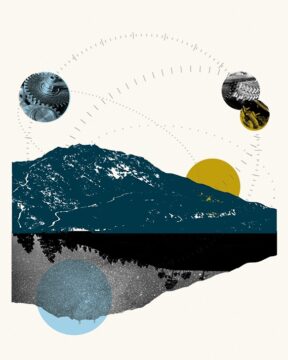 In the words of Danny Hillis, the man who conceived the clock in 1989, long before Bezos became involved: “You have to get away from the idea of direct progress and surrender that kind of control in order to find your way.”
 Among the many consequential decisions judges have to make, they weigh in on parole requests: determining whether an individual will regain freedom or remain confined to a prison cell. Several factors normally play a role in these rulings, such as the risk of recidivism, the severity of the crime and the inmate’s behaviour. However, when a group of researchers
  D
D From 1840, Peabody’s became the meeting place for a motley group of women, aged between 13 and 60, who came together simply to talk. These “conversations” were the brainchild of Margaret Fuller, a free-spirited critic and editor widely considered the best-read woman in New England, who believed, writes the author (a very distant relation), that “the individual came into radiant being” through interaction. These women were hungry for knowledge; excluded from formal education, they had pursued their own courses — plying ministers with questions, devising reading programs, initiating correspondences — and the conversations provided them with much-desired structure, motivation and solidarity.
 The private jet took off from the Caribbean island of Antigua in April carrying three highly combustible tanks of compressed oxygen and a terminally ill cancer patient.
 Southern California families who have lost everything the in recent
  If language models really are learning language, researchers may need new theories to explain how they do it. But if the models are doing something more superficial, then perhaps machine learning has no insights to offer linguistics.
 I
I