Scientists reveal single-neuron gene landscape of the human brain

From PhysOrg:

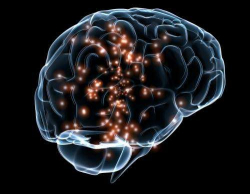
BrainA team of scientists at The Scripps Research Institute (TSRI), University of California, San Diego (UC San Diego) and Illumina, Inc., has completed the first large-scale assessment of single neuronal “transcriptomes.” Their research reveals a surprising diversity in the molecules that human brain cells use in transcribing genetic information from DNA to RNA and producing proteins. The researchers accomplished this feat by isolating and analyzing single-neuronal nuclei from the human brain, allowing classification of 16 neuronal subtypes in the brain's cerebral cortex, the “gray matter” involved in thought, cognition and many other functions. “Through a wonderful scientific collaboration, we found an enormous amount of transcriptomic diversity from cell to cell that will be relevant to understanding the normal brain and its diseases such as Alzheimer's, Parkinson's, ALS and depression,” said TSRI Professor and neuroscientist Jerold Chun, who co-led the study with bioengineers Kun Zhang and Wei Wang of UC San Diego and Jian-Bing Fan of Illumina. The study was published on June 24 in the journal Science.

All the Same

While parts of the cerebral cortex look different under a microscope—with different cell shapes and densities that form cortical layers and larger regions having functional roles called “Brodmann Areas”—most researchers treat neurons as a fairly uniform group in their studies. “From a tiny brain sample, researchers often make assumptions that obtained information is true for the entire brain,” said Chun. But the brain isn't like other organs, Chun explained. There's a growing understanding that individual brain cells are unique, and a possibility has been that the microscopic differences among cerebral cortical areas may also reflect unique transcriptomic differences—i.e., differences in the expressed genes, or messenger RNAs (mRNAs), which carry copies of the DNA code outside the nucleus and determine which proteins the cell makes. To better understand this diversity, the researchers in the new study analyzed more than 3,200 single human neurons—more than 10-fold greater than prior publications—in six Brodmann Areas of one human cerebral cortex. With the help of newly developed tools to isolate and sequence individual cell nuclei (where genetic material is housed in a cell), the researchers deciphered the minute quantities of mRNA within each nucleus, revealing that various combinations of the 16 subtypes tended to cluster in cortical layers and Brodmann Areas, helping explain why these regions look and function differently.

More here.

Thursday, June 23, 2016

The Unbelievable Tale of Jesus’s Wife

Ariel Sabar in The Atlantic:

ScreenHunter_2055 Jun. 23 18.19On a humid afternoon this past November, I pulled off Interstate 75 into a stretch of Florida pine forest tangled with runaway vines. My GPS was homing in on the house of a man I thought might hold the master key to one of the strangest scholarly mysteries in recent decades: a 1,300-year-old scrap of papyrus that bore the phrase “Jesus said to them, My wife.” The fragment, written in the ancient language of Coptic, had set off shock waves when an eminent Harvard historian of early Christianity, Karen L. King, presented it in September 2012 at a conference in Rome.

Never before had an ancient manuscript alluded to Jesus’s being married. The papyrus’s lines were incomplete, but they seemed to describe a dialogue between Jesus and the apostles over whether his “wife”—possibly Mary Magdalene—was “worthy” of discipleship. Its main point, King argued, was that “women who are wives and mothers can be Jesus’s disciples.” She thought the passage likely figured into ancient debates over whether “marriage or celibacy [was] the ideal mode of Christian life” and, ultimately, whether a person could be both sexual and holy.

King called the business-card-size papyrus “The Gospel of Jesus’s Wife.” But even without that provocative title, it would have shaken the world of biblical scholarship. Centuries of Christian tradition are bound up in whether the scrap is authentic or, as a growing group of scholars contends, an outrageous modern fake: Jesus’s bachelorhood helps form the basis for priestly celibacy, and his all-male cast of apostles has long been cited to justify limits on women’s religious leadership.

More here.

Breakthrough in understanding the chills and thrills of musical rapture

Ian Sample in The Guardian:

ScreenHunter_2054 Jun. 23 17.29The skin comes out in goosebumps and tingles run up the spine. But how particular pieces of music can induce such rapturous effects in people has stumped researchers for centuries.

With the passing of time comes new technology though, and suitably equipped with modern brain scanning equipment, scientists may now have made some headway.

In the latest effort to understand “the chills”, researchers in the US put out a call for music fans who either consistently experienced euphoric sensations on hearing certain tracks, or who hardly ever felt them at all.

“It stemmed from a deep interest in intense, profound emotional responses, in particular those that come from music,” said Matthew Sachs, a graduate student at the University of Southern California who conducted the experiments at Harvard University. “I’ve always been fascinated by how a collection of tones changing over time has the ability to evoke these very strong sensations.”

More than 200 people responded to the call and filled out online personality questionnaires. From these, Sachs and others at Harvard and Wesleyan University in Connecticut selected 10 to form a “chill group” and another 10 to form a “no chill” group.

Before having their brains scanned, the 20 volunteers went into the lab with playlists of music they found most pleasurable.

More here. [Thanks to Marko Ahtisaari.]

George Soros: The Brexit crash will make all of you poorer

From The Guardian:

ScreenHunter_2053 Jun. 23 16.56David Cameron, along with the Treasury, the Bank of England, the International Monetary Fund and others have been attacked by the leave campaign for exaggerating the economic risks of Brexit. This criticism has been widely accepted by the British media and many financial analysts. As a result, British voters are now grossly underestimating the true costs of leaving.

Too many believe that a vote to leave the EU will have no effect on their personal financial position. This is wishful thinking. It would have at least one very clear and immediate effect that will touch every household: the value of the pound would decline precipitously. It would also have an immediate and dramatic impact on financial markets, investment, prices and jobs.

As opinion polls on the referendum result fluctuate, I want to offer a clear set of facts, based on my six decades of experience in financial markets, to help voters understand the very real consequences of a vote to leave the EU.

More here.

How to Plug In Your Brain

David Noonan in Smithsonian:

May2016_b99_braintraining-wr-v2_jpg__800x600_q85_cropTwo hundred and thirty-five years after the Italian scientist Luigi Galvani reported that dismembered frog legs twitch in response to a static charge applied to a nerve, we are still exploring the mysteries of what he called “animal electricity,” especially in the brain. That the brain generates a bit of its own electricity, which can be detected by an electroencephalogram, or EEG, is well established, as is the fact that some neurosurgeons today sometimes use hair-thin electrodes to stimulate deep brain structures and stop Parkinson’s tremors. But scientists are now exploring a question that is, well, mind-boggling: Can low-voltage doses of electricity, transmitted through hair, skin and skull directly into particular regions of the brain, make already healthy people sharper and more alert?

Aron Barbey, a 39-year-old neuroscientist at the University of Illinois, is a leader in this research, though he is excruciatingly cautious about its prospects. He resists the idea that tomorrow’s malls and airports will feature commercial brain-charging stations, updated versions of today’s massage stops, but if that future (or something like it) comes to pass, his work will have played a critical role in bringing it about. Barbey is the director of the UI’s Decision Neuroscience Laboratory at the university’s Beckman Institute for Advanced Science and Technology, and his experiments appear to point to a time when students, soldiers, executives and the elderly could all benefit from a treatment called transcranial direct-current stimulation (tDCS).

More here.

Thursday Poem

Hearing Parker for the First Time

The blue notes spiraling up from the transistor radio
tuned to WNOE, New Orleans, lifted me out of bed
in Seward County, Kansas, where the plains wind riffed
telephone wires in tones less strange than the bird songs
of Charlie Parker. I played high school tenor sax the way,
I thought, Coleman Hawkins and Lester Young might have
if they were, like me, untalented and white, but Ornithology
came winding up from the dark delta of blues and dixieland
into my room on the treeless and hymn-ridden high plains
like a dust devil spinning me into the Eleusinian mysteries
of the jazz gods though later I would learn that his long
apprenticeship in Kansas City and an eremite’s devotion
to the hard rule of craft gave him the hands that held
the reins of the white horse that carried him to New York
and 52nd Street, farther from wheat fields and dry creek beds
than I would ever travel, and then carried him away.

by B.H. Fairchild
from Early Occult Memory Systems of the Lower Midwest
W.W. Norton, 2003
.

‘Holy grail’ of breast-cancer prevention in high-risk women may be in sight

From KurzweilAI:

Breast-cancer-preventionAustralian researchers have discovered that an existing medication could have promise in preventing breast cancer in women carrying a faulty BRCA1 gene, who are at high risk of developing aggressive breast cancer. Currently, many women with this mutation choose surgical removal of breast tissue and ovaries to reduce their chance of developing breast and ovarian cancer. Notably, in May 2013, actress Angelina Jolie, who reportedly had with an estimated 87 per cent risk of breast cancer and 50 per cent risk of ovarian cancer, chose to have d2ouble mastectomy with breast reconstruction. Women with mutation have an approximately 65% cumulative risk of developing breast cancer by age 70, the researchers note, based on a 2003 combined analysis of 22 studies.

A drug option

But now, another option may be be possible, as 16 scientists (most in Australia) report in an advance online paper in Nature Medicine this week. The researchers discovered that pre-cancerous cells could be identified by a marker protein called RANK. A concurrent study led by an Austrian group had also identified the importance of RANK. This was an important breakthrough, they said, because an inhibitor of the RANK signalling pathway was already in clinical use: the drug denosumab. The researchers suggest the drug may have potential to prevent breast cancer from developing. If confirmed in clinical studies, this would provide a non-surgical option to prevent breast cancer in women with elevated genetic risk.

More here.

Wednesday, June 22, 2016

“You Had No Address”

“You-Had-No-Address”_The-Caravan-magazine_June-2016_01-319x435

Sumayya Kassamali in Caravan:

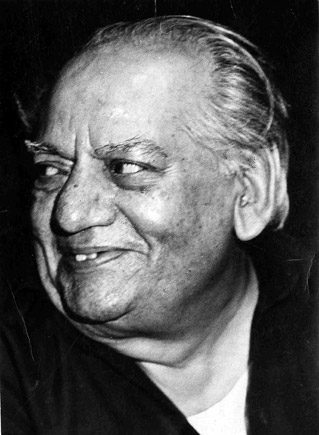
“AND WERE YOU POLITICALLY INVOLVED in Beirut?” an interviewer once asked Faiz Ahmed Faiz, arguably the greatest Urdu poet of the last century. “I was, indeed, yes!” he replied. “You had to be, if you were part of the suffering of the place and of the people.”

Today, the most visible signs of the subcontinent’s involvement in Beirut are the neon-green-uniformed South Asian men emptying plastic garbage bins into large green trucks on the street. Images of India abound in the city’s hip yoga culture, with Pakistan harder to find. The Arabic word for “Sri Lankan,” in its feminine adjectival form, is widely synonymous with “maid.” Diversity fares mildly better in elite liberal enclaves such as the American University of Beirut or the contemporary art scene, which are generally sprinkled with a few brown faces. There are moments, of course. An independent film festival recently screened the Indian filmmaker Anurag Kashyap’s crime drama Gangs of Wasseypur, a Palestinian refugee camp includes a grocery store stocked with imported ingredients for its Bangladeshi residents (cheap housing and limited state intervention attract the camp’s mixed occupants), and a Nepalese feminist organisation offers a stream of regular programming for its community of domestic workers. In Faiz’s day, Asians had just begun to enter Lebanon’s manual and domestic labour force. But for politically conscious intellectuals in Lahore or Delhi, the tiny Arab country bordered by Syria and Palestine was a closely followed news item in an era marked by the spirit of socialism and Third World solidarity.

In 1977, General Zia ul-Haq deposed Pakistan’s elected prime minister, Zulfikar Ali Bhutto, in a coup that would lead to over a decade of American-supported military rule. Soon afterwards, the 67-year-old Faiz—a former political prisoner, close associate of Bhutto and outspoken socialist—decided to leave his home in Karachi for Beirut. This seemed a curious choice.

More here.

Brexit supporters say they’re worried about immigration. The real problems are deeper.

540655586

Daniel Davies in Vox:

One big factor is that the character of a neighborhood is changed by the kind of people who move out just as much as by the kind of people who move in. And regional migration within the UK has been a big phenomenon over the past 20 years, as London and the Southeast have grown – economically and in population terms – much faster than the rest of the country.

Some of the most Euroskeptical areas have seen rapid declines in their population. In Stoke-on-Trent, for example, the local council has so many empty homes that it sometimes sells them for £1 each, in a publicity stunt aimed at attracting economically active people.

This depopulation has been driven by deindustrialization. While the UK has in general been good at creating jobs and keeping unemployment down, the northern and coastal towns where Brexit support is the highest tend to be home to either difficult and dangerous labor-intensive industries or low-level service industry employers like hotels and care homes. As the UK labor force has got more productive and better educated, on average, it’s unsurprising that workers have tended to migrate to the higher-paid new jobs being created in the growing regions around London.

Lopsided and London-centric development is a real problem. And of course, although it is an old cliché for miners and fishermen to hope that their children don’t follow them, that doesn’t make it any less painful to have your children (and now grandchildren) living on the other side of the country, in a world that’s culturally and economically even further away than its geographic distance.

It’s particularly challenging when the housing and employment vacuum created by their departure gets filled with new European immigrants, who act as very visible symbols of the underlying change when you interact with them in their service jobs, or at the doctor’s office.

More here.

Review of Jacob Hacker and Paul Pierson’s American Amnesia

American-amnesia-9781451667820_hr

Henry Farrell in Crooked Timber:

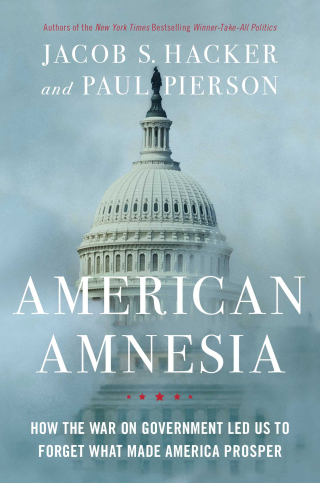
Jacob Hacker and Paul Pierson’s new book, American Amnesia: How the War on Government Led Us to Forget What Made America Prosper does four things. First, it makes the case for the mixed economy – the effort to make the market and state work together. Second, it makes the case that mixed government existed. The US used not to be as divided as it is now, and business, rather than being committed to a virulently anti-state agenda was often relatively pragmatic. Third, it tries to explain how this went South – how mixed government, and indeed government, became a dirty word. Finally, it asks how mixed government can be resuscitated again.

Hacker and Pierson’s political argument, as I read it, has a lot in common with that of old-style liberals like J.K Galbraith and Charles Lindblom. Hacker and Pierson don’t want an overweeningly powerful state – instead, they want a state and market that work together. They borrow Lindblom’s analogy of markets working like the fingers of a hand to provide dexterity, while the state works like a thumb, to provide authority and to help grasp things that need to be grasped. This does not imply that the state and markets should be guided by a single will so much as that they work, when they work well, in complementary ways. Indeed, like both libertarians and many leftists they are highly suspicious of what might happen when the state and private industry build relations that are too congenial. As they describe it (p.5), “Democracy and the market – thumbs and fingers – have to work together, but they also need to be partly independent of each other, or the thumb will seek to provide effective counterpressure to the fingers.”

In a mixed economy, government provides services and goods that will be underprovided by the private sector, or perhaps not provided at all. It also regulates market actors, obliging them to behave more honestly towards the consumers of their products. As the economy becomes increasingly complex, it becomes increasingly easy for private sector interests to take advantage of ordinary people. Regulators can help restrain business through regulation and antitrust (Hacker and Pierson acknowledge Woodrow Wilson’s racism but have kind words for his efforts to build the institutions that would regulate market competition). Unless business is restrained by the state, it is liable to behave badly.

More here.

on zizek and the immigrant crisis

ZizPaul O’Mahoney at The Dublin Review of Books:

This latest addition to the prolific Žižek’s output is in large part culled from pieces of journalism published over the past twelve months, dealing with the migrant crisis and related phenomena, from the Paris terror attacks of November 2015 to the mass sexual assaults during new year’s celebrations in Cologne. The book allows for presentation of these reflections in a more considered and consistent form; and, while its tone, brisker pace and brevity may betray its journalistic origins, it is not inappropriate, given the urgency of the subject matter and the need for practical proposals, that it should have more references to other pieces of journalism and sociological research and fewer to the German Idealist philosophy and Lacanian psychoanalysis so associated with Žižek’s work.

The figure of the neighbour, in the abstract, the multiplicity of that figure’s potential manifestations and equally diverse forms of “troubles with the neighbours”, have always been central to Žižek’s work; it is thus no surprise that migrations unprecedented in the era of welfare state capitalism should not only occasion his direct reflections but also, and more unusually, force his hand as regards offering solutions. The current mass migrations of course present a dual challenge: on the one side, the European destination countries feel it acutely and fear it as a potential threat to their way of life, an unexampled form of present, and promise of future, “troubles with the neighbours”. The challenge facing those attempting to reach Europe meanwhile is not only to stay alive; it does not end with their gaining Europe but is only transformed into a fresh set of troubles in a new neighbourhood.

more here.

THE STRANGE POWER OF A MEDIEVAL POEM about death

Livingstone-TheStrangePowerofaMedievalPoemAbouttheDeathofaChild1-872Josephine Livingstone at The New Yorker:

The medieval poem “Pearl” was written by someone whose identity we do not know, and is set mostly within a dream. Neither of these facts is unusual in medieval poetry. Authorship is often unclear for works from that period, and dreams were popular as literary devices: then, as now, dreams allow poets to illustrate ideas that might otherwise be inexpressible. The “Pearl” poet used the technique to account for an experience that still seems impossible to describe—the loss of a child.

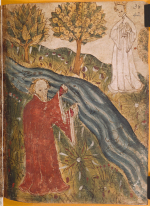
In the poem, the narrator visits the spot where a pearl once slipped from his grasp and got lost among “Gilofre, gyngure, & gromylyoune, / & pyonys powdered ay bytwene” (“ginger, gromwell, and gillyflower / with peonies scattered in between”). Swooning into unconsciousness, he comes to in a dream, in a place he has never been before, where cliffs split the sky (“ther klyfez cleven”). Across a river, he sees his pearl again, but now the “perle” is no mere thing—she is a young girl, richly arrayed in an elaborate outfit covered in pearls. Pearl also seems to be her name, or at least it is how the man addresses her: “ ‘O perle,’ quod I . . . ‘Art thou my perle?’ ” In reply, she calls him a jeweller, and he refers to her as a gem (“ ‘Jueler,’ sayde that gemme clene”).

more here.

On a Certain Epigram by Anna Akhmatova

AkhmatovaAnthony Madrid at The Paris Review:

Here is my own attempt at delivering the thing in all its roguish wit or egomaniacal misogyny:

Could Beatrice master the technique?
Or Laura write a sonnet—? Ach, enough.
I taught these Russian women how to speak.
God! if only I could make ’em all shut up.

One piece of serendipity that keeps nagging at me, which I shall not withhold here: it’s quite possible to make a new, macaronic epigram out of this material, wherein the second half translates the first. You’ll have to read it aloud to see how it strangely rhymes:

Ya nauchila zhenshchin govorit’…
No, Bozhe, kak ikh zamalchat’ zastavit’!
I taught these Russian women how to speak.
Now somebody show me how to make ’em stoppit!

It’s not necessary to read Akhmatova’s first two lines as if she is straightforwardly speaking from her own position, by the way. She may have thought—I’m convinced she did think—that it was obviously possible for a woman to “glorify love’s fire,” “create like Dante,” and so on; she had done it herself. So, when the greatest female poet of all time (in her own eyes and those of others) asks, “Can women write great stuff?” she’s channeling a voice not quite her own.

more here.

Should ethics professors observe higher standards of behavior?

Judith Stark in The Conversation:

ScreenHunter_2050 Jun. 22 15.31This is an enduring dilemma in the area of ethics and one that has recently come to light with charges of unethical behavior brought against a prominent philosopher, Professor Thomas Pogge of Yale University. Pogge has been accused of manipulating younger women in his field into sexual relationships, a charge he has strenuously denied.

Without making any judgment on the case itself, this situation raises larger questions about how the behavior of the experts in ethics is to be reviewed and evaluated.

As with most professions, there are no “ethics police” in the professions themselves. We who work in these professions are expected to police ourselves according to our codes of ethics, as is the case, for example, with physicians, lawyers and clergy members. Obviously, law enforcement comes into the picture with actions that are against the law.

Of course, we know that these professions also harbor people who do engage in unethical behavior, but in the case of experts in ethics, should we expect a higher standard of good behavior simply because they are experts in ethics?

More here.

Wednesday Poem

Breaking Pitch

My father raises his hand to signal “enough,”
but I'm still pitching, and the ball spins
off my fingertips–a breaking pitch
with so much stuff on it my imaginary batter
is too baffled to swing, so much stuff
the angels whistle, the crows near
the garbage cans take off in a flurry
of caws, and the mosquitoes burst in midair,
so much stuff my father, fear
in his eyes, hits the pavement,
behind him glass shattering.

Above the garage, Mrs. Golub, who runs
a vacuum cleaner over her wood floors every two hours,
yells out the window,”I told you something
bad would happen if you let that kid play here.”
And Miss Lamar pushes her long
nose into the screen, “See if my car
has any glass on it,” and Mr. Gorelick,
who sells silk ties to posh men's shops,
shouts, “Clean up the mess, boy.”

I hear the cars on Clayton Road,
their tinny horns, the wind shaking
down leaves, the sound of the breaking
pitch trembling the wires that cross
from neighborhood to neighborhood, echoing
in shells strung from my best friend's
doorway, the white horsehide glinting
in the sun, a flash of light,
a prophecy of greatness.

Shaking his head, my father comes toward me,
his tightened fists warning me that I'll be sorry.
“Helluva curve,” he mutters, “helluva curve.”

by Jeff Friedman
from, Working in Flour
Carnegie University Press
.

Anglosplaining

Andreas Kluth in 1843 Magazine:

UntitledMany Germans have been glued to a television series, “Where We Come From”, that explains Germany’s long, complicated and often tragic history. The “we” in the title, however, is deceptive, for the host and narrator is Sir Christopher Clark, an Australian historian knighted for his services to Anglo-German relations. His academic credentials are excellent. His book on Prussia, “Iron Kingdom”, may be the best on the subject. His tome on the first world war, “The Sleepwalkers”, became a bestseller. But Germany has plenty of its own historians. Why Clark? The answer starts with the dappled bow tie he wears as he drives around Germany in a red cabriolet vw Beetle: the quintessential Brit (Aussies are close enough) in the quintessential German vehicle. Then there’s the language. Clark speaks grammatically flawless German, but with enough of an English cadence to sound cheeky, witty and incisive. Occasionally he uses humour, which can still be shocking on German public television. Sometimes he even says nice things about the country’s past, which to Germans is truly shocking. He does not seem full of himself. To Germans that is refreshing.

German Anglophiles consider such attributes “Anglo-Saxon”. The term is stretchable in this context and includes anybody English-speaking, whether Celtic or Saxon, pale or brown, from down under or beyond the pond. Clark is not an isolated case. The late Gordon Craig, a Scottish-American historian, achieved similar success. So has Timothy Garton Ash, a historian at Oxford and Stanford, who wows Germans with pithy insights delivered in sophisticated German.

More here.

Industrial optimist: Moholy-Nagy revisited

Jeff Tollefson in Nature:

Moholy-Nagy-A11-43-900_pI’m standing in the spiraling rotunda of New York’s Guggenheim Museum, and over me dangles a chaotic mess held together by translucent Plexiglas. In the shadow the sculpture casts on the wall, the shapes converge in a pleasing negative blending intention and happenstance – impossible to predict, yet clearly part of a plan. On evidence, this is an artist thinking experimentally, and in multiple dimensions.

The industrial designer, artist and photographer Lázló Moholy-Nagy (1895-1946) was certainly that. As the Guggenheim’s retrospective Moholy-Nagy: Future Present shows, the Hungarian pioneer of the Bauhaus and beyond worked in a dazzling array of media: film, photography, painting, sculpture, graphic design and typography. But behind the restless eclecticism, he adhered to the unifying theory (with the Constructivists) that art is integral to social transformation and must embrace new technologies. At a time of vast industrial expansion, he declaimed himself as “[n]ot against technological progress, but with it”, championing novel industrial materials — from Formica and aluminium to the Plexiglas in Dual Form with Chromium Rods (1946) in the rotunda. Drawn towards the airy, the transparent and the brilliantly coloured, he was also in love with light and movement: like contemporary Alexander Calder, he engineered moving parts and even electric motors into kinetic sculptures.

More here.

Tuesday, June 21, 2016

A Crash Course in the Long-Term Relationship

Yoona Lee in the Los Angeles Review of Books:

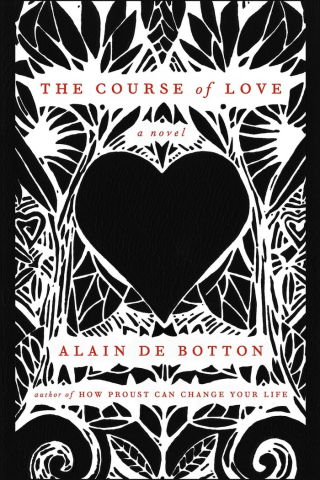
The-Course-of-Love-image-1In 1993 an unusually precocious 23-year-old named Alain de Botton rocked the literary world with the release of his first novel, On Love (also known as Essays in Love). Since then he has become a minor cultural phenomenon, thanks in part to his preternatural understanding of the human condition, unerringly articulate writing, and embrace of a mind-bogglingly broad array of subject matter, from commercial cookie manufacturing to Roman architecture. An accomplished polymath, de Botton is a journalist, novelist, and philosopher who has even founded a global, multichannel enterprise called The School of Life. For more than two decades, his second novel has been breathlessly anticipated by his admirers.

Written in de Botton’s characteristic style — accessible and sprinkled with friendly parenthetical asides — The Course of Love picks up where On Love leaves off. The main character of that novel, a Lebanese-German named Rabih Khan, has grown into a young man of 31. An architect now living in Edinburgh, he still slams doors during arguments, enjoys a good sulk now and then, and has a penchant for pragmatic, independent-minded women with ruddy hair and charmingly imperfect teeth. He is still an unabashed and incurable Romantic.

When Rabih meets his client, an unflappable Scottish woman named Kirsten McLelland, he quickly falls deeply in love. Soon they are dating, and at the end of the second chapter, de Botton summarizes their entire subsequent relationship in stark terms. The couple will marry and encounter major challenges along with the banality of domestic life. Over the course of 13 years, they will have a daughter followed by a son, and one will have an affair. “This will be the real love story,” the author concludes.

More here.