Friday Poem

Address

There are many ways of saying Chinese
in American. One means restaurant.
Others mean comprador, coolie, green army.

I’ve been practicing
how to walk and talk,
how to dress, what to do in a silk shop.

How to talk. America: Meiguo,
second tone and third.
The beautiful country.

In second grade we watched films
on King in Atlanta.
How our nation was mistaken:

They said we had hidden the Japanese
in California.
Everyone apologized to me.

But I am from Eldorado Drive
in the suburbs. Sara Lee’s
pound cake thaws in the heart

of the home, the parakeet bobs on a dowel,
night doesn’t move. The slumber party
teems in its spot in the dark

Read more »

Thursday, April 14, 2016

Europe: A Better Plan for Refugees

George Soros in the New York Review of Books:

ScreenHunter_1856 Apr. 15 12.04The asylum policy that emerged from last month’s EU-Turkey negotiations—and that has already resulted in the deportation of hundreds of asylum seekers from Greece to Turkey—has four fundamental flaws. First, the policy is not truly European; it was negotiated with Turkey and imposed on the EU by German Chancellor Angela Merkel. Second, it is severely underfunded. Third, it is not voluntary. It imposes quotas that many member states oppose and requires refugees to take up residence in countries where they don’t want to live, while forcing others who have reached Europe to be sent back. Finally, it transforms Greece into a de facto holding pen without sufficient facilities for the number of asylum seekers already there.

All these deficiencies can be corrected. The European Commission implicitly acknowledged some of them this week when it announced a new plan to reform Europe’s asylum system. But the Commission’s proposals still rely on compulsory quotas that serve neither refugees nor member states. That will never work. European Commission Vice President Frans Timmermans is inviting an open debate. Here is my contribution.

More here.

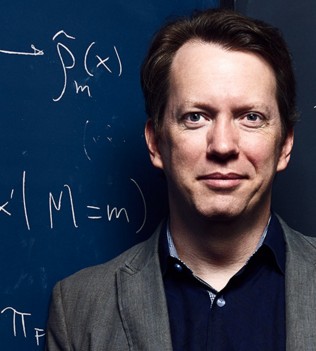
Sean Carroll speculates on the next big breakthrough in physics

Michael Brooks interviews Sean Carroll for New Scientist:

Are you enjoying the current popularity of physics that’s come as a result of discoveries like the Higgs boson and gravitational waves?

ScreenHunter_1855 Apr. 14 17.50It’s interesting, because physicists sort of ruled the 20th century with quantum mechanics, the atomic bomb and all sorts of technologies. We had the most political power and intellectual heft. Now the biologists are stealing that from us. Biology is advancing enormously quickly, and has a much more direct impact on our lives. But such advances – gene editing, for example – can be double-edged swords. In a sense, this works in favour of physics: the kinds of discoveries we’re making now don’t have immediate implications for technology or our everyday lives. No one’s worried about how the Higgs boson or gravitational waves are going to be used – they’re just really cool.

These physics breakthroughs have come from proving mathematical theorems. Should we continue to use maths to guide research?

It’s not just that mathematics is helpful in understanding nature, it’s the scientific methodology too. The bigger point is that these things illustrate the knowability of our world. There’s a quiet debate between people who think nature is fundamentally mysterious versus those who think it is fundamentally intelligible. These kinds of discoveries remind us is that our puny little brains have the power to make amazing predictions about far away and very difficult-to-access aspects of the natural universe.

More here.

Thursday Poem

luam/asa-luam

…. the afterworld sea

there was a water song that we sang
when we were going to fetch river from the river,
it was filled with water sounds
& pebbles. here, in the after-wind, with the other girls,
we trade words like special things.
one girl tells me “mai” was her sister’s name,
the word for “flower.” she has been saving
this one for a special trade. I understand
& am quiet awhile, respecting, then give
her my word “mai,” for “water,”
& another girl tells me “mai” is “mother”
in her language, & another says it meant,
to her, “what belongs to me,” then
belonging,” suddenly, is a strange word,
or a way of feeling, like “to be longing for,”
& you, brother, are the only one,
the only one I think of to finish that thought,

to be longing for
. mai brother, my brother

by Aracelis Girmay
from Poetry Magazine, April 2016

A Revolutionary Discovery in China

Ian Johnson in the New York Review of Books:

ScreenHunter_1854 Apr. 14 15.08As Beijing prepared to host the 2008 Olympics, a small drama was unfolding in Hong Kong. Two years earlier, middlemen had come into possession of a batch of waterlogged manuscripts that had been unearthed by tomb robbers in south-central China. The documents had been smuggled to Hong Kong and were lying in a vault, waiting for a buyer.

Universities and museums around the Chinese world were interested but reluctant to buy. The documents were written on hundreds of strips of bamboo, about the size of chopsticks, that seemed to date from 2,500 years ago, a time of intense intellectual ferment that gave rise to China’s greatest schools of thought. But their authenticity was in doubt, as were the ethics of buying looted goods. Then, in July, an anonymous graduate of Tsinghua University stepped in, bought the soggy stack, and shipped it back to his alma mater in Beijing.

University administrators acted boldly. They appointed China’s most famous historian, seventy-five-year-old Li Xueqin, to head a team of experts to study the strips. On July 17, the researchers gingerly placed the slips in enamel basins filled with water, hoping to duplicate the environment that had allowed the fibrous material to survive so long.

The next day, disaster struck. Horrified team members noticed that the thin strips had already started developing black spots—fungus that within a day could eat a hole through the bamboo. Administrators convened a crisis meeting, and ordered the school’s top chemistry professors to save the slips.

More here.

Morality, Alliances, And Altruism

Jesse Marczyk in Psychology Today:

ScreenHunter_1853 Apr. 14 14.59Having one's research ideas scooped is part of academic life. Today, for instance, I'd like to talk about some research quite similar in spirit to work I intended to do as part of my dissertation (but did not, as it didn't end up making the cut in the final approved package). Even if my name isn't on it, it is still pleasing to see the results I had anticipated. The idea itself arose about four years ago, when I was discussing the curious case of Tucker Max's donation to Planned Parenthood being (eventually) rejected by the organization. To quickly recap, Tucker was attempting to donate half-a-million dollars to the organization, essentially receiving little more than a plaque in return. However, the donation was rejected, it would seem, under fear of building an association between the organization and Tucker, as some people perceived Tucker to be a less-than-desirable social asset. This, of course, is rather strange behavior, and we would recognize it as such if it were observed in any other species (e.g., “this cheetah refused a free meal for her and her cubs because the wrong cheetah was offering it”); refusing free benefits is just peculiar.

As it turns out, this pattern of behavior is not unique to the Tucker Max case (or the Kim Kardashian one…); it has recently been empirically demonstrated by Tasimi & Wynn (2016), who examined how children respond to altruistic offers from others, contingent on the moral character of said others. In their first experiment, 160 children between the ages of 5 and 8 were recruited to make an easy decision; they were shown two pictures of people and told that the people in the pictures wanted to give them stickers, and they had to pick which one they wanted to receive the stickers from. In the baseline conditions, one person was offering 1 sticker, while the other was offering either 2, 4, 8, or 16 stickers. As such, it should come as no surprise that the person offering more stickers was almost universally preferred (71 of the 80 children wanted the person offering more, regardless of how many more).

Now that we've established that more is better, we can consider what happened in the second condition where the children received character information about their benefactors.

More here.

Thomas De Quincey: the Pope of Opium

BooksfeatHermione Eyre at The Spectator:

This biography of the craven Romantic and self-confessed ‘Pope of Opium’ concludes with the ominous words: ‘We are all De Quinceyan now.’ His life was shambolic but his legacy is strong. Many spores from his fevered mind have lodged in modern popular culture: his narcotic excursions inspired Baudelaire and Burroughs, his sensitivity to place influenced the psychogeographers Guy Debord and Iain Sinclair, his laconic, jaunty essay ‘On Murder Considered as One of the Fine Arts’ was deemed ‘delightful’ by Alfred Hitchcock, and his Escher-like imaginative double consciousness prompted Jorge Luis Borges to ask: ‘I wonder if I would have existed without De Quincey?’

And yet behold the man himself. Broke, pompous and high as a kite, he dressed like a beggar and wrote surrounded by an ‘ocean’ of books, papers and candles so that, as Frances Wilson dryly notes, ‘It was habitual for his daughters to point out to De Quincey as he worked that his hair was alight’. By turns amused, appalled and empathetic, Wilson paints such a riveting multi-tonal portrait that one ends up with a strong regard for De Quincey’s rare vision but at the same time an absolute certainty one would not invite him to dinner.

Torpid until midnight, his conversation would take off just as the other guests were leaving, reaching a peak of ‘diseased acuteness’, according to Thomas Carlyle; he might then stay on as a guest for weeks on the smallest pretext, borrowing money, leaving behind the stacks of papers that always attended him, and probably ending up by revealing damning details about his stay a few years later. He was a great writer, but became, like so many junkies, a lousy friend.

more here.

The brutality of Islamist terrorism has many precedents

187L11104_68SQS_comp_2.jpg.thumb.319.319John Gray at Lapham's Quarterly:

For those who find the rise of ISIS baffling, much of the past century can only be retro­gression from modern life. Even the regime that committed a crime with no precedent in history must be regarded as an example of atavism: the Nazi state has often been described as having taken Europe back to the Dark Ages. Certainly the Nazis exploited a medieval Christian demonology in their persecution and genocide of Jews, but Nazism also invoked a modern pseudoscience of race to legitimate these atrocities. Invoking a type of faux Darwinism, Nazi racism could have emerged only in a time shaped by science. Nazism was modern not just in its methods of killing but also in its way of thinking.

This is not to reiterate the claim—made by Marxian theorists of the Frankfurt School—that modern scientific thinking leads, by some circuitous but inevitable route, to Nazism and the Holocaust. It is to suggest that when it is invoked in politics modernity is a figment. The increase of knowledge in recent centuries is real enough, as is the enlargement of human power through technology. These advances are cumulative and accelerating and, in any realistically likely scenario, practically irreversible. But there have been few, if any, similar advances in politics. The quickening advance of science and technology in the past few centuries has not gone with any comparable advance in civilization or human rationality. Instead, the increase of knowledge has repeatedly interacted with human conflicts and passions to produce new kinds of barbarism.

more here.

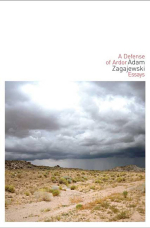
A defence of ardour

ImagesAdam Zagajewski at Eurozine:

In Krakow, I sensed the luminescence of all that was best in the Polish tradition: distant recollections of the Renaissance recorded in the architecture and museum exhibits, the liberalism of the nineteenth-century intelligentsia, the energy of the interwar period, the influence of the democratic opposition just then coming into being.

The West Berlin of the early eighties struck me as a peculiar synthesis of the old Prussian capital and a frivolous city fascinated by Manhattan and the avant-garde (sometimes I suspected that the local intellectuals and artists treated the wall as yet another invention of Marcel Duchamp). In Paris, I didn't encounter the great minds, the great French arbiters of civilization – I'd come too late for that. But I discovered nonetheless the beauty of one of the few European metropolises to possess the secret of eternal youth (even Baron Haussmann's barbarism hadn't ruined the continuity of the city's life). Finally, at this brief list's conclusion, I came to know Houston, sprawled on a plain, a city without history, a city of evergreen oaks, computers, highways, and crude oil (but also wonderful libraries and a splendid symphony).

After a time I understood that I could draw certain benefits both from the wartime disaster, the loss of my native city, and from my later wanderings – as long as I wasn't too lazy and learned the languages and literatures of my changing addresses.

more here.

Cancer Therapy: An Evolved Approach

Cassandra Willyard in Scientific American:

DAAFE4B6-7111-48F8-BD4802E9C16594D0Cancer cells harbour a staggering array of mutations. In 2012, when Swanton and his colleagues sequenced multiple biopsies from two people with kidney cancer, they found that even within a single person, no two samples were the same. The team examined not only the primary tumour, but also the satellite tumours—called metastases—that had spread throughout the patients' bodies. In each person, the team found more than 100 mutations in the various tumour samples analysed; only about one-third of them occurred in all samples. The relationships between the various cancerous cells from a single person can be plotted out in much the same way as evolutionary biologists plot relationships between species: by drawing phylogenetic trees, branching diagrams that trace 'descendants' back to a common ancestor. Mutations that occur in the first malignant cells, those in the trunk of this evolutionary tree, will end up in all the tumour cells; mutations that arise later will be found only in the tree's branches. To eliminate the tumour, Swanton says, one must attack the mutations in the trunk.

Therapies that target some of these trunk mutations already exist, and they often produce dramatic responses at first. But then resistance develops, as Bardelli found. “We're so fixated on 'the smaller the tumour gets, the better', but what one doesn't think about is what one has left behind,” Swanton says. “You're often leaving resistant clones that you can't treat.” But he thinks that by targeting multiple trunk mutations at the same time, researchers might have a shot at wiping out the cancer. Chances are slim that a single cancer cell would be able to evade a two- or three-pronged attack.

One way to do this is to use combinations of targeted therapies.

More here.

Wednesday, April 13, 2016

Kurt Vonnegut is Taken Seriously, and You Won’t Believe What Happens Next!

Robert T. Tally Jr. in Humor in America:

ScreenHunter_1851 Apr. 13 16.47I’m not sure that it ranks as high as pictures of baby animals, meme-based quizzes, “infotainment” listicles, or Kim Kardashian’s prodigious rump, but Kurt Vonnegut’s very name seems to have become a powerful form of clickbait in the twenty-first century. Judging from my own Facebook feed, there must be weekly (if not almost daily) blog posts or internet articles citing the wit and wisdom of the great Hoosier novelist. Vonnegut’s birthday on November 11 – serendipitously, it coincides with Armistice Day, otherwise known as Remembrance Day, but in the United States (and to Vonnegut’s dismay) it is now called Veteran’s Day – occasioned another wave of links crashing upon my social media screens, including this one, bizarrely titled “So It Goes: A Life of Guidance from Kurt Vonnegut in 11 Quotes.” As with other such worshipful pieces, all of the quotations are taken completely out of context, but errant web-surfers apparently find his words all the more meaningful, inspiring, or “guiding” for their being context-less. It matters little that Vonnegut was writer who consistently lamented the loss of memory and who derogated the false promise of an afterlife, particularly when he is being memorialized on the internet in such a way as to reinforce the memory-loss and to celebrate immortality. More than seven years after his death and more than 45 years after the publication of his most famous novel, Vonnegut lives a vibrant, seemingly eternal life as a ghostly but wise internet presence. Hi ho!

More here.

We are now witnessing Elon Musk’s slow-motion disruption of the global auto industry

Steve LeVine in Quartz:

ScreenHunter_1850 Apr. 13 16.42On March 31, his Tesla Motors unveiled its long-promised Model 3, a $35,000 electric car that will go 215 miles per charge. The market response suggests to some the potential as a category killer, not just in electric vehicles, but mainstream cars in general: in the week since, more than 325,000 Model 3s have been pre-ordered by people putting down $1,000 per reservation, the company said April 7.

Even deep Tesla skeptics call this demand unprecedented. There simply may be no example of a new car attracting as much interest in more than a century of automative history. Veteran auto analyst Bertel Schmidt says the closest comparison would be the 1955 Citroen DS (below), which was pre-ordered by 12,000 motorists on launch day. Wall Street has responded by sending Tesla’s share price up by about 12% since the Model 3’s debut.

More here.

The Absurd Primacy of the Automobile in American Life

Edward Humes in The Atlantic:

Lead_960What are the failings of cars? First and foremost, they are profligate wasters of money and fuel: More than 80 cents of every dollar spent on gasoline is squandered by the inherent inefficiencies of the modern internal combustion engine. No part of daily life wastes more energy and, by extension, more money than the modern automobile. While burning through all that fuel, cars and trucks spew toxins and particulate waste into the atmosphere that induce cancer, lung disease, and asthma. These emissions measurably decrease longevity—not by a matter of days, but years. The Massachusetts Institute of Technology calculates that 53,000 Americans die prematurely every year from vehicle pollution, losing 10 years of life on average compared to their lifespans in the absence of tailpipe emissions.

There are also the indirect environmental, health, and economic costs of extracting, transporting, and refining oil for vehicle fuels, and the immense national-security costs and risks of being dependent on oil imports for significant amounts of that fuel. As an investment, the car is a massive waste of opportunity—“the world’s most underutilized asset,” the investment firm Morgan Stanley calls it. That’s because the average car sits idle 92 percent of the time. Accounting for all costs, from fuel to insurance to depreciation, the average car owner in the U.S. pays $12,544 a year for a car that puts in a mere 14-hour workweek.

More here.

I am on the Kill List. This is what it feels like to be hunted by drones

Malik Jalal in The Independent:

Pg-29-drones-apI am in the strange position of knowing that I am on the ‘Kill List’. I know this because I have been told, and I know because I have been targeted for death over and over again. Four times missiles have been fired at me. I am extraordinarily fortunate to be alive.

I don’t want to end up a “Bugsplat” – the ugly word that is used for what remains of a human being after being blown up by a Hellfire missile fired from a Predator drone. More importantly, I don’t want my family to become victims, or even to live with the droning engines overhead, knowing that at any moment they could be vaporized.

I am in England this week because I decided that if Westerners wanted to kill me without bothering to come to speak with me first, perhaps I should come to speak to them instead. I’ll tell my story so that you can judge for yourselves whether I am the kind of person you want to be murdered.

I am from Waziristan, the border area between Pakistan and Afghanistan. I am one of the leaders of the North Waziristan Peace Committee (NWPC), which is a body of local Maliks (or community leaders) that is devoted to trying to keep the peace in our region. We are sanctioned by the Pakistan government, and our main mission is to try to prevent violence between the local Taliban and the authorities.

More here.

Wallace Stevens, a “philosophical” poet (or not)

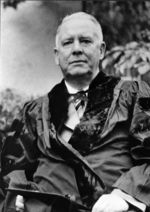
WallaceStevensRegalia-3.28.50David Baker at The New England Review:

We think by feeling,” writes Roethke, and then adds with a lyric shrug, “what is there to know?” Roethke articulates in “The Waking” a manner of late, purified, and some have said discredited romanticism—more inspiration than intellect, more sense than sanity or reason. So he doesn’t get lost in his unknowing, in a dark time, Roethke finds his way in and back out of the maze by means of form itself, following the step-by-step, syllable-by-syllable guidance of the villanelle. Otherwise, it might all look like, well, disaster.

Wallace Stevens is one of our supreme knowers, one of the profound thinkers of, and inside, the lyric poem. If Roethke thinks by feeling, then how does Stevens think? All that abstract longwinded highbrow stuff, that tink-a-tink and philosophy, what to do with all that?

Philosophy is my first point, or rather the relation of philosophy to the lyric utterance. One of the persisting characterizations of Stevens and his poems—and it seems everyone has written on Stevens—is that he is a philosophical poet, that particular kind of abstractive thinker. Even a quick amble through recent Stevens criticism will show the commentators as likely to position Stevens alongside philosophers as alongside poets. Of course they situate him with Burke and Kermode, James and Santayana and Locke; but also Stevens with Derrida, Gombrich, Adorno, Bachelard, Blanchot, Wittgenstein, Lacan, Pater, Levinas, Hegel, Schlegel, Kant. Entire books appear about Stevens and the philosophical: The Never-Resting Mind, The Act of the Mind, Stevens’ Poetry of Thought, and A Cure of the Mind.

more here.

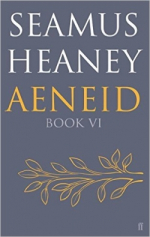
Seamus Heaney’s Aeneid

Heaney aeneidJ. Kates at Harvard Review:

Seamus Heaney introduced his translation of Beowulf with these words: "When I was an undergraduate at Queen's University, Belfast, I studied Beowulf and other Anglo-Saxon poems and developed not only a feel for the language but a fondness for the melancholy and fortitude that characterized the poetry." [1] His introduction to Book VI of Virgil's [2] Aeneidbegins in both a parallel and yet a very different fashion: "This translation of Aeneid VI is neither a 'version' nor a crib: it is more like classics homework, the result of a lifelong desire to honour the memory of my Latin teacher at St. Columb's College, Father Michael McGlinchey." [3]

I am certain the poet needed little encouragement. Heaney descended into the Underworld time and time again from the very beginning of his writing career. Many of his own poems confront the dead who passed through and out of his life, just as Aeneas eternally confronts those in his regnum inferni. In Station Island, Heaney came close to employing Dante as his own Virgil. The Aeneid was standard fare for a Latin student of Heaney's generation. In Father McGlinchey's class he was set, as I was set in Mr. Clegg's, passages to translate as part of the pedagogy. Now Heaney's translation of Book VI, the narrative of Aeneas's descent into the Underworld, has been published posthumously in its own slim volume.

more here.

Gerald Foos bought a motel in order to watch his guests having sex

160411_r27944-320Gay Talese at The New Yorker:

As to whether my correspondent in Colorado was, in his own words, “a deranged voyeur”—a version of Hitchcock’s Norman Bates, or the murderous filmmaker in Michael Powell’s “Peeping Tom”—or instead a harmless, if odd, man of “unlimited curiosity,” or even a simple fabulist, I could know only if I accepted his invitation. Since I was planning to be in Phoenix later in the month, I decided to send him a note, with my phone number, proposing that we meet during a stopover in Denver. He left a message on my answering machine a few days later, saying that he would meet me at the airport baggage claim.

Two weeks later, when I approached the luggage carrousel, I spotted a man holding out his hand and smiling. “Welcome to Denver,” he said, waving in his left hand the note I had mailed him. “My name is Gerald Foos.”

My first impression was that this amiable stranger resembled many of the men I had flown with from Phoenix. He seemed in no way peculiar. In his mid-forties, Foos was hazel-eyed, around six feet tall, and slightly overweight. He wore a tan jacket and an open-collared dress shirt that seemed a size small for his heavily muscled neck. He had neatly trimmed dark hair, and, behind horn-rimmed glasses, he projected a friendly expression befitting an innkeeper.

more here.

The Rest Is Silence: Chaplin’s trip abroad

Henry Giardina in The Paris Review:

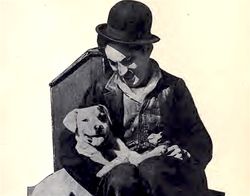
Mytripabroad05chapialaIn the fall of 1921, journalists were clamoring to know if Charlie Chaplin intended to play Hamlet. They asked him in Chicago at the Blackstone Hotel. They cornered him at the Ritz. His response each time was coy and evasive: “Why, I don’t know.” Of all the unlikely questions they tended to ask him at this point in his career—“Are you a Bolshevik?” “What do you do with your old mustaches?”—the Hamlet question seems most out of place. Why would an actor known for his comedy and silence take on a famously verbose and tragic role? Hamlet, with his hemming and hawing, didn’t seem a natural fit for an actor in Chaplin’s position. But then, no actor had ever been in Chaplin’s position before.

In 1921, Chaplin was the most famous man in the world, famous in a way that hadn’t been possible since the birth of cinema a mere twenty-odd years earlier. He’d just put out The Kid, his most ambitious film, and the first feature-length film comedy. There had been other attempts, mainly accidents: Harold Lloyd’s A Sailor-Made Man, which ran over its three intended reels into a fourth, and Chaplin’s earlier Tillie’s Punctured Romance had the length but lacked the architecture. The Kid was different. It merged tragedy and comedy into a third, fluid form. Chaplin wanted to wring out of audiences every single emotion at once without losing any narrative cohesion. The result was a high emotional realism not yet seen in the short history of the cinema. This was, before 1921, unheard of—inadvisable, even. People thought Chaplin too ambitious, especially for his medium. “It won’t work,” his friend Gouverneur Morris told him. “The form must be pure, either slapstick or drama; you cannot mix them, otherwise one element of your story will fail.” But Chaplin understood something of the complicated response he produced in his audience, a response belonging neither to pure joy nor pure sadness. In 1914, an actress had approached him with tears in her eyes after watching him film a two-reel comedy. “I know it’s supposed to be funny,” she said, “but you just make me weep.”

More here.