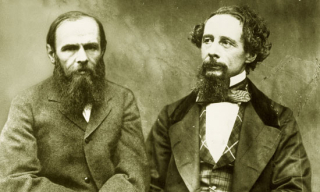
When Dickens met Dostoevsky

Naiman_Commentary

Eric Naiman in the TLS:

Late in 2011, Michiko Kakutani opened her New York Times review of Claire Tomalin’s biography of Charles Dickens with “a remarkable account” she had found in its pages. In London for a few days in 1862, Fyodor Dostoevsky had dropped in on Dickens’s editorial offices and found the writer in an expansive mood. In a letter written by Dostoevsky to an old friend sixteen years later, the writer of so many great confession scenes depicted Dickens baring his creative soul:

“All the good simple people in his novels, Little Nell, even the holy simpletons like Barnaby Rudge, are what he wanted to have been, and his villains were what he was (or rather, what he found in himself), his cruelty, his attacks of causeless enmity toward those who were helpless and looked to him for comfort, his shrinking from those whom he ought to love, being used up in what he wrote. There were two people in him, he told me: one who feels as he ought to feel and one who feels the opposite. From the one who feels the opposite I make my evil characters, from the one who feels as a man ought to feel I try to live my life. ‘Only two people?’ I asked.”

I have been teaching courses on Dostoevsky for over two decades, but I had never come across any mention of this encounter. Although Dostoevsky is known to have visited London for a week in 1862, neither his published letters nor any of the numerous biographies contain any hint of such a meeting. Dostoevsky would have been a virtual unknown to Dickens. It isn’t clear why Dickens would have opened up to his Russian colleague in this manner, and even if he had wanted to, in what language would the two men have conversed? (It could only have been French, which should lead one to wonder about the eloquence of a remembered remark filtered through two foreign tongues.) Moreover, Dostoevsky was a prickly, often rude interlocutor. He and Turgenev hated each other. He never even met Tolstoy. Would he have sought Dickens out? Would he then have been silent about the encounter for so many years, when it would have provided such wonderful fodder for his polemical journalism?

More here.
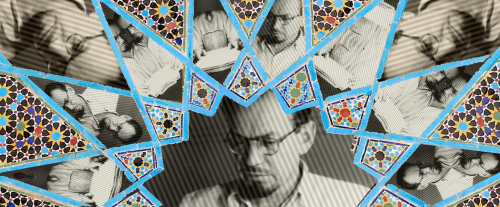
Leopold Weiss, the Jew Who Helped Invent the Modern Islamic State

Asad_256097

Shalom Goldman in Tablet:

In 1961 the eminent Muslim scholar Muhammad Asad, then living in Europe, published The Principles of State and Government in Islam. The central question posed in that book is whether Islam is opposed to the mixing of religion and politics—as is the modern West. Though Asad’s answers to this question are subtle and non-categorical, his overall conclusion is that in majority-Muslim states a mixture of politics and religion is necessary. Society must bind itself to the will of God, Asad stated, and “the organization of an Islamic state or states is an indispensable condition of Islamic life in the true sense of the word.”

This was not the first time that Asad, who had been publishing books and articles since the mid-1930s, called for the infusion of religion into politics. In his highly influential 1934 essay “Islam at the Crossroads,” Asad articulated a set of principles about the relationship between the Muslim world and the West that served as the basis of his later conversations with Muhammad Iqbal and other Islamist activists. He envisioned, in Pakistan and elsewhere, the emergence of Muslim states thoroughly modern but inspired and informed by religious principles.

Asad’s vision of an Islamic state bears little resemblance to the militant, anti-Western version propagated by ISIS today; he conceived of an Islamic state based on modern interpretations of the Quran and the Islamic legal traditions, a state grounded in democratic principles, where women would be treated as equals and the civil rights of non-Muslims respected.

Perhaps that’s not surprising, given Asad’s roots. He was born at the turn of the 20th century in Austria-Hungary—in what is now Ukraine—as Leopold (Aryeh) Weiss.

More here.

9 LGBTQ Writers Reflect after Orlando

Daniel Evans Pritchard in The Critical Flame:

We at The Critical Flame shared the heartbreak, anger, and confusion at the recent mass shooting of members of the gay, lesbian, bisexual, transgender, and queer community inOrlando, where a lone gunman killed more than fifty LGBTQ-identified and Latinx people at Pulse nightclub.

The shooter likely intended to silence and marginalize the LGBTQ/Latinx community. It has been heartening to see many writers responding with such expansive humanity. Justin Torres writes about the particular joy found in Latinx spaces in a full-throated piece in The Washington Post, for instance, and Rigoberto González writes about finding a home in similar spaces for BuzzFeed. These are only a few examples, but their reflections seeded the idea for our feature.

It has been a year too full of tragedy, mourning, and anger. Over just the past week, we’ve witnessed the deaths of Philando Castile and Alton Sterling at the hands of law enforcement officers, as well as the nation’s 228th mass shooting since the beginning of the year—this time of police officers and Black Lives Matter protesters in Dallas. Creating a more peaceful, more just society will require all our righteous anger, activism, ballots, and safe spaces. It will also require an articulation of what that society will look like. Every person should be able to make a home in this life, to be at home in their own identity. To remake the world so that’s not only possible but presumed and universal, we’ll need to articulate that future in policy, in practice, and in word.

This is literary journal. Language is our medium. So, in an effort to create more space for healing and solidarity, to help articulate a more peaceful and just world, CF has invited a number of LGBTQ-identified writers to respond to this question:

Can you tell us about a time that you felt at home in your identity?

Home is a complicated notion, as several of our contributors note, and it’s ultimately inadequate to the task of realizing justice—but it is a powerful idea. A person can find home in a community, in a relationship, at a nightclub, in writing, etc.

I’m so grateful to our contributors for their generosity, careful reflection, and honesty. I am also deeply indebted to both Alison Lanier, CF Conversations Editor, and Ricco Siasoco, CF Contributing Editor, for their guidance in the formulation and curation of this feature.

In peace and solidarity,

Daniel Evans Pritchard
Editor

More here.

Ulysses, Order and Myth

Ulyssess-1967-filmAnthony Domestico at berfrois:

Published in The Dial in November of 1923, T.S. Eliot’s essay “‘Ulysses,’ Order, and Myth” is a rare opportunity to see one of modernism’s giants grappling with one of modernism’s greatest works. Having met Joyce for the first time while delivering a pair of old shoes on behalf of Ezra Pound on August 15, 1915, Eliot received each new episode from Joyce’s work as it became available[1]. Eliot previously had commented on the necessary “crudity and egoism” of Joyce’s writings in the Athenaeum of July 4, 1919 and had praised the “Oxen of the Sun” episode as an exposure of “the futility of all English styles” following the book’s publication in 1922.[2] His review in The Dial, however, was his most sustained and considered commentary on Joyce’s work, his method, and its broader implications for modern fiction and the novel form itself.

In his review, Eliot claims Ulysses to be “the most important expression which this present age has found,” a “book to which we are all indebted, and from which none of us can escape.”[3] From the very beginning, Eliot indicates the significance of the novel to its specific time, to the particular conditions and communities of the modern age. The most important innovation of Joyce’s technique, Eliot claims, and the one that makes it such a seminal work for the modern writer, is “the parallel [of the work] to the Odyssey, and the use of appropriate styles and symbols to each division.” Eliot praises this “method,” as he calls it, as not merely “an amusing dodge, or scaffolding erected by the author for the purpose of disposing his realistic tale,” but instead “a way of controlling, of ordering, of giving a shape and a significance to the immense panorama of futility and anarchy which is contemporary history”

more here.

With Coercive Control, the Abuse Is Psychological

Abby Ellin in The New York Times:

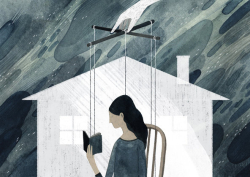
TraumaLisa Fontes’s ex-boyfriend never punched her, or pulled her hair. But he hacked into her computer, and installed a spy cam in her bedroom, and subtly distanced her from her friends and family. Still, she didn’t think she was a victim of domestic abuse. “I had no way to understand this relationship except it was a bad relationship,” said Dr. Fontes, 54, who teaches adult education at the University of Massachusetts, Amherst. It was only after doing research on emotional abuse that she discovered a name for what she experienced: Coercive control, a pattern of behavior that some people — usually but not always men — employ to dominate their partners. Coercive control describes an ongoing and multipronged strategy, with tactics that include manipulation, humiliation, isolation, financial abuse, stalking, gaslighting and sometimes physical or sexual abuse.

“The number of abusive behaviors don’t matter so much as the degree,” said Dr. Fontes, the author of “Invisible Chains: Overcoming Coercive Control in Your Intimate Relationship.” “One woman told me her husband didn’t want her to sleep on her back. She had to pack the shopping cart a certain way, wear her clothes a certain way, wash herself in the shower in a certain order.” While the term “coercive control” isn’t widely known in the United States, the concept of nonphysical forms of mistreatment as a kind of domestic abuse is gaining recognition.

More here.

postcard from the indy 500

Why-is-the-indy-500-the-wildest-party-in-racing-237224646-may-24-2013-1-600x450John Paul Rollert at Harper's Magazine:

For one weekend every year, the corner of Georgetown Road and West 25th seems like the center of the universe, the perfect place for Tate to tell people about a world far beyond our own. Or try to tell them, for no one stops to have a conversation with him, not on the afternoon before the Indianapolis 500.

“I wouldn’t be here if y’all came to church,” Tate explains to no one in particular. He’s armed with a portable microphone and a street preacher’s shield of self-righteousness, holding his phone out before him as if he were trying to cast out a demon dispatched from the Verizon call center. This is how I find him, and it takes me a moment to realize what he’s doing: videotaping hecklers on the other side of a temporary fence. One of them is wearing a shirt with an arrow on it pointing up to his face, holding a sign that reads He wants to see boobies.

I can’t blame the goons, not entirely, not even the one with the bullhorn who attempts to trump Tate’s appeals by invocations that begin, If you believe in drink…. This is Indy after all, and the corner of the Coke Lot is a perfect place to party and preach.

more here.

‘Dante: The Story of His Life’ by Marco Santagata

DanteTim Parks at The London Review of Books:

The Alighieri family was Guelf by tradition, but obscure enough to have avoided exile with other Guelfs when the Ghibellines were in the ascendant shortly before Dante’s birth. Of his education we know only that his family wasn’t rich enough to provide him with a private tutor. Dante’s father died when his son was ten, leaving him, as Leonardo Bruni would put it, ‘not greatly rich … but with moderate and sufficient wealth to live honourably’. The problem, as Santagata construes it, was that Dante’s notions of honourable living were not Bruni’s. He was ambitious, had the highest possible opinion of himself and aspired to the life of a noble, or at least to a noble life, a life dedicated to writing. Which brings us to one of the core themes of this biography: Dante’s self-image, the way it dominated his writings and conditioned his every move.

Giovanni Villani, almost the only person to write about Dante who actually knew him, thought him a ‘great poet and philosopher’ but ‘presumptuous, contemptuous and disdainful’ as a person. A generation later, Boccaccio, whose biography of Dante is based on conversations with people who had known him, describes him as ‘proud and disdainful’ and prone to losing his temper. Around these meagre testimonies, Santagata gathers a quantity of detail, largely drawn from Dante’s writing, to suggest a man intent on constructing a myth of himself as both nobly born and destined to greatness. All three of his major works, the Vita nova (1295), the Convivio (1307) and the Commedia (1321), were, for their time, remarkably autobiographical. ‘

more here.

Why the Web Needs the Little Miracle of 3QuarksDaily

Thomas Manuel in The Wire:

Note: Dear 3qd followers, As a community of sophisticated readers, you keep raising the bar higher for us through your timely comments. Thank you. Please read the article below which finally gives due credit to my brother Abbas who has dedicated himself to this public service: “So then how does something like this ‘stay the course’ and last more than a decade? I asked Meis what the secret was, completely unsure what to expect as a reply. “It is the people and the relationships,” he said “That’s the core of it. It is, to be terribly corny, love that has always held the thing together.” Thanks to my co-editors. And to Abbas…BRAVO!

ImagesOn July 31st 2004, Abbas Raza began to curate the internet. On his first day, he posted links to the Cavafy poem, ‘Waiting for the Barbarians’, a New Scientist article on the possibilities of extra-terrestrial contact, ‘Is it Art, Or is it Arab Art?’, two obituaries of Francis Crick, a primer on how to avoid copyright litigation and a curious piece in the Independent on Mike Tyson’s short-lived comeback. An undoubtedly dizzying range of subjects.

Almost twelve years later, on June 23, 2016, 3QuarksDaily, or 3QD for short, is still going strong. The latest contents include an analysis of the immigration concerns around Brexit, a book review of American Amnesia: How the War on Government Led Us to Forget What Made America Prosper, the ever entertaining Slavoj Žižek, an article titled ‘Should ethics professors observe higher standards of behaviour?’, and a Caravan feature on the Urdu poet Faiz Ahmed Faiz. While a majority of people might see this as a vertigo-inducing list of esoterica, to thousands of intellectual omnivores (including Richard Dawkins, Steven Pinker, Nassim Nicholas Taleb, David Byrne and Mohsin Hamid) who subscribe to the site, it’s a vantage point. They, like me, have become overawed by the vastness of the internet’s moving feast. One that is increasingly so filled with food that there’s no place to manoeuvre around the table. So we find ourselves malnourished while choking on delicacies. As Raza put it, the “overload is something of a cliché by now but that doesn’t make it any less real”.

The need for filters, aggregators and curators to navigate the web isn’t new. Arts and Letters Daily, the inspiration for 3QD, was founded by the late Denis Dutton way back in 1998. It in turn was inspired by the news aggregator, Drudge Report, which started in 1995. But each of these had their own niche (literary humanities and conservative politics respectively) while Raza envisioned something more all-embracing – which ironically turned out to be a niche of its own. His plan was to “collect only serious articles of intellectual interest from all over the web but never include merely amusing pieces, clickbait, or even the news of the day… to find and post deeper analysis… and explore the world of ideas… [to] cover all intellectual fields that might be of interest to a well-educated academic all-rounder without being afraid of difficult material… [and to] have an inclusive attitude about what is interesting and important and an international outlook, avoiding America-centrism in particular.”

In practice, this elaborate vision looks deceptively simple. According to Morgan Meis, one of the editors of 3QD, all you had to do was “get a few reasonably smart people together, have them create links to the sorts of things they would want to read across the web, on any given day. Voila! You’ve got an interesting website. Then, don’t fuck that simple formula up. Don’t get cute. Stay the course.”

More here.

Monday, July 11, 2016

Sunday, July 10, 2016

The Standoff in Bangladesh

Joseph Allchin in the New York Review of Books:

Bangladeshi-security-dhakaThe first time I walked into the Holey Bakery, in Dhaka, Bangladesh, one of its owners was on the verdant front lawn, a rare holdover of old-world extravagance in the country’s densely inhabited capital. Situated next to a lake in the upscale Gulshan neighborhood, the bakery and its sister restaurant, the O’Kitchen, occupied the house in which, he said, he had fallen in love with his wife. A rare venue for European food, it catered to affluent foreigners and the country’s elite; less than a dozen dimly-lit marble-topped tables stretched around impressive imported ovens inside, with a few on a terrace for use when weather allowed.

On the evening of Friday, July 1, bone marrow was on the menu, and the diners included nine Italians, most of whom were employed in the country’s garments sector, as well as a group of recent graduates of the exclusive American International School, which is just across the lake that Holey’s garden overlooks. Cristian Rossi, forty-seven, and Nadia Benedetti, fifty-two, were Italian apparel entrepreneurs saying farewell to the country. The young students enrolled in college in the United States—Tarishi Jain, nineteen, at Berkeley, and Faraaz Hossain, twenty, and Abinta Kabir, eighteen, a US citizen, both at Emory—were back for the summer holidays and celebrating a reunion of sorts.

At around 8:45 PM, however, the restaurant turned into a place of devastation and utter horror, when a siege by five—or possible six—young Islamist militants (the presence of a sixth attacker has not been ruled out), apparently affiliated with ISIS, executed these and other patrons, eighteen of them foreign nationals.

More here. [Thanks to Kazi Anis Ahmed.]

100 Million Years of Decorating Yourself In Junk

Ed Yong in Not Exactly Rocket Science:

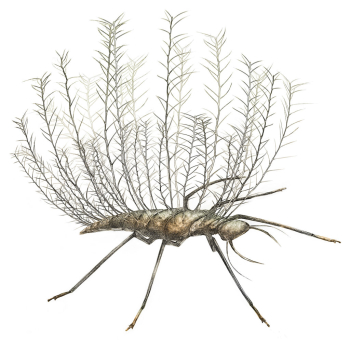
Wang1HR-1024x995Every year, in northern Myanmar, thousands of farmers pull tonnes of Cretaceous amber out of the ground, and send the glistening nuggets to local markets. For six years, Bo Wang from the Chinese Academy of Sciences and his colleagues have visited the markets and sifted through 300,000 of the glistening nuggets. It was a lot of work. Then again, it takes a lot of work to find animals that spent their whole lives trying not to be found.

Within the amber, Wang’s team identified dozens of ancient insects that camouflaged themselves by adorning their bodies with junk. They had short bristles and elaborate feathery tubes, onto which they stuck sand, soil, wood fibres, bits of ferns, and even body parts of other insects. They were the earliest animals that we know of to camouflage themselves, some 100 million years ago.

Many living creatures still embellish their bodies in debris. The aptly nameddecorator crabs, for example, look like walking bundles of algae and seaweed. The larvae of caddisflies live in tubes made of rock, sand, plants, and other underwater detritus, bound by silk. And one grisly species of assassin bug wears a coat made from the corpses of its ant prey.

More here.

Art That Exposes the Strange World We Live In

Sheherzad Preisler in Nautilus:

ArtThe environmental artist Ned Kahn, a MacArthur Foundation “genius grant” awardee, gravitates toward phenomena that lie on the edges of what science can grasp—“things,” he tells me over the phone, “that are inherently complex and difficult to predict, yet at the same time beautiful.” The weather, for example, has, because of its chaotic yet orderly nature, “fascinated me for my whole career,” he says. For almost the last 30 years in particular, he’s been creating dynamic installations that he thinks of as “observatories”: Since they frequently incorporate wind, water, fog, sand, and light, he states on his website, “they frame and enhance our perception of natural phenomena.”

Take his most recent project, the “Shimmer Wall”. Composed of over 30,000 tiles, it will be a 1,100-foot long façade of a new building, home to the “Ocean Wonders: Sharks!” exhibit, set to open this year at the New York Aquarium (over $80,000, toward a $100,000 goal, has been donated for its construction). It will house over 100 species of animals, including but not limited to a variety of crustaceans, sharks, fish, rays, and turtles. “They were struggling with the façade and someone on the design committee knew about my work and approached me,” says Kahn. “That led to the idea that we’re doing a skin for the aquarium inspired by fish skin, shark skin, scales. I’ve been doing a number of faceted, fragmented, kinetic artworks influenced by scales—that move with the wind and, when you step back, you get an idea of how the wind affects it.”

Kahn tells me that, before Hurricane Sandy hit, on October 29th 2012, there was a six-foot square experimental piece of the Wall outside the aquarium, to test if it could stand extreme weather. It held up perfectly, he says. In his conversation with Nautilus, Kahn also spoke with enthusiasm about how nature both inspires and interacts with his work, as well as what people make of it.

More here.

Why Nabokov’s Speak, Memory Still Speaks to Us

2016_summer_16_nabokov A

Danny Heitman in Humanities:

Earlier this year, when the New York Times asked novelist and essayist Roger Rosenblatt to name the best memoir he’d read recently, he was unequivocal in his reply. “Speak, Memory, recently or ever,” Rosenblatt told the Times.

He was referring to the classic account by Vladimir Nabokov (1899–1977) of his idyllic Russian childhood in a family of colorful aristocrats, the 1917 Bolshevik revolution that banished him to exile, and the path that would eventually lead him to live in the United States.

Rosenblatt is far from alone in hailing Speak, Memory as a gem. “To write superior autobiography one requires not only literary gifts, which are obtainable with effort, but an intrinsically interesting life, which is less frequently available,” literary critic Joseph Epstein once observed. “Those who possess the one are frequently devoid of the other, and vice versa. Only a fortunate few are able to reimagine their lives, to find themes and patterns that explain a life, in the way successful autobiography requires. Vladimir Nabokov was among them.” After closing the pages of Speak, Memory, John Updike, no slouch himself as a prose stylist, was carried away. “Nabokov has never written English better than in these reminiscences; never has he written so sweetly,” he declared. “With tender precision and copious wit . . . inspired by an atheist’s faith in the magic of simile and the sacredness of lost time, Nabokov makes of his past a brilliant icon—bejewelled, perspectiveless, untouchable.”

Updike was writing in 1966, the year that the definitive version of Speak, Memory, subtitled An Autobiography Revisited, was published. That edition is 50 years old this year, still in print after half a century, and still attracting new readers. Perhaps no one would be more surprised at the book’s longevity than Nabokov himself. He pronounced the memoir “a dismal flop” after its release, lamenting that it brought him “fame but little money.”

More here.

Can Islam be More Jewish?

What is islam

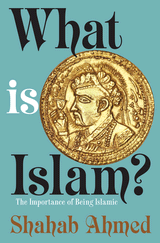
Mark Oppenheimer reviews Shahab‘ Ahmed's What Is Islam?, in Tablet:

So we’ve been told. Even though it has no pope, and authority is radically decentralized, in any given community the authority is likely to reside with a cleric whose chief claim to authority is memorization of the Quran and knowledge of sharia law and its application. That’s Islam. Right?

Wrong, says Shahab Ahmed, in his new book What Is Islam? Last fall, Ahmed, then a research scholar at Harvard, died of leukemia at the age of 48, and it’s tempting to think that the popular attention given to this scholarly book—a review in The Nation,a column in the New York Times opinion section—owes something to his early demise. But I think that if Ahmed were alive to promote his book, it would be getting far more attention. Because what he’s saying is intriguing over 500 footnoted pages, but is downright explosive when summarized out loud. The short version of his thesis, the one he’d have given Terry Gross or Rachel Maddow, is that Islam is many things, and some of them don’t even have much to do with the Quran.

In short, Islam is a lot like Judaism, in that there’s a culture, and a context, and only a pedantic boob would think that the whole thing can be found by reading the Scriptures, let alone reading them literally.

To back up: Ahmed is very clear that most Muslims today see the Quran and the hadiths as a normative and necessary text, providing a fixed star recognizable even to those who don’t take guidance from it. But he believes that this obsession with Islamic law and religious scripture is recent, contingent, and not typical of Islamic history. And he believes—although he is a little bit coy about saying so—that the Islamic world would do well to rediscover its far more playful and rope-skipping, less doctrinaire and sober, past.

More here. The first chapter of Ahmed's book can be found here.

The inheritance of crime

Header_ESSAY-Juvenile-Det-RTR2U41G

Douglas Starr in Aeon:

[I]f you look at the totality of peer-reviewed studies of the past several years, it’s hard not to come to the conclusion that biology plays some role in criminal behaviour, impossible to quantify. The new science of epigenetics proposes an interaction between environment and heredity, in which environmental factors (such as childhood abuse) can affect the expression of genes. In other words, the nature-nurture division that scientists have been arguing about for more than a century is narrowing, and might someday disappear. Genes and brain structure do not represent a simple on-off switch that determines a person’s behaviour but, as some studies show, they can indicate a vulnerability. A temperamentally-impulsive young man who lives in deprivation and has been handed a gun is more likely to make a bad decision than an equally impulsive guy from a nice neighbourhood holding a tennis racket.

Raine has been studying brain scans for decades, and he has come up with a kind of grand unified theory of violence. He describes it with the phrase ‘from genes to brain to antisocial behaviour’. Certain gene abnormalities can lead to structural brain abnormalities that lead to emotional and cognitive abnormalities (such as poor impulse control) that can lead to anti-social behaviour. At the same time, he writes, early life experiences – including maternal neglect, poor nutrition, or being surrounded by gang violence – can feed into the cycle.

‘In this context,’ writes Raine, ‘how moral is it for us to punish many criminals as harshly as we do?’

Here’s where today’s researchers fundamentally diverge from their 19th-century forbearers, not only in the content of their research but its direction. No one is suggesting the existence of ‘born criminals’, or that such people need to be permanently locked away. Fallon posits a ‘three-legged stool’ model of psychopathy, involving genes, brain function and early childhood exposure to emotional, physical or sexual abuse. The one component we can affect – childhood violence – involves social, not biological, intervention. Raine and other criminologists propose that courts consider an alleged criminal’s genetic and neurological make-up prior to sentencing – not to impose lifetime segregation for someone with violent predispositions, but to include appropriate treatment and care.

More here.

Sunday Poem

Her Body is Private

in spite of all
the sweet inducements to disrobe
in the public eye, to sunbathe
in the hot glow of the spotlight (not be
forgotten for a minute, maybe two);
in spite of all
the cash that flows to those
who wear their heart, not on their sleeve
in that old innocence, but on their naked
wrist, or butt, like a tattoo;
in spite of all
emoluments, of shrinks who swear
that secrets eat the lining from the guts
and that the more you tell, the less
you burn in hells intestinal;
in spite of all,
her memory, like her body, is
her own, and serpents guard it
like a tree with treasure in a myth;
if you approach, she’ll turn
the blank side of her words, a shield
to the light, to fix your face
in the bright circle
of its mirror. This time Medusa
has the shield, and the last word.
.

by Eleanor Wilner
from Reversing the Spell: New and Selected Poems
Copper Canyon Press, 1998
.