
by Brooks Riley
Category: Recommended Reading
Sunday, August 28, 2016
Kurt Vonnegut and His Super-Duper Atomic Bowtie
Charles J. Shields at his own website:
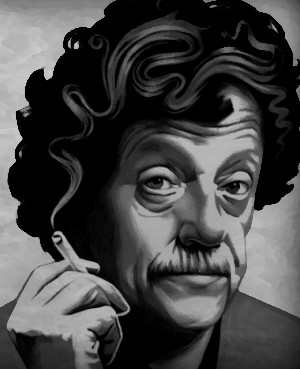
For almost twenty years before the publication of Slaughterhouse-Five in 1969, Vonnegut was broke most of the time. (Someone claiming to be his newsboy told me he was somehow never around at the end of the month to pay for delivery.)
The poignancy of how success and the comfort of money eluded him year after year can be summed up in a tale, here told for the first time: Kurt Vonnegut’s idea for an atomic bowtie (alas, another anecdote that didn’t make final draft of his biography). In 1950, Vonnegut was sure that a bowtie polka-dotted with the symbol for nuclear energy would be a big seller and bring him money he so desperately needed to keep writing and supporting his family.
More here.
How A Harvard Doctor’s Sordid Murder Launched Modern Forensic Anthropology
Kristina Killgrove in Forbes:
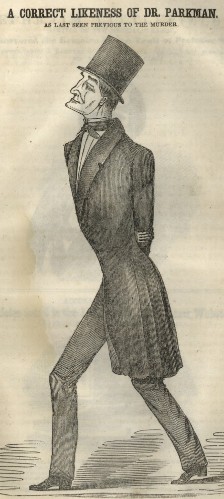
The story starts just before Thanksgiving in 1849, when Dr. George Parkman went missing. Parkman was from a wealthy Boston family, an old-timey Doogie Howser who entered Harvard at age 15. He went to medical school in Scotland, returning after the War of 1812. Parkman donated some land in Boston to Harvard Medical College so that the school could relocate from Cambridge. He was also well-known for lending money from his considerable fortune and for walking around town to collect on those debts.
A professor of chemistry and geology at Harvard, John White Webster, was one of those debtors. He had been having financial problems, requiring him to give up his family’s Cambridge mansion. Webster’s salary as a lecturer at Harvard simply didn’t cover his grandiose lifestyle. So Webster borrowed $400 from Parkman in 1842. Seems like a paltry sum, but the equivalent in today’s dollars is nearly $10,000.
More here.
The Strange Reason Nearly Every Film Ends by Saying It’s Fiction (You Guessed It: Rasputin!)
Duncan Fyfe in Slate:
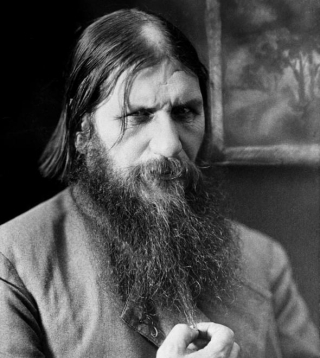
For that bit of boilerplate, we can indirectly thank none other than Grigori Rasputin, the famously hard-to-assassinate Russian mystic and intimate of the last, doomed Romanovs. It all started when an exiled Russian prince sued MGM in 1933 over the studio’s Rasputin biopic, claiming that the American production did not accurately depict Rasputin’s murder. And the prince ought to have known, having murdered him.
Here’s the story. In 1916, the fabulously wealthy, Oxford-educated Prince Felix Yusupov was one of several Russian aristocrats agonizing over the unseemly influence that Rasputin—the magical healer, charismatic lech, and peasant—had over the Tsar and, particularly, the Tsarina. In December, Yusupov invited Rasputin to his palace, where he offered him cyanide-laced cakes and then shot him.
Although the Tsarina was distraught, the Tsar let Yusupov off lightly, exiling the prince and his wife Irina. (In doing so, he inadvertently spared them from the impending slaughter of the revolution.)
Sixteen years later, MGM produced Rasputin and the Empress, based on those events.
More here.
Why Do We Love Some Animals But Eat Others?
Alva Noë at NPR:
I'm not passing judgment. It strikes me that the shifting, unstable, historical, emotional, playful and earnest feelings we Americans have about animals has a lot to do with other kinds of value, meaning and quality in our lives.
And, so, it is with a real sense of curiosity that I wonder about our varying relationships with animals. Why, for example, it is that we do not even notice road kill, for the most part — let alone stop to mourn it? And what can be said about the fact that the sale of bull semen is a big part of the cattle industry — and the methods used to create supply?
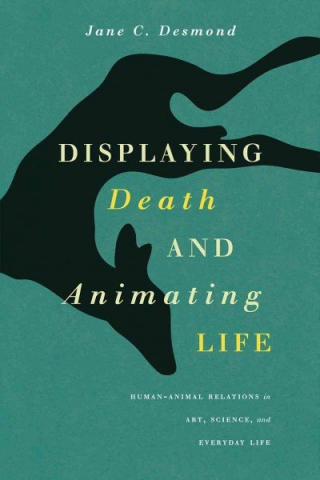
You can get the salacious details in Jane C. Desmond's fascinating new book Displaying Death and Animating Life: Human-Animal Relations in Art, Science, and Everyday Life. This is a scholarly work devoted to looking at the variety and tensions surrounding human-animal relations in, as the subtitle puts it, art, science and everyday life. Her focus, in this gripping book, is ourcontemporary American society (to the extent that there is any such a unified thing).
More here.
The Wastefulness of Modern Dining, as Performance Art
Nora Caplan-Bricker in The New Yorker:
The sly and playful Austrian performance artists Sonja Stummerer and Martin Hablesreiter want to make us reëxamine the culinary mores that we take for granted.
The leap to high-concept performance happened almost by accident: they wanted to submit photos of people eating for an exhibition about table manners at the 2011 Gwangju Biennale, in Korea, and a tight budget forced them to serve as their own models. “Many people liked these photos so much that for the next book, ‘Eat Design,’ we decided to make forty or fifty photos of ourselves eating,” Hablesreiter said. Eventually, they began making videos as well.
More here.
toots thielemans (1922 – 2016)
connie crothers (1941 – 2016)
warren hinckle (1938 – 2016)
Checkmate for a broken republic: on Benjamin and Brecht
Gavin Jacobson in New Statesman:
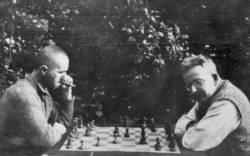
Brecht was six years younger than Benjamin. By the time they met, he had established himself as a gifted poet and playwright whose first works, such as Baal (premiered in 1923), combined lyrical force and moral dissent, especially on the theme of sexuality. Brecht’s plays departed from the aesthetic conventions of melodrama and developed a style called “epic theatre”; he argued that spectators should not be able to identify emotionally with the characters before them but should take a critical view of the action on stage instead. This was not just a visual strategy. It was driven by Brecht’s commitment to Marxism. If audiences identified with the emotional agonies of heroes such as Hamlet or Lear, then the Marxist notion that human nature is not fixed but a product of shifting historical conditions would be undermined.
More here.
Sunday Poem
Sweet Bread
It is a terrible struggle she tells me,
pulling dough from the bowl. Waking
up every morning for sixty-five years,
over forty next to him. He says you
snore, I offer and she rolls the dough
tighter, twisting it around itself
until the edges are sealed shut.
She drops it in the pan and I shine
the top with egg, ignoring the silence
that rises as we work. When he walks in,
the floor shifts beneath us, old boards heaving.
I know there are things that can’t be fixed.
Know it even stronger as I watch her
slap more dough on the table, as he takes
the empty bowl and washes it without
a word. And later, we eat the bread
in silence, its sweet crust flaking
into pieces too small to taste.
.
by Christine Klocek-Lim
from How to Photograph the Heart
The Lives You Touch Publications, 2009
.
Saturday, August 27, 2016
Colombia’s Milestone in World Peace
Steven Pinker and Juan Manuel Santos in the New York Times:

The 52-year war between the Colombian state and the FARC is the oldest and only armed conflict in the Western Hemisphere, and the last one held over from the Cold War. From Alaska to Tierra del Fuego, war — in the classic sense of a violent conflict over governance or territory fought by at least one national army — has disappeared. Although drug-related gang violence in Latin America continues, the extinguishing of political armed conflicts from an entire hemisphere deserves note.
One has only to look back a few decades to see how momentous a change this is. In Guatemala, El Salvador and Peru, as in Colombia, leftist armed forces battled American-backed governments, with deaths mounting into the hundreds of thousands. In Nicaragua, the conflict was the other way around: American-backed rebels fought to overthrow a leftist government. The United States and the Soviet Union poured in support that kept such wars raging. The “dirty war” in Argentina also flowed from a clash of left and right, in which tens of thousands were killed.
More here.
A new class of galaxy has been discovered, one made almost entirely of dark matter
Rachel Feltman in the Washington Post:

But now scientists have found something entirely new: a galaxy with the same mass as the Milky Way but with only 1 percent of our galaxy's star power. About 99.99 percent of this other galaxy is made up of dark matter, and scientists believe it may be one of many.
The galaxy Dragonfly 44, described in a study published Thursday in the Astrophysical Journal Letters, is 300 million light years away. If scientists can track down a similar galaxy closer to home, however, they may be able to use it to make the first direct detection of dark matter.
The researchers who found Dragonfly 44 weren't looking for a dark galaxy. Another surprise: They found it using a telescope built of camera parts. The Dragonfly Telephoto Array was built by a group of astronomers at Yale University and the University of Toronto who realized that telephoto lenses — so often used for nature photography and sporting events — were well-suited for spotting the kind of large, dim objects that pose problems for typical telescopes.
More here.
Frans de Waal on Being European
Frans de Waal in Euromind:

I look at all European citizens as having a shared background, a shared history, a shared culture, and definitely shared interests. Even though all of us speak different languages (I am fluent in four), and have different cuisines, we obviously have a common cultural heritage dating back many centuries. My own country has been under Roman, Spanish, French, and German rule, and even though we generally don’t consider these invasions in a positive light, they mean that we have always been connected to and influenced by other nations. This is true all over Europe.
It has hard to formulate what makes me feel European rather than American, but one simple example is the structure of the cities. In Europe, cities are compact, with narrow streets, arranged around a square and a large church or cathedral. We all take this for granted but it is radically different from many American cities, and also from Asian ones. The way people interact, the music they prefer, the way they dress, in all of these aspects I still feel most at home in Europe.
More here.
Personal and historical perspectives of Hans Bethe
Mann’s inhumanity to Mann

“Klaus Mann was six times jinxed. A son of Thomas Mann. A homeless exile. A drug addict. A writer unable to publish in his native tongue. A not-so-gay gay. Someone haunted all his life by a fascination with death.” Thus opens Frederic Spotts’s elegantly written and deeply moving biography of the writer Klaus Mann. These lines set the tone for the exploration of the tragic life of a courageously uncompromising and truly European intellectual, who, born in 1906 and living through the darkest period of European history, was plagued by both political and personal calamities in almost equal measure. Spotts leaves the reader in no doubt that Thomas’s coldly judgemental attitude towards his eldest son was a root cause of many of Klaus’s problems.
In his diary, Klaus complained that his father’s “general lack of interest in human beings is especially strong toward me”. If there was indeed such a lack of interest, it certainly did not prevent the harshest of judgements, for, in his own diary, Thomas pronounced of Klaus: “The boy is morally and intellectually not intact”. In his novella Disorder and Early Sorrow (1925), a thinly disguised family portrait, Thomas describes the character modelled on Klaus as someone who “knows nothing, can do nothing and thinks only how to play the clown and lacks even the talent for that”. There is little if any evidence to suggest that Klaus’s remarkable achievements later in life altered his father’s damning verdict on him.
more here.
‘Nutshell’ by Ian McEwan

This is a short novel narrated by a foetus who is also Hamlet. “Bounded in the nutshell” of (Ger-) Trudy’s womb he listens, with a cervix for an arras, to her planning to murder his father, John Cairncross, in partnership with her lover, John’s brother Claude (-ius). The state of Denmark is being played by a decaying, but entire, Georgian town house in central London, based surely on the legendarily unimproved Islington home of the poet Hugo Williams. It has been inherited by hopeless poetry publisher John, is coveted by property developer Claude and is worth a cool £8m. Though the narrator at one point has a gorgeous and explicitly Elizabethan dream – “A cold mist on the day of my desertion, a three-day journey on horseback, long rows of the English poor in the rutted lanes” – the year is mostly 2015.
This may not sound like an entirely promising read: a talking foetus could be an unconvincing or at least tiresomely limited narrator, and updatings of Shakespeare often strain at their own seams. From the start, though, McEwan manages to establish both the groggy, gripping parameters of the uterus – “My limbs are folded hard across my chest, my head is wedged into my only exit. I wear my mother like a tight-fitting cap” – and that this foetus, Hamlet-style, is “king of infinite space”. He sounds rather like Humbert Humbert in Nabokov’sLolita; the same grand, elegiac tone; the same infinite knowledge of history and English poetry, the same covetous, obsessively physical eye.
more here.
‘Paris Vagabond’ by Jean-Paul Clébert
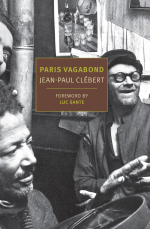
We meet many people across Clébert’s wanderings, and his characters (for that’s what they become) parade past the reader, page by page, each pausing only for a brief second before plunging back into the seedy tableau. While out measuring rooms for an architect, our hero is “struck by the odor of soil and dead leaves” and encounters a mushroom farm inside of an apartment. “I would have had to clamber in damp darkness,” he writes, “over little mounds of earth on which white spots were breaking out.” On the Buttes-Chaumont he discovers an artist’s workshop filled with uncaged birds, “an immense glassed-in space that stunned you with cries and colors.” A page later, on assignment in the Saint-Pierre neighborhood, we’re in an apartment-turned-serpentarium, with snakes nestled in every nook: “They were everywhere, slithering under tables and around the feet of chairs. . . . I left with my tail between my legs, ignoring the gentleman’s polite and soothing explanations.” Friends and acquaintances are equally mad. There’s Jérôme, the grave robber, “the world’s expert on the topography and benefits of Paris’s cemeteries,” who engages in the business of “headhunting.” Inside a crypt, a motivated headhunter need only avoid the caretaker, hold his breath, “grasp hold of a head by thrusting a finger and thumb into the eye sockets, twist sharply so as to snap the uppermost vertebra, and toss each skull into [a] sack.” The heads, for their part, become curios to sell to discerning bidders. And Monsieur Claude, aka Mr. Numb, “who sticks needles, pins or nails into a part of his anatomy chosen by any enthusiast who pays a round.” Only for those paying a premium does Mr. Numb reserve his best: “[He] will adorn the knob of his penis with a tight sheaf of tiny needles, a spectacle prone to make young tourists blanch and choke.” The case of Marceau and his two wives is particularly emblematic of the carefree vagabond cast. After Marceau goes missing during a multi-day bender, the police discover a corpse, which wife number one (the one and only, at the time) identifies as her husband’s. The woman grieves over free drinks from anyone who will pay their respects, until one morning when Marceau returns from the dead with wife number two in hand, “this to the outrage of the other one, who bombarded him with curses.” The polygamist remains officially deceased: “[The police] struck Marceau off the roster of the living and registered his death as accidental. End of story.”
more here.
When Exercise Becomes Too Much of a Good Thing
Carrie Arnold in Nautilus:

What makes exercise addiction a thorny phenomenon to study, though, is its complicated relationship with eating disorders. In the 1800s, for example, physicians treating young women with anorexia nervosa, an eating disorder characterized by self-starvation and persistent weight loss, often noted their extreme restlessness and need to constantly move about. And in a 1984 study, a group of physicians had noted in the Journal of the American Medical Association that considerably dedicated male runners, or “obligatory runners,” shared many of the same psychological traits as young women with anorexia, such as perfectionism and depression, although to a lesser degree.
More here.
Overselling A.D.H.D.: A New Book Exposes Big Pharma’s Role
Steve Silberman in The New York Times:
It did not. But the Benzedrine did have an effect that was right in line with Smith, Kline & French’s aspirations for its new product: The drug seemed to boost the children’s eagerness to learn in the classroom while making them more amenable to following the rules. The drug seemed to calm the children’s mood swings, allowing them to become, in the words of their therapists, more “attentive” and “serious,” able to complete their schoolwork and behave. Bradley was amazed that Benzedrine, a forerunner of Ritalin and Adderall, was such a great normalizer, turning typically hard-to-manage kids into models of complicity and decorum. But even after marveling at the effects of the drug, he maintained that medication should be considered for children only in addition to other forms of therapy. Bradley’s research was ignored for a couple of decades as psychoanalysis became dominant in the United States.But his discoveries laid the foundation for one of the most aggressive marketing campaigns in history, which succeeded not only in helping to transform the nascent drug industry into the multinational juggernaut known as Big Pharma, but in convincing parents, physicians and public health officials that 15 percent of American schoolchildren are sick enough that they would require powerful medication just to get through the day.
More here.