
Matt Richtel in the New York Times:
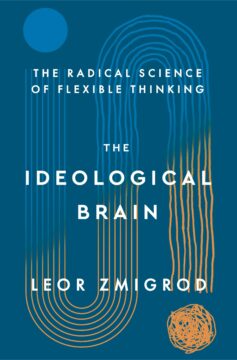 So sharp are partisan divisions these days that it can seem as if people are experiencing entirely different realities. Maybe they actually are, according to Leor Zmigrod, a neuroscientist and political psychologist at Cambridge University. In a new book, “The Ideological Brain: The Radical Science of Flexible Thinking,” Dr. Zmigrod explores the emerging evidence that brain physiology and biology help explain not just why people are prone to ideology but how they perceive and share information.
This conversation has been edited for clarity and brevity.
What is ideology?
It’s a narrative about how the world works and how it should work. This potentially could be the social world or the natural world. But it’s not just a story: It has really rigid prescriptions for how we should think, how we should act, how we should interact with other people. An ideology condemns any deviation from its prescribed rules.
You write that rigid thinking can be tempting. Why is that?
Ideologies satisfy the need to try to understand the world, to explain it. And they satisfy our need for connection, for community, for just a sense that we belong to something.
More here.
Enjoying the content on 3QD? Help keep us going by donating now.
 Among the many grievances aired by Norman Podhoretz in his insufferable 1967 memoir Making It is an already septic grudge concerning The New Yorker’s publication of James Baldwin’s most famous essay in 1962. Titled, following the magazine’s convention, “
 “That Cajun blackened shrimp recipe looks really good,” I tell my husband while scrolling through cooking videos online. The presenter describes it well: juicy, plump, smoky, a parade of spices. Without making the dish, I can only imagine how it tastes. But a new device inches us closer to recreating tastes from the digital world directly in our mouths. Smaller than a stamp, it contains a slurry of chemicals representing primary flavors like salty, sweet, sour, bitter, and savory (or umami). The reusable device mixes these together to mimic the taste of coffee, cake, and other foods and drinks.
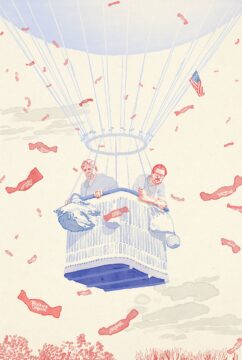 Each balloon carried two copilots vying to prevail in the 1995 Coupe Aéronautique Gordon Bennett, ballooning’s oldest and most prestigious aeronautical race. The goal was to travel the farthest distance possible before landing. Only the world’s most daring and decorated aeronauts could claim a spot in the field. The race typically lasted one or two days, and occasionally stretched into a third. No Gordon Bennett balloon had ever flown a fourth night, but favorable weather and a stretch of newly opened airspace now made that feat attainable for the first time. “It was fabulous, and we knew it,” said Martin Stürzlinger, a member of the ground crew for a balloon called the D-Caribbean.
 The college essay is a deeply unfair way to select students for top colleges, one that is much more biased against the poor than standardized tests. The college essay wrongly encourages students to cast themselves as victims, to exaggerate the adversity they’ve faced, and to turn genuinely upsetting experiences into the focal point of their self-understanding. The college essay, dear reader, should be banned and banished and burned to the ground.
 “T
“T A half generation
 M
M Five scientists who contributed to the development of the
 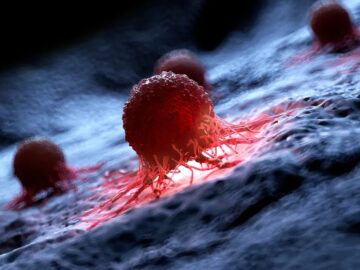 Back in 2014, a woman with advanced cancer pushed Adrienne Boire’s scientific life in a whole new direction. The cancer, which had begun in the breast, had found its way into the patient’s spinal fluid, rendering the middle-aged mother of two unable to walk. “When did this happen?” she asked from her hospital bed. “Why are the cells growing there?” Why, indeed. Why would cancer cells migrate to the spinal fluid, far from where they’d been birthed, and how did they manage to thrive in a liquid so strikingly poor in nutrients? Boire, a physician-scientist at Memorial Sloan Kettering Cancer Center in New York, decided that those questions deserved answers.
 Four years ago, I made a series for the BBC in which I