
Enjoying the content on 3QD? Help keep us going by donating now.
Category: Recommended Reading
Being George Clooney Is Harder Than It Looks
Maureen Dowd in The New York Times:
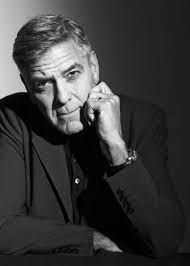 George Clooney has been sneaking outside to smoke. Not like his friend Barack Obama used to, when he was running for president and his wife, Michelle, was after him to quit. Clooney doesn’t even like smoking.
“I had to get better at inhaling,” he said. “I go outside so the kids don’t see and smoke a little bit.” He plans to switch to herbal cigarettes when he makes his Broadway debut next month in a stage adaptation of his 2005 movie, “Good Night, and Good Luck.” Smoking has been unpleasant, he said, because in his Kentucky clan “eight uncles and aunts all died of lung cancer — it’s a big deal.” He noted that his aunt Rosemary Clooney, the torch singer and movie star, was 74 when she died in 2002 from complications of lung cancer. “My dad’s the only one that didn’t smoke, and he’s 91.”
More here. (Note: Excellent show. Saw it last night and loved it.)
Enjoying the content on 3QD? Help keep us going by donating now.
This Tech Hack Can Help You Communicate More Efficiently
Matt Abrahams in Time Magazine:
 In today’s fast-paced world, many of us rush to deliver our messages without taking the time to tailor or test them. At work, we rely on boilerplate presentations, or “Frankendecks,” consisting of slides we have “borrowed” from previous presentations or hastily composed emails and memos that lack focus and relevance. This approach leads to confusion, lost engagement, missed opportunities, and a lot of time cleaning up the mess of misunderstandings.
However, the tech industry can teach us a way to predictably increase the fidelity of how we communicate while remaining time efficient. Just as product designers use the Minimally Viable Product (MVP) approach to quickly test, refine, and improve their offerings, we can apply similar principles to communication. The concept of MVP emphasizes launching a simplified version of a product to test its core value with real users. Similarly, we can leverage Minimally Viable Communication (MVC) to generate and iterate on meaningful, memorable messages that are audience-centric and clear.
More here.
Enjoying the content on 3QD? Help keep us going by donating now.
Baltic: The Future of Europe
Owen Matthews at Literary Review:
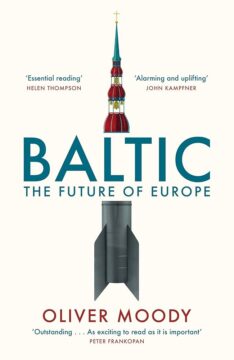 Are the Baltic Sea states, as former Estonian president Lennart Meri once put it, the factory of Europe’s future? Oliver Moody’s brilliantly written, convincingly argued and compelling book makes a good argument that it is in the plucky, resilient and often overlooked littoral states of the Baltic that the spirit of Europe burns strongest.
According to Moody, since the beginning of the war in Ukraine the Baltic countries – encompassing here not just Estonia, Latvia and Lithuania, but also Finland, Poland and Sweden – have ‘articulated and realised a positive vision of how to put the West back on the front foot, and a compelling idea of what Europe could be: more hopeful, more assertive in defence of its values and interests, more conscious of solidarity with other liberal democracies, more open to the potential of technology, more confident of its own distinctive strengths, less constrained by fear’. Echoing Robert Graves’s characterisation of the dying Roman Empire in his poem ‘The Cuirassiers of the Frontier’, Moody argues that the rotten tree of Europa lives only in its rind.
more here.
Enjoying the content on 3QD? Help keep us going by donating now.
Monday, March 24, 2025
Why Creole Languages Are Not Broken English
John McWhorter in the New York Times:
 In 2021, Mark McGowan, who was then the premier of Western Australia, made a video informing Aboriginal people about safety precautions during the Covid-19 pandemic. He stood next to an Aboriginal interpreter, who translated his statements into Kriol, the language many Aboriginal people in Australia speak. So, for instance, when McGowan said, “This is an important message to keep Aboriginal people safe,” it was followed by the interpreter saying, “Dijan message i proper important-one to keep-im everybody safe-one.”
Commentary in and out of Australia was mean, calling it racist and condescending for McGowan to have statements directed at Aboriginal people translated into mere baby talk. Typical was “This isn’t a mix of languages, this is just ignorant usage of English. Apparently saying this is ‘bad English’ is racist, but I guess I’m a racist because this is just bad English.”
The dust-up revealed that even in Australia, many people are unaware that Aboriginal people have transformed English into a new language entirely. To many people, the idea that Kriol is a legitimate form of speech is unfamiliar, and even absurd.
More here.
Enjoying the content on 3QD? Help keep us going by donating now.
Is Dark Energy Getting Weaker? New Evidence Strengthens the Case
Charlie Wood in Quanta:
 Last spring, a team of nearly 1,000 cosmologists announced that dark energy — the enigmatic agent propelling the universe to swell in size at an ever-increasing rate — might be slackening. The bombshell result, based on the team’s observations of the motions of millions of galaxies combined with other data, was tentative and preliminary. Today, the scientists report(opens a new tab) that they have analyzed more than twice as much data as before and that it points more strongly to the same conclusion: Dark energy is losing steam.
“We are much more certain than last year that this is definitely a thing,” said Seshadri Nadathur(opens a new tab), a member of the Dark Energy Spectroscopic Instrument (DESI) collaboration, the group behind the new result.
Their finding, presented today at the Global Physics Summit in Anaheim, California, aligns with that of a second group of cosmologists, the 400-strong Dark Energy Survey (DES). Having also observed a huge swath of the cosmos, DES reported evidence(opens a new tab) of varying dark energy in a paper earlier this month and in a talk today at the Anaheim meeting.
More here.
Enjoying the content on 3QD? Help keep us going by donating now.
Richard S. Sutton, 2024 Turing Award Winner
Enjoying the content on 3QD? Help keep us going by donating now.
From Statecraft To Soulcraft
Alexandre Lefebvre at Noema:
 In Jean Bodin’s “Colloquium of the Seven About Secrets of the Sublime,” a fabulously wealthy Venetian nobleman named Coronaeus invites six guests to his home for a week of amusement and conversation.
By day, the guests stroll the gardens, enjoy lavish meals, play with optical illusions, take naps and read. But by night, when wine begins flowing, things get feisty. Coronaeus, a devout Catholic, planned the week to learn how the rest of the world lives and thinks. This is why his guests are a Lutheran, a Calvinist, a Jew, a Muslim, a skeptic and a philosophical naturalist. Together, they debate everything under the sun — including the nature of the sun itself. Their sharpest clashes concern what it means to live well and the ultimate purpose of human life, as they alternate between attempts at persuasion and the realization of its futility.
Suppose we wanted to repeat the experiment in 2025. More pointedly, let’s put ourselves in Coronaeus’s shoes: a wealthy and comfortable hegemon at a time when his hegemony was challenged. In the 16th century, that meant being Catholic. In the 21st century, it means being liberal while the liberal-democratic order begins to crack. So, if we, like Coronaeus, want to understand how our rivals live and think, who should we invite?
It’s obvious: Liberals should seek out the most articulate and thoughtful representatives of regimes from around the world that are threatening to dethrone liberalism from the political, social, economic and cultural pre-eminence it has enjoyed for roughly the past 75 years.
More here.
Enjoying the content on 3QD? Help keep us going by donating now.
The Untold Story of Bauhaus Women
Enjoying the content on 3QD? Help keep us going by donating now.
My Mother’s Ashtray: When I lost her, I lost a world
Jonathan Lethem in The Yale Review:
 My childhood home was a palace of uncanny and singular artifacts. I took this for granted, as one does. My father was a painter, and the centrifuge of such stuff was his studio, on the top floor. It erupted with his new drawings and paintings and “assemblages”—he never called anything a sculpture—many of which he would hang for brief or sustained durations on the walls of the parlor and in the stairwells of our three-story house. Later, after contemplation, some of this artwork might retreat to the wall of his studio for further effort, then emerge changed, or it might vanish into storage.
More here.
Enjoying the content on 3QD? Help keep us going by donating now.
Babies Form Memories. Why Do Adults Forget Them?
Sahana Sitaraman in The Scientist:
 An infant learns many things in the first few years of life—movements, languages, relationships, and more—all of which require memory formation. Yet, if an adult is asked to recall individual experiences from this dynamic period, they would hardly remember any. This paradoxical phenomenon, called infantile amnesia, has intrigued scientists for more than a century.1
One important way the brain remembers the world is by forming episodic memories to immortalize experiences, which include multiple components such as places, objects, and people involved. Within the brain, a banana-shaped structure called the hippocampus is crucial for the formation of episodic memories.2 On studying patients suffering from amnesia with hippocampal lesions, scientists observed similarities between their memory capabilities and those of infants. Based on these findings and the fact that the hippocampus is immature until adolescence, the prevailing theory suggests that infantile amnesia emerges from the inability of the hippocampus to encode experiences during early years of life.2 Now, in a study published in Science, researchers at Yale University reported that infants as young as one year old can encode episodic memories, overturning the longstanding hypothesis.3
More here.
Enjoying the content on 3QD? Help keep us going by donating now.
On Abbas El-Zein’s Forays Into Language And History
Amelia Zhou at The Sydney Review of Books:
 How many ways can you say the word ‘love’? In Arabic, Abbas El-Zein tells us in his memoir Bullet Paper Rock (2024), there are at least twenty-five, perhaps up to one hundred, words that express love in all its shades. The word jawa, for instance, refers to ‘alternating states of hope and despondency that a lover endures’. More than a word with a double meaning, it points to another kind of dynamic: the emotional tides typical of a lover’s conundrums about their beloved. Hope and despondency may initially strike us as incompatible, even oppositional, in meaning, yet they are less so than they appear. For El-Zein, expressions of love also contain ‘the possibility of [love’s] deficit, of a certain fragility inherent to the utterance’. In jawa, this four-letter container, we see mirrored back the tenuous fulfilment of love El-Zein describes. Just as love can be reciprocated and fulfilled, it can also be undercut and anguished by the prospect of its own defeat.
In Bullet Paper Rock, El-Zein further maps the amatory pivoting between hope and its inversions (disappointment, failure, and defeat) onto the affective condition of the migrant. Negated forms of hope, El-Zein suggests throughout the memoir, become emblematic of his experiences of dislocation, from leaving his home country of Lebanon for Europe, before finally emigrating to Australia.
more here.
Enjoying the content on 3QD? Help keep us going by donating now.
On ‘An African Abroad’
Toye Oladinni at The Paris Review:
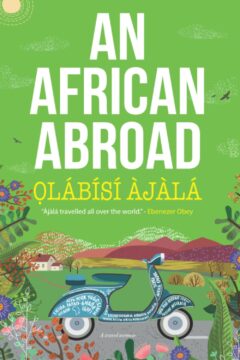
When ordered to surrender his documents by the KGB, he tells them, “I am not allowed to part with my passport. I am quite capable of looking after it myself.” He is beaten up by Persian guards “several” times in his attempt to meet the shah but perseveres through more than six weeks of inquiries with the Iranian government. In Old Jerusalem he decides to cross from Palestine into Israel under sniper fire, again just to avoid going the long way around. He speaks to the guards, arguing, “Please be reasonable with me, my good brothers.” They refuse him, clearly. “Looking at your scooter alone makes us sick,” one says. Àjàlá doesn’t listen. He asks for a map as a distraction and guns it over the border while they’re looking the other way.
In Nigeria his name has become synonymous with traveler, but it does have a literal meaning: Àjà—one who fights; lá—to tire out. Àjàlá, his surname by birth, dubs him a fighter who wears his opponents down.
more here.
Enjoying the content on 3QD? Help keep us going by donating now.
Sunday, March 23, 2025
The Real Economy
Jonathan Levy in Phenomenal World:
No discipline in the humanities or social sciences today has a convincing theory of the economy. Long preoccupied with honing methods, the core of the discipline of economics has abandoned investigation into what the economy really is. Preoccupied with either appropriating or criticizing the methods of economics, other disciplines have failed to articulate any alternative conceptions of the economy.
A conspicuous absence of a convincing theory is what prevails today, but it was not always the case. In the period stretching from 1890 to 1930, when the modern discipline of economics was formed, fierce debates raged, as many different “visions” of the economy, as the economist Joseph Schumpeter once put it, circulated and competed with one another. This period—after Marx made the last great contribution to “political economy” but before the triumph of “neoclassical” economics—was a moment of “methodological pluralism.” For figures like Schumpeter, the subject of economics was by no means obvious. Rather, the very task of positing an economic problem, he wrote, would require that, “we should first have to visualize a distinct set of coherent phenomena as a worthwhile object of our analytic efforts.”
In my encounter with these “years of high theory,” as one chronicler characterized them, the economics of Keynes and Veblen have loomed the largest. Veblen and Keynes were economic theorists writing before neoclassicals transformed economic theory into an entirely mathematical affair, and both preferred verbal exposition (Veblen nearly exclusively). Keynes entitled his most important books Treatise on Money and The General Theory, and Veblen, The Theory of the Leisure Class and The Theory of Business Enterprise. While these texts stand today as the most notable from the period, the economic visions of a great many twentieth-century economic theorists also crossed diverse institutionalist, post-Keynesian, Marxist, Austrian, French Regulation, and even neoclassical traditions—from Irving Fisher to John Hicks, Joseph Schumpeter, Frank Knight, Joan Robinson, Albert Hirschman, Nicholas Kaldor, and others. If in different ways, all first cultivated or sought to carry forward the rich legacies of pre-World War II economic theory.
More here.
Enjoying the content on 3QD? Help keep us going by donating now.
The Industrial Party
Jacob Dreyer in The Ideas Letter:
“Nature builds no machines, no locomotives, railways, electric telegraphs… These are products of human industry; natural material––transformed into organs of the human will over nature, or of human participation in nature. They are organs of the human brain, created by the human hand; the power of knowledge, objectified.” Karl Marx, Grundrisse
Washington, DC, February 2025—Here is the heart of empire, convulsing. Cop cars stopped at every intersection, helicopters swept through the night. The city reminded me of nothing so much as Beijing in 2012, when Bo Xilai had been thrown in jail on the eve of Xi Jinping’s arrival to power. The city was locked up tightly, it felt that the displays of armed police were intended as a warning to any would-be coup plotters. Today, the police forces on the streets of DC telegraph fear on the part of our new president and his friends that assassins are lurking. A revolution is underway in America, and it’s one that the Chinese have been waiting for, hidden under vague terms like “a change not seen in one hundred years.” We are all focused on political changes, but what if those changes are merely reflections of technological change, attempts on the part of the political structure to catch up with a society that is different than the one that our institutions were designed for? Technology became culture became politics, and the politics, only a symptom or after-effect, is what I saw on the streets of the capital.
The Industrial Party, a generic ideological structure of techno-nationalism which can be adjusted for the nation it transpires in, has seized control of America; it’s been in charge of China for quite some time. We’re in the throes of the Fourth Industrial Revolution, which will bulldoze political and cultural structures at home as well as abroad. The new politics are certainly not conservative, nor are they liberal. They see technology, rather than political structures, as the apparatus which will bring us into the future. Factory labor will be automated; much white collar labor will be replaced by AI; and perhaps capital will finally throw off the chains of labor. Very little of the society we’re used to will be conserved, and certainly not the political structures called liberal democracy. We might see Trumpism as a political revolution; but in many ways, it is just the expression in political form of a social change that predates it.
More here.
Enjoying the content on 3QD? Help keep us going by donating now.
American Destiny?
Anders Stephanson in Sidecar:
When Donald Trump invoked ‘manifest destiny’ in his inaugural address, it was in its oldest meaning as territorial expansion: the predestined, God-given American right to claim and acquire new land – more extravagantly than ever in this case, by putting an American flag on Mars (a sop to Elon Musk). The term in this sense was coined in the hyper-expansionist 1840s, when the Union was poised to swallow up the territory from Texas to California in the southwest and Oregon in the northwest, the manifest destiny being ‘to overspread the continent’. Trump also pictured the nation restored under his leadership as brimming with ‘exceptionalism’, indeed ‘far more exceptional than ever before’. America, down in the dumps, would become even more of an American America, making it brilliantly adequate to its concept. His State of the Union peroration to Congress six weeks later predicted a glorious future for ‘the most dominant civilization in history’, now that ‘the unstoppable power of the American spirit’ had been recaptured.
These were occasions for rhetorical excess, to which Trump is inclined anyway. But I was nonetheless surprised by the reference. I didn’t have him down as much of an exceptionalist or for that matter a destinarian. To put the question in that way may indeed impute a coherence and depth to Trump’s politics that it doesn’t have. Scratch the surface and the ideological essence seems to be the person of Donald Trump himself. Whims, lies, cheats, illegalities, egocentrism, revenge, brutality, boundless cynicism and a whole slew of appalling prejudices – does this add up to a ‘position’? Scarcely so – it appears. And yet. . .
More here.
Enjoying the content on 3QD? Help keep us going by donating now.
Sunday Poem
Etymology of Borders
BORDER, from the Middle English bordure, meaning “the decorative band
surrounding a shield,” a heraldic device intended to identify
possession — this flag flies over that land, & so this land belongs
to… But before belong became “to be the property of,”
there was no belonging: belong simply meant “to go along with,”
as if to be told a joke that goes on too long. Both long & belong
derive from the Old English langian — “to yearn after, grieve for,
be pained, lengthen” as hours & distance do, both stretching
long past where borders mark their end. Borders are only
a device, after all, & device comes from the French
devis, meaning “an expressed intent or desire; a plan or design,”
design indicating not art but intentions, which we find
in the Latin divido, “to divide.” A continent is divided
into countries — country coming from the Latin contra,
“opposite, against,” as if to be of one place is to be
against another, or perhaps against all others,
property & possession of the flag whose shadow stretches
long across its land. Which side of the border you’re born on
defines where it is you belong, what devis & designs
are allowed to you, in which direction you yearn.
In which direction do you yearn? Does your country’s flag
wrap around you like an embrace or a shroud?
Decorate or divide you? There are only ever two options —
where you are or somewhere else —
but the border’s blade between slices them into infinite
cruelties, so thin you can see straight through
to the other side.
by Jaz Sufi
from Split This Rock
Enjoying the content on 3QD? Help keep us going by donating now.
Jessie Colin Young (1941 – 2025) Singer/Songwriter
Enjoying the content on 3QD? Help keep us going by donating now.
Is Robert Frost Even a Good Poet?
Jessica Laser in The Paris Review:
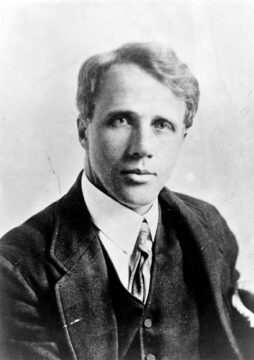 Though he is most often associated with New England, Robert Frost (1874–1963) was born in San Francisco. He dropped out of both Dartmouth and Harvard, taught school like his mother did before him, and became a farmer, the sleeping-in kind, since he wrote at night. He didn’t publish a book of poems until he was thirty-nine, but went on to win four Pulitzers. By the end of his life, he could fill a stadium for a reading. Frost is still well known, occasionally even beloved, but is significantly more known than he is read. When he is included in a university poetry course, it is often as an example of the conservative poetics from which his more provocative, difficult modernist contemporaries (T. S. Eliot, Ezra Pound) sought to depart. A few years ago, I set out to write a dissertation on Frost, hoping that sustained focus on his work might allow me to discover a critical language for talking about accessible poems, the kind anybody could read. My research kept turning up interpretations of Frost’s poems that were smart, even beautiful, but were missing something. It was not until I found the journalist Adam Plunkett’s work that I was able to see what that was. “We misunderstand him,” Plunkett wrote of Frost in a 2014 piece for The New Republic, “when, in studying him, we disregard our unstudied reactions.”
More here.
Enjoying the content on 3QD? Help keep us going by donating now.
Rest Easy. I can’t. Can you?
Joseph Epstein in Commentary:
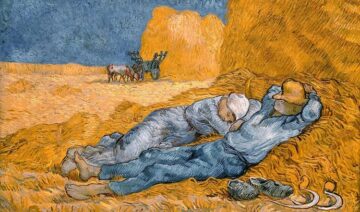 The Russian novelist Ivan Goncharov once said of writers, “And to write and write, like a wheel or a machine, tomorrow, the day after, on holidays; summer will come—and he must still be writing. When is he to stop and rest? Unfortunate man?” Goncharov was born in 1812 and died in 1891, so I am clearly not the model for the writer he was talking about—even though, my prolificacy having often been commented upon, I could otherwise well be. The eponymous hero of his novel Oblomov feels the same way about another character in the book who loves travel, and a second one who enjoys a lively social life, and a third who works hard in the hope of promotion. All of them are viewed by Oblomov as absurdly out of synch with life’s real purpose. This purpose, as Oblomov sees it, is to lie abed doing nothing all the days of one’s life. If rest may be said to have a champion, it is Oblomov, a gentleman by birth for whom “life was divided, in his opinion, into two halves: one consisted of work and boredom—these words were for him synonymous—the other of rest and peaceful good-humor.” Rest, unrelenting rest, is the name of Oblomov’s game.
More here.
Enjoying the content on 3QD? Help keep us going by donating now.