If we don’t act now, all future wars may be as horrific as Aleppo

Paul Mason in The Guardian:
ScreenHunter_2287 Oct. 12 17.27A single day of fighting in June 1859, among the vineyards and villages near Lake Garda, left 40,000 Italian, French and Austrian soldiers dead or wounded. The Battle of Solferino might have been remembered simply for its carnage, but for the presence of Henry Dunant. Dunant, a Swiss traveller, spent days tending the wounded and wrote a memoir that led to the founding of the Red Cross and to the first Geneva convention, signed by Europe’s great powers in 1864.

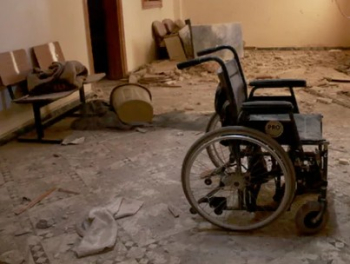
Solferino inspired the principle that hospitals and army medical personnel are not a legitimate target in war. Today, with the bombing of hospitals by the Russians in Syria, the Saudis in Yemen and the Americans in Afghanistan, those who provide medical aid in war believe that principle is in ruins.

So far this year, according to Médecins Sans Frontières (MSF), 21 of their supported medical facilities in Yemen and Syria have been attacked. Last year an MSF hospital in Kunduz, Afghanistan was destroyed by a US attack, in whichthose fleeing the building were reportedly gunned down from the air, and 42 patients and staff died.

A UN resolution in May urged combatants to refrain from bombing medical facilities. MSF says that the resolution “has made no difference on the ground”. Four out of the five permanent members of the UN security council, it says, are actively involved in coalitions whose troops have attacked hospitals.

More here.
The New Secretary-General, and the Next: Reforming International Appointments

António_Guterres_2013

Sanjay Reddy over at his website:

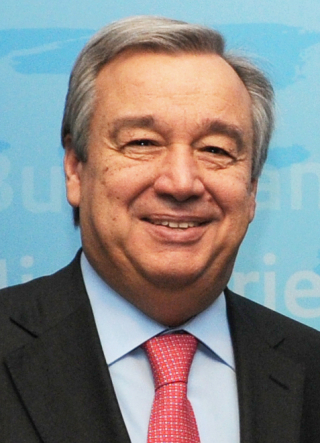
The announcement that the new Secretary-General of the United Nations will be Antonio Guterres of Portugal brings to an end a process of making this important appointment which has been more transparent than ever (as it included such innovations as a public debate between declared candidates). However, despite the credentials of the new Secretary-General and his laudable intentions for the organisation, the process has highlighted the continued deficiencies in the selection process, including but not confined to lack of full transparency, in particular on the basis of the final decision.

The widespread anticipation that the next Secretary-General would be the first woman in the position has been disappointed, as has been the supposition that the candidate should come from Eastern Europe, the one officially recognized regional grouping from which a Secretary-General has not come before. However, it is less surprising that these expectations were disappointed than at first might be thought. UN insiders, including both member states and activists engaged with the organisation, informally imposed both a regional and gender criterion, creating a gradient against which potential candidates who did not satisfy the requirements had to climb – inevitably limiting the range of strong candidates, including women candidates, who were willing to enter the race. (While two of the five finally declared women candidates were from outside Eastern Europe many others had been discouraged previously, and both of those who did run were decided insiders whose actions during their UN tenure were viewed by many either adversely or as unremarkable). Although there were numerous candidates, the preponderance of those from Eastern Europe was relatively weak, and on the whole without much experience of the United Nations system or with a checkered record. Strong candidates from elsewhere, with a few exceptions, may inevitably have been discouraged by the idea that the candidate must if possible be both a woman and from Eastern Europe, even as the process remained opaque and dependent on state sponsorship and power-broking. [The regional groupings are also highly unequal in terms of number of countries and their share of the world’s population — more than half of the world’s population and more than a quarter of countries are in the Asia-Pacific, while twelve percent of member states and less than five percent of the world ‘s population lives in Eastern Europe].

If the expectation had been that the candidate selected would have been a woman, without imposing a regional criterion additionally, this would surely have increased the quantity and quality of the women candidates who made themselves available globally, especially if the process had also been made more transparent to all individual candidates.

More here.

GROWING UP UNDER THE RUSSIANS

The-Socialist-Fraternal-Kiss-between-Leonid-Brezhnev-and-Erich-Honecker-1979-2Durs Grünbein at Literary Hub:

For the most part they were unobtrusive, almost invisible—our occupying power. Their day-to-day life carried on behind closed doors, as if someone were trying to shield them from us, or maybe us from them.

They lived a hidden life in the barracks, behind the crooked fences and walls that were made impenetrable by skeins of barbed wire, like a hedge of rose thorns. But anyway, who would have dared try to climb over, who would have had the courage to infiltrate the forbidden zone on the other side? Not even we children were brave enough to give each other a leg up over the wall, though our knees were sometimes itching to.

It wasn’t hard to imagine what it was like behind the walls—over there with the Ivans—as people called them ironically behind their backs. Or the Russians, as was said, though still sotto voce, since the word was strange and chauvinistic too—and we all knew it. But talking about Soviets wasn’t the answer either. Those who used the phrase on official occasions or at school felt immediately that there was something embarrassing, something not quite right about the hypocritical turn of phrase. The problem was that there was no suitable designation for these strangers in our country. Everyone knew that they were one of the victorious occupying powers at the end of the Second World War; their dominance in our country was such a dirty open secret that no one dared say it out loud. Our own country: nothing but a Soviet satrapy?

more here.

LEONARD COHEN MAKES IT DARKER

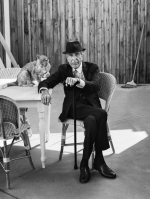
161017_r28842_rd-903x1200-1476123800David Remnick at The New Yorker:

Like anyone of his age, Cohen counts the losses as a matter of routine. He seemed not so much devastated by Marianne’s death as overtaken by the memory of their time together. “There would be a gardenia on my desk perfuming the whole room,” he said. “There would be a little sandwich at noon. Sweetness, sweetness everywhere.”

Cohen’s songs are death-haunted, but then they have been since his earliest verses. A half century ago, a record executive said, “Turn around, kid. Aren’t you a little old for this?” But, despite his diminished health, Cohen remains as clear-minded and hardworking as ever, soldierly in his habits. He gets up well before dawn and writes. In the small, spare living room where we sat, there were a couple of acoustic guitars leaning against the wall, a keyboard synthesizer, two laptops, a sophisticated microphone for voice recording. Working with an old collaborator, Pat Leonard, and his son, Adam, who has the producer’s credit, Cohen did much of his work for “You Want It Darker” in the living room, e-mailing recorded files to his partners for additional refinements. Age and the end of age provide a useful, if not entirely desired, air of quiet.

more here.

considering the real shimon peres

Bgperes620bAmjad Iraqi at the London Review of Books:

When Peres died last month, many Palestinians resented the national and international outpouring of praise he received. They were especially angered when President Mahmoud Abbas and other Palestinian Authority (PA) officials went to the funeral in Jerusalem; Abbas had to getpermission from the Israeli army to enter the city. Ayman Odeh, the head of the Joint List of Arab political parties in the Knesset, sent his condolences to Peres’s family but refused to go to the funeral. ‘This is a national day of mourning in which I have no place,’ he said. ‘Not in the narrative, not in the symbols that exclude us, not in the stories of Peres as a man who built up Israel’s defences.’

Israelis were shocked by these reactions. Since his presidency, Peres was revered in Israel as a peacemaker, a founding father, and a moral compass. He was an architect of the Oslo Accords and the peace treaty with Jordan, a Nobel laureate, and a sponsor of Jewish-Arab coexistence programmes through the Peres Centre for Peace. But he had not been a popular politician for much of his career: he was distrusted by his colleagues (‘a tireless schemer’, Yitzhak Rabin called him), and his brief stints as prime minister ended in political failure and lost elections.

Defenders of Peres’s legacy argue that he shed years of hawkish politics to become, in David Grossman’s words, a statesman who ‘symbolised the willingness for compromise with the Palestinians’.

The Palestinians, however, cannot forget the hawk so easily.

more here.

A radical revision of human genetics

Erika Check Hayden in Nature:

Nature_genomic_resource_400dpiLurking in the genes of the average person are about 54 mutations that look as if they should sicken or even kill their bearer. But they don't. Sonia Vallabh hoped that D178N was one such mutation. In 2010, Vallabh had watched her mother die from a mysterious illness called fatal familial insomnia, in which misfolded prion proteins cluster together and destroy the brain. The following year, Sonia was tested and found that she had a copy of the prion-protein gene, PRNP, with the same genetic glitch — D178N — that had probably caused her mother's illness. It was a veritable death sentence: the average age of onset is 50, and the disease progresses quickly. But it was not a sentence that Vallabh, then 26, was going to accept without a fight. So she and her husband, Eric Minikel, quit their respective careers in law and transportation consulting to become graduate students in biology. They aimed to learn everything they could about fatal familial insomnia and what, if anything, might be done to stop it. One of the most important tasks was to determine whether or not the D178N mutation definitively caused the disease.

Few would have thought to ask such a question in years past, but medical genetics has been going through a bit of soul-searching. The fast pace of genomic research since the start of the twenty-first century has packed the literature with thousands of gene mutations associated with disease and disability. Many such associations are solid, but scores of mutations once suggested to be dangerous or even lethal are turning out to be innocuous. These sheep in wolves' clothing are being unmasked thanks to one of the largest genetics studies ever conducted: the Exome Aggregation Consortium, or ExAC.

More here.

Tuesday, October 11, 2016

A Brave Debut Novel About the Sri Lankan Civil War

Ru Freeman in the New York Times:

ScreenHunter_2286 Oct. 11 19.18War is a constant wellspring of literature, and the best of it looks not for the obvious and sensationally violent, but instead searches for the subtle ways that life unfolds regardless. While Sri Lankans writing in Sinhala and Tamil have long borne nuanced witness to the country’s three decades of civil war, writing in English has been much slower to respond. And too much of it has taken the easy route, giving a foreign readership what it desires: a voyeuristic, and ultimately unengaged, affirmation of what it believes is true of savage peoples in other countries.

Anuk Arudpragasam’s brave debut takes the higher road. In language that is often poetic, he describes a single day and night in the life of a refugee fleeing both the Liberation Tigers of Tamil Eelem and government forces.

More here.

This Is What a Feminist Looks Like

Barack Obama in Glamour:

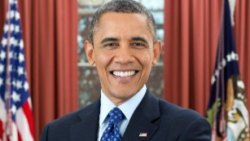
ScreenHunter_2285 Oct. 11 19.06There are a lot of tough aspects to being President. But there are some perks too. Meeting extraordinary people across the country. Holding an office where you get to make a difference in the life of our nation. Air Force One.

But perhaps the greatest unexpected gift of this job has been living above the store. For many years my life was consumed by long commutes­—from my home in Chicago to Springfield, Illinois, as a state senator, and then to Washington, D.C., as a United States senator. It’s often meant I had to work even harder to be the kind of husband and father I want to be.

But for the past seven and a half years, that commute has been reduced to 45 seconds—the time it takes to walk from my living room to the Oval Office. As a result, I’ve been able to spend a lot more time watching my daughters grow up into smart, funny, kind, wonderful young women.

That isn’t always easy, either—watching them prepare to leave the nest. But one thing that makes me optimistic for them is that this is an extraordinary time to be a woman. The progress we’ve made in the past 100 years, 50 years, and, yes, even the past eight years has made life significantly better for my daughters than it was for my grandmothers. And I say that not just as President but also as a feminist.

More here.

America will take the giant leap to Mars

Barack Obama at CNN:

161010191224-barack-obama-hedshot-medium-plus-169Just five years ago, US companies were shut out of the global commercial launch market. Today, thanks to groundwork laid by the men and women of NASA, they own more than a third of it. More than 1,000 companies across nearly all 50 states are working on private space initiatives.
We have set a clear goal vital to the next chapter of America's story in space: sending humans to Mars by the 2030s and returning them safely to Earth, with the ultimate ambition to one day remain there for an extended time. Getting to Mars will require continued cooperation between government and private innovators, and we're already well on our way. Within the next two years, private companies will for the first time send astronauts to the International Space Station.
The next step is to reach beyond the bounds of Earth's orbit. I'm excited to announce that we are working with our commercial partners to build new habitats that can sustain and transport astronauts on long-duration missions in deep space. These missions will teach us how humans can live far from Earth — something we'll need for the long journey to Mars.
More here.

two books on the russian revolution

41ivSb+badLDouglas Smith at Literary Review:

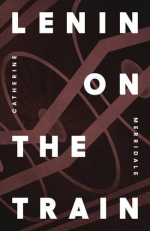
By the end of 1916, all the participants in the First World War were desperate to find some way to end the bloody stalemate. Anything that might possibly bring some advantage, no matter how unlikely its chance of success, was not to be ignored. Under the direction of Count von Brockdorff-Rantzau, Germany’s ambassador in Copenhagen, peace initiatives had already been forwarded to the Russians. The German foreign ministry spent millions on peace propaganda directed at its enemies, all to no avail. Next, the Germans looked to Russia’s revolutionary parties to help bring tsarism to its knees. They began secretly funnelling funds to them through a network of agents and spies, including the notorious intriguer Alexander Helphand, also known as Parvus. It was Parvus, in January 1915, who was apparently the first to approach the German government offering advice on how their enemy’s enemy could be put to work by encouraging upheaval at home and so speed the end of the war.

Living in European exile, Lenin was stunned when he learned of the fall of the monarchy in March 1917. ‘Staggering!’ he cried to his wife, Nadezhda Krupskaya. ‘Such a surprise! We must get home.’ Here, Lenin’s and the German High Command’s wishes aligned.

more here.

Three new books try to untangle the Gordian knot of white-trash identity

HillbillyelegyOliver Lee Bateman at The Paris Review:

Scan the headlines and you’ll find that everyone’s talking about how the white trash have made their presence felt. The white trash support Trump; the white trash are losing ground; the white trash should be honored by the government for their hard work and sacrifices; the white trash are continuing to redirect their aggression at other racial minorities instead of the robber barons who exploit them.

But who exactly are these people, these trashy whites who have found themselves, in the words of sociologist C. Wright Mills, “without purpose in an epoch in which they are without power?”

Thanks to a spate of newly released books on the topic, we readers can begin fumbling towards some preliminary answers. For those interested in a first-person account of white-trash living, there’s J. D. Vance’s Hillbilly Elegy, a spare and poignant look at impoverished rural Ohio and Kentucky. Nancy Isenberg’s White Trash: The 400-Year Untold History of Class in America offers a concise and highly readable overview of the subject beginning with colonization and concluding with the Clintons. Carol Anderson’s White Rage: The Unspoken Truth of Our Racial Divide examines a series of events, ranging from Reconstruction to the election of Barack Obama, after which seeming gains for African Americans were quickly met by massive resistance from whites.

more here.

In defence of the comic novel

9780143107675Howard Jacobson at The New Statesman:

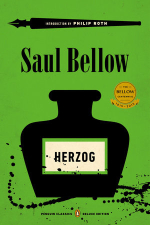
Returning to the specifics of Herzog, let me remind you of the heroic action on which Moses Herzog is hell-bent and into which I, brandishing my pencil, leapt Laertes-like. Herzog’s rage has been a long time brewing. The failure of his marriage to Madeleine, in particular his angry thraldom to her, is rendered with an immense comic verve of the sort that is sometimes called misogynistic, though it comprises such attention, not to say attentiveness, to her every movement and inflexion – from the way she applies her lipstick to the way she bends her knee at church – that it also deserves to be called rhapsodic love. A person has to be, or has to have been, deeply in love to attend with such lingering detail to what is infuriating in the beloved.

It is, however, well past all that, now that Madeleine (you can choose whether to hear a Proustian allusion in her name) has left him for Valentine Gersbach, an overdemonstrative, one-legged radio announcer and erstwhile friend. It’s a Hydra-headed, bitterly ludicrous betrayal that includes, as Herzog sees it, the usurpation of his young daughter’s affections, too. Herzog won’t be the first man who, in circumstances such as these, sees murder as the only self-respecting response.

more here.

Which Type of Exercise Is Best for the Brain?

Gretchen Reynolds in The New York Times:

Well_physed-tmagArticleSo for the new study, which was published this month in the Journal of Physiology, researchers at the University of Jyvaskyla in Finland and other institutions gathered a large group of adult male rats. The researchers injected the rats with a substance that marks new brain cells and then set groups of them to an array of different workouts, with one group remaining sedentary to serve as controls. Some of the animals were given running wheels in their cages, allowing them to run at will. Most jogged moderately every day for several miles, although individual mileage varied. Others began resistance training, which for rats involves climbing a wall with tiny weights attached to their tails. Still others took up the rodent equivalent of high-intensity interval training. For this regimen, the animals were placed on little treadmills and required to sprint at a very rapid and strenuous pace for three minutes, followed by two minutes of slow skittering, with the entire sequence repeated twice more, for a total of 15 minutes of running. These routines continued for seven weeks, after which the researchers microscopically examined brain tissue from the hippocampus of each animal.

They found very different levels of neurogenesis, depending on how each animal had exercised. Those rats that had jogged on wheels showed robust levels of neurogenesis. Their hippocampal tissue teemed with new neurons, far more than in the brains of the sedentary animals. The greater the distance that a runner had covered during the experiment, the more new cells its brain now contained. There were far fewer new neurons in the brains of the animals that had completed high-intensity interval training. They showed somewhat higher amounts than in the sedentary animals but far less than in the distance runners. And the weight-training rats, although they were much stronger at the end of the experiment than they had been at the start, showed no discernible augmentation of neurogenesis. Their hippocampal tissue looked just like that of the animals that had not exercised at all.

More here.

Tuesday Poem

[go on sister sing your song]

go on sister sing your song
lady redbone señora rubia
took all day long
shampooing her nubia

she gets to the getting place
without or with him
must I holler when
you’re giving me rhythm

members don’t get weary
add some practice to your theory
she wants to know is it a men thing
or a him thing

wishing him luck
she gave him lemons to suck
told him please dear
improve your embouchure

by Harryette Mullen
from Recyclopedia
Graywolf Press, 2006

Monday, October 10, 2016

Sunday, October 9, 2016

Letter of Recommendation: The Life of Marshall Hodgson

Lydia Kiesling in The New York Times:

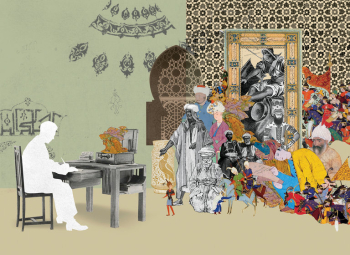
MagViewed in the least charitable terms, academia is a small fraternity of ambitious backbiters engaged in the production of work so dense that only other members of the order can hope to understand it. But some scholars arrive on the scene bearing such a combination of intellect, urgency and charisma that their achievements resonate long after the Festschrift is printed and the memorial lecture empties out. One of these was Marshall Hodgson, a great American scholar of Islam who died in 1968 while jogging on the University of Chicago campus. He was 46, and he left behind a manuscript that would become a magisterial three-volume book, “The Venture of Islam,” published posthumously through the efforts of his widow and colleagues.

In some parts of America today, “Muslim” is a slur. This is a grotesquely low bar by which to measure a non-Muslim’s engagement with Islam, but it is in fact the bar. Citizens in “Muslim garb” are attacked on American streets. One of our presidential candidates believes there is a “Muslim problem,” and he has plans to solve it. Self-styled experts analyze Shariah on right-wing talk shows. Toggling between Rush Limbaugh’s radio show and Hodgson’s “Venture,” it’s hard to believe they’re discussing the same religion. In Islam Hodgson found one of the most creative and the most excellent of our collective human enterprises. He was a committed Quaker, and his own religious beliefs allowed him to find deep resonance in both the unity and variety of Islamic experience. “Medieval” is a kind of slur now, too, but there was something medieval about Hodgson’s combination of study and belief. For much of history, Islamic and otherwise, the pursuit of knowledge and the practice of faith were a single project. This was likewise Hodgson’s motivation and his way of reckoning with the role of Islam in world history.

More here.

When Philosophy Lost Its Way

Robert Frodeman and Adam Briggle in the New York Times:

ScreenHunter_2279 Oct. 09 21.50The history of Western philosophy can be presented in a number of ways. It can be told in terms of periods — ancient, medieval and modern. We can divide it into rival traditions (empiricism versus rationalism, analytic versus Continental), or into various core areas (metaphysics, epistemology, ethics). It can also, of course, be viewed through the critical lens of gender or racial exclusion, as a discipline almost entirely fashioned for and by white European men.

Yet despite the richness and variety of these accounts, all of them pass over a momentous turning point: the locating of philosophy within a modern institution (the research university) in the late 19th century. This institutionalization of philosophy made it into a discipline that could be seriously pursued only in an academic setting. This fact represents one of the enduring failures of contemporary philosophy.

Take this simple detail: Before its migration to the university, philosophy had never had a central home. Philosophers could be found anywhere — serving as diplomats, living off pensions, grinding lenses, as well as within a university. Afterward, if they were “serious” thinkers, the expectation was that philosophers would inhabit the research university. Against the inclinations of Socrates, philosophers became experts like other disciplinary specialists. This occurred even as they taught their students the virtues of Socratic wisdom, which highlights the role of the philosopher as the non-expert, the questioner, the gadfly.

Philosophy, then, as the French thinker Bruno Latour would have it, was “purified” — separated from society in the process of modernization.

More here.