Slavoj Žižek: Clown Prince of the Revolution

Roger Scruton in City Journal:
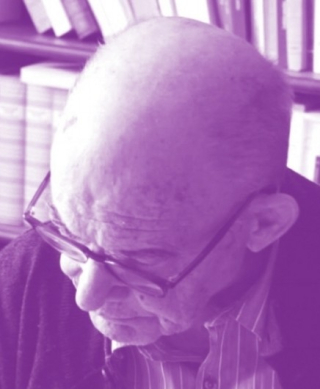
ScreenHunter_2298 Oct. 15 11.17During the 1960s and 1970s, the consensus in Western academic and intellectual institutions was very much on the left. Writers like Michel Foucault and Pierre Bourdieu shot to eminence by attacking the civilization they dismissed as “bourgeois.” The critical-theory writings of Jürgen Habermas achieved a dominant place in the curriculum in the social sciences, despite their stupefying tediousness. The rewriting of national history as a tale of “class struggle,” undertaken by Eric Hobsbawm in Britain and Howard Zinn in the United States, became a near-orthodoxy not only in university history departments but also in high schools. For us dissidents, it was a dispiriting time, and there was scarcely a morning when I did not wake up during those years, asking myself whether my teaching at the University of London was the right choice of career. Then came the collapse of Communism in Eastern Europe, and I allowed myself to hope.

For a while, it looked as though an apology might be forthcoming from those who had devoted their intellectual and political efforts to whitewashing the crimes of the Soviet Union or praising the “people’s republics” of China and Vietnam. But the moment proved short-lived. Within a decade, the Left establishment was back in the driver’s seat, with Zinn and Noam Chomsky renewing their intemperate denunciations of America, the European Left regrouped against “neoliberalism” (the new name for the free economy) as though this had been the trouble all along, Habermas and Ronald Dworkin collecting prestigious prizes for their barely readable defenses of ruling leftist platitudes, and the veteran Marxist Hobsbawm rewarded for a lifetime of unswerving loyalty to the Soviet Union by his appointment as “Companion of Honour” to the Queen.

True, the enemy was no longer described as before: the Marxist template did not easily fit the new conditions, and it seemed a trifle foolish to champion the cause of the working class, when its last members were joining the ranks of the unemployable or the self-employed. But one thing remained unchanged in the wake of Communism’s collapse: the conviction that it was unacceptable to be on the “right.”

More here.
Black Panther Primer

Jay A. Fernandez in Signature:

ScreenHunter_2297 Oct. 15 11.05African Americans’ struggle for equality in America has taken on many shapes and strategies since the Thirteenth Amendment, which officially abolished slavery, was ratified in 1865. From the Niagara Movement and the formation of the NAACP through Marcus Garvey’s Universal Negro Improvement Association to the powerful oratory and organization of Malcolm X and Martin Luther King Jr.; from the fiery poetry and literature of Richard Wright, Nikki Giovanni, James Baldwin, and Amiri Baraka to the Million Man March and Black Lives Matter, the great, ongoing effort has been a defining characteristic of the American identity, ever convulsing and changing, if never quickly or comprehensively enough.

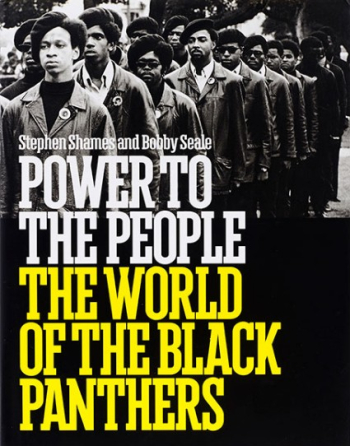
Malcolm X was killed in early 1965, and King in April 1968. In between, fifty years ago on October 15 in Oakland, former college classmates Bobby Seale and Huey P. Newton, inspired by the forceful rhetoric of the former and disillusioned by the nonviolent approach of the latter, formed the Black Panther Party for Self-Defense. While contentious from the start, and dogged by both internal criminal tendencies and outside government forces seeking to discredit the group as a threat to democracy, the Panthers undeniably hold a key place in the history of the black struggle, even if many of their ambitiously broad aims, which included standing up to police brutality and the unpunished killings of unarmed black civilians, remain sadly unrealized half a century later. (The group dissolved in 1982.)

More here.

LISTENING TO PHILOSOPHY, SILENCE & SELF: in conversation with Jean-Luc Nancy

From IIIIXIII Magazine:

ScreenHunter_2296 Oct. 15 10.57The relationship between art and philosophy has a long and troubled history. In his Republic, Plato banished art from his ideal society and invited philosophy to become the sovereign ruler of the state. For Plato, art was a form of illusion, creating a representation of an empirical world that was already one step removed from the truth of his Platonic Ideas. It wasn’t until the the German Idealists, and the work of Georg Wilhelm Friedrich Hegel in particular, that art and philosophy came closer to harmony. For Hegel, art too was an expression of truth, albeit in a sensuous and thereby imperfect form.

Jean-Luc Nancy is a French philosopher, who has written works on thinkers from Georg Wilhelm Friedrich Hegel, to Immanuel Kant, René Descartes and Martin Heidegger. Throughout his work, he has challenged and questioned philosophy’s denigration of the sensuous and its privileging of the concept. He first came to prominence with The Inoperative Community (1991) and some of his other most well known work include, The Sense of the World (1993) and Being Singular Plural (2000), which highlights the question of our being together in contemporary society as one of the main themes in his prolific work. Nancy has also published books on film, literature and music, such as on the work of Abbas Kiarostami, On Kawara, Charles Baudelaire and Friedrich Hölderlin.

We talked to Jean-Luc Nancy about the relations of philosophy, art, silence and the self.

More here.

India’s Eternal Inequality

Aatish Taseer in the New York Times:

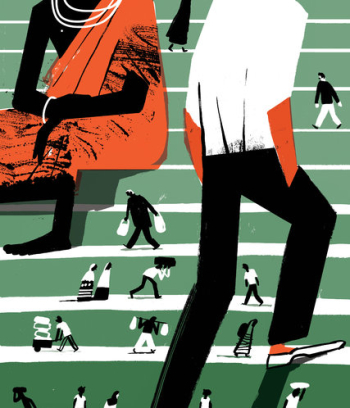
13Taseer-blog427It is one thing to have a theoretical knowledge of caste. It is quite another to see it in action. A few months ago, I was given a small, relatively benign glimpse into how this idea of spiritual purity actually affects people’s lives inIndia.

I was in Varanasi, India’s most sacred city, conducting research for a book about Brahmins, the priestly caste at the top of the Hindu hierarchy. I was speaking at length to a young student who, like his Brahmin ancestors, was steeped in the study of Sanskrit and the Veda. One day, we drove together to the village where he came from. Our driver on this five-hour journey was a voluble man from the neighboring state of Bihar. Along the way, the driver, the student and I chatted amicably, but as we neared the Brahmin village, our dynamics swiftly changed.

My father was Muslim, and since religion in India is patrilineal, my presence in the Brahmin household should have been an unspeakable defilement. But it wasn’t. I belong to India’s English-speaking upper class and, in the eyes of my host, I was exempt from the rules of caste. As we approached the village, he did make one small adjustment: He stopped calling me by my conspicuously Muslim name, and rechristened me Nitish, a Hindu name.

More here.

How Vector Space Mathematics Helps Machines Spot Sarcasm

From the MIT Technology Review:

SarcasmBack in 1970, the social activist Irina Dunn scribbled a slogan on the back of a toilet cubicle door at the University of Sydney. It said: “A woman needs a man like a fish needs a bicycle.” The phrase went viral and eventually became a famous refrain for the growing feminist movement of the time.

The phrase is also an example of sarcasm. The humor comes from the fact that a fish doesn’t need a bicycle. Most humans have little trouble spotting this. But while various advanced machine learning techniques have helped computers spot other forms of humor, sarcasm still largely eludes them.

These other forms of humor can be spotted by looking for, say, positive verbs associated with negative or undesirable situation. And some researchers have used this approach to look for sarcasm.

But sarcasm is often devoid of sentiment. The phrase above is a good example—it contains no sentiment-bearing words. So a new strategy is clearly needed if computers are ever to spot this kind of joke.

More here.

Friday Poem

And Ut Pictura Poesis Is Her Name

You can’t say it that way any more.
Bothered about beauty you have to
Come out into the open, into a clearing,
And rest. Certainly whatever funny happens to you
Is OK. To demand more than this would be strange
Of you, you who have so many lovers,
People who look up to you and are willing
To do things for you, but you think
It’s not right, that if they really knew you . . .
So much for self-analysis. Now,
About what to put in your poem-painting:
Flowers are always nice, particularly delphinium.
Names of boys you once knew and their sleds,
Skyrockets are good—do they still exist?
There are a lot of other things of the same quality
As those I’ve mentioned. Now one must
Find a few important words, and a lot of low-keyed,
Dull-sounding ones. She approached me
About buying her desk. Suddenly the street was
Bananas and the clangor of Japanese instruments.
Humdrum testaments were scattered around. His head
Locked into mine. We were a seesaw. Something
Ought to be written about how this affects
You when you write poetry:
The extreme austerity of an almost empty mind
Colliding with the lush, Rousseau-like foliage of its desire to communicate
Something between breaths, if only for the sake
Of others and their desire to understand you and desert you
For other centers of communication, so that understanding
May begin, and in doing so be undone.
.

by John Ashbery
from Houseboat Days
Farrar Straus and Giroux, 1987

.

Why Bob Dylan’s Nobel Prize for Literature is long overdue

Liz Thomson in New Statesman:

DylanI was too young to appreciate the arrival of Bob Dylan. My generation screamed for the pop music pin-ups of the Seventies such as the Osmonds and David Cassidy. It wasn’t until 1976, when he released his bestselling album, Desire, that Dylan's growly tones first caught my imaginationI. His former girlfriend, the folk singer Joan Baez, was my entrée: I learned to play guitar from her records on which I first encountered such magisterial Dylan songs as “A Hard Rain’s a-Gonna Fall” and “With God on Our Side”, which I never did master. I knew “Blowin’ in the Wind” of course: written in 1963 and a hit for the group Peter, Paul and Mary first, it was already part of our cultural DNA, so too was the 1965 hit single “Mr Tambourine Man”. Soon I would discover songs such as “The Times They Are a-Changin’” and “Like a Rolling Stone” whose lyrics are now part of our lingua franca, paraphrased by headline writers around the world.

The man who was born Robert Allen Zimmerman in Duluth, Minnesota was today awarded the Nobel Prize for Literature. Some will carp (why not Philip Roth or Salman Rushdie, or Alice Waters?), but most will agree it is an honour long overdue —and perhaps fitting that it be awarded now, in his seventy-fifth year. That his best work is behind him matters not. His last truly great album was in 1975, Blood on the Tracks, its songs full of the pain of divorce. There have been flashes of brilliance since (Oh, Mercy, 1989; Time Out of Mind, 1997) but none compares to the genius (a word not used lightly) of the handful of albums Dylan made between his debut in 1962 and the motorcycle crash of July 1966 that allowed him to escape the drug-fuelled craziness and retreat to his lie low at his home in Woodstock.

More here.

Safety Concerns Blight Promising Cancer Therapy

Heidi Ledford in Scientific American:

StatA groundbreaking treatment that arms immune cells called T cells to battle cancer is barrelling towards regulators, fuelled by unprecedented clinical success and investor exuberance. But progress of the therapy, called CAR-T, has been marred by its toxicity; several deaths have been reported in clinical trials. Even as the first company readies its application to the US Food and Drug Administration (FDA)—expected by the end of the year—researchers are hard at work to make the supercharged T cells safer. Doing so is crucial to expanding the use of the therapy to more people, says Anthony Walker, a managing partner at Alacrita, a consulting firm in London. “Right now it is heroic medicine,” he says—a gruelling treatment deployed only in people for whom all else has failed. “Patients are taken sometimes to within an inch of their lives.”

Most CAR-T procedures begin by harvesting a patient’s white blood cells and sifting out the T cells. Those T cells are engineered to recognize cancer cells, and then infused into the patient, ready to do battle. The approach has shown remarkable success against leukaemias and lymphomas: in one study, all traces of leukaemia disappeared in 90% of the patients who received the treatment (S. L. Maude et al. N. Engl. J. Med. 371, 1507–1517; 2014). Results such as those have fuelled an investor frenzy. “It set the field on fire,” says Walker. Swiss pharmaceutical giant Novartis invested in the technique in 2012. In 2014, CAR-T firm Kite Pharma of Santa Monica, California, raised US$128 million when it went public. A few months later, one of its competitors, Juno Therapeutics of Seattle, Washington, yielded $264 million in its initial public offering. Now Kite is racing to be the first to bring a CAR-T therapy to the market. On October 18, the company will update investors on its plans to manufacture and sell the complex therapy, which it hopes to launch in 2017. But the treatment’s toxicity has discouraged some investors. On September 26, Kite released interim clinical-trial results—widely seen as successful—in people with aggressive non-Hodgkin’s lymphoma (see go.nature.com/2djdqen). Yet about one-third of the patients developed serious neurological side effects, and 18% developed a deadly condition called cytokine release syndrome, which can cause organ failure. Two of the 62 patients died as a result of the treatment.

More here.

Thursday, October 13, 2016

On the Bombing of Aleppo

George Soros in the New York Review of Books:

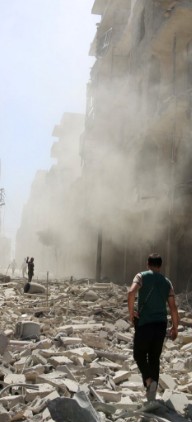
ScreenHunter_2293 Oct. 13 18.21The world is witnessing a humanitarian catastrophe of historic proportions. It is happening in Syria. It is being perpetrated by the president of Russia, Vladimir Putin, in support of his protégé, Bashar al-Assad. Russian planes are bombing the civilian population of Aleppo, the country’s second-largest city, to assist Syrian government forces that are attempting to take control of rebel-held areas of the city.

The combined assault has, among other things, killed hundreds of people and wounded over a thousand, put the city’s remaining hospitals out of commission, and deprived the population of drinking water.

President Putin is moving aggressively to exploit the three months between now and the January 20 US presidential inauguration, based on a callous political calculation.

As The New York Times puts it:

Mr. Putin calculates that the departing President Obama will be unlikely to intervene in the escalating Syrian conflict and a new American president who might consider a tougher policy will not yet be in office. “Putin is in a hurry before the American elections,” said Nikolai V. Petrov, a political scientist in Moscow. “The next American president will face a new reality and will be forced to accept it.”

Other articles in The New York Times and elsewhere have vividly depicted the suffering of the people of Aleppo and the heroic efforts of the doctors and civilians like White Helmets who are risking their lives to help them. When the facts are fully established, Putin’s bombing of Aleppo will be viewed as among the modern world’s most egregious war crimes.

More here.

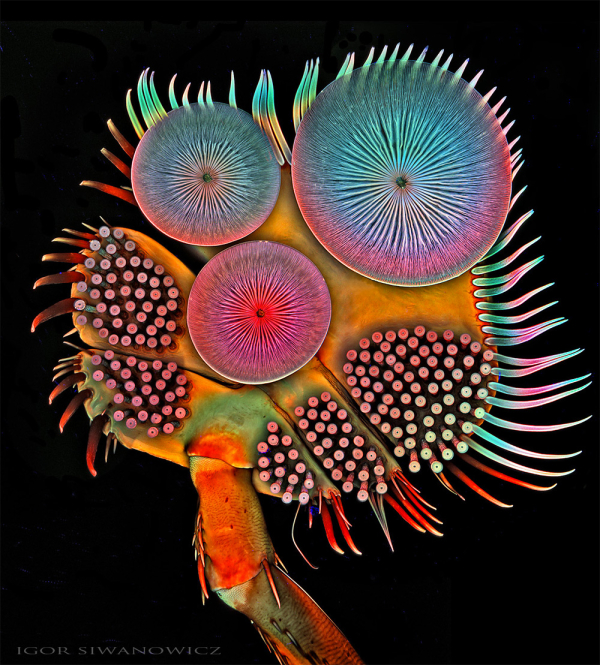
The Extraordinary Details of Tiny Creatures Captured with a Laser-Scanning Microscope by Igor Siwanowicz

Igor-1

Acilius diving beetle male front tarsus (foot) 100x

Christopher Jobson in Colossal:

If you’ve ever wondered how a diving beetle swims through the water or manages to rest just on the surface, the answer is in part because its foot is infinitely more complicated than your own. As seen above, this microscopic image of a male Acilius sulcatus (diving beetle) by photographer Igor Siwanowicz reveals the extraordinary complexity of this aquatic insect’s tiny appendage. This is just one of many examples of Siwanowicz’s work as a neurobiologist at the Howard Hughes Medical Institute’s Janelia Farm Research Campus.

More here. [Thanks to Jennifer Oullette.]

The Excitable Mitochondria

John Hewitt in Inference:

ScreenHunter_2292 Oct. 13 18.09Current approaches to the neurosciences are naïve and often misguided. Contemporary researchers are hopelessly enthusiastic about computer simulations, wiring diagrams or connectomes, and brain activity maps. We may need software tools to visualize brains, but they will not provide any deep understanding of the brain itself.

I shall argue that the fundamental, discrete units of the nervous system are its mitochondria. The feature that we expect of an irreducible neural component is excitability. Mitochondria take excitability to an extreme. If mitochondria are the fundamental units of the nervous systems, then in any CAD model of the brain, they are precisely the parts to which the most care and attention should be applied.

More here.

The Future of Sex Is Orgy Domes

Hermione Hoby at Vice:

Could-orgasmic-meditation-and-sex-parties-be-the-future-body-image-1476198895When I met Emily Witt six years ago, I felt that touch of vertigo that comes when you realize you're in the presence of a highly sophisticated and committed mind. Witt is an alumnus of Brown, the Columbia School of Journalism, and Cambridge. So she did not strike me as the sort of person who would get high and have sex in the “orgy dome” of Burning Man with a person she'd just met. I'd made this assumption because I am, like most people, susceptible to normative narratives of what a hyper-educated, somewhat reserved young woman does and does not do. Nowhere are those narratives more fraught than in the realm of sex and dating.

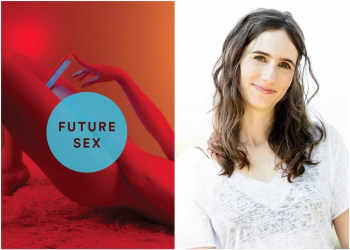
In Future Sex, published this month by Farrar, Strauss and Giroux, Witt interrogates both our cultural myths around feminine sexuality and the vanguards of sexual experimentation seeking to dismantle them. Her serious, radical book places her in a lineage that started with writers like the late feminist critic Ellen Willis, and, yes, Joan Didion herself. Didion didn't do acid in Haight-Ashbury, but Witt, who, for example, details attending the live filming of a hardcore pornography series, is participant as well as observer. Her progressiveness is not just of politics, but of practice. The result is this wise, honest, and necessary book. We met for coffee last week in Brooklyn to talk about Future Sex and how to approach writing about female sexuality.

More here.

Bob Dylan Awarded Nobel Prize in Literature

Dylan1

Sewell Chan in the New York Times:

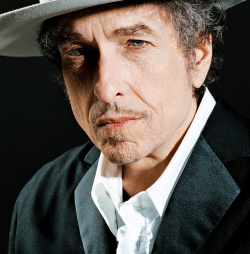
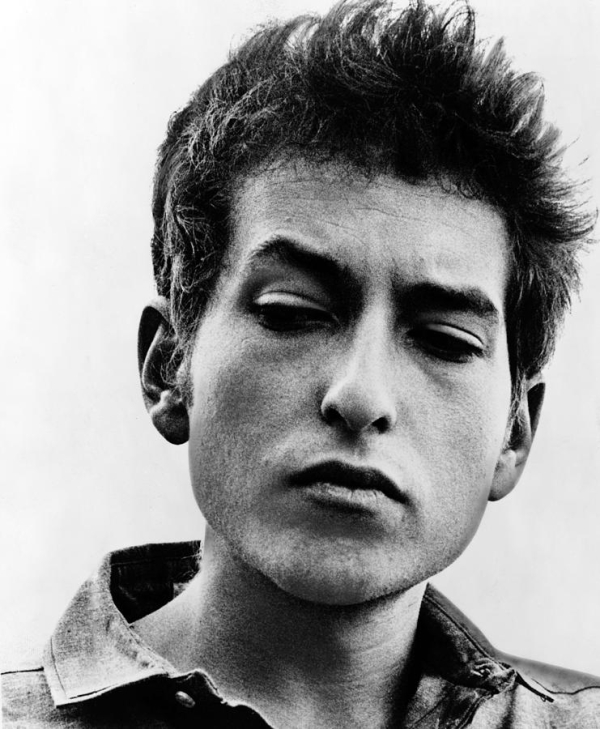
The singer and songwriter Bob Dylan was awarded the Nobel Prize in Literature on Thursday for “having created new poetic expressions within the great American song tradition,” in the words of the Swedish Academy.

He is the first American to win since the novelist Toni Morrison, in 1993. The announcement, in Stockholm, came as something of a surprise. Although Mr. Dylan, 75, has been mentioned often as having an outside shot at the prize, his work does not fit into the literary canons of novels, poetry and short stories that the prize has traditionally recognized.

“Mr. Dylan’s work remains utterly lacking in conventionality, moral sleight of hand, pop pabulum or sops to his audience,” the former Rolling Stones bass player Bill Wyman wrote in a 2013 Op-Ed essay in The New York Times arguing for Mr. Dylan to get the award. “His lyricism is exquisite; his concerns and subjects are demonstrably timeless; and few poets of any era have seen their work bear more influence.”

Mr. Dylan was born on May 24, 1941, in Duluth, Minn., and grew up in Hibbing. He played in bands as a teenager, influenced by the folk musician Woody Guthrie, the authors of the Beat Generation and modernist poets.

More here.

Funky cool medinas

Emma Duncan in The Economist:

MedinaThe origins of Le Jardin Secret lie in a dentist’s waiting-room in Mayfair. Sante Giovanni Albonetti, an Italian businessman, had acquired a development site on the ruins of an ancient riyad and its garden at the centre of Marrakech’s medina with his business partner, Lauro Milan. They had planned to build a hotel, but after the crash of 2008 started contemplating other possible uses for a space that was both huge and, because of the high walls in the medina, invisible to the outside world. Browsing through a magazine, Albonetti saw an article about a “secret garden” that Tom Stuart-Smith, Britain’s most celebrated garden designer, was creating – and thought, “That’s it!” So the developers hired Stuart-Smith to make one for them too.

There is nothing unusual about creating an ambitious garden in Morocco. It is a wonderful place for cultivation (the region does much of Europe’s market gardening), for the High Atlas mountains keep temperatures down and provide snow-melt that flows into underground aquifers. Gardens are central to Islam. While Christianity’s paradise is a vague notion of proximity to God, Islam’s is firmly rooted in a garden, with a detailed planting scheme described in scripture: fig and pomegranate, olive and date-palm. The basic chahar-bagh (four-garden) shape was first used by the Persian emperor Cyrus the Great two and a half millennia ago, and the idea of a formal garden came to Europe from the Muslim world via Moorish Spain. The illustrations for the “Roman de la Rose”, a 13th-century French poem, show a garden clearly modelled on an Islamic one.

More here.

The Strange History of the October Surprise

Jared Keller in Smithsonian:

ObamaFriday, October 7, may have been among the strangest, most tumultuous days in American political history. No fewer than three events occurred that in any other campaign would have shocked the nation. Most infamously, The Washington Post released a devastating 2005 video showing Trump bragging about sexually assaulting women: “When you're a star they let you do it.” Moments later, Wikileaks released the transcripts of some of the Wall Street speeches delivered by Hillary Clinton, which had been a contentious point during the Democratic primary. This was all just hours after Trump had claimed that the “Central Park Five” were guilty, even though the suspects in the 1989 case were exonerated through DNA evidence and the true perprator has confessed. It was a day of “October Surprises” after the previous week had already had a few of them, including revelations from The New York Times that the Republican may have avoided paying federal taxes for some 18 years. The term “October Surprise” was coined by a 1980s political operative but has ever since been appropriated by the media to describe unexpected political disasters in the twilight hours of the campaign. Sometimes they are intentionally positioned by political opponents to impact voters, often days before they head to the polls. They aren’t always successful, but they’ve become a staple of modern politics. Though the term was coined by Reagan campaign manager and future CIA director William Casey during the 1980 campaign, the October surprise enjoyed a long, unusual history even before it entered American political vernacular:

2012: The Storm Before the Storm

Last election’s October surprise wasn’t the result of political scheming or well-timed investigative reporting, but a freak of nature. Hurricane Sandy, which devastated communities up and down the East Coast in the closing days of October, had two important effects: It took swing states New Hampshire and Virginia off the campaign trail for a week or two and gave President Obama the opportunity to appear presidential while responding to a national emergency. The image of then-popular Republican New Jersey Gov. Chris Christie warmly greeting Obama in the aftermath of the storm didn’t help either, according to political analysts at the time. While Obama was already on the rebound in the national polls after a mixed performance during the presidential debates, Hurricane Sandy gave him an additional edge days before the election. The rest, as they say, is history.

More here.

Wednesday, October 12, 2016

Can Transcendence Be Taught?

John Kaag and Clancy Martin in the Chronicle of Higher Education:

ScreenHunter_2289 Oct. 12 17.43I have, alas! Philosophy,
Medicine, Jurisprudence too,
And to my cost Theology,
With ardent labour, studied through.
And here I stand, with all my lore,
Poor fool, no wiser than before.

For two professors, the opening words of Goethe’s Faust have always been slightly disturbing, but only recently, as we’ve grown older, have they come to haunt us.

Faust sits in his dusty library, surrounded by tomes, and laments the utter inadequacy of human knowledge. He was no average scholar but a true savant — a master in the liberal arts of philosophy and theology and the practical arts of jurisprudence and medicine. In the medieval university, those subjects were the culminating moments of a lifetime of study in rhetoric, logic, grammar, arithmetic, geometry, music, and astronomy.

In other words, Faust knows everything worth knowing. And still, after all his careful bookwork, he arrives at the unsettling realization that none of it has really mattered. His scholarship has done pitifully little to unlock the mystery of human life.

Are we and our students in that same situation? Are we teaching them everything without teaching them anything regarding the big questions that matter most? Is there a curriculum that addresses why we are here? And why we live only to suffer and die?

More here. [Thanks to Eric Chaffee.]

Meet the New Math, Unlike the Old Math

Kevin Hartnett in Quanta:

ScreenHunter_2288 Oct. 12 17.37If we could snap our fingers and change the way math and science are taught in U.S. schools, most of us would. The shortcomings of the current approach are clear. Subjects that are vibrant in the minds of experts become lifeless by the time they’re handed down to students. It’s not uncommon to hear kids in Algebra 2 ask, “When are we ever going to use this?” and for the teacher to reply, “Math teaches you how to think,” which is true — if only it were taught that way.

To say that this is now changing is to invite an eye roll. For a number of entrenched reasons, from the way teachers are trained to the difficulty of agreeing on what counts in each discipline, instruction in science and math is remarkably resistant to change.

That said, we’re riding the next big wave in K-12 science and math education in the United States. The main events are a pair of highly visible but often misunderstood documents — the Common Core math standards and the Next Generation Science Standards (NGSS) — that, if implemented successfully, will boldly remake the way math and science are taught. Both efforts seek to recast instruction in the fundamental ideas and perspectives that animate the two fields.

More here.

Raising Barriers: A New Age of Walls · Episode 1

EEuroCapture

Samuel Granados, Zoeann Murphy, Kevin Schaul and Anthony Faiola over at the Washington Post:

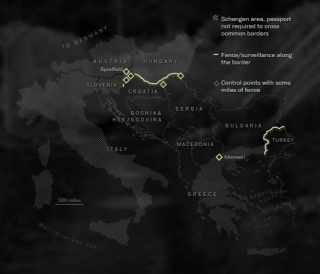
But it is in Europe, not the American Southwest, where the cauldron of migration has truly begun to boil over.

In a region where borders were being erased, more new barriers suddenly went up than anywhere else on Earth. It happened as 2015 saw a rush of more than a million migrants — the vast majority fleeing the wars in Syria and Iraq — taking to rough seas and scaling mountainous terrain to find sanctuary in Europe.

At first, the newcomers arrived largely unhindered. But then fear took hold, driven in part by terrorist attacks involving militants posing as migrants as well as crimes involving asylum seekers. Hungary began building a fence in June 2015, and it was not long before others followed suit. By early this year, Austria and other nations had banded together to halt migrant transit through the Balkans, and the E.U. signed a deal with Turkey to stop asylum seekers from crossing the Aegean Sea.

The combined moves left nearly 60,000 migrants trapped in Greece, with the single largest bottleneck forming in Idomeni, a border town that formerly served as a waystation for those heading deeper into Europe. Before the camp was cleared in May and the migrants relocated to other corners of Greece, as many as 14,000 desperate asylum seekers were living in squalid conditions there, some in tents strung along the very barbed wire fence that barred their way.

More here.