
Category: Recommended Reading
The Plastic Earth: Connecting climate change to the planet’s shifting crust
Jonathan Shaw in Harvard Magazine:
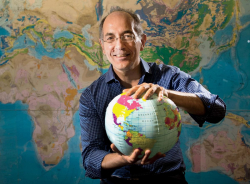
Fame of the academic variety came early to Mitrovica and mushroomed about a decade ago, when he reminded people what happens to local sea levels in the vicinity of a melting ice sheet, like those covering Greenland and Antarctica. The effect was first described a hundred years ago, but “people had forgotten how big it was,” he says. “It’s big.” If Greenland’s ice sheet melted entirely, sea level would fall 20 to 50 meters at the adjacent coast. That’s counterintuitive, but the ice sheets are so massive (Greenland’s ice, one-tenth the size of the Antarctic ice sheets, weighs on the order of 3,000 trillion tons) that two immediate effects come into play. First, all that ice exerts gravitational pull on the surrounding ocean. When an ice sheet melts, that gravitational influence diminishes, and water moves away from the ice sheet, causing sea levels to drop as far as 2,000 kilometers away. (The drop is most pronounced close to the glacier, because gravity’s effects dissipate with distance.) But because the sea level has fallen where the ice sheet melted, it rises everywhere else beyond that 2,000-kilometer boundary, and on distant shores this rise is far greater than the global average. The effect amplifies the rise in average global sea level attributable to the addition of the meltwater itself to the oceans. (Greenland alone contributed a trillion tons of melted ice from 2011 to 2014.) Second, the land beneath the now-vanished ice sheet slowly rebounds, rising as the weight of the mass above diminishes, a process that continues for thousands of years after the ice sheet is gone. Locally, this doubles the relative drop in sea level. But globally, the uplifting crust pushes water outward, further raising sea levels around the world.
More here.
On Raul Brandão’s ‘The Poor’
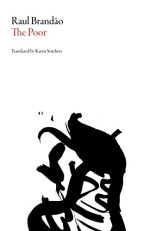
Raul Brandão debuted in English a month ago without a murmur. We should welcome him with the joyful thrill of discovering a late, great Portuguese novelist heretofore unknown to the Anglo-American world. However the recent publication of The Poor also exemplifies one accidental way of hampering a foreign writer. Although the usual method involves a bad translation, Karen Sotelinogets an A from me for navigating syntactically and lexically close to the original. But what can you do with inaccurate translation of context? According to Dalkey Archive Press, this is “a powerful tribute to the underclasses” and an exposé of the “economic situation in Portugal.”
How unexciting: Portugal’s first Modernist novelist downgraded to a turn-of-the-century social realist fiction pamphleteer. DAP could have found more suitable candidates among his contemporaries. Now, bad translations can’t be salvaged, only scraped and rewritten, but let’s see if we can correct Brandão’s haphazard labeling.
In the first chapter, the unnamed narrator introduces several people living in a derelict tenement building: a group of prostitutes and thieves; Senhor José, a pallbearer; the unemployed Gebo, his wife and daughter, Sofia; and Gabiru, “a solitary philosopher, slender, as sad as a funeral, and armed with the most formidable and strangest of wisdom in God’s creation.”
more here.
The Dream of Enlightenment
Alex Dean in Prospect Magazine:
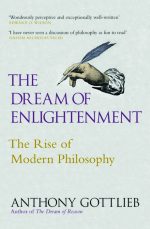
The Dream of Enlightenment contains some fascinating biographical tales. By the book’s end you know not just what the philosophers said, but who they were. I did not know, for instance, that Thomas Hobbes was so obsessed with geometry that he used to draw triangles on his sheets and legs while in bed.
More here.
A MONUMENT TO OUTLAST HUMANITY

“City” is a monumental architectonic work, with dimensions comparable to those of the National Mall, in Washington, D.C., and a layout informed by pre-Columbian ritual cities like Teotihuacan. Heizer started it in 1972, when he was in his late twenties and had already established himself as an instigator of the earthworks movement, a group of artists, including Robert Smithson and Walter De Maria, who made totemic outdoor sculptures, often in the majestic wastelands of the American West. “City” is made almost entirely from rocks, sand, and concrete that Heizer has mined and mixed on site. The use of valueless materials is strategic, a hedge against what he sees as inevitable future social unrest. “My good friend Richard Serra is building out of military-grade steel,” he says. “That stuff will all get melted down. Why do I think that? Incans, Olmecs, Aztecs—their finest works of art were all pillaged, razed, broken apart, and their gold was melted down. When they come out here to fuck my ‘City’ sculpture up, they’ll realize it takes more energy to wreck it than it’s worth.”
It is either perfect or perfectly bizarre that Heizer’s sculpture, a monument meant to outlast humanity, is flanked by an Air Force base and a bomb-test site; in recent years, the land surrounding “City” was under consideration for a railroad to convey nuclear waste to a proposed repository at Yucca Mountain. As it happened, Senator Harry Reid, a dedicated opponent of Yucca Mountain and an advocate for public lands, fell in love with Heizer’s crazily ambitious project and its quintessentially Nevadan setting. “I decided to go and look at it,” Reid told me. “Blew out two tires. I just became infatuated with the vision that he had.” Last summer, at Reid’s urging, President Obama declared seven hundred and four thousand acres of pristine wilderness surrounding “City” a national monument, meaning that it will be protected from development, including a nuclear rail line, for as long as the United States exists.
more here.
Radical Flâneuserie: the aimlessly wandering woman
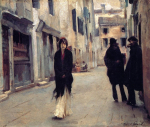
There’s something so attractive about wandering aimlessly through the city, taking it all in (especially if we’re wearing Hermès while we do it). We all, deep down, want to detach from our lives. The flâneur, since everyone wants to be one, has a long history of being many different things to different people, to such an extent that the concept has become one of these things we point to without really knowing what we mean—a kind of shorthand for urban, intellectual, curious, cosmopolitan. This is what Hermès is counting on: that we will associate Hermès products with those values and come to believe that buying them will reinforce those aspects of ourselves.
The earliest mention of a flâneur is in the late sixteenth century, possibly borrowed from the Scandinavian flana, “a person who wanders.” It fell largely out of use until the nineteenth century, and then it caught on again. In 1806, an anonymous pamphleteer wrote of the flâneur as “M. Bonhomme,” a man-about-town who comes from sufficient wealth to be able to have the time to wander the city at will, taking in the urban spectacle. He hangs out in cafés and watches the various inhabitants of the city at work and at play. He is interested in gossip and fashion, but not particularly in women. In an 1829 dictionary, a flâneur is someone “who likes to do nothing,” someone who relishes idleness. Balzac’s flâneur took two main forms: the common flâneur, happy to aimlessly wander the streets, and the artist-flâneur, who poured his experiences in the city into his work.
more here.
Friday Poem
In Kashmir, it is the boys, [and everyone]
—Dedicated to the killed, maimed, blinded, imprisoned,
…. curfewed in Kashmir
It is the boys, says the government man
on the Indian TV
who the parents should ask to stay away
away from the streets and stones
and sit, in front of lifeless computers
in dark, Internet banned, phones shut,
smeared with blood of their mates
drinking milk-less tea, dry-eyed
and stay calm [a must]
pretend the chains they keel under
are the gossamer-threads of democracy
Thursday, August 25, 2016
On Rainer Maria Rilke, William Gass, Stumbling Across My Younger Self, and the Pleasures and Perils of Translating Poetry
Kai Maristed in Agni:
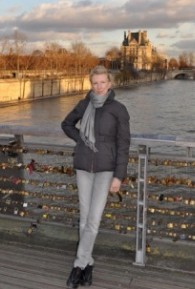
At some point I confided to David that, not being a published poet, I had recently experienced twinges of self-doubt, of feeling like a trespasser, while translating Ingeborg Bachmann, Paul Celan and others. At the same time, the doing itself was exhilarating, and seemed, well…if not exactly easy, to flow toward rightness and resolution. Or was I being grossly naive, to believe I could simply listen closely to the German words and verses, immerse myself in the worlds they made, twirl them through my ear and mind and have them emerge as lines of English, lucid and faithful to original meaning while carrying as much of the original music as possible?
Shouldn’t there be more hard labor involved, more agony and frustration? Isn’t that why so many modern poetry translations appear to have been composed by a duo of Established Poet and her/his trusty sidekick, the Native Speaker? Like high level military brass going into the battlefields guided by, well, local translators. Didn’t William Gass, in his 1999 book-length essay, Reading Rilke, Reflections on the Problems of Translation, assert that, compared to having fluency in both languages, “it is more important that the translator have native-like possession of the language into which he is trying to put his chosen poem”? (‘Native-like possession’ being in context a strikingly awkward euphemism for ‘should be a skilled poet or literary eminence, capable of wrestling with the intransigency of the task.’)
David listened patiently to my questions, then answered with a single one of his own: “Well, and aren’t Gass’s translations of the Duino Elegies really terrible?” Nothing like a baldly-stated truth to make you burst out laughing.
More here.
Adaptive Computation: The Multidisciplinary Legacy of John H. Holland
Stephanie Forrest and Melanie Mitchell in Communications of the ACM:
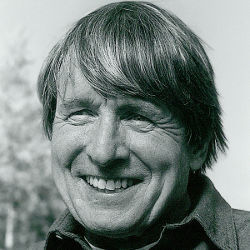
Holland is best known for his invention of genetic algorithms (GAs), a family of search and optimization methods inspired by biological evolution. Since their invention in the 1960s, GAs have inspired many related methods and led to the thriving field of evolutionary computation, with widespread scientific and commercial applications. Although the mechanisms and applications of GAs are well known, they were only one offshoot of Holland's broader motivation—to develop a general theory of adaptation in complex systems.
Here, we consider this larger framework, sketching the recurring themes that were central to Holland's theory of adaptive systems: discovery and dynamics in adaptive search; internal models and prediction; exploratory modeling; and universal properties of complex adaptive systems.
More here.
How Science Can Help Get Out the Vote
Supriya Syal and Dan Ariely in Scientific American:
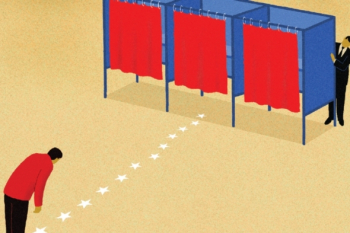
Certainly there are political and mechanical obstacles within the American voting climate that make it difficult for people to even get to the polls, such as onerous voter ID laws or a shortage of polling stations in some locales. The absence of automatic voter registration (as in Finland) or mandatory registration (as in Australia) also limits turnout.
But beyond these structural hurdles, most theories that examine the mindset of those who do not vote speak to disengagement from electoral politics or disbelief in government's ability to affect progress. Solutions that aim to address these problems typically inform people about the importance of their vote in electing a government that works for them. Yet this tactic does not appear to sway many. Despite such efforts, turnout has consistently hovered around 50 percent for the past nine U.S. presidential elections—the highest being 56.9 percent in 2008.
More here.
NYC FLOW is an exploration of video processing techniques introduced by neural-style code
NYC FLOW from Danil Krivoruchko on Vimeo.
The Chomsky Puzzle: Piecing together a celebrity scientist
Tom Bartlett in The Chronicle of Higher Education:
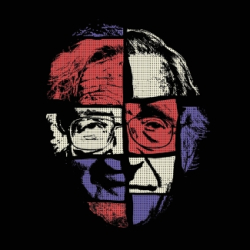
That’s what happens when you are “arguably the most important intellectual alive today,” a line from a 1979 New York Times book review that’s been recycled ever since as shorthand for a hard-to-summarize man. The same book review, written by Paul Robinson, a Stanford historian, goes on to outline what he calls “the Chomsky problem,” that is, “the problem of an opinionated historian inhabiting the same skin as the brilliant and subtle linguist.” There is Noam Chomsky, father of modern linguistics, whose theory of Universal Grammar seeks to explain human language. And there is Noam Chomsky, the political activist and writer, who remains among the most unrelenting critics of American military action. In his new book, Tom Wolfe takes a crack at explaining that bifurcated persona. (Yes, that Tom Wolfe — the Bonfire of the Vanities, Electric Kool-Aid Acid Test guy.). He describes the divide with patented Wolfeian exuberance: “Chomsky’s politics enhanced his reputation as a great linguist, and his reputation as a great linguist enhanced his reputation as a political solon, and his reputation as a political solon inflated his reputation from great linguist to all-around genius, and the genius inflated the solon into a veritable Voltaire, and the veritable Voltaire inflated the genius of all geniuses into a philosophical giant … Noam Chomsky.”
Once fully inflated, Wolfe proceeds to stick a pin in him. The Kingdom of Speech (Little, Brown and Company) is one of two new books that offer sour portraits of the soft-spoken, if not always mild-mannered, emeritus professor of linguistics at the Massachusetts Institute of Technology. The other, Decoding Chomsky: Science and Revolutionary Politics (Yale University Press), by Chris Knight, was a decade in the making and may be the most in-depth meditation on “the Chomsky problem” ever published. Like Wolfe, Knight first consecrates Chomsky, noting that, by one measure, he is the eighth-most-cited thinker in the humanities — hot on the heels of fellow one-namers like Freud and Plato — before setting fire to the shrine.
Is this any way to treat arguably the most important intellectual alive?
More here.
Peaceful ant-plant partnerships lead to genomic arms races
Elizabeth Pennisi in Science:

To find out how quickly friendly partners evolve, Corrie Moreau, an evolutionary biologist at the Field Museum of Natural History in Chicago, Illinois, and her graduate student Benjamin Rubin sequenced the genomes of seven ant species. Three survive by partnering with just one plant: the acacia tree, the Japanese knotweed, or a tropical tree called Tachigali. In the case of the acacia, Pseudomyrmex flavicornis defends the tree from elephants and other grazers in return for a special acacia-produced sugar and the hollow spines in which it nests. The duo also sequenced the genomes of three nonspecialist species—each closely related to one of the specialists—and one very distantly related ant species. All seven were in the Pseudomyrmex genus. Rubin, now at Princeton University, compared the genome of each mutualistic ant with that of its partner and the distant relative, using the three sequences to calculate a rate of evolution based on the number of DNA differences between the distant relative and the other ants. “What we expected to see was a slowdown in the rate of evolution in the mutualist,” Moreau says. But the opposite proved true. The genome of each mutualistic ant was evolving at a faster rate than that of the most closely related generalist, Rubin and Moreau report today in Nature Communications. Moreover, they discovered that changes were occurring in the same genes in all three mutualistic ant species compared with their nonmutualistic counterparts.
More here.
Wednesday, August 24, 2016
Lucian Freud: The Pitiless Eye
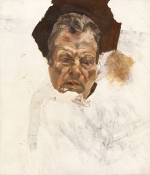
Freud felt—in a very old-fashioned way—that his portraits somehow got to the essence, the heart of the “self.” Martin Gayford quotes him as saying he wanted a painting not to be “of” or “like” the person he painted: “I didn’t want to get just a likeness like a mimic, but to portray them, like an actor…. As far as I am concerned the paint is the person. I want it to work for me just as flesh does.” After sittings, he liked to talk to his subjects, share a meal, understand their feelings. “In a way, I don’t want the picture to come from me. I want it to come from them.” In practice, this often meant that the person did not exist for Freud apart from the sittings: those who did not turn up, or wriggled, or chattered, or were otherwise annoying, were out—no matter what they gave up to sit for him for so long.
Sitting for Freud often took months while he circled around, came back, altered details, slowly filled in the center and worked outward. Small details, like the light on a lapel, a stray tuft of hair, or a deepening, swirling background, could alter the focus of the whole, and the strength and density came in part from this technique of returning, layering, reworking. The sketches were part of this work, but also a separate expression of the subject that obsessed him at the time. His lasting draughtsmanship shows in the sketch Girl sleeping, while the drastic change in his painting style in the 1950s from flat, almost hallucinatory definition, to loosely-handled watercolors and the lavish, heavy brushstrokes of later oils, is displayed in the loose, fast sketch of Anna in Venice, from the 1960s. Missing here are the naked poses that leave his subjects splayed and open, male and female genitalia rendered with a clinical gaze.
more here.
The Return of Religion in Contemporary Philosophy
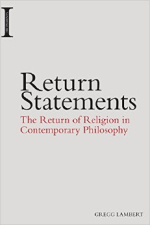
Various contemporary continental philosophers have taken an interest in espousing some form of a ‘return to religion’ but one devoid of actual, material religious belief and practice (e.g., John Caputo’s ‘religion without religion’ or Jean-Luc Nancy’s ‘deconstruction of Christianity)’. But actual, empirical religion, post-9/11, has been flourishing in our globalized world, where belief and religion are not devoid of their meaning, permanently cancelled out philosophically, as it were, but are as loaded as ever with the charge of tradition and sense. This is the context wherein Gregg Lambert develops his notion of the ‘return statement’. The latter phrase, appropriated from computer programming, indicates the exit from a particular subroutine, i.e., something like a paradigm shift in philosophical terms. Lambert invokes it in order to indicate contemporary continental philosophy’s desire to leave behind the various embodied religious forms we see before us every day in its own, more abstracted ‘return to religion’ that would serve perhaps to cancel out the religious altogether.
The problem with contemporary philosophical accounts, in Lambert’s analysis, is that they are too beholden to those deconstructive, negative theological accounts of representation that would see a specific ontology crossed-out but not replaced by anything with its own ontological substance. There is therefore a lack of an ontological form that arises in the face of these various philosophical ‘fundamentalisms’ that he is keen to frequently critique.
more here.
women are changing ukraine
Nothing new in the East: the weather on the front is hot. In the summer, the war gets worse. The war, officially called an Anti-Terrorist Operation or simply ATO in Ukraine, began in spring 2014, when Russian-backed separatist groups in the Donbas region demanded that Ukraine be split up. The Minsk agreement of 2015, which was supposed to end the fighting between the Ukrainian army and pro-Russian rebels, did not ease the tensions, on the contrary. For Ukrainian soldiers, the situation even intensified, because many commanding officers would not allow them to return fire until the last moment, if the separatists opened fire. So if the agreement is to be observed, one is dependent on the West for assistance. Right now, it is very quiet here in Popasna, near the city of Sloviansk. The first shots are fired around midnight, when the OSCE observers go home.
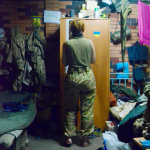
The soldiers listen to bad patriotic Ukrainian rock, clean their weapons, play with the camp dog, smoke. Roksovana is the only woman among 20 men in this Intelligence Brigade, and one of 50,000 soldiers currently serving in the Ukrainian army or in volunteer battalions.
Roksovana is her nickname, she doesn't want to reveal her real name or show her face. She comes from Crimea, where her family lives and could get into trouble if her identity is made public. “It's better like this”, she laughs, “I don't have to put on makeup.” A few cosmetics utensils stand tidily arranged next to her bunk bed, above which there hangs a little guardian angel made of wood, a present from her niece. Roksovana is 45 and has no children. That's rare in Ukraine. Why did she become a soldier? Because, she says, it is her civic duty. Because she doesn't want to live in Russia.
more here.
My Parents’ Mixed Messages on the Holocaust
Jason Stanley in the New York Times:
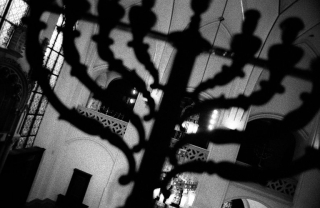
As a child, this fact was not as salient to me as it is today.
I grew up hearing stories from my father of Central Park and the Ethical Culture Society. New York City in the 1940s and ’50s seemed like a magical place. But between these stories were interspersed ones whose contrast couldn’t have been stronger.
My father told me of watching Nazi marches from his grandparents’ balcony, begging his grandparents to allow him to join. He told me what the signs on the streets said when he started learning to read. He told me of the fear of being in hiding, and of the lessons my grandmother gave him in how to dress quickly. More recently, reading family letters, I learned about the beatings he suffered on the streets of Berlin, his 5-year-old hands outstretched to fend off the truncheon blows raining down on his head.
More here.
Biologists are close to reinventing the genetic code of life
John Bohannon in Science:

Such a large-scale genomic hack once seemed impossible, but no longer, says Peter Carr, a bioengineer at the Massachusetts Institute of Technology Lincoln Laboratory in Lexington who is not involved with the project. “It's not easy, but we can engineer life at profound scales, even something as fundamental as the genetic code.”
The genome hacking is underway in the lab of George Church at Harvard University, the DNA-sequencing pioneer who has become the most high-profile, and at times controversial, name in synthetic biology. The work takes advantage of the redundancy of life's genetic code, the language that DNA uses to instruct the cell's protein-synthesizing machinery. To produce proteins, cells “read” DNA's four-letter alphabet in clusters of three called codons. The 64 possible triplets are more than enough to encode the 20 amino acids that exist in nature, as well as the “stop” codons that mark the ends of genes.
More here.
Teju Cole’s “Known and Strange Things”
Amardeep Singh in his own blog:
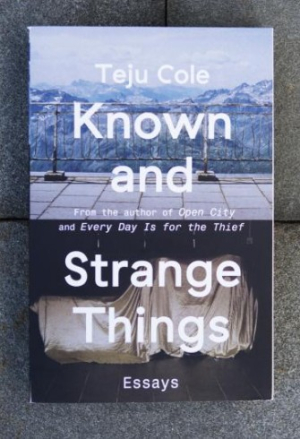 I have been reading and reveling in Teju Cole's new collection of essays, Known and Strange Things, over the past week. Many of the essays here were published earlier in magazines such as The New Yorker, The Atlantic, The New York Times Magazine, and Granta.
And indeed, I had read several of them before, but spread out over years and often sandwiched into lots of other online reading that sometimes diluted their impact. As a result, I did not see the true implications of important essays like “Unnamed Lake” or “A True Picture of Black Skin” in those earlier reads. Seeing them in print and in the context of other essays on overlapping topics helps the author drive the point home. (Another reminder of the limits of our online media + text consumption ecosystem.)
The collection as a whole is divided into three sections, including essays on writers and literature, essays on photography, and travel writings. The travel writings I found particularly engrossing; Cole has visited dozens of countries since he became a literary star after the publication of Open City in 2011. I also see in the travel writings echoes of the voices of other great travel writers, including Conrad, Naipaul and more contemporaneously, Amitava Kumar… There's a very precise balance in these essays of the personal voice and experience with a journalist's eye for broad questions of general interest. I would not be surprised if we were to see more travel writing from Teju Cole in the future.
More here.