Ethan Siegel in Forbes:
More here.

Ethan Siegel in Forbes:
More here.
Arunava Sinha in Scroll.in:
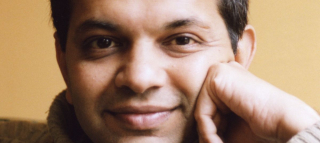
I cannot reveal that conceit. That wouldn’t just be a spoiler, it would kill the need to read this story.
A work of fiction by Mehta, who is still remembered and revered for his Bombay book Maximum City, the title having become a descriptor of the metropolis, is obviously something of an event. Publishing it is, arguably, a minor coup (more so since Juggernaut Books, which is looking to turn conventional publishing upside down with its app, has convinced Mehta to let it debut as a digital edition alone). Expectations are high, and, let it be said, the breathless prose, so American in its energy, doesn’t let you down.
More here.
Those Images
What if I bade you leave
The cavern of the mind?
There's better exercise
In the sunlight and wind.
I never bade you go
To Moscow or to Rome.
Renounce that drudgery,
Call the Muses home.
Seek those images
That constitute the wild,
The lion and the virgin,
The harlot and the child
Find in middle air
An eagle on the wing,
Recognise the five
That make the Muses sing.
.
by William Butler Yeats
.
Diaa Hadid in The New York Times:
It is incumbent upon every able-bodied Muslim who can afford to do so to travel to Mecca, Saudi Arabia, Islam’s holiest site, at least once in his or her lifetime. The annual pilgrimage is known as the hajj, and it is one of the five pillars of Islam, prescribed in the Quran:
And proclaim to mankind the hajj. They will come to you on foot, on very lean camel, they will come from every deep and distant mountain highway.
This year, 1437 according to the Islamic calendar, I am making my first hajj. I will be joining two million Muslims from around the world — though the writer Abu Muneer Ismail Davids joked that it may feel more like 10 million people. During the hajj, we must not swear, cut our hair or nails, have sex or crush a plant. I will be chronicling my journey for The New York Times and on social media. To better follow along, here’s a glossary of terms, names and places that help explain the rites and rituals Muslims will participate in during the six days of the hajj, which begins Saturday.
Ibrahim, the prophet who, following God’s commandment, left his wife, Hajar, and their son Ismail in the Arabian desert. (I am using the Islamic spellings for these figures that also appear in the Judeo-Christian Bible as Abraham, Hagar and Ishmael.) It is with Ibrahim that one of the stories of the origin of Islam begins. For Muslims, like Jews, he is considered a patriarch of our faith. Hajar was Ibrahim’s second wife. After she and Ismail were left in the desert, Hajar ran seven times between two hills, Safa and Marwa, searching for water for her thirsty son. Ismail is said to have kicked his leg in the sand, causing water to trickle out. This became the spring of Zamzam, from which we’ll drink during the hajj. Ismail is considered the ancestor of the Arabs. He was reunited with his father after many years when Ibrahim returned to the desert. Ismail is said to have helped his father build a temple, called the Kaaba, or cube, to honor his one God. To test Ibrahim’s faith, God commanded him to sacrifice Ismail. Three times the devil tried to tempt Ibrahim to abandon his mission, and each time Ibrahim hurled seven stones at the devil to ward him off. We’ll re-enact the stone throwing during the hajj.
More here.
Paul Ibbotson and Michael Tomasello in Scientific American:

The research suggests a radically different view, in which learning of a child’s first language does not rely on an innate grammar module. Instead the new research shows that young children use various types of thinking that may not be specific to language at all—such as the ability to classify the world into categories (people or objects, for instance) and to understand the relations among things. These capabilities, coupled with a unique human ability to grasp what others intend to communicate, allow language to happen. The new findings indicate that if researchers truly want to understand how children, and others, learn languages, they need to look outside of Chomsky’s theory for guidance.
This conclusion is important because the study of language plays a central role in diverse disciplines—from poetry to artificial intelligence to linguistics itself; misguided methods lead to questionable results. Further, language is used by humans in ways no animal can match; if you understand what language is, you comprehend a little bit more about human nature.
More here.
Andrew Rice in New York Magazine:

For the past 15 years or so, Jacob has been primarily preoccupied with a more existential danger: the rising sea. The latest scientific findings suggest that a child born today in this island metropolis may live to see the waters around it swell by six feet, as the previously hypothetical consequences of global warming take on an escalating — and unstoppable — force. “I have made it my mission,” Jacob says, “to think long term.” The life span of a city is measured in centuries, and New York, which is approaching its fifth, probably doesn’t have another five to go, at least in any presently recognizable form. Instead, Jacob has said, the city will become a “gradual Atlantis.”
The deluge will begin slowly, and irregularly, and so it will confound human perceptions of change. Areas that never had flash floods will start to experience them, in part because global warming will also increase precipitation. High tides will spill over old bulkheads when there is a full moon. People will start carrying galoshes to work. All the commercial skyscrapers, housing, cultural institutions that currently sit near the waterline will be forced to contend with routine inundation.
More here.
Named after physicist Enrico Fermi, the paradox asks a simple question: where are the aliens? If the Milky Way has hundreds of billions of stars, millions of them millions of years older than Earth’s, and if even a tiny fraction of those stars have life-bearing planets, and if even a fraction of those planets developed sophisticated technology, even the most severe mathematical parsing should result in parking lots full of aliens, or at least museums full of their ancient relics. Even hobbled by the limitation of light speed, this paradox complains, there should be at least hundreds of alien civilizations that proved out the L in the Drake Equation and either came visiting – to conquer, colonize, or just sightsee – or sent mechanical probes to do it for them.
Instead, nothing. Entire arrays of gigantic radio telescopes have been probing the night sky for decades, spacecraft have been launched, and yet, as of this writing, there’s been no hint of life anywhere, and no hint that life has ever been anywhere in the past. The Drake Equation makes such life all but inevitable; the Fermi Paradox points out its resounding absence; the questing human spirit is caught somewhere in between.
more here.
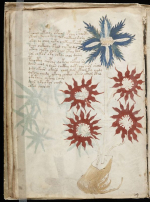
In the middle of August—traditionally the “Silly Season” for reporting—several British newspapers ran the story of a small publishing house which had just secured the rights to produce a limited edition of “the most mysterious book in the world”: the Voynich Manuscript. As all lovers of curious lore will know, this is a richly and strangely illustrated text, written in a language that has never been translated, or a code that has never been cracked. Carbon-dating has shown that it was created some time in the early fifteenth century, thus exploding the legend that it was the work of the thirteenth-century English occultist Roger Bacon, but otherwise its origin and purpose are entirely obscure.
The book had been lost to history until 1912, when a Polish collector, Wilfred Voynich, bought it from a Jesuit monastery in Italy. Since 1969, it has been housed in Yale University’s Beinecke Library, where it goes by the less glamorous name of “MS 408.” In recent years, the library has received thousands of emails about it every month, both from a few serious academics and from hordes of obsessive types who believe it to possess the Key to All Mythologies or evidence of extra-terrestrial life. It is partly in the hope of stemming this electronic tide that Yale has finally agreed to allow its publication.
more here.
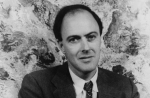
It is his poetry, as embedded in his prose, that brings out the quintessence of Dahl. His early novels burst with original poems. In James and the Giant Peach, first published in 1961, the Centipede celebrates the discovery that the Peach they inhabit is edible by bursting into an extemporaneous ode to the fruit. Charlie and the Chocolate Factory, which first appeared in 1964, is even thicker with poems than James. The prose itself is high octane, charged with alliteration and anaphora. When Wonka takes the Golden Ticket winners on a boat ride down the Chocolate River, the parents cry out:
He’s balmy!
He’s nutty!
He’s batty!
He’s dippy!
He’s dotty!
He’s daffy!
He’s goofy!
He’s beany!
He’s buggy!
He’s wacky!
He’s loony!
The monometer list, full of slant rhyme, becomes incantatory. The repetition of He’s is hypnotic, a string of unstressed syllables that create a singsong effect as we read down the column. Dahl has an incredible facility for putting words in our mouths: putting this poem into the voices of the nervous parents forces readers to vocalize the adjectives too.
more here.
The Clothes Shrine
It was a whole new sweetness
In the early days to find
Light white muslin blouses
On a see-through nylon line
Drip-drying in the bathroom
Or a nylon slip in the shine
Of its own electricity-
As if St. Brigid once more
Had rigged up a ray of sun
Like the one she’d strung on air
To dry her own cloak on
(Hard-pressed Brigid, so
Unstoppably on the go)-
The damp and slump and unfair
Drag of the workday
Made light of and got through
As usual, brilliantly.
.
by Seamus Heaney
from Electric Light
Farrar, Straus and Giroux, 2001
.
Steven Poole in The Guardian:
Wolfe tells these stories with the kind of free-wheeling vim familiar from his brilliant books such as The Right Stuff and The Bonfire of the Vanities. Particularly in the way he ventriloquises the thoughts and worries of his protagonists, the book is superbly written, when it doesn’t tip over into a kind of self-parodic babble. (Darwin, we are assured, “was also a slick operator … smooth … smooth … smooth and then some”.) The only problem with Wolfe’s tales, really, is that they are irresponsibly partial accounts, riddled with elementary falsehoods.
More here.
From KurzweilAI:
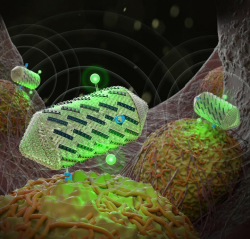
…In another set of experiments, the researchers demonstrated how the gas vesicles could be made to target certain tissues in the body. They genetically engineered the vesicles to display various cellular targets, such as an amino acid sequence that recognizes proteins called integrins that are overproduced in tumor cells.
More here.
Mario Vargas Llosa in Literary Hub:
This short essay does not intend to add to the large number of interpretations of contemporary culture but rather to explore the metamorphosis of what was still understood as culture when my generation was in school or at university, and the motley definitions that have replaced it, an adulteration that seems to have come about quite easily, without much resistance.
Before developing my own argument, I would like to explore, albeit in summary fashion, some of the essays that, in recent decades, have focused on this topic from different perspectives, and have at times stimulated important intellectual and political debates. Although they are very different from each other, and are only a small sample of the ideas and theses that the subject has inspired, they do share a common denominator in so far as they all agree that culture is in deep crisis and is in decline. The final analysis in this essay, by contrast, talks of a new culture built on the ruins of what it has come to replace.
More here.
From Phys.org:

Until now, unbreakable encrypted messages were transmitted via a system envisioned by American mathematician Claude Shannon, considered the “father of information theory.” Shannon combined his knowledge of algebra and electrical circuitry to come up with a binary system of transmitting messages that are secure, under three conditions: the key is random, used only once, and is at least as long as the message itself.
The findings by Daniel Lum, a graduate student in physics, and John Howell, a professor of physics, have been published in the journal Physical Review A.
“Daniel's research amounts to an important step forward, not just for encryption, but for the field of quantum data locking,” said Howell.
Quantum data locking is a method of encryption advanced by Seth Lloyd, a professor of quantum information at Massachusetts Institute of Technology, that uses photons—the smallest particles associated with light—to carry a message. Quantum data locking was thought to have limitations for securely encrypting messages, but Lloyd figured out how to make additional assumptions—namely those involving the boundary between light and matter—to make it a more secure method of sending data.
More here. [Thanks to Farrukh Azfar.]
In a searing investigation into the once lauded biotech start-up Theranos, Nick Bilton discovers that its precocious founder defied medical experts—even her own chief scientist—about the veracity of its now discredited blood-testing technology. She built a corporation based on secrecy in the hope that she could still pull it off. Then, it all fell apart.
Nick Bilton in Vanity Fair:
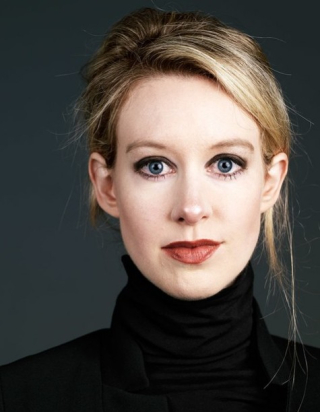
The article created tremors throughout Silicon Valley, where Holmes, the world’s youngest self-made female billionaire, had become a near universally praised figure. Curiosity about the veracity of the Journal story was also bubbling throughout the company’s mustard-and-green Palo Alto headquarters, which was nearing the end of a $6.7 million renovation. Everyone at Theranos, from its scientists to its marketers, wondered what to make of it all.
Forr two days, according to insiders, Holmes, who is now 32, had refused to address these concerns. Instead, she remained largely holed up in a conference room, surrounded by her inner circle. Half-empty food containers and cups of stale coffee and green juice were strewn on the table as she strategized with a phalanx of trusted advisers, including Ramesh “Sunny” Balwani, then Theranos’s president and C.O.O.; Heather King, the company’s general counsel; lawyers from Boies, Schiller & Flexner, the intrepid law firm; and crisis-management consultants.
More here. [Thanks to Ali Minai.]
Across dozens of novels and well over a hundred short stories, Philip K Dick worried away at one theme above all others: the world is not as it seems. He worked through every imaginable scenario: consensus reality was variously a set of implanted memories, a drug-induced hallucination, a time slip, a covert military simulation, an illusion projected by mega-corporations or extraterrestrials, or a test set by God. His typical protagonist was conspired against, drugged, hypnotised, paranoid, schizophrenic – or, possibly, the only person in possession of the truth.
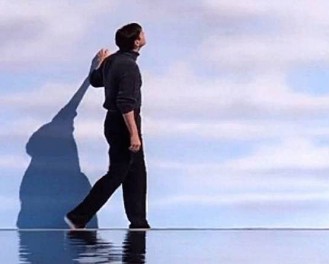
The preoccupation all too clearly reflected the author’s life. Dick was a chronic doubter, tormented, like René Descartes, by the suspicion that the world was the creation of an evil demon ‘who has directed his entire effort to misleading me’. But cogito ergo sum was not enough to rescue someone who in 1972, during one of his frequent bouts of persecution mania, called the police to confess to being an android. Dick took scepticism to a level that he made his own. It became his brand, and since his death it has been franchised across popular culture. He isn’t credited on Hollywood blockbusters such as The Matrix (in which reality is a simulation created by machines from the future) or The Truman Show (about a reality TV programme in which all but the protagonist are complicit), but their mind-bending plot twists are his in all but name.
more here.
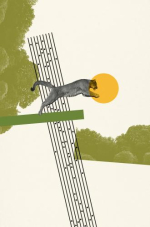
It is useful to start at the end, which is also the beginning: at the far side of an imaginary bridge, picturing a mountain lion slinking over the rise to the east, hugging the shadows and contours of the easy-rolling ridge, then arriving at the 101 freeway’s eight lanes. Mountain lions have died here before, crossing from one sliver of wilderness to another—from the inland, semi-coastal ranges in the Angeles and Los Padres National Forests, across the Simi and San Fernando Valleys, to the Santa Monica Mountains, which run along the Pacific Ocean before elbowing eastward, inland again into the middle of Los Angeles. If the mountain lions don’t die crossing over, those moving westward into the Santa Monicas enter the home range of a famous and stressed-out cat family with a particularly famous son, whose likeness has been printed on magazine covers and T-shirts. The lions here are celebrated and beset upon by all sides—they’re cramped, which is why they are also so ill at ease. It was these cats, the famous group, we were trying to imagine finding a way eastward, over the freeway, escaping L.A.
The crossing point where the bridge might be is named, too perfectly, Liberty Canyon. It is not much of a canyon, more of a dry, narrow valley, or a choke point between a few large hills. We—biologists, ecologists, animal-corridor experts, a few scientists employed by the California Department of Transportation, and I—were here imagining mountain lions and the bridge that they might cross mostly because the bridge will be expensive—many tens of millions of dollars, certainly.
more here.