Once a Year, Scientific Journals Try to Be Funny. Not Everyone Gets the Joke

Ben Panko in Smithsonian:

AsparHarvard researcher Sarah Coseo Markt and her colleagues were dining on steamed asparagus with Hollandaise sauce at a Swedish scientific meeting when they came across a critical research question. Asparagus, as you might know, has a reputation for imparting a sharp, sulfuric smell to people's urine shortly after they eat it. Later that evening, Markt and her supervisor, Harvard University epidemiologist Lorelei Mucci, experienced that truism firsthand. But surprisingly, several of their companions said they had experienced no unusual bathroom odor. Why not?

After returning to Boston, the pair decided to investigate the conundrum further. Luckily for them, they had access to surveys collected every two years by Harvard from thousands of men and women of European-American backgrounds. For the 2010 surveys, Markt and her colleagues added a question asking people to rate the following sentence: “After eating asparagus, you notice a strong characteristic odor in your urine.” Roughly 60 percent of the nearly 7,000 men and women surveyed said they had “asparagus pee anosmia,” or the lack of ability to smell asparagus-influenced urine. The diligent researchers then pinpointed the specific cluster of genes that controlled this ability, by comparing the genomes of the people surveyed to whether or not they were able to smell the asparagus-y urine. They found that a difference in 871 nucleotides—the letters that make up a DNA strand—on Chromosome 1 appeared to control whether or not one could “enjoy” the smell after a meal of asparagus. Markt’s research, cheerfully titled “Sniffing out significant 'Pee Values': genome-wide association study of asparagus anosmia,” ended up in this week’s issue of The British Medical Journal (BMJ), becoming part of a hallowed end-of-year tradition.

More here.

Wednesday, December 21, 2016

When Science Finally Confirms Your Cherished Beliefs — Worry

David Shaywitz in Forbes:

960x0“Girls rule, boys drool,” tweeted VC (and my Tech Tonics co-host) Lisa Suennen today, succinctly summarizing a paper recently published by respected Harvard public health researcher Ashish Jha (who is also a friend).

Suennen isn’t alone–Jha’s report has created a media frenzy. “Evidence Of The Superiority Of Female Doctors,” announcedThe Atlantic. “Want to save 32,000 lives a year? Get male doctors to practice more like women,” advised Vox.

The study–explained nicely by Jha in his blog–examined a large number of Medicare hospitalizations–about 1.5 million–over a four-year period, and found a relatively small but statistically significant difference in the outcomes associated with female vs. male doctors. This little difference becomes a big number, and an important finding, when you multiply by the total size of the Medicare population, as Jha argued in his blog, noting that the discrepancy is especially striking given the “pretty strong evidence of a substantial gender pay gap and a gender promotion gap within medicine.”

While the science itself may be solid (I’d expect nothing less from Jha), I doubt this is what’s driving the paper’s popularity. Rather, it’s the intuitive appeal of the conclusions, together with a dollop of social justice. “My priors are confirmed,” tweeted Aledade CEO Farzad Mostashari, echoing the instinctive response of many–including me.

But it’s exactly when published science confirms our priors and tells us what we’ve been hoping to hear that we should begin to worry–not about the specific paper, necessarily, but rather about how to appropriately contextualize the conclusions.

More here.

THE FERRANTE PARADOX

Merve Emre in Public Books:

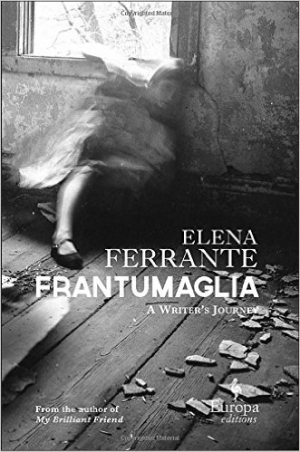
51iyVULVmwL._SX329_BO1,204,203,200_Reading Frantumaglia, the new collection of letters, interviews, and occasional prose from Elena Ferrante, I was struck by how often the author opened her correspondence with an apology. “I apologize again for the trouble I cause you,” she writes to her publisher Sandra Ozzola of her unwillingness to appear in person to accept a prestigious literary prize. “I’m sincerely afraid that I don’t know how to contribute to your project … I apologize in advance,” she writes to Mario Martone, the director who wants to adapt her novella Troubling Love into a film, before providing him with 15 pages of brilliant, exacting notes on the script he has sent her. “I apologize in advance for the confusing or contradictory passages you may encounter,” she writes to critic and magazine editor Goffredo Fofi in a letter she ultimately decides not to send. The refrain clangs across all three hundred pages of the book: “I apologize.” “I am sorry,” “I am sorry,” “I am sorry.”

An apology is not a neutral act, especially not an apology that is issued publicly, as Ferrante’s apologies now are. An apology performs an act of deference, yet it need not be sincere. Often, in fact, it isn’t. “I am sorry” can serve as a strategic front, allowing the speaker to present a remorseful or self-vilifying attitude while continuing to think or do whatever she pleases. For Ferrante, apologizing is a tactic for preserving her innocence, a self-protective stance she has assumed since childhood, albeit with certain reservations. “Innocence—I began to convince myself—is never to get into the situation of arousing malicious reactions in others,” she writes. “Difficult but possible. So I taught myself to be silent, I apologized for everything, I reined in my tongue, I was polite and compliant. Yet secretly I was bad.”

More here.

Liberal Zionism in the Age of Trump

Omri Boehm in the New York Times:

ScreenHunter_2464 Dec. 22 11.31For weeks now, Jewish communities across America have been troubled by an awkward phenomenon. Donald J. Trump, a ruthless politician trafficking in anti-Semitic tropes, has been elected to become the next president, and he has appointed as his chief strategist Stephen K. Bannon, a prominent figure of the “alt-right,” a movement that promotes white nationalism, anti-Semitism, racism and misogyny. Though Bannon himself has expressed “zero tolerance” for such views, his past actions suggest otherwise; as the executive chairman of Breitbart News for the past four years, he provided the country’s most powerful media platform for the movement and its ideologies.

Still, neither the United States’ most powerful Jewish organizations nor Israeli leaders have taken a clear stance against the appointment. In fact, they have embraced it.

Immediately after Trump appointed Bannon, the Zionist Organization of America prepared to welcome him at its annual gala dinner, where he was to meet Naftali Bennett, Israel’s minister of education, and Danny Danon, the country’s ambassador to the United Nations. (Bannon didn’t show up.) Ron Dermer, Israel’s ambassador in Washington, publicly announced that he was looking forward to working with the entire Trump administration, including Bannon. And Alan Dershowitz, the outspoken Harvard emeritus professor of law who regularly denounces non-Zionists as anti-Semitic, preferred in this case to turn not against Bannon, but against his critics. “It is not legitimate to call somebody an anti-Semite because you might disagree with their politics,” he pointed out.

More here.

THE CULT OF THE HINDU COWBOY

UrlSnigdha Poonam at Granta:

As the motto of India’s fiercest band of cowboys puts it, ‘To protect our culture and our civilization, we must do as the Vedas say. And the Vedas tell us this – if an infidel kills a cow, we are to pump his body with bullets.’ The ancient texts are unlikely to have issued an order involving the use of guns. What they repeatedly do is rate the flesh of the cow as the best meat known to mankind and mandate its offering to gods and guests alike. But one can either read a multivolume Sanskrit text or put together an army; apparently one can’t do both.

In 2013, Yogendra Arya launched Haryana’s first twenty-first-century militia of gau rakshaks (cow protectors). He also had it registered with the government as a non-profit, tax-free organization. The official logo of Arya’s Cow Protection Army is the gilded torso of a cow flanked first by a pair of swords and then AK-47s. Its slogan: ‘We will keep the numbers of the cow mother intact with our corpses. It’s going to be a fight the enemies will remember.’ The army operates at the level of an independent republic. It has an anthem and a constitution. It also has a fleet of vehicles and a stockpile of arms and ammunition. Its commanders are elected through a three-tier voting process; foot soldiers are chosen through the submission of an application form. Dozens are filed every day.

more here.

Would Politics Be Better Off Without Anger?

51sUiA1IpmL._SX327_BO1,204,203,200_Amia Srinivasan at The Nation:

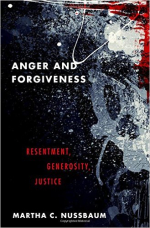
In her latest book, Anger and Forgiveness, the philosopher Martha Nussbaum argues for just this. Even “great injustice,” she says, is no “excuse for childish and undisciplined behavior.” For not only is anger bad because of its consequences—alienating political opponents, breeding revenge and violence, inhibiting progress—it is also a bad thing in itself, an immoral and incoherent way of responding to the world.

To be angry, according to Nussbaum, is to thirst for revenge, either as a means of recompense for a wrongdoing or as a means of restoring one’s damaged social status after one. But revenge, she thinks, never works as recompense: The suffering of others cannot undo harm to oneself. At best, revenge repairs wounded egos: Humiliating my wrongdoer can elevate me by downgrading him. But that, Nussbaum says, is to operate in the barbaric logic of the honor code; it is not the stuff of justice. Thus “in a sane and not excessively anxious and status-focused person, anger…is a brief dream or cloud, soon dispelled by saner thoughts of personal and social welfare.” Resisting anger, Nussbaum thinks, is a mark not only of our humanity, but of our sanity.

Nussbaum describes this view of anger as “radical.” But it is not radical in the sense of being unfamiliar. With the notable exception of black and feminist thinkers who have defended anger as a vital tool of the oppressed, almost all of Western political thought since the Stoics has largely shared Nussbaum’s dim view of anger.

more here.

No looking at my elephant

51wqpcmv83L._SX322_BO1,204,203,200_Mary Wellesley at The London Review of Books:

The keeping of exotic animals has, at times, interlocked with larger political agendas. During the Interregnum, Hyde Park and other royal parks were sold off for the good of the Commonwealth; theatres and bear pits were closed down. The Royal Menagerie in St James’s Park fell into disuse, and Oliver Cromwell’s wife kept a dairy there. After the Restoration, Charles II set about renovating St James’s Park, filling it with parrots, partridges, pheasants and rabbits, as well as guinea fowl, monkeys and ‘the handsomest deer’. To keep the park full of such deer, he decreed that two of the handsomest be sent to London with every returning East India Company ship. During the reign of James I, there had been concern that the animals in St James’s Park should not be visible to the public; the king decreed that his elephant should not be seen and that the menagerie’s camels should be shielded from ‘the vulgar gaze’. Under Charles II, some visitors were permitted access; exploring the renovated menagerie in 1663, the traveller Peter Mundy remarked on the ‘cassawarwa, a strange fowle somewhat lesser than an estridge … a shee bustard’ and also some ‘outlandish geese’.

A relentless desire to anthropomorphise runs down the years in Grigson’s book. After visiting the menagerie at Exeter Change in London, Byron wrote of a ‘hippopotamus, like Lord L.L. [Liverpool, the prime minister] in the face’, and an ‘Ursine Sloth’ that had ‘the very voice and manner of my valet’. But the capacity for seeing human traits in animals came hand in hand with a capacity for seeing animal traits in humans.

more here.

How Woody Guthrie can help us fight for science

Jacqueline M. Vadjunec in Nature:

WVWhen I moved from Massachusetts almost a decade ago to teach at Oklahoma State University, many colleagues were afraid for my career. I work on the human dimensions of global environmental change, and Oklahoma has a long and complex history with science, including climate change. Oklahoma was the first state to ratify ‘anti-Darwin’ legislation in 1923 and today is home to key sceptics in the war on climate change, including Republican Senator James Inhofe and Scott Pruitt, the state’s attorney-general, who earlier this month was nominated to run the US Environmental Protection Agency. These politicized debates trickle down, and both evolution and human-induced climate change remain contested topics, especially in schools. However, Oklahoma is also the home of protest singer Woody Guthrie, a visible example of resistance in the 1930s class and culture wars between rural and urban values.If Woody could use his voice to speak up, so can scientists. In truth, my career is fine, and my colleagues are supportive. I not only manage, but also thrive. And if I can, then so can other scientists who find themselves concerned about the tidal wave of climate scepticism that comes with last month’s election of Donald Trump and his associates. The election might have powerful effects on science, policy and funding. But I want to stress the power and promise of human agency.

In my case, adjustments are minor, but might seem substantial elsewhere. I realize that in my day-to-day actions in the classroom and in my research with family farmers and ranchers, I probably hold a minority viewpoint on human-induced climate change. In the classroom, I am sensitive to the fact that many of my students have family ties to the oil and gas industry. I regularly see them struggle with the local contradictions. I try to create a place of mutual respect to embrace this struggle on their own terms, while also trying to focus on our role as global citizens facing global challenges. It is not always an easy balancing act; these experiences have taught me that most students care about global environmental change, but often have little previous exposure to such issues — in part because of the decisions of local politicians and school boards. In our debriefing at the end of the semester, students often express frustration that they weren’t exposed to many of the issues surrounding climate change at a younger age.

I also learned that actively listening to (instead of talking at) farmers and ranchers who care about sustaining their land and livelihoods is a good way to open dialogue.

More here.

Tuesday, December 20, 2016

How Christian Wiman made poetry matter

Jason Guriel in Slate:

ScreenHunter_2462 Dec. 20 18.23“I don’t really believe in Collected Poems,” the American poet and critic Christian Wiman has said. “They’re almost always bad.” Wiman has long believed that real poetry is rare. As editor of the prestigious magazine Poetry, a position he held for 10 years, he faced a slush pile so big it had slopes, a base camp. But he still struggled to source print-worthy poems. “If poetry is so rare in the world, if so much of it is dross, just think how much rarer it must surely be in your (our!) own work,” he writes in a provocative editorial called “In Praise of Rareness.” Wiman’s argument—that a person who truly respects poetry will find most of it lacking—is the sort of good sense that nevertheless triggers some poetry readers, who tend to be aspiring poets themselves. People don’t prefer to acknowledge that the art they dabble in is probably beyond them. (Full disclosure: Wiman took some of my poems for his magazine. But he rejected many, many more.)

Unsurprisingly, Wiman’s high-profile editorship came to overshadow his own poems. So, too, did an essay he wrote about his incurable form of blood cancer and his rediscovery of faith. (The piece went viral in 2007, and led to other essays about God, opening up a new readership for Wiman.) But Wiman’s poems, which have been gathered in his new book Hammer Is the Prayer: Selected Poems, deserve our attention, too. By striving to be clear and memorable, they dare to address the needs of that mythical unicorn, the general reader. They prove, as Wiman’s editorship did, that poetry doesn’t have to be a coterie concern.

More here.

The Forgotten Life of Einstein’s First Wife

Pauline Gagnon in Scientific American:

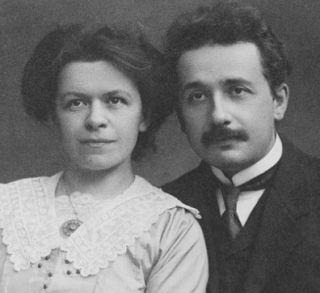
ScreenHunter_2461 Dec. 20 18.10Today, 19 December, marks the 141th anniversary of the birth of Mileva Marić Einstein. But who remembers this brilliant scientist? While her husband, Albert Einstein is celebrated as perhaps the best physicist of the 20th century, one question about his career remains: How much did his first wife contribute to his groundbreaking science? While nobody has been able to credit her with any specific part of his work, their letters and numerous testimonies presented in the books dedicated to her(1-5) provide substantial evidence on how they collaborated from the time they met in 1896 up to their separation in 1914. They depict a couple united by a shared passion for physics, music and for each other. So here is their story.

Mileva Marić was born in Titel in Serbia in 1875. Her parents, Marija Ruzić and Miloš Marić, a wealthy and respected member of his community, had two other children: Zorka and Miloš Jr. Mileva attended high school the last year girls were admitted in Serbia. In 1892, her father obtained the authorization of the Minister of Education to allow her to attend physics lectures reserved to boys. She completed her high school in Zurich in 1894 and her family then moved to Novi Sad. Mileva’s classmates described her as brilliant but not talkative. She liked to get to the bottom of things, was perseverant and worked towards her goals.

More here.

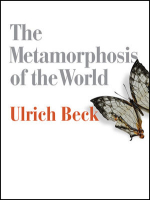
‘The Metamorphosis of the World’, by Ulrich Beck

0745690211John Fanning at The Dublin Review of Books:

The book also highlights two additional developments that are contributing to a sense of bewilderment and disorientation; advances in reproductive medicine which are changing the nature of motherhood and fatherhood and the extraordinary speed and implications of the digital revolution. Under the first heading Beck discusses the emerging concepts of fertility tourism, transnational motherhood and commodity children and suggests that if the act of procreation no longer requires the presence of two people at the same time in the same place but can be “displaced to a laboratory somewhere in the world in any random rented womb at any arbitrary time” then our fundamental understanding of humanity is in doubt. The effects of the digital revolution have received much more attention but Beck brings fresh insight to the subject, pointing out that we are only just becoming aware of “digital risk”, which interferes with something we have always taken for granted; our capacity to control personal information and protect our private lives. Echoing Hardt and Negri’s Empire (2000) thesis, he argues that we are all being lured into control by an anonymous digital central power; which doesn’t rely on violence but which “exercises extensive and intensive profound and far-reaching control that ultimately pushes any individual preference and deficit into the open—we are all becoming transparent”. He also notes the unsettling effects of the divide between the “Neanderthals”; the elderly, who were born human beings but who woke up as “digitally illiterate” and the young “Homo Cosmopoliticus” at ease in the new world but in danger of drowning in an ocean of “fragmented, unorganised, context-free knowledge”.

The political reaction to this unprecedented level of disorientation has been one of outrage rather than any coherent attempt to alleviate the problem. The immediate reaction on the right is to circle the wagons and build a wall; against Mexico, Europe, whatever; and on the left to “occupy” Wall Street, any street, whatever. Both reactions allow people to let off steam but are intellectually bankrupt in terms of a solution.

more here.

Juvenile Jane Austen

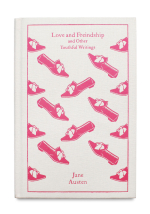
Randomhouse_loveandfreindship_1_7f2809a3-9869-438b-8a0b-059008ebaffeLouis B. Jones at Threepenny Review:

Let’s not pretend romance isn’t always the most important thing. Let’s not pretend romance is somehow beneath us, or trivial, or just for girls. The choice of a mate is maybe the most consequential decision anybody makes. And this is particularly true in a materialistic, capitalist society, where (this was one of Jane Austen’s constant concerns) marriage is—apart from the love thing, of course, and the religion thing—a civic institution, government-regulated, for the preservation of property, and property’s legal transmission. The most important skill a girl can acquire is insight—insight into men’s true character. And women’s real motives. The precocious experiments that are collected miscellaneously in Love and Freindship: and Other Youthful Writings(where the misspelling of “friendship,” Jane’s own, has been preserved by the editors throughout) reveal that even at the age of fourteen, the girl from rural Hampshire, seventh child in a family of eight, already had the peculiar attitude, mixing deep exasperation with fondness, that characterizes all her later writing. And this Penguin paperback—cheap at sixteen dollars, well bound for longevity, conveniently zuhandlich in its little mass-market trim size, legibly printed on the tender old “Penguin Classics” paper stock, wisely annotated—will make a rewarding addition to any Jane-lover’s library.

Miss Austen rose out of a vast (as she herself saw it) treacle swamp of eighteenth-century female writing and she reordered the genre, reordered it inimitably, so that readers forever after will, in her, treat courtship’s comedy with a little of the deadly seriousness it warrants.

more here.

what is putin up to?

ResetGreg Afinogenov at n+1:

Beyond the question of evidence lies the much more interesting question of what Putin was hoping to accomplish by interfering in US elections. The American public, even the foreign policy-savvy pundit class, has remarkably short memories. Putin can trace his enmity to the Clintons as far back as the 1990s, when the US intervention in Kosovo under the leadership of sometime centrist Democratic presidential hopeful General Wesley Clark nearly sparked a shooting war with Russia. (It was prevented at the last minute, bizarrely, by schlocky pop singer James Blunt, then a captain in the British army.) More proximate causes of enmity lie in Hillary Clinton’s policies as Secretary of State, which added insult to injury by kicking off with a purely cosmetic “reset.” These included US support—real or imagined—for a series of election protests in Russia in 2011, but especially the US intervention in Libya. Russia had abstained from a UN resolution ordering a no-fly zone there, but saw its trust, as Putin sees it, immediately betrayed when the no-fly zone turned into a full-fledged regime change operation.

So why choose this particular tactic to destroy, or at least damage, Hillary? Simply put, Putin (if his media is any guide) believes that the US has already tried to influence Russian elections through leaks. While most Americans have already forgotten about them, the Panama Papers were timed deliberately or accidentally to coincide with Russian parliamentary elections this year. In Russia they are widely seen as having been released by US intelligence to target Putin specifically, because of the $2 billion they revealed to be in the offshore account of a close friend. The hacking operation that targeted the DNC succeeded only two months after the Panama Papers were released. These dots are easy to connect.

more here.

An Invitation for Meaningful Dialogue

Caperton in Feministe:

Cats-and-dogs-together-600x338There’s been a lot of talk lately about dialogue and understanding. Liberals just need to try to understand conservatives, They say. People get defensive when you call them (or, more often, even just imply that they might be) bigots, They say. If we want to get anything accomplished, we need to meet conservatives halfway (in which “halfway” is usually defined as “on their side”), They say. (In this case, “They” for the most part refers to journalists who think that because Their piece is set on a college campus and not a failing coal town in West Virginia, it’s totally novel and not the exact same article journalists have been writing since November 9 and before.) Generally, the response from the liberal camp is, “Fuck that shit,” which is a position I myself have taken before. (I stand by it.) You can’t reason someone out of a position they didn’t reason themselves into. “Actually, no, Latinos aren’t rapists” and “Actually, no, BLM isn’t a terrorist organization” aren’t going to be compelling messages to people who only take those positions to rationalize their own latent (acknowledged or unacknowledged) prejudices. “Supporting a bigoted campaign involves signing off on bigotry” isn’t going to convince someone who is struggling to accept that that’s what they did. It’s hard and unsatisfying, and maybe the New York Times needs to do a Dialogue and Understanding piece about people who are being asked to take on that struggle.

That said, dialogue can happen. Here’s how.

Privileged liberals: Put your privilege to good use.

It’s completely understandable that you might not want to engage with people who either embody or enable bigotry. The ones who embody it are miserable to be around — try spending time with someone who thinks that they’re completely justified in wanting to put Muslims on registries or block LGBT people from services like housing and medical care. And the ones who insist that they aren’t bigoted, because they disagree with registries and religious discrimination, can be almost as bad. For them, having negative feelings about those things, but not to the point that they actually do anything about them, is a mark in the Win column, and asking for anything beyond that — which is what we’re asking them to do — is a direct attack on their character. Having to handle them with kid gloves so they don’t get defensive is a lesson in frustration.

More here.

Scientists Say the Clock of Aging May Be Reversible

Nicholas Wade in The New York Times:

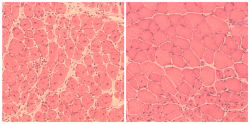
AgingAt the Salk Institute in La Jolla, Calif., scientists are trying to get time to run backward. Biological time, that is. In the first attempt to reverse aging by reprogramming the genome, they have rejuvenated the organs of mice and lengthened their life spans by 30 percent. The technique, which requires genetic engineering, cannot be applied directly to people, but the achievement points toward better understanding of human aging and the possibility of rejuvenating human tissues by other means. The Salk team’s discovery, reported in the Thursday issue of the journal Cell, is “novel and exciting,” said Jan Vijg, an expert on aging at the Albert Einstein College of Medicine in New York. Leonard Guarente, who studies the biology of aging at M.I.T., said, “This is huge,” citing the novelty of the finding and the opportunity it creates to slow down, if not reverse, aging. “It’s a pretty remarkable finding, and if it holds up it could be quite important in the history of aging research,” Dr. Guarente said. The finding is based on the heterodox idea that aging is not irreversible and that an animal’s biological clock can in principle be wound back to a more youthful state. The aging process is clocklike in the sense that a steady accumulation of changes eventually degrades the efficiency of the body’s cells. In one of the deepest mysteries of biology, the clock’s hands are always set back to zero at conception: However old the parents and their reproductive cells, a fertilized egg is free of all marks of age.

Ten years ago, the Japanese biologist Shinya Yamanaka amazed researchers by identifying four critical genes that reset the clock of the fertilized egg. The four genes are so powerful that they will reprogram even the genome of skin or intestinal cells back to the embryonic state. Dr. Yamanaka’s method is now routinely used to change adult tissue cells into cells very similar to the embryonic stem cells produced in the first few divisions of a fertilized egg.

More here.

‘Fake’ News and the Victorian Gentleman

UNDERSTANDING THE OTHER SIDE: Only a fraction of the articles we post are normally about politics but it is also true that the editors of 3QD are all (to a person) liberal progressives and none of us supported or voted for Donald Trump. In the interest of dialogue and trying to understand the conservative point of view better, I have decided to start occasionally posting relatively well-argued articles from the right side of the political spectrum. Some of these are sent to me by friends who did vote for Trump. (And, yes, I have such friends and hope you do too.) Trust me, it will not hurt you to read them. I hope that people will keep the comments civil and focused on the issues, and not engage in ad hominem attacks.

Matthew Continetti in Commentary:

ScreenHunter_2460 Dec. 20 10.26Donald Trump’s election as president sent the press scrambling for explanations. Few in the media expected Trump to win, an assumption reflected in coverage of the presidential campaign. In the weeks before Election Day, major papers and television networks were filled with stories touting Hillary Clinton’s “blue wall” of states, including Michigan, Pennsylvania, and Wisconsin (oops), and celebrating a “surge” of Hispanic voters that would put Clinton over the top. As it turned out, Trump won more Hispanic votes than Mitt Romney.

Because it is difficult for liberals to understand that people might oppose them on substantive as well as moral grounds, their analyses of the election results were as flawed as their takes on the horse race. Many liberal commentators simply ascribed Trump’s victory to the supposed racism, misogyny, and authoritarianism of his supporters, reducing varied and complex motivations to base, irrational, and impermissible drives. Other reporters, editors, and anchors quickly became enamored of the idea that misinformation on social- media networks and the Internet tricked voters into supporting Trump, that America fell for a con ginned up by liars with Facebook accounts eager to make a quick buck and assisted by cybernauts in league with the Kremlin. Such was the genesis of the controversy over “fake news.”

More here.

Monday, December 19, 2016