
by Brooks Riley
Category: Recommended Reading
Sunday, December 25, 2016
Tom Shaner “Last Summer”
The World Can Have Peace and Prosperity, If It Wants
Stephen M. Walt in Foreign Policy:
A little over a year ago, I wrote a column explaining why international peace was in the U.S. national interest. Yet none of the presidential candidates — not even Bernie Sanders — made it a key theme of their campaign. We heard a lot about strength and resolve and “greatness” and leadership, along with repeated warnings about alleged threats and “enemies,” but hardly a word was said about the virtues of peace or the policies that the United States should follow in order to preserve it. Indeed, one of the candidates kept making bizarre and bellicose statements of various kinds, including not-so-veiled threats of violence against his political opponents. And guess what? That guy eventually won.
Looking beyond the recent U.S. election offers little reason for optimism. There are a few bright spots — such as the renewal of the peace deal in Colombia — but encouraging episodes like that are few and far between. The European Union used to be a shining symbol of its member states’ commitment to transcend their conflict-ridden history; today the EU seems to be in a slow-motion process of disintegration. Syria is a demolished wasteland, and Afghanistan, Yemen, Somalia, Iraq, South Sudan, and Libya remained mired in violence with no end in sight. The political landscape in Asia is beginning to shift as well, and the U.S. president-elect has already questioned the “One China” policy and repudiated the Trans-Pacific Partnership. A neat trick: He’s managed to provoke China and undermine the U.S. position in Asia simultaneously, and he’s not even in office yet. Fasten your seatbelts, folks, it’s going to be a bumpy ride.
More here.
Christmas Poem
Half a Christmas Tree
by Brooks Riley
I
I go
I go there
I go there now
I go there now and
I go there now and see
I go there now and see trees
I go there now and see trees swaying
I go there now and see trees swaying slightly
I go there now and see trees swaying slightly, unaware
I go there now and see trees swaying slightly, unaware they
I go there now and see trees swaying slightly, unaware they might
I go there now and see trees swaying slightly, unaware they might somehow
Be uprooted
By the wind
Or Santa Claus.
THEATER AN DER WIEN’s messiah
zsa zsa gabor (1917 -2016)
Lewis Lapham Reads “Christmas Carol”
From Lapham's Quaterly:
In a December 1995 Harper’s Magazine essay, Lewis Lapham wrote that Charles Dickens’ classic holiday tale had become obsolete: “The plot line of A Christmas Carol didn’t fit the bracing spirit of the times, and neither did its irresponsible moral lesson. Here was old Scrooge, an exemplary Republican, troubled in his sleep by ghostly dreams of human kindness, changed into a gibbering liberal at the sight of a crippled child. Hardly an inspiring tale of triumphant profit taking.” He proposes an update to the story. Listen to him read his essay:
More here.
china machado (1929 – 2016)
Jesus Christ: Jewish radical or bathrobe Republican? The “reason for the season” remains an enigma after 2,000 years
Andrew O'Hehir in Salon:
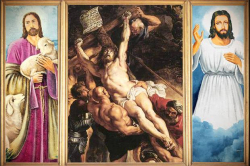
…It’s outrageous that Donald Trump is permitted to depict himself, in some nominal way, as a follower of Jesus Christ without provoking widespread howling and vomiting. It’s an outrage that a majority of white Americans who consider themselves followers of Jesus Christ twisted themselves into voting for a man who has promised to persecute the powerless, shun the strangers, drive away the hungry and the vulnerable. None of this is anything new, of course. Ever since the real Jesus, whoever he was, disappeared behind his symbolic death, his messianic promise of the Kingdom of Heaven has been used to build kingdoms here on earth. Christmas is barely even an allusion to Jesus Christ. It’s a pagan celebration of the winter solstice, presided over by a red-suited elf-god. At some point it got reverse-engineered into a birthday party for a half-mythological baby whose more important accomplishment was his death. If the church asks us to keep Christ in Christmas, we might respond that he was never there in the first place. But as I stood looking at the empty cradle in the St. Patrick’s crèche, I reflected that the incoherent innocence of the Christmas story — the way it gives us Jesus as an infant, stripped of history and his tangled and contradictory afterlife — is the source of its power.
In the Christmas season we seek reassurance, repetition and ritual; we watch movies we’ve seen dozens of times before, and football teams we don’t care about. We embrace that strange sense of “Christmas Carol” suspended time that makes childhood and adulthood, past and future, seem to merge. If Christmas has nothing to do with the real Jesus, it allows us to connect, briefly and vaguely, to the idea of Jesus and to the possibility of human redemption he seemed to embody. It’s only a moment, a shared shimmering dream, and then it’s gone. But it’s a gift.
More here.
Bernie Sanders In A Candid Conversation With Sarah Silverman
Saturday, December 24, 2016
‘Against Everything’ by Mark Greif
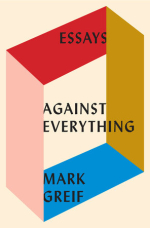
The unflinching intelligence of his writing can be exhilarating, but intimidating. Yet there are many moments of levity: a doctor is described as “a mechanic who wears the white robe of an angel and is as arrogant as a boss”. Of the hipster movement he writes: “It did not yield a great literature, but made good use of fonts”.
As the book progresses, the style becomes looser and more expansive. The cool, stern tone of the earlier essays gives way to a more playful approach, typified by the essay “Learning to Rap”, in which, yes, Greif decides to teach himself how to rap along to hip-hop records. His rationale is that, as a music fan in the early 90s, he chose to devote himself to American post-punk, such as Sonic Youth and Fugazi, rather than hip-hop. This was a mistake, he now thinks, as hip-hop was the birth of a “new world-historical form” while rock “had been basically exhausted by 1972”.
It’s quite the essay. By wrestling with the specifics of learning to rap, Grief plays on the white liberal’s guilt at cultural appropriation while demonstrating the complexity, difficulty and brilliance of the form. He discusses the practical challenges: trying to decipher the lyrics of Nas, Snoop Dogg and the Notorious BIG; rapping along in a low voice with the music on his headphones as he waits for the next subway.
more here.
on ‘The Moravian Night’ By Peter Handke
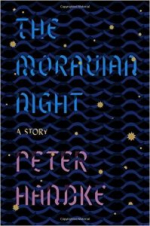
The disintegration of Yugoslavia (as Serbs, Croats, and Bosniaks pursued their nationalist interests in what had been a multicultural country) was a turning point. In a series of long essays Handke argued that Serbia was being portrayed as the sole aggressor in the civil wars and that the language of journalism was itself a tool of aggression. He traveled in Serbia and described it in language he thought more conducive to peace. (A Journey to the Rivers orJustice for Serbia is the only one of these essays in English translation; the German title, Eine winterliche Reise zu den Flüssen Donau, Sava, Morawa, und Drina, suggests a geographical connection with The Moravian Night.) Critics were merciless, attacking him with the same either/or language he was determined to replace with thinking marked by the conjunction “and.” Literary prizes were withdrawn and when a French writer published an essay interpreting Handke’s Yugoslavia work (and his attendance at the funeral of Slobodan Milosevic) in the worst possible light, Handke’s The Play of Questioning was withdrawn from a planned production in Paris. Defenders of Handke, of which I was one, pointed out that the critics were inventing the supposed transgressions and that a reading of the essays revealed a thoughtful dialectic rather than a single-minded denial of Serbian guilt.
When Handke received the Norwegian International Ibsen Prize for Drama in 2014, there were protests. Karl Ove Knausgaard responded to the protests in an essay called “Handke and Singularity”, arguing that Handke’s Yugoslavia works are “another form of history-writing, about what goes on outside of public attention, the entire political-historical and generalizing system of concepts that has filled ‘Serbia’ with a whole bunch of fixed notions, unalterable and unshakable.” As it meanders through possibilities of narration beyond fixed notions and forms, The Moravian Night continues to call the unalterable and unshakable into question.
more here.
‘THE INVISIBILITY CLOAK’ BY GE FEI
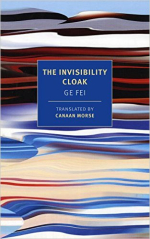
Ge Fei’s significance as an author is his ability to bring commentary on contemporary Chinese society into fiction aware of theories about fictional unreliability. As a child Cui’s friend Jiang Songping is described as “a natural politician,” able to convince everyone “that Antonioni was posing as a movie director in order to infiltrate our country’s borders and assassinate the Great Leader, Chairman Mao,” and also “that every pomegranate contained the same number of seeds . . . three hundred and sixty five”; Cui’s sister confirms her distrust of Jiang by counting a pomegranate and finding three hundred and seventy-one, but Antonioni was indeed denounced during the Cultural Revolution for his 1972 documentaryChung Kuo, Cina (likely as part of the Gang of Four’s campaign to undermine Premier Zhou Enlai’s engagements with the outside world). The plot of The Invisibility Cloak hinges on Cui’s plan to buy an apartment with money earned selling his prized Tannoy Autograph speakers—only in production from 1954 to ’74—which he bought at auction at a low price (and which were his only demand in the divorce); explaining the name, though, he writes, “Of course, the English word ‘autograph’ has plenty of direct equivalents in Chinese, but for whatever reason, someone in the hi-fi community translated it as ‘autobiography,’ and the mistake has been accepted as the norm.” China’s tortuous representations of the West and Western fiction’s self-aware blending of fact and factitiousness merge in Ge Fei’s depictions.
The “invisibility cloak” of the title is only mentioned in passing: detailing the mythology surrounding the previous owner of the Autograph speakers, Cui says, “The wildest story I heard was that he could show up at any event unseen because he wore an invisibility cloak.” Perhaps the shady buyer of Cui’s Autographs puts on such a cloak of his own, but if so it only earns the subtlest of suggestions; Cui does not make this connection himself. Or perhaps our external selves and dishonest interactions with others are cloaking our own inner lives and making them invisible.
more here.
Merriam-Webster sums up 2016 in one word: ‘Surreal’
Leanne Itale in The Independent:
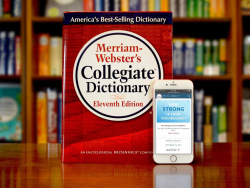
The single biggest spike in lookups came in November, he said, specifically November 9, the day Donald Trump went from candidate to president-elect. There were also smaller spikes, including after the death of Prince in April at age 57 and after the June shootings at the Pulse nightclub in Orlando, Florida. Irony mixed with the surreal for yet another bump after the March death of Garry Shandling. His first sitcom, It's Garry Shandling's Show, premiered on Showtime in 1986 and had him busting through the fourth wall, speaking directly to the audience and mimicking his real life as a standup comedian, but one who knew he was starring in a TV show. “It was surreal and it's connected to the actual original meaning of surreal, which is to say it comes from Surrealism, the artistic movement of the early 20th century,” Sokolowski said. Which is to say that “surreal” didn't exist as a word until around 1924, after a group of European poets, painters and filmmakers founded a movement they called Surrealism. They sought to access the truths of the unconscious mind by breaking down rational thought. It wasn't until 1937 that “surreal” began to exist on its own, said Sokolowski, who is a lexicographer.
More here.
SANTA’S PRIVACY POLICY
Lawrence Hughes in McSweeney's:
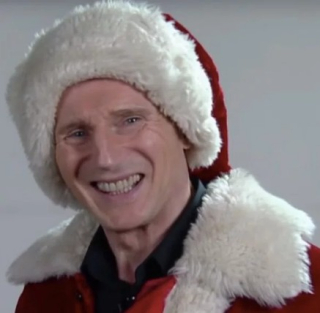
Why Do We Need This Information?
Santa Claus requires your information in order to compile his annual list of Who is Naughty and Who is Nice, and to ensure accuracy when he checks it twice. Your information is also used in connection with delivering the kinds of goods and services you’ve come to expect from Santa, including but not limited to toys, games, good cheer, merriment, Christmas spirit, seasonal joy, and holly jollyness.
What Information Do We Collect?
We obtain information from a variety of sources. Much of it comes from unsolicited letters sent to Santa by children all over the world listing specific items they would like to receive for Christmas. Often these letters convey additional information as well, such as the child’s hopes and dreams, how much they love Santa, and which of their siblings are doodyheads.
The letters also provide another important piece of information—fingerprints. We run these through databases maintained by the FBI, CIA, NSA, Interpol, MI6, and the Mossad.
More here.
A Brainless Slime That Shares Memories by Fusing
Ed Yong in The Atlantic:

They are slime molds —yellow, oozing, amoeba-like organisms found on decaying logs and other moist areas. They have no brains. They have no neurons. Each consists of just a single, giant cell. And yet, they’re capable of surprisingly complicated and almost intelligent behaviors. The species that Dussutour studies, Physarum polycephalum, can make decisions, escape from traps, and break out of Petri dishes. “It’s a unicellular organism but it looks smart,” she says.
At its smallest, Physarum can exist as microscopic cells, which actively swim about. These cells are attracted to each other, and when they swarm together, they can merge. The result is a single giant cell called a plasmodium, which can extend for meters.
More here.
It may have seemed like the world fell apart in 2016 but Steven Pinker is here to tell you it didn’t
Julia Belluz in Vox:
Julia Belluz
So 2016 has been an incredibly stressful and violent year from a news standpoint for many people. Do you have any advice for putting it in context?
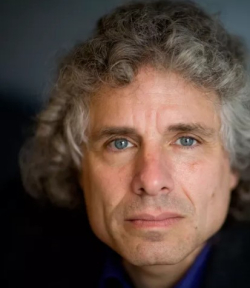 Steven Pinker
Look at history and data, not headlines. The world continues to improve in just about every way. Extreme poverty, child mortality, illiteracy, and global inequality are at historic lows; vaccinations, basic education, including girls, and democracy are at all-time highs.
War deaths have risen since 2011 because of the Syrian civil war, but are a fraction of the levels of the 1950s through the early 1990s, when megadeath wars and genocides raged all over the world. Colombia’s peace deal marks the end of the last war in the Western Hemisphere, and the last remnant of the Cold War. Homicide rates in the world are falling, and the rate in United States is lower than at any time between 1966 and 2009. Outside of war zones, terrorist deaths are far lower than they were in the heyday of the Weathermen, IRA, and Red Brigades.
Julia Belluz
One big thing that’s changed since we last spoke is the election of Donald Trump. We now have a president coming in who has said he wouldn’t defend America’s allies in NATO if we were attacked by a foreign power and who has strong links to Russia. His election came after Brexit. These really seem like threats to the global institutions that have likely helped sustain peace in recent years.
Steven Pinker
Several awful things happened in the world’s democracies in 2016, and the election of a mercurial and ignorant president injects a troubling degree of uncertainty into international relations.
But it’s vital to keep cool and identify specific dangers rather than being overcome by a vague apocalyptic gloom.
More here.
Trololo Guy’s Triumphant Return to Trololo-ing
Original video length: 2:41
New video length: 3:13
The Power of Concentration
Maria Konnikova in The New York Times:
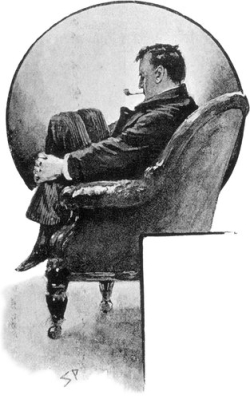
Now we’re learning that the benefits may reach further still, and be more attainable, than Professor Langer could have then imagined. Even in small doses, mindfulness can effect impressive changes in how we feel and think — and it does so at a basic neural level. In 2011, researchers from the University of Wisconsin demonstrated that daily meditation-like thought could shift frontal brain activity toward a pattern that is associated with what cognitive scientists call positive, approach-oriented emotional states — states that make us more likely to engage the world rather than to withdraw from it.
More here.
YouTube star Adam Saleh’s story is shocking – but only if it’s true

Moustafa Bayoumi in The Guardian:
If the allegation of being thrown off a plane for speaking Arabic is true, then Saleh is right to be outraged. We must all be outraged at such blatant bigotry.
But pardon me for being skeptical.
First of all, this is the same guy who released a video in 2014 titled “Racial Profiling Experiment”, which showed the NYPD as flat-footedly anti-Muslim and was later revealed to be a hoax, doing no favors for those of us in the battle against real racial profiling.
And Saleh’s more recent antics include a video of him squeezing into a piece of luggage and flying in the baggage hold from Melbourne to Sydney, Australia. But that stunt was also faked. Security footage shows Saleh walking like a regular, two-legged, ticket-bearing passenger straight onto his flight.
Saleh, who calls himself a “professional idiot”, is a publicity hound, and that’s fine for him. While I freely admit that I don’t get this type of entertainment, a lot of people seem to enjoy his prankish, MTV-style antics. But because this is his public persona, we are justified in considering the possibility that his latest video could be another stunt.
For one thing, we don’t know see what transpired before he began filming this incident. And while we do see others passengers waving and heckling him with goodbyes, we don’t know what the cause of their anger is besides Saleh’s assertion that it’s racism. We have only Saleh’s word at this point, and he may not be a completely trustworthy source. Meanwhile, alleging discrimination where none occurred is a dangerous and damaging game. Just ask Yasmin Seweid.
Seweid is a college student who told New York City police that three drunk men attacked her on the subway, screaming “Donald Trump” and attempting to rip off her hijab while no one came to her defense. Police later discovered that Seweid had fabricated the story due to a troubled family life, and the 18-year-old has now been charged with filing a false report.
The lesson from all of this is not that Islamophobia is false. On the contrary. The handful of fabricated stories of Islamophobia are convincing only because Islamophobia is real, recognized tangible, and dangerous.
More here.