The ‘Global Order’ Myth: Teary-eyed nostalgia as cover for U.S. hegemony

Andrew J. Bacevich in The American Conservative:
Shutterstock_281823848During the Age of Trump, Year One, a single word has emerged to capture the essence of the prevailing cultural mood: resistance. Words matter, and the prominence of this particular term illuminates the moment in which we find ourselves.

All presidents, regardless of party or program, face criticism and opposition.Citizens disinclined to support that program protest. Marching, chanting, waving placards, and generally raising a ruckus in front of any available camera, they express dissent. In normal times, such activism testifies to the health of democracy.

Yet these are not normal times. In the eyes of Trump’s opponents, his elevation to the pinnacle of American politics constitutes a frontal assault on values that until quite recently appeared fixed and unassailable. In such distressing circumstances, mere criticism, opposition, protest, and dissent will not suffice. By their own lights, anti-Trump forces are fending off the apocalypse. As in November 1860 so too in November 2016, the outcome of a presidential election has placed at risk a way of life.

The very word resistance conjures up memories of the brave souls who during World War II opposed the Nazi occupation of their homelands, with the French maquis the best known example. It carries with it an unmistakable whiff of gunpowder. After resistance comes revolution.

Simply put, Trump’s most ardent opponents see him as an existential threat, with the clock ticking. Thus the stakes could hardly be higher. Richard Parker of Harvard has conjured what he calls Resistance School, which in three months has signed up some 30,000 anti-Trump resistors from 49 states and 33 countries. “It is our attempt to begin the long slow process of recovering and rebuilding our democracy,” says Parker. Another group styling itself the DJT Resistance declares that Trump represents “Hatred, Bigotry, Xenophobia, Sexism, Racism, and Greed.”

More here.
Meet the chef who’s debunking detox, diets and wellness

Tim Lewis in The Guardian:

4890The Angry Chef’s railing against the trend for clean-eating and wellness bloggers, his frustration at the miraculous properties assigned to kale and coconut oil quickly found an audience. The Sun asked Warner to contribute to an article about “Insta-gurus’ diet advice”, and Ben Goldacre, one of his anti-pseudoscience heroes, tweeted his approval. New Scientist commissioned Warner to write for them, a gratifying nod for a self-described “science geek” who has a degree in biochemistry from Manchester University.

Now a book, The Angry Chef: Bad Science and the Truth About Healthy Eating, is out next month. It is a systematic, densely footnoted, and often very funny takedown of pretty much every food fad that has taken hold in recent years: detox, alkaline, ash and paleo diets among them. If you believe superfoods exist, then Warner will have some strong words to make you reconsider. Likewise, if you’re convinced there’s no possible defence for sugar or processed food, then he wants you to take another look at the evidence.

More here.

Wednesday Poem

Blood

I am blood—fennel and mint-spiced,
a tired line of arthritic fingers, strained
eyes. I am cold Brooklyn nights,
apartment houses, frosted front windows
facing the El. I am curses, spells,
bowlfuls of oil and salt, a language gasping
near-dead, soft Cs and Ps, clipped vowels
lodged deep in the back of my throat.
I am broken baptisms, dark spirits
who fed like leeches on a priest’s missing
words, slithered their way into bedrooms.
I am rosaries, rosemary, saint statuettes.
I am needle and thread.
I stitch coats for ghosts out of poems.

by Ja'net Danielo
from The 2River View, Fall 2016
.

In Search of Fear: Notes from a high-wire artist

Philippe Petit in Lapham's Quarterly:

FearA void like that is terrifying. Prisoner of a morsel of space, you will struggle desperately against occult elements: the absence of matter, the smell of balance, vertigo from all sides, and the dark desire to return to the ground, even to fall. This dizziness is the drama of high-wire walking, but that is not what I am afraid of. After long hours of training for a walk, a moment comes when there are no more difficulties. It is at this moment that many have perished. But in this moment I am also not afraid. If an exercise resists me during rehearsal, and if it continues to do so a little more each day, to the point of becoming untenable, I prepare a substitute exercise—in case panic grabs me during a performance. I approach it slyly, surreptitiously. But I always want to persist, to feel the pride of conquering it. In spite of that, I sometimes give up the struggle. But I do so without any fear. I am never afraid on the wire. I am too busy.

But you are afraid of something. I can hear it in your voice. What is it?

Sometimes the sky grows dark around the wire, the wind rises, the cable gets cold, the audience becomes worried. At those moments I hear fear screaming at me. To imagine that one evening I will have to give up the wire, that I will have to say, “I was afraid, I met Holy Fear, it invaded me and sucked my blood”—I, the fragile walker of wires, the tiniest of men, will turn away to hide my tears—and yes, how afraid I am.

On the ground I profess to know no fear, but I lie. I will confess, with self-mockery, to arachnophobia and cynophobia. Because I see fear as an absence of knowledge, it would be simple for me to conquer such silly terrors. “I am too busy these days,” I’ll say, “but when I decide it’s time to get rid of my aversion to animals with too many legs (or not enough legs—snakes are not my friends, either), I know exactly how to proceed.” I will read science reports, watch documentaries, visit the zoo. I will interview spider-wranglers (is there such a profession?) to discover how these creatures evolved, how they hunt, mate, sleep, and, most importantly, what frightens the hairy, scary beast. Then, like James Bond, I won’t have any problem having a tarantula dance a tarantella on my forearm.

More here.

Eye-opening picture of fetal immune system emerges

Heidi Ledford in Nature:

DataA human fetus in its second trimester is extraordinarily busy. It is developing skin and bones, the ability to hear and swallow, and working on its first bowel movement. Now, a study published on 14 June in Nature finds that fetuses are also acquiring a functioning immune system — one that can recognize foreign proteins, but is less inclined than a mature immune system to go on the attack (N. McGovern et al. Nature http://dx.doi.org/10.1038/nature22795; 2017). The results add to a growing body of literature showing that the fetal immune system is more active than previously appreciated. “In general textbooks, you see this concept of a non-responsive fetus is still prevailing,” says immunologist Jakob Michaelsson at the Karolinska Institute in Stockholm. But the fetal immune system is unique, he says. “It’s not just immature, it’s special.” A developing fetus is constantly exposed to foreign proteins and cells, which are transferred from the mother through the placenta. In humans, this exposure is more extensive than in many other mammals, says immunologist Mike McCune at the University of California, San Francisco. As a result, laboratory mice have proved a poor model for studying the developing human fetal immune system. But fully understanding that development could reveal the reasons for some miscarriages, as well as explain conditions such as pre-eclampsia, which is associated with abnormal immune responses to pregnancy and causes up to 40% of premature births. And organ-transplant surgeons have long been interested in how a developing fetus and its mother tolerate one another without either of them launching an immune attack — the hope is to find ways to suppress the immune system’s response to transplanted organs.

For Jerry Chan, an obstetrician and gynaecologist at the KK Women’s and Children’s Hospital in Singapore, understanding the fetal immune system was important for his goal of developing stem-cell treatments and gene therapies for genetic disorders in developing fetuses. Chan and his colleagues wanted to know whether there was a developmental stage at which such treatments could be given without the risk of the therapies themselves being attacked by the immune system. To do this, Chan teamed up with immunologist Florent Ginhoux at the Agency for Science, Technology and Research in Singapore to study dendritic cells, immune cells that break down foreign material and present fragments of it to other immune cells called T cells. Some T cells are then activated to target the foreign material for destruction.

The team found that human fetuses have functional dendritic cells by 13 weeks of gestation. But although the cells behave much like the adult versions, their response to foreign human proteins differs: rather than mark the foreign material for annihilation, fetal dendritic cells are more likely to activate a special category of T cell called regulatory T cells, which suppress immune responses. This could reflect a need to avoid a catastrophic immune response against a mother’s cells. “You don’t want too much immune response in a developing fetus,” says Ginhoux. “It is very dangerous — this is a critical point in development.”

More here.

Tuesday, June 20, 2017

The Reichstag Fire Next Time

Masha Gessen in Harper's Magazine:

025__HA0717_25-1When each day brings more news than we are used to seeing in a week, and the kind of news that only the most catastrophic imagination can accommodate, we find ourselves talking about the Reichstag fire. Time feels both accelerated and slowed down, and so we imagine that we have been talking about the fire for years. It is the new president’s new clothes: invisible, yet always present in our perception of him.

The Reichstag fire, it goes almost without saying, will be a terrorist attack, and it will mark our sudden, obvious, and irreversible descent into autocracy. Here is what it looks like: On a sunny morning you turn on the television as you make coffee, or the speaker in your shower streams the news, or the radio comes on when you turn the ignition key in your car. The voices of the newscasters are familiar, but their pitch is altered, and they speak with a peculiar haste. Something horrible has happened—it is not yet clear what—and thousands are dead, and more are expected to die. You hear the word “terror.” You feel it.

You reach for your cell phone, but the circuits are busy, and will be for hours—it will take you the rest of the day to check in with your loved ones. They are safe, but changed. And so are you. So are all of us. Tragedy has cast its shadow over every space where you encounter strangers: the subway, your child’s school, your lunch spot. People are quieter, less frivolous, yet they are not subdued. They share a sense of purpose that is greater than their fear. They are experiencing something they’d only read about: War has come to their land. Everyone is a patriot now.

More here.

Neuron transistor behaves like a brain neuron

Lisa Zyga in Phys.org:

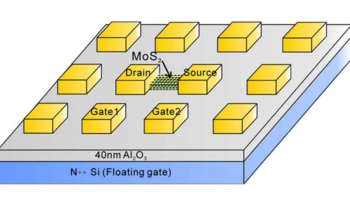
NeurontransiResearchers have built a new type of "neuron transistor"—a transistor that behaves like a neuron in a living brain. These devices could form the building blocks of neuromorphic hardware that may offer unprecedented computational capabilities, such as learning and adaptation.

The researchers, S. G. Hu and coauthors at the University of Electronic Science and Technology of China and Nanyang Technological University in Singapore, have published a paper on the neuron transistor in a recent issue of Nanotechnology.

In order for a transistor to behave like a biological neuron, it must be capable of implementing neuron-like functions—in particular, weighted summation and threshold functions. These refer to a biological neuron's ability to receive weighted input signals from many other neurons, and then to sum the input values and compare them to a threshold value to determine whether or not to fire. The human brain has tens of billions of neurons, and they are constantly performing weighted summation and threshold functions many times per second that together control all of our thoughts and actions.

In the new study, the researchers constructed a neuron transistor that acts like a single neuron, capable of weighted summation and threshold functions. Instead of being made of silicon like conventional transistors, the neuron transistor is made of a two-dimensional flake of molybdenum disulfide (MoS2), which belongs to a new class of semiconductor called transition metal dichalcogenides.

More here.

Throughout history, plagues and wars have left greater equality in their wake. Can we get there again without violence?

Walter Scheidel in Aeon:

ScreenHunter_2725 Jun. 20 22.17The principal sources of inequality have changed over time. Whereas feudal lords exploited downtrodden peasants by force and fiat, the entrepreneurs of early modern Europe relied on capital investment and market exchange to reap profits from commerce and finance. Yet overall outcomes remained the same: from Pharaonic Egypt to the Industrial Revolution, both state power and economic development generally served to widen the gap between rich and poor: both archaic forms of predation and coercion and modern market economies yielded unequal gains.

Does this mean that history has always moved in the same direction, that inequality has been going up continuously since the dawn of civilisation? A cursory look around us makes it clear that this cannot possibly be true, otherwise there would be no broad middle class or thriving consumer culture, and everything worth having might now be owned by a handful of trillionaires. Did democracy and progressive reform save us from this unenviable fate; or was it the labour movement, or mass education? All of these developments played an important role, and yet, at best, furnish only part of the answer. For inequality had already dipped steeply on several occasions, long before any of these modern breakthroughs had begun to appear.

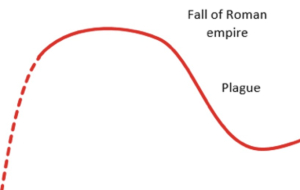
From time to time, it turns out, history has pushed a reset button, driving down inequality in marked, if only temporary fashion. It is only by surveying its full sweep, over thousands of years, that we can discover the dynamics that drove this process. And these dynamics turn out to be very disturbing indeed: every time the gap between rich and poor shrank substantially, it did so because of traumatic, often extremely violent shocks to the established order.

More here.

John McPhee and the oranges

540b4c71320024543f33aec82da1495c_XLWyatt Williams The Oxford American:

In the winter of 1965, an ambitious writer met with William Shawn, the famously autocratic editor of the New Yorker, to discuss his next story. After some considerable effort, the young man had published an expansive profile of a basketball star in the January 23 issue of the magazine. While going over final proofs of that story with Shawn, he had even talked his way into a job as staff writer. But now they couldn’t agree on the writer’s next assignment. The writer would suggest subject after subject only to be told that the idea had already been reserved for another writer or that Shawn wasn’t interested in it. This is the moment, as the story goes, when John McPhee finally just said, “Oranges.”

According to the version he told in an interview with the Paris Review decades later, “That’s all I said—oranges. I didn’t mention juice, I didn’t mention trees, I didn’t mention the tropics. Just—oranges. Oh yes! Oh yes! [Shawn] says. That’s very good. The next thing I knew I was in Florida talking to orange growers.”

It is a fitting origin story for an idiosyncratic writer whose work has followed the farthest limits of his interests wherever they lead. Descriptions of McPhee’s career inevitably fumble with the broadness of it—he has written books about sports and nature and canoes and doctors and fish and nuclear physics. McPhee is a patient writer, aware of time and yet existing a little outside of it. Around the same cultural moment that, say, Joan Didion was collecting her essays for The White Album, a book that spans the upheaval of a decade, McPhee was beginning to map out a comprehensive survey of North American geology, a book that spans the upheaval of billions of years. Twenty years later, when he finally published Annals of the Former World, a seven-hundred-page monument to rocks, he was awarded the Pulitzer Prize in nonfiction.

more here.

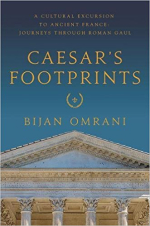
Caesar’s Footprints: Journeys to Roman Gaul

51a+KnRzneL._SX329_BO1 204 203 200_Daisy Dunn at Literary Review:

Some of the most colourful passages of Greek and Latin literature describe the people of Gaul. There are haughty, bellicose Gauls, drunk Gauls, Gauls who sleep on straw like animals, Gauls who make severed heads into necklaces for horses or store them in cedar oil to bring out on special days. And then, ‘living beyond the deep sea and quite cut off from the world’, are the huge and ‘terrifying’ Britons. All in all, a horrible bunch.

One of the effects of the Gallic War, which Julius Caesar waged between 58 and 51 BC, was to draw what Bijan Omrani calls ‘an impenetrable veil over centuries of indigenous Gallic culture’. The campaign, which Caesar initially undertook to pay off his debts and outshine his political rivals, helped the Romans to rewrite Gallic history. Conquered tribes left little trace of their former ways of life. Caesar, meanwhile, left his extensive Commentaries on the Gallic War.

The text is Omrani’s guide as he travels across France, Belgium and Switzerland in search of the conflict it describes – and the history it doesn’t. A former classics teacher, Omrani rambles along dung-strewn lanes and muddy tracks, and through medieval villages named after ancient villas (the Latin name endings –acum and –anus became –ac, –at, –as, –y, –é, and –ay in French). In places, his book evokes Richard Holmes’s pursuit of Robert Louis Stevenson through France in his marvellous Footsteps, though Omrani’s own personality is comparatively self-contained. For all the mud, his own footprints are rather fainter on his pages than those of Caesar and the Gauls he stalks.

more here.

On museums as havens for culture

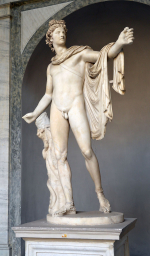
Apollo_of_the_BelvederePhilippe de Montebello at The New Criterion:

This is how these conversations can change enormously, and they change also with the change of the canon. We lived for hundreds of years with a canon that was essentially based on the Apollo Belvedere and Raphael as the ne plus ultra of all of visual art, and there was a certain consistency to the way one approached works of art and by which curators hung and installed their galleries. Of course the Elgin Marbles—the Parthenon Marbles—changed everything about the canon when they arrived, and it all shifted. Then came, in the middle of the nineteenth century, the Salon des Refusés, and suddenly everything went (by which I mean “everything goes,” but of course in the past tense).

Since then we’ve had contemporary art and there’s no more question of a canon. We have a kind of anarchical situation in which rectangular objects with paint on them and regular sculptures still exist, but they coexist with installation pieces, videos, and things of that sort—very ephemeral material. And so the conversation today is a very different one, in which there is an obsession with contemporary art in opposition to everything else.

As far as contemporary art is concerned, the fashion is now to insert it not only into contemporary art museums and modern art museums, but also into older museums. You’ve all seen it, from the controversial works of Jeff Koons being shown in Versailles, to the much more applauded Anish Kapoor sculpture in the gardens of Versailles, to just about every museum that now includes contemporary art—not just as a department, but in contiguity with the art of the past.

more here.

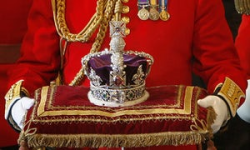
Koh-i-Noor: The History of the World’s Most Infamous Diamond

Anthony Sattin in The Guardian:

KohSize, as we know, is not everything. You might only be the 90th largest, but you can still emerge with a sizable reputation. This is one of several lessons to be learned from the story of the Koh-i-Noor diamond, way down the list in terms of size but, as this new book’s subtitle suggests, looming large in the imagination. It is probably also the world’s most dangerous diamond, described here as being “like a living, dangerous bird of prey” because so many have lost their lives over it. The origins of the Koh-i-Noor, the “mountain of light”, are unknown, beyond the reach even of this book’s two accomplished authors, but it seems safe to assume that it emerged out of alluvial deposit somewhere in India. It may have been known in antiquity and it may have been referred to in many a romantic tale, but its first verifiable appearance isn’t until the 18th century, where it decorated the Mughal emperor’s Peacock Throne in Delhi and where it stimulated envy and greed in the emperor’s rivals. Over the following 100 years, it brought torment and tragedy to a range of people in Delhi, Kabul and Lahore.

The history of the diamond is quickly told – it’s a rock, after all, so there’s only so much story it can have. But the history of the many who have coveted the diamond is long and involved, full of wonder and awe, treachery and bloodshed. It is told here by William Dalrymple, known for entertaining travel writing and sweeping histories, particularly of the British in India and, most recent, in Afghanistan, and by Anita Anand, whose previous book told the story of the granddaughter of the last Indian maharaja to own the diamond. Dalrymple tells the earlier history, when the diamond was established as an emblem of power and sovereignty. He does this with his habitual panache, sweeping along the trail from the Mughal court in Delhi to Persia, where the diamond was taken by Nader Shah in 1739, to Afghanistan and then in 1813 to Lahore, where it was worn by the great Sikh maharaja Ranjit Singh. There are enough grand durbars with the diamond strapped to princely biceps and terrible moments of eyes being pricked by needles and brains being fried with molten metal to keep the pages turning. Anand’s task is more complicated, for she covers the history of the stone and its owners since the cremation of Ranjit Singh in June 1839. The key moment occurred 10 years later and involved Ranjit’s 10-year-old heir, Maharaja Duleep Singh. British-led forces under Governor-General Lord Dalhousie had just taken control of the maharaja’s state of Punjab in an act of perfidy that will be familiar to anyone who has read our imperial story: three years earlier, the British had assured the prince’s advisers that they would stay until he was 16, old enough to rule by himself. Now, before his 11th birthday, he was handed a document to sign to “resign for himself, his heirs, and successors all right, title and claim to the sovereignty of the Punjab, or to any sovereign power whatever”. Item three of the five-clause document required him to “surrender” the Koh‑i‑Noor to Queen Victoria.

More here.

Scientists Discover a Key to a Longer Life in Male DNA

Carl Zimmer in The New York Times:

LONGEVITY-master768A common genetic mutation is linked to an increase in life span of about 10 years among men, researchers reported on Friday. The mutation, described in the journal Science Advances, did not seem to have any effect on women. Still, it joins a short list of gene variants shown to influence human longevity. By studying these genes, scientists may be able to design drugs to mimic their effects and slow aging. But the search for them has been slow and hard.

When it comes to how long we live, nurture holds powerful sway over nature. In 1875, for example, life expectancy in Germany was less than 39 years; today it is over 80. Germans didn’t gain those extra decades because of evolving, life-extending changes in their genes. Instead, they gained access to clean water, modern medicine and other life-protecting measures. Nevertheless, heredity clearly plays a modest role in how long people live. For example, a number of studies have shown that identical twins, who share the same genes, tend to have more similar life spans than fraternal twins. In a 2001 study of Amish farmers in Pennsylvania, researchers found that close relatives were more likely to live to similar ages than distant ones. The impact of heredity on life span has turned out to be about as big as its influence on developing high blood pressure. But large-scale surveys of people’s DNA have revealed few genes with a clear influence on longevity. “It’s been a real disappointment,” said Nir Barzilai, a geneticist at Albert Einstein College of Medicine. Researchers are having better luck following clues from basic biology. In many species, for example, there is a relationship between an animal’s size and its life span. “If you look at dogs, flies, mice, whatever it is, smaller lives longer,” said Gil Atzmon, a geneticist at the University of Haifa in Israel who collaborates with Dr. Barzilai.

More here.

Monday, June 19, 2017

Sunday, June 18, 2017

REBECCA SOLNIT: THE LONELINESS OF DONALD TRUMP

Rebecca Solnit in Literary Hub:

DTSexism-584265724He was supposed to be a great maker of things, but he was mostly a breaker. He acquired buildings and women and enterprises and treated them all alike, promoting and deserting them, running into bankruptcies and divorces, treading on lawsuits the way a lumberjack of old walked across the logs floating on their way to the mill, but as long as he moved in his underworld of dealmakers the rules were wobbly and the enforcement was wobblier and he could stay afloat. But his appetite was endless, and he wanted more, and he gambled to become the most powerful man in the world, and won, careless of what he wished for.

Thinking of him, I think of Pushkin’s telling of the old fairytale of The Fisherman and the Golden Fish. After being caught in the old fisherman’s net, the golden fish speaks up and offers wishes in return for being thrown back in the sea. The fisherman asks him for nothing, though later he tells his wife of his chance encounter with the magical creature. The fisherman’s wife sends him back to ask for a new washtub for her, and then a second time to ask for a cottage to replace their hovel, and the wishes are granted, and then as she grows prouder and greedier, she sends him to ask that she become a wealthy person in a mansion with servants she abuses, and then she sends her husband back. The old man comes and grovels before the fish, caught between the shame of the requests and the appetite of his wife, and she becomes tsarina and has her boyards and nobles drive the husband from her palace. You could call the husband consciousness—the awareness of others and of oneself in relation to others—and the wife craving.

More here.

Are Disability Rights and Animal Rights Connected?

Joshua Rothman in The New Yorker:

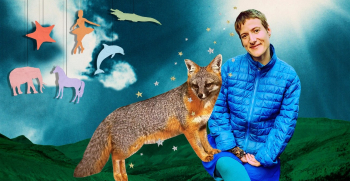
Rothman-Are-Disability-and-Animal-Rights-ConnectedIn 2004, when she was twenty-three, Sunaura Taylor Googled “arthrogryposis,” the name of a condition she has had since birth. Its Greek roots mean “hooked joints”; the arms and legs of many people who have it are shorter than usual because their joints are permanently flexed. Taylor was curious about whether animals had it, too. In the journal of the Canadian Cooperative Wildlife Centre, she found a report called “Congenital Limb Deformity in a Red Fox.” It described a young fox with arthrogryposis. He had “marked flexure of the carpal and tarsal joints of all four limbs”—that is, hooked legs. He walked on the backs of his paws, which were heavily callused. In a surprised tone, the report noted that he was muscular, even a little fat: his stomach contained “the remains of two rodents and bones from a larger mammal mixed with partially digested apple, suggesting that the limb deformity did not preclude successful hunting and foraging.” All this had been discovered after he had been shot by someone walking in the woods, who noticed that he “had an abnormal gait and appeared sick.”

Taylor was taken aback by this story. The fox, she thought, had been living a perfectly good life before someone had shot it. Perhaps that someone—the report named only “a resident of Cape Breton, Nova Scotia”—had been afraid of it; maybe he’d seen it as a weird, stumbling creature and imagined the shooting as an act of mercy. Taylor’s hands are small, and she has trouble lifting them; she uses a motorized wheelchair to get around. Once, her libertarian grandmother had told her that, were it not for the help of others, Taylor would “die in the woods.” When she read about the fox, she was coming into political consciousness as a disabled person. She had been learning about what disabilities scholars call the “better-off-dead narrative”—the idea, pervasive in movies and books, that life with a disability is inherently and irredeemably tragic. In the fox, she saw herself.

More here.

Hybrid tapestries: Why Pakistani writing in English is thriving

Sadaf Halai in the Herald:

ScreenHunter_2722 Jun. 19 10.31Indian authors writing in English were the rising stars of the anglophone literary world in the 1990s, notes Muneeza Shamsie in the preface to her groundbreaking and exhaustive book, Hybrid Tapestries: The Development of Pakistani Literature in English.

At the time, she writes, many in Pakistan would ask her why there weren’t any English language writers in Pakistan. But, contrary to general perception, Muneeza recalls, she was “meeting and writing about Pakistani-English authors all the time”.

This disconnect between perception and reality served as a catalyst of sorts for A Dragonfly in the Sun, the 1997 anthology she went on to compile. The anthology included the works of several writers of Pakistani origin living abroad, raising important questions of “identity and belonging”. In Hybrid Tapestries, Muneeza addresses those questions and defines what it means to be a “Pakistani” writer: “anyone who claims that identity,” she argues.

She asserts early on in her remarkably well-organised, thoughtful and extremely readable book that Pakistani English literature is unlike other Pakistani literatures in that it is a “direct result of the colonial encounter”.

She uses a “historical trajectory” to trace the development of Pakistani English literature: the starting point of the trajectory are the “founders” of Pakistani English writing — writers who became Pakistani at the time of the Partition, whose writing cannot be separated from the “colonial encounter”. She, however, avoids using what she refers to as the “academic labels” of postmodern and postcolonial.

More here.