The English Conquest of Jamaica

518GN8pYlKL._SX329_BO1 204 203 200_Adrian Tinniswood at Literary Review:

Historians have a bad habit of glossing over the Protectorate. It just isn’t interesting: no drama, no battles, all those drab Puritans cancelling Christmas. Traditionalists tend to lump the four and a half years of Oliver Cromwell’s reign as Lord Protector in with the rest of the Interregnum, just another stage in that embarrassing aberrant gap between one Charles and another. Radicals dismiss it as a betrayal of the revolution and prefer to focus with longing on the Diggers, the Ranters and the Fifth Monarchy Men.

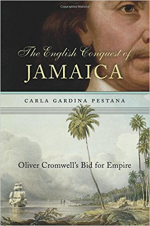
These attitudes have been challenged over the past decade. One thinks of Little and Smith’s Parliaments and Politics during the Cromwellian Protectorate (2007), or Blair Worden’s important essay ‘Oliver Cromwell and the Protectorate’ (2010). Now, in The English Conquest of Jamaica, Carla Gardina Pestana has taken a single event in the life of the Protectorate and produced a gripping study that sheds light not only on governmental thinking in the 1650s but also on the birth of the British Empire itself.

Pestana’s previous book The English Atlantic in an Age of Revolution(2004) was a landmark in the relatively new field of Atlantic studies. Here she takes as her starting point the ‘Western Design’, Cromwell’s ambitious plan, hatched early in 1654, to send an invasion force to the West Indies with the aim of conquering Spanish colonies in the region and establishing a permanent English presence there.

more here.

War has become a depoliticized given in American political life

170407-N-FQ994-091Patrick Blanchfield at n+1:

In the past few months we have witnessed the emergence of what we might call a hystericization of American politics. The structure of hysteria, as classical psychoanalysis has it, involves a consuming orientation toward a powerful Other, a state of erratic toggling between paranoia and attraction, fears of persecution, and demands for love. America has had its political hysterias and various histrionic politicians in the past, but as a symptom of our current collective pathologies and miserable cultural institutions, Trump is of another order entirely. It’s perhaps fitting that the 21st-century version of the fin-de-siècle Viennese hysteric—the marginalized woman succumbing to her mythical “wandering womb” by going into spasms on a chaise longue—is a sexually abusive reality TV star happy to spend precious minutes of televised debate time bragging about the size of his dick.

Yet the real hysteria hasn’t been Trump’s—it’s been the American media’s. “What Does Trump Really Want?” has become the great question of our time—the center of an entire cottage industry. Everything Trump says and tweets, no matter how trivial or unthinking (and very little of it is anything but), is instantly transformed into an utterance of major import: fodder for endless, breathless speculation and feverish interpretation. To whom was he sending a message with that tweet? While we’re playing checkers, he’s playing 4-dimensional chess—what’s his next play? What Does Trump’s Refusal to Shake Angela Merkel’s Hand Reveal About His Foreign Policy? Are his desires really the desires of some Other (Putin, Bannon, and in recent days, Kushner)?

more here.

Mélenchon’s Rise

_95693616_jlmindex17apr17Samuel Earle at the London Review of Books:

His radical, fearless economic programme has resonated with the public – and left the markets in a panic. He has promised to tax incomes above €400,000 at 100 per cent, increase public spending by €250 billion a year, drop the retirement age, and cut the working week from 35 hours to 32 (Macron wants to increase it to 37). ‘The rich are living beyond our means,’ he says. If they want to leave, ‘let them.’

Investors have sold off French bonds and the euro has dropped against the dollar. The ‘nightmare scenario’ for the finance sector – a second round that sees Le Pen pitted against Mélenchon – is possible. Pierre Gattaz, the head of France’s biggest pro-business organisation (MEDEF), says it would be a ‘catastrophe’: a choice ‘between economic disaster and economic chaos’. The Economist called the choice ‘unpalatable’. Le Figarocompared Mélenchon to Chávez, Castro and Robespierre, ‘en passant par Lenin’. Slate recently released a ‘survival guide’ for Le Pen v. Mélenchon: leaving France is apparently the most ‘rational’ option.

Parts of the left are uneasy, too. It’s possible Mélenchon would take France out of the EU – or at least hold a referendum on the question – and he is committed to leaving Nato. His hostility towards supranational institutions has led to comparisons with Le Pen, but there is a complete absence of xenophobia in Mélenchon’s campaign, and he has refused to join in with her migrant-bashing. Towards the beginning of his rally in Marseille, he held a moment’s silence for all those who have died in the ‘mass grave’ behind him, the Mediterranean Sea.

more here.

Wednesday Poem

People Like Us

—for James Wright

There are more like us. All over the world
There are confused people, who can’t remember
The name of their dog when they wake up, and people
Who love God but can’t remember where

He was when they went to sleep. It’s
All right. The world cleanses itself this way.
A wrong number occurs to you in the middle
Of the night, you dial it, it rings just in time

To save the house. And the second-story man
Gets the wrong address, where the insomniac lives,
And he’s lonely, and they talk, and the thief
Goes back to college. Even in graduate school,

You can wander into the wrong classroom,
And hear great poems lovingly spoken
By the wrong professor. And you find your soul,
And greatness has a defender, and even in death you’re safe.
.

by Robert Bly
from Stealing Sugar from the Castle
Norton, 2013

.

TRUTH AND FREEDOM

Brenden O'Neill in Sp!ked:

Brendan_march_coverThe most curious thing about the political class’s war in defence of truth is that it coexists with a war against freedom of speech. In one breath, our betters, whether it’s the technocrats of the EU or broadsheet thinkers, bemoan a crisis of truth, claiming that a combination of demagoguery and populist myth-making has propelled the modern West into a ‘post-truth’ era. Yet in the next they express disdain for the ideal of unfettered free thought and debate. Whether they’re instituting laws against ‘hate speech’ or enforcing social stigma against such things as ‘climate-change denial’ or ‘Europhobia’, they exhibit a palpable discomfort with the idea of a fully open public sphere in which nothing is unsayable.

We might even say that in 2017, there are two things that really animate the political and cultural elites of the West: first, their self-styled urge to defend truth, their pose as warriors for honesty against the misinformation of the new populists; and secondly, their agitation with unfettered discussion and with the expression of what they consider to be hateful or outré views. This is striking, because truth without freedom, without the freest possible space in which to debate and doubt and blaspheme, is not truth at all. It is dogma. It represents an assumption of intellectual and moral infallibility rather than a winning and proving of it in the only way that counts: through free public contestation. That our rulers both claim to love truth and fear freedom of speech utterly explodes the pretensions of their moral panic about a ‘post-truth’ era. It’s not truth they want to protect – it’s the authority of their prejudice.

More here.

First evidence for higher state of consciousness found

From Phys.Org:

BrainNeuroscientists observed a sustained increase in neural signal diversity – a measure of the complexity of brain activity – of people under the influence of psychedelic drugs, compared with when they were in a normal waking state. The diversity of brain signals provides a mathematical index of the level of consciousness. For example, people who are awake have been shown to have more diverse neural activity using this scale than those who are asleep. This, however, is the first study to show brain-signal diversity that is higher than baseline, that is higher than in someone who is simply 'awake and aware'. Previous studies have tended to focus on lowered states of consciousness, such as sleep, anaesthesia, or the so-called 'vegetative' state. The team say that more research is needed using more sophisticated and varied models to confirm the results but they are cautiously excited.

Professor Anil Seth, Co-Director of the Sackler Centre for Consciousness Science at the University of Sussex, said: "This finding shows that the brain-on-psychedelics behaves very differently from normal. "During the psychedelic state, the electrical activity of the brain is less predictable and less 'integrated' than during normal conscious wakefulness – as measured by 'global signal diversity'. "Since this measure has already shown its value as a measure of 'conscious level', we can say that the psychedelic state appears as a higher 'level' of consciousness than normal – but only with respect to this specific mathematical measure." For the study, Michael Schartner, Adam Barrett and Professor Seth of the Sackler Centre reanalysed data that had previously been collected by Imperial College London and the University of Cardiff in which healthy volunteers were given one of three drugs known to induce a psychedelic state: psilocybin, ketamine and LSD. Using brain imaging technology, they measured the tiny magnetic fields produced in the brain and found that, across all three drugs, this measure of conscious level – the neural signal diversity – was reliably higher.

More here.

Tuesday, April 18, 2017

‘Randamoozham’: India to produce its most expensive film ever

Manveena Suri at CNN:

170419105707-mahabharata-india-play-01-exlarge-169With a budget of $155 million, India is set to make the longest poem ever written into its most expensive film ever.

The figure may seem paltry by Hollywood standards, but it is new territory in India, where costs for its highest-budget movies barely skim $25 million.
Based on the Sanskrit epic the "Mahabharata," "Randamoozham" has surpassed previous record-breaking budgets like that of the upcoming Tamil-language sci-fi thriller "2.0," which cost $62 million to make and stars 65-year-old action superstar Rajinikanth. It has even beat the combined $65 million budget of the two-part blockbuster epic "Baahubali."
The film will be financed by B.R. Shetty, an entrepreneur based in the United Arab Emirates, who has high hopes for the film.
"The 'Mahabharata' is an epic of all epics," Shetty said in a statement. "I believe that this film will not only set global benchmarks, but also reposition India and its prowess in mythological storytelling. I am confident that this film will be adapted in over 100 languages and reach over 3 billion people across the world."
More here.

Tuesday Poem

Belfast Confetti

Suddenly as the riot squad moved in it was raining
marks,
Nuts, bolts, nails, car-keys. A fount of broken type. And
the explosion
Itself – an asterisk on the map. This hyphenated line, a burst
of rapid fire . . .
I was trying to complete a sentence in my head, but it kept
stuttering,
All the alleyways and side-streets blocked with stops and
colons.


I know this labyrinth so well – Balaklava, Raglan, Inkerman,
Odessa Street –

Why can’t I escape? Every move is punctuated. Crimea Street.
Dead end again.

A Saracen, Kremlin-2 mesh. Makrolon fae-shield. Walkie-
talkies. What is

My name? Where am I coming from? Where am I going?
A fusillade of question-marks.

by Ciaran Carson
from The Irish for No
Gallery Press, Old Castle

From zombie parades to Stranger Things: why is our culture obsessed with monsters?

Olivia Laing in the New Statesman:

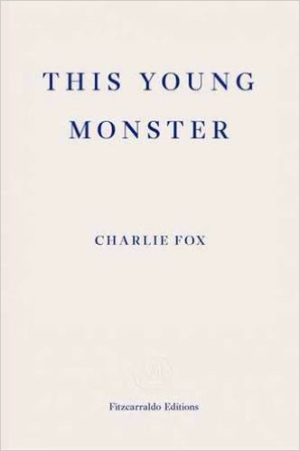
31k+2Ba4GyL._SX330_BO1 204 203 200_There’s something kind of hot about monsters. They’re so dumb and hungry, with their big hairy mitts and gleaming fangs, leaving a trail of gore in their wake. And they’re soulful, too: Cocteau’s melancholy Bête, a tear spangling his fur; Boris Karloff as Frankenstein’s lonesome Creature, mumbling, “Alone: bad. Friend, good!” Monsters plunder unconscious terrors about dangerous homes and unsettling bodies; hardly any wonder we’re all fixated on what Charlie Fox calls “monstrous entertainments”, from zombie parades to Stranger Things to the 2015 exhibition of Alexander McQueen’s spectral waifs and hybrids at the Victoria and Albert Museum.

“A monster is a fear assuming a form” is a pretty neat definition with which to embark on a whizzy cultural history of fiends and ghouls in the contemporary imagination. The beast, the freak, the oddity has provided many artists with inspirational material, from Diane Arbus to John Carpenter and David Lynch, but isn’t the artist also a type of monster: a vampire or del­inquent, like Arthur Rimbaud loaded on absinthe, stabbing Verlaine in a lesbian bar? The monster’s stock-in-trade of transformation, catharsis, revenge, is, as Fox notes, “something like art’s task”.

More here.

Study finds some significant differences in brains of men and women

Michael Price in Science:

Ep_AWNKAW-copy_16x9Do the anatomical differences between men and women—sex organs, facial hair, and the like—extend to our brains? The question has been as difficult to answer as it has been controversial. Now, the largest brain-imaging study of its kind indeed finds some sex-specific patterns, but overall more similarities than differences. The work raises new questions about how brain differences between the sexes may influence intelligence and behavior.

For decades, brain scientists have noticed that on average, male brains tend to have slightly higher total brain volume than female ones, even when corrected for males’ larger average body size. But it has proved notoriously tricky to pin down exactly which substructures within the brain are more or less voluminous. Most studies have looked at relatively small sample sizes—typically fewer than 100 brains—making large-scale conclusions impossible.

In the new study, a team of researchers led by psychologist Stuart Ritchie, a postdoctoral fellow at the University of Edinburgh, turned to data from UK Biobank, an ongoing, long-term biomedical study of people living in the United Kingdom with 500,000 enrollees. A subset of those enrolled in the study underwent brain scans using MRI. In 2750 women and 2466 men aged 44–77, Ritchie and his colleagues examined the volumes of 68 regions within the brain, as well as the thickness of the cerebral cortex, the brain’s wrinkly outer layer thought to be important in consciousness, language, memory, perception, and other functions.

More here.

The Utter Uselessness of Job Interviews

Jason Dana in the New York Times:

09graySUB-articleLargeA friend of mine once had a curious experience with a job interview. Excited about the possible position, she arrived five minutes early and was immediately ushered into the interview by the receptionist. Following an amicable discussion with a panel of interviewers, she was offered the job.

Afterward, one of the interviewers remarked how impressed she was that my friend could be so composed after showing up 25 minutes late to the interview. As it turned out, my friend had been told the wrong start time by half an hour; she had remained composed because she did not know she was late.

My friend is not the type of person who would have remained cool had she known she was late, but the interviewers reached the opposite conclusion. Of course, they also could have concluded that her calm reflected a flippant attitude, which is also not a trait of hers. Either way, they would have been wrong to assume that her behavior in the interview was indicative of her future performance at the job.

This is a widespread problem. Employers like to use free-form, unstructured interviews in an attempt to “get to know” a job candidate. Such interviews are also increasingly popular with admissions officers at universities looking to move away from test scores and other standardized measures of student quality. But as in my friend’s case, interviewers typically form strong but unwarranted impressions about interviewees, often revealing more about themselves than the candidates.

More here.

MALE TEARS FOR FEARS: EMBRACING THE IRONIC PERFORMANCE OF MISANDRY

Catherine Young in Bitchmedia:

AndryFor as long as feminism has existed, feminists have been accused of hating men. Pleas for equal rights, franchise, and financial independence have been met with not just ardent and sometimes violent opposition, but the persistent, insidious untruth that feminists desire nothing more than to emasculate and eradicate the male sex and “take over.” While hating men isn’t a core tenet of feminist ideology, a curious trend has taken hold online over the past couple years: ironic misandry. Women attach #KillAllMen and #BanMen hashtags to news stories of male-perpetrated violence against women or legislation sponsored by male politicians designed to cut back on women’s rights. From the celebration of “Gleeful Mobs of Women Murdering Men in Western Art History” by the Toast to the bracelets proclaiming that “All Men Must Die” and mugs filled with “Male Tears” for sale on Etsy, the idea of telegraphing male hatred in public as a performance has really caught on. The thinking seems to be this: If men continue to insist that striving for gender equality is the same as hating them, why not lean into it?

In a Vice essay titled “The Year in Male Tears,” writer Chelsea Summers defined modern misandry not as a hatred of men, but as “a seething rage against patriarchal power” and declared 2014 “the year misandry became chic.” It was the year feminists agreed that “dick is abundant and low value” and that male tears made the best moisturizer. In 2015, #GiveYourMoneyToWomen emerged and grew in strength and visibility. In a piece titled “Give Your Money to Women: The End Game of Capitalism,” feminist activists Lauren Chief Elk, Yoeshin Lourdes, and Bardot Smith described the radical hashtag and movement as a “theory and practical framework of gender justice.” In short, gymtw is centered around the idea that women deserve to be directly compensated by men for the emotional labor they provide. “gymtw is a decolonial effort,” Chief Elk said in a 2016 tweet, and “Friday is payday.” Even celebrities got in on the fun. Gifs of Nicki Minaj cutting a banana in half in her “Anaconda” video were remixed with glitter “misandry” signs, and in her music video for “Bitch Better Have My Money,” Rihanna kidnapped and dismembered the trifling accountant who stole her money, then bathed in his blood. Misandry has gone mainstream, and unfortunately the irony seems to be lost on men. For the first time, the primary drivers of conversations around misandry are, in fact, the very feminists long-accused of not-so-secretly wanting to do away with men.

More here.

Is Matter Conscious? Why the central problem in neuroscience is mirrored in physics

Hedda Hassel Morch in Nautilus:

ImageThe nature of consciousness seems to be unique among scientific puzzles. Not only do neuroscientists have no fundamental explanation for how it arises from physical states of the brain, we are not even sure whether we ever will. Astronomers wonder what dark matter is, geologists seek the origins of life, and biologists try to understand cancer—all difficult problems, of course, yet at least we have some idea of how to go about investigating them and rough conceptions of what their solutions could look like. Our first-person experience, on the other hand, lies beyond the traditional methods of science. Following the philosopher David Chalmers, we call it the hard problem of consciousness. But perhaps consciousness is not uniquely troublesome. Going back to Gottfried Leibniz and Immanuel Kant, philosophers of science have struggled with a lesser known, but equally hard, problem of matter. What is physical matter in and of itself, behind the mathematical structure described by physics? This problem, too, seems to lie beyond the traditional methods of science, because all we can observe is what matter does, not what it is in itself—the “software” of the universe but not its ultimate “hardware.” On the surface, these problems seem entirely separate. But a closer look reveals that they might be deeply connected.

Consciousness is a multifaceted phenomenon, but subjective experience is its most puzzling aspect. Our brains do not merely seem to gather and process information. They do not merely undergo biochemical processes. Rather, they create a vivid series of feelings and experiences, such as seeing red, feeling hungry, or being baffled about philosophy. There is something that it’s like to be you, and no one else can ever know that as directly as you do. Our own consciousness involves a complex array of sensations, emotions, desires, and thoughts. But, in principle, conscious experiences may be very simple. An animal that feels an immediate pain or an instinctive urge or desire, even without reflecting on it, would also be conscious. Our own consciousness is also usually consciousness of something—it involves awareness or contemplation of things in the world, abstract ideas, or the self. But someone who is dreaming an incoherent dream or hallucinating wildly would still be conscious in the sense of having some kind of subjective experience, even though they are not conscious of anything in particular.

More here.

Monday, April 17, 2017

Sunday, April 16, 2017

C.M. Naim in Conversation

Fahad Hashmi in Café Dissensus:

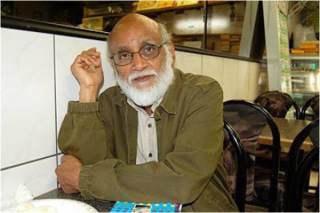
Cm-naimC.M. Naim is Professor Emeritus of Urdu studies at the University of Chicago. He taught Urdu language and literature in the department of South Asian Languages and Civilisation, University of Chicago. He co-founded Mahfil (The Journal of South Asian Literature) in 1963 and the Annual of Urdu Studies in 1981. Besides a good number of works to his credit, he has also translated Qurratulain Hyder’s Housing society, Patjhad ki Awaz, and Sitaharan which is A Season of Betrayals in its English version; Vibhuti Narayan Rai’s Shahar mein curfew as Curfew in the City; and Harishankar Parsai’s satirical sketches as Inspector Matadeen on the Moon: Selected Satires.

Fahad Hashmi: What sort of prose and poetry are being produced in the Urdu language in academies and government aided-centres, meant for the promotion of the language in India?

C.M. Naim: The state academies do not produce much on their own; they mostly facilitate publication of books written or edited by someone within the state. They also give awards. As for the major ‘Central’ organization, the National Council for the Promotion of Urdu Language (NCPUL), it has been doing fairly good work: publication of inexpensive editions of classical texts; keeping prices down of their own other publications; holding book exhibitions and sales in major cities across the country; subsidizing publication of research work done by scholars at various places, and probably much more. You may want to check their website to see their various projects. I have only listed the things that I have noted myself. It also publishes a magazine, but I don’t read it regularly.

More here.

As mountains grow, they drive the evolution of new species

Cici Zhang in Popular Science:

Photo_by_jian_huang_137074_webMountains aren't just beautiful: these locales also tend to host some of the richest diversity of species on the planet. We’ve known this for a long time—ever since Alexander von Humboldt, the Prussian geographer and naturalist, first climbed up the Andes in the 18th century. But nobody has really figured out why.

One popular hypothesis goes like this: the reason why mountains have so many different species is that, as mountains are uplifted by colliding tectonic plates, the process creates more environments, and therefore more opportunities for new species to adapt to them. However, this hypothesis never had any explicit quantitative testing until now, according to a recent study published in the Proceedings of the National Academy of Sciences.

Many other studies have looked at the diversity of one single plant group or another, and results seemed to support the popular hypothesis. “That claim is often made. The hypothesis often incorporates the narratives of these studies, but it's never been explicitly tested” across time and space, through quantitative comparison, says study co-author Richard Ree, Associate Curator of Botany at Chicago’s Field Museum.

More here.