
Matt Lutz at Humean Being:
My academic work is mostly in the field of metaethics, which is the area of philosophy that investigates the nature of morality. It’s a rather abstract subject, but one that almost everyone has views about, however inchoate. When I try to explain to someone what metaethics is about, I’ll usually say something like, “I study questions like whether or not morality is relative.” This usually gets people on the right page, because everyone has heard of the idea of moral relativism, and everyone has opinions about it. It’s not a particularly popular view! Indeed, the term ‘moral relativism’ is often used as a kind of epithet or term of abuse. (As in, “What kind of stupid moral relativism is this?”) People don’t like moral relativism because they equate it with a kind of unthinking non-judgmentalism or radical tolerance. “That’s what I think, but they think differently, and who am I to judge?” But that’s not what moral relativism is.
More here.
Enjoying the content on 3QD? Help keep us going by donating now.
 T
T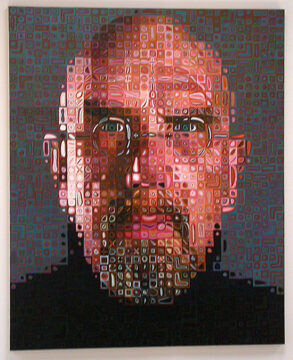 Take Self-Portrait (Rigid) (1982), one of the most straightforward examples of what Close is up to. In this work, the bearded and bespectacled face of the artist, familiar from his paintings, is assembled as an orderly array of handmade paper chicklets, small squares in twenty-four shades of gray that Close has marshalled into a pixelated image. Close’s characteristic grid structure maps the material surface of the image’s support, marking the lines of division between individual image units: inexpressive squares of pulp paper that measure out the surface of the page one cell at a time. But in many of Close’s later paintings that make the geometric structure of their composition visible, the grid also serves as a kind of screen to look through onto a pictorial space that, although shallow, is certainly volumetric and illusive. One cannot help but think of Leon Battista Alberti’s famous veil: the gridded scrim the painter interposed between his eye and his subject as a means of regimenting the perception of space. Remnants of this optical experience remain in the pulp paper works, even those as decisively material- and surface-oriented as Self-Portrait (Rigid).
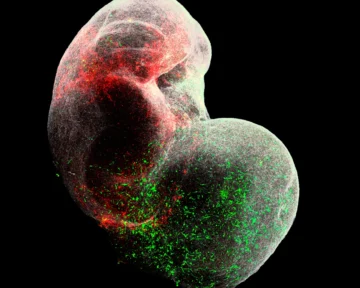 The development of the human brain, with its extraordinary range of cognitive abilities, is an awe-inspiring feat of evolution. Each of its tens of billions of cells must be born at precisely the right time, migrate to the correct locations, differentiate into as many as 3,000 distinct cell types, and form exquisitely specific synaptic connections with one another. Most of this happens before birth, but development continues for nearly three more decades.
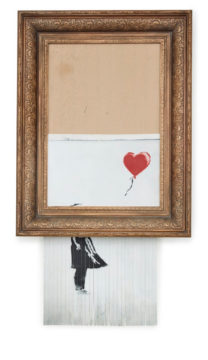 The artist known as Banksy has made a fortune in graffiti and irony and ironic graffiti. No, he’s not the guy—we now know that Banksy is a middle-aged Englishman named Robin Gunningham—who taped a banana to the wall with silver duct tape. (Maurizio Cattelan sold Comedian at a Sotheby’s auction in 2024 for $6.2 million.) Nor is he responsible for the pair of glasses left on the floor of the San Francisco Museum of Modern Art, a stunt that the museum took in stride as a Marcel Duchamp-style prank. (The culprits were 17-year olds who in the spirit of “I could have made that” passed off the glasses as art.) Or the two men who, just weeks after the October 2025 Louvre heist, smuggled a fake painting into the museum, a portrait of the two “artists” in Renaissance garb in a frame made of Legos, and hung it on a gallery wall. They filmed themselves and the stunt, of course, went viral.
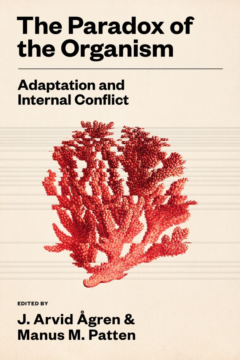 Some thirty-five years ago, biologist Richard Dawkins coined the phrase “paradox of the organism” to encapsulate a conundrum. If
  I
I
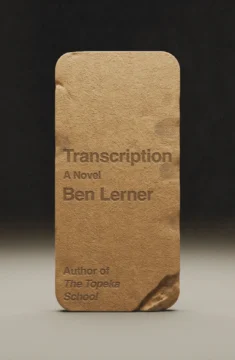 Transcription is a work of art for a new age of mechanical reproduction, a meditation on imperfect facsimile. Its cover features an embossed finger- and thumb-printed brick with rounded corners, in my judgment an iPhone-shaped Rosetta stone as satisfyingly tactile as braille. It signals the degree to which the novel is preoccupied with the absolute centricity of the smartphone in contemporary life, as a crutch, an addiction, a lifeline, a miracle . . . whatever is the opposite of a vestigial limb.
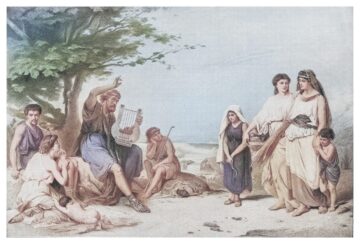 “Show, don’t tell” is among the most repeated piece of writing advice in the English language, up there with hatred for the passive voices, disdain for adverbs, and endorsements of George Orwell’s dusty old essay full of maxims that probably made sense in 1946. It’s a mantra drilled into MFA workshop participants, stamped into the margins of manuscripts, and recited by well-meaning teachers from middle school to graduate seminars. And in its dogmatic form, it could be used to pathologize some of the greatest prose ever written. Like a lot of writing advice, “show, don’t tell” has a legitimate kernel of truth; like almost all writing advice, I think its actual utility for inexperienced writers is near zero.
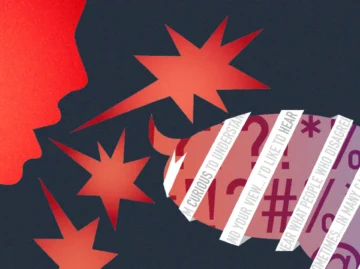 1. What’s the most common mistake we make when we disagree?
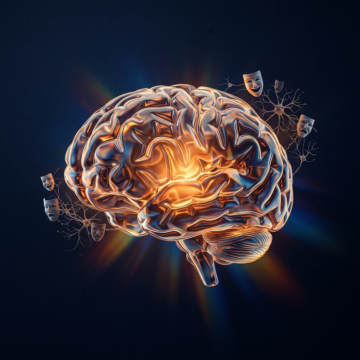 Every April 1st, the world agrees to lie to each other. Not the dangerous kind — not the kind that topples governments or breaks marriages. The small kind. The kind that makes you check if your coffee is actually salt. The kind that makes a grown adult Google “did NASA really discover a second moon” before breakfast.
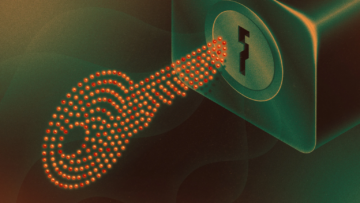 Some 30 years ago, the mathematician