Michael Jordan:
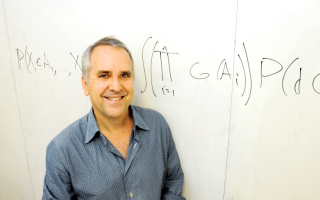
There is a different narrative that one can tell about the current era. Consider the following story, which involves humans, computers, data and life-or-death decisions, but where the focus is something other than intelligence-in-silicon fantasies. When my spouse was pregnant 14 years ago, we had an ultrasound. There was a geneticist in the room, and she pointed out some white spots around the heart of the fetus. “Those are markers for Down syndrome,” she noted, “and your risk has now gone up to 1 in 20.” She further let us know that we could learn whether the fetus in fact had the genetic modification underlying Down syndrome via an amniocentesis. But amniocentesis was risky — the risk of killing the fetus during the procedure was roughly 1 in 300. Being a statistician, I determined to find out where these numbers were coming from. To cut a long story short, I discovered that a statistical analysis had been done a decade previously in the UK, where these white spots, which reflect calcium buildup, were indeed established as a predictor of Down syndrome. But I also noticed that the imaging machine used in our test had a few hundred more pixels per square inch than the machine used in the UK study. I went back to tell the geneticist that I believed that the white spots were likely false positives — that they were literally “white noise.” She said “Ah, that explains why we started seeing an uptick in Down syndrome diagnoses a few years ago; it’s when the new machine arrived.”
More here.

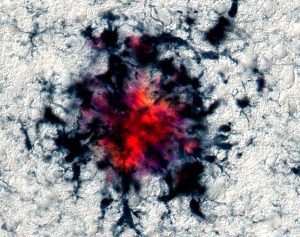 Neuroscientist Michael Heneka knows that radical ideas require convincing data. In 2010, very few colleagues shared his belief that the brain’s immune system has a crucial role in dementia. So in May of that year, when a batch of new results provided the strongest evidence he had yet seen for his theory, he wanted to be excited, but instead felt nervous. He and his team had eliminated a key inflammation gene from a strain of mouse that usually develops symptoms of Alzheimer’s disease. The modified mice seemed perfectly healthy. They sailed through memory tests and showed barely a sign of the sticky protein plaques that are a hallmark of the disease. Yet Heneka knew that his colleagues would consider the results too good to be true.


 Again, the point is not to highlight the discrepancy between the egalitarian ideals of these students and their class position since, if the equality you’re committed to is between groups, there is no discrepancy. And just as no hypocrisy is required at the elite college where you fight hard against racism, none will be required at the NGO or the job as a consultant or in finance (“Why Goldman Sachs? Diversity!”
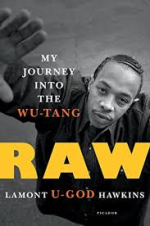
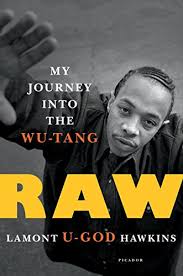 Hawkins grew up in a single parent family in Brooklyn and Park Hill on Staten Island. Whenever he inquired about the family patriarch, his mother would reply, “God is your father!” Unlike Mane, who describes being orbited by grandparents, aunts and uncles, Hawkins’s childhood was blighted by black-on-black crime and drugs-related violence. He describes witnessing his first death when he was four years old and watched a woman leap or fall from the roof of an apartment building. “Lovin’ You” by Minnie Riperton was playing on a radio in the street. Hawkins was a member of gangs called Baby Cash Crew, Dick ’Em Down and Wreck Posse. He carried a gun from the ages of 14 to 21 and recalls watching one of his babysitters shooting up heroin on the couch. Years later, Staten Island’s rappers would describe Park Hill as “Killa Hill” in their music. “Dudes would shoot dogs and leave their carcasses behind our building all the time,” writes Hawkins. “It was like a concentration camp for poor black people.”