
Category: Recommended Reading
maurice peress (1930 – 2017)
aharon appelfeld (1932 – 2018)
Why humans need to rethink their place in the animal kingdom
Simon Barnes in New Statesman:
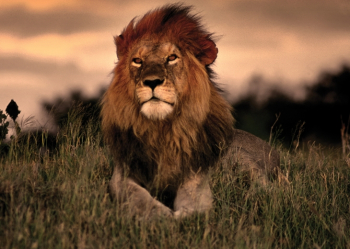
…For years, it was accepted that the issue was binary. You could be objective, or you could be sentimental. Scientific orthodoxy stated that animals had no emotions or personalities: even to consider such a matter was a sin. This was not something to be investigated or put to the test. It was an error that could be corrected with a single word: anthropomorphism. Mary Midgley, the ethical philosopher, wrote about mahouts, elephant riders, and how, if they failed to take into account “the basic everyday feelings – about whether their elephant is pleased, annoyed, frightened, excited, tired, sore, suspicious or angry – they would not only be out of business, they would often simply be dead”. Anthropomorphise or die. Anyone who works with horses knows that. Peter Wohlleben had a hit with his book The Hidden Life of Trees. In this, he described the fungal connections between tree and tree, which he interpreted as highways of communication and wittily called “the wood-wide web”. He made trees the sort of living thing that we humans can empathise with, rather than pieces of rural furniture.
More here.
This Cat Sensed Death. What if Computers Could, Too?
Siddhartha Mukherjee in The New York Times:
But S. demurred. He was regaining strength week by week. The conversation was bound to be “a bummah,” as he put it in his distinct Boston accent. His spirits were up. The cancer was out. Why rain on his celebration? I agreed reluctantly; it was unlikely that the cancer would return. When the relapse appeared, it was a full-on deluge. Two months after he left the hospital, S. returned to see me with sprays of metastasis in his liver, his lungs and, unusually, in his bones. The pain from these lesions was so terrifying that only the highest doses of painkilling drugs would treat it, and S. spent the last weeks of his life in a state bordering on coma, unable to register the presence of his family around his bed. His mother pleaded with me at first to give him more chemo, then accused me of misleading the family about S.’s prognosis. I held my tongue in shame: Doctors, I knew, have an abysmal track record of predicting which of our patients are going to die. Death is our ultimate black box.
More here.
Sunday Poem
Not to Choose
I should be someplace else!
but pace around in the sweats
of inhumane endeavor and its trash:
goods, deeds, credits, debts.
Have it your own way, life:
I'm just here to die, but I
would rather live it out as a fool
and have a short life in contempt
and idle graces, but, instead,
the office telephone goes off
and voices out of its dark night
command me, "Choose, Choose,"
while women's angel voices call
the cities and their numbers. Then,
when I do choose, "I run away!"
the shop door opens and a cop
or statue stand there in the way.
What does he want? Blood. Oh
let me tumble in the wards, bolts
and chambers of a police lock, locked
so I can get to sleep again,
warm in the guaranteed steel!
Instead, I have to fake him off
with promises to pay. Cash!
How cold action is. I should
do spiritual exercises toward
the body of this world
and get in shape for choices,
choices, No! Instead, I leave
the dirty business by the back
window, climb down the fire escape,
and sneak out of town alive
with petty cash and bad nerves in
an old Ford with a broken muffler!
So here I am again, July,
vacationing in your country broke,
in debt, not bankrupt yet!
and free to get your message!
What is it?
To begin again in another state!
Alan Dugan
from New and Collected Poems 1961-1983
Ecco Press, 1983
Saturday, January 6, 2018
My Life as a New York Times Reporter in the Shadow of the War on Terror
James Risen in The Intercept:
Bundled against the freezing wind, my lawyers and I were about to reach the courthouse door when two news photographers launched into a perp-walk shoot. As a reporter, I had witnessed this classic scene dozens of times, watching in bemusement from the sidelines while frenetic photographers and TV crews did their business. I never thought I would be the perp, facing those whirring cameras.
As I walked past the photographers into the courthouse that morning in January 2015, I saw a group of reporters, some of whom I knew personally. They were here to cover my case, and now they were waiting and watching me. I felt isolated and alone.
My lawyers and I took over a cramped conference room just outside the courtroom of U.S. District Judge Leonie Brinkema, where we waited for her to begin the pretrial hearing that would determine my fate. My lawyers had been working with me on this case for so many years that they now felt more like friends. We often engaged in gallows humor about what it was going to be like for me once I went to jail. But they had used all their skills to make sure that didn’t happen and had even managed to keep me out of a courtroom and away from any questioning by federal prosecutors.
Until now.
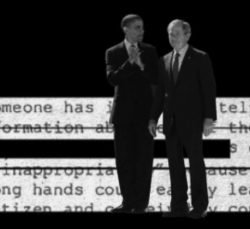
My case was part of a broader crackdown on reporters and whistleblowers that had begun during the presidency of George W. Bush and continued far more aggressively under the Obama administration, which had already prosecuted more leak cases than all previous administrations combined.
More here. [Thanks to Corey Robin.]
Reining in Alternative Gravity
Fabian Schmidt in APS Physics:
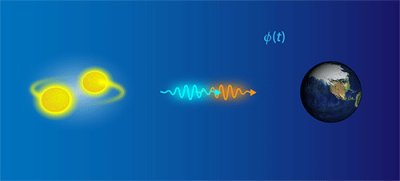
But the theory has fallen short in one respect: explaining the finding that the Universe is expanding at an accelerating rate. According to GR, the sum of all known radiation, visible matter, and dark matter should exert an inward “tug” on the Universe, slowing down its rate of expansion over time. So to account for acceleration, physicists have been forced to consider three possibilities [1], all of which are often loosely referred to as “dark energy.” The first option—and also the simplest and most favored—is the existence of a cosmological constant, or vacuum energy, which counteracts gravity by exerting a constant negative effective pressure. The second imagines that the cosmological constant is actually dynamical. Finally, the third possibility is that gravity behaves differently on large distance scales, requiring a modification of GR. Using the recent detection of a gravitational wave and light from a distant binary neutron merger, four research groups have now placed some of the tightest constraints to date on this third scenario [2–5].
The extraordinary observation that made this work possible occurred on August 17, 2017, when the gravitational-wave detectors at the Advanced LIGO and Advanced Virgo experiments picked up a loud signal [6]. Within 2 s of the event, known as GW170817, an instrument onboard the Fermi gamma-ray satellite detected a short burst of gamma rays from a similar location in the sky [7]. Follow-up observations by telescopes across the globe confirmed that the gravitational wave and gamma rays came from the same source—a binary neutron star merger in the NGC 4993 galaxy, approximately 130 million light years away from Earth (see 16 October 2017 Viewpoint). The fact that the two signals traveled from such a great distance, yet arrived at Earth just a few seconds apart, implies that gravitational waves travel at the same speed as light to within 1 part in 10151015 [8]. Previous constraints on the relative speeds had only been at the level of 1 part in 5, so this single observation improved our knowledge of a fundamental property of nature by 14 orders of magnitude.
More here. [Thanks to Farrukh Azfar.]
TRIAL BY THERAPY: The Jerry Sandusky Case Revisited
Frederick Crews in Skeptic:
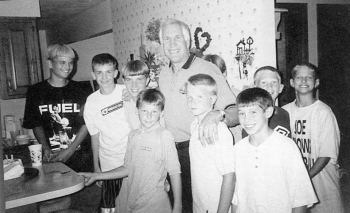
The Sandusky case was so mortifying that it triggered the firing of Penn State’s president, Graham Spanier, a vice president, Gary Schultz, its athletic director, Tim Curley, and the idolized Joe Paterno himself, at age 84 and after 61 years of service, for having abetted Sandusky’s crimes. Specifically, they had failed to take action after one horrific incident had been called to their notice. Paterno died of lung cancer two months after his shaming. Schultz and Curley, later indicted on felony charges, pleaded guilty to a compromise charge of child endangerment, for which they each received a two-year jail sentence (not entirely served). President Spanier protested his innocence but was convicted of the same offense and sentenced to four to 12 months of combined jail time and house arrest.
More here. [Thanks to Daniel Dennett.]
Determining Bargaining Power in the Platform Economy
The Collected Essays of Elizabeth Hardwick

In the palmy days between, say, the end of the second world war and the late 1970s, when New York was the capital of the literary world – when there was still a literary world to speak of – new novels from Saul Bellow or John Updikeor Mary McCarthy, or poetry collections from Robert Lowell or Elizabeth Bishopor John Ashbery, were anticipated with a level of excitement only slightly keener than that with which we waited upon the critical responses of the likes of Edmund Wilson or Lionel Trilling or Elizabeth Hardwick. Fiction and poetry mattered then, not as subjects for jaded gossip or to be wagered on to win a prize, but as works of art to delight and quicken the mind, and as some sort of indication of the health or otherwise of the culture in general.
The professional reputation of the critic and novelist Hardwick was for a long time eclipsed by the gargantuan shadow of Lowell, to whom she was married for 23 years, and who, in 1970, notoriously left her for Caroline Blackwood, and thereafter used her private letters to him, sometimes in bleeding verbatim chunks, in the poems in his late volumes For Lizzie and Harriet and The Dolphin, both published in 1973. In “Epilogue” from the 1977 collection Day By Day, Lowell famously posed the question, “Why not say what happened?”, by which time he had said so, over and over, and with a vengeance.
more here.
edward garnett: mentor to genius
In 1893 the young John Galsworthy booked passage on the clipper Torrens, then sailing from the South Seas to England. During this voyage the future author of “The Forsyte Saga” happened to become friendly with the ship’s first mate. In a letter home he described this “capital chap”— of Polish origin — as “a man of travel and experience in many parts of the world,” with “a fund of yarns.” Seven years after their shipboard conversations, Joseph Conrad — who else could it have been? — would dedicate his most famous novel, “Lord Jim,” to Galsworthy. In 1932 Galsworthy would be awarded the Nobel Prize for Literature; Conrad, of course, is now universally regarded as one of the greatest novelists of all time.
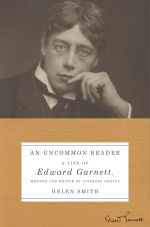
Both these writers counted themselves proteges of Edward Garnett (1868-1937), the subject of Helen Smith’s prizeworthy literary biography, “An Uncommon Reader.” No ordinary acquisitions editor or publisher’s reader, Garnett devoted his life to fostering, with tough love, the work of many young, and now famous, authors. Besides Galsworthy and Conrad, who became his close friends, he championed Stephen Crane, helped D.H. Lawrence reconfigure “Sons and Lovers,” urged T.E. Lawrence to publish “Seven Pillars of Wisdom,”lent moral and financial support to Edward Thomas — “the finest poet of his generation” — and produced the first major essay on Thomas’s American friend Robert Frost.
more here.
THOREAU’S QUESTIONS
Few of Thoreau’s best-known quotations take the form of a question. Yet those that do cut deep. They get under our skin. “Why should we be in such desperate haste to succeed, and in such desperate enterprises?” Thoreau asks in Walden. “What is the use of a house if you haven’t got a tolerable planet to put it on?” he writes in a letter to H.G.O. Blake.
One of the few Thoreau scholars to recognize the importance of Henry’s questions is Jeffrey Cramer, whose collection The Quotable Thoreau devotes a section to questions. In doing so, he recognizes that Thoreau was not necessarily the man with all the answers.
“Thoreau,” writes Cramer, “was the vegetarian who ate meat; the conservationist who surveyed woodlots in Walden Woods; the pacifist who endorsed violence; the hermit who loved gossip.” Thoreau was no hypocrite, as he has often been painted: he was “a questioner of the very concepts we have come to associate with his name.”
more here.
Saturday Poem
—for H & J
Choosing a Dog
"It's love," they say. You touch
the right one and a whole half of the universe
wakes up, a new half.
Some people never find
that half, or they neglect it or trade it
for money or success and it dies.
The faces of big dogs tell, over the years,
that size is a burden: you enjoy it for a while
but then maintenance gets to you.
When I get old I think I'll keep, not a little
dog, but a serious dog,
for the casual, drop-in criminal—
My kind of dog, unimpressed by
dress or manner, just knowing
what's really there by the smell.
Your good dogs, some things that they hear
they don't really want you to know—
it's too grim or ethereal.
And sometimes when they look in the fire
they see time going on and someone alone
but they don't say anything.
.
William Stafford
from The Way It Is
Graywolf Press, 1998
We Are What We Read
John Sutherland in The New York Times:

“The Written World” makes this grand assertion on the basis of a set of theses. Storytelling is as human as breathing. When fabulation intersected with writing, stories were empowered to propagate themselves in society and around the world as civilization-forming “foundational texts.” Puchner opens, by way of illustration, with Alexander the Great. Under his pillow at night he had, alongside his dagger, a copy of the “Iliad.” His literary GPS, we understand. As important as the epic’s originally oral story of great conquest was the script it was written in: That too would conquer worlds. This review is printed in a variant of it. The narrative gallops on to Mesopotamia, Nineveh, clay tablets, cuneiform and Gilgamesh. Puchner explains it all with brio. By Page 50 Ashurbanipal is a name the reader will feel able to drop knowingly into any conversation on literary matters. In chronological procession there follow Buddha, Confucius (a notably brilliant chapter), “The Tale of Genji” (hooray, at last, for the woman author), the Mayas (a dark episode), the Gospels, Gutenberg, Muhammad, Luther, Cervantes, Goethe, Benjamin Franklin, Thomas Jefferson, Marx and Engels, the African epic of Sunjata — on, on and on to Derek Walcott (“new nations need stories to tell them who they are,” writes Puchner) and Harry Potter (“repetitive,” alas). The invention and spread of paper gave literature wings. So too did print and in our day, the web. Looking at his screen, Puchner wonders what foundational texts will flicker down to us. There is a joyous personality in this book. Puchner gives more of himself to the reader than most literary historians. As a child, he confides, he was entranced by the “Arabian Nights” — only cliff-hanging bedtime stories to her husband can save Scheherazade from being a one-night queen and next morning’s bridal corpse. But who originated this bundle of tales? The question nags at Puchner. He has a dream that he describes at length. What does the dream tell him? Stop looking. Searching is futile.
More here.
Friday, January 5, 2018
The Anatomy of the Urban Dictionary
From the MIT Technology Review:

Part of Urban Dictionary’s appeal is its informal approach, which allows both definitions and descriptions of words. It even allows opinions, which can sometimes be offensive. It captures new words quickly and registers many of the variations that emerge over time. A voting system allows users to show admiration or disdain, revealing words’ popularity.
Today, many millions of users rely on the site to keep them up to date with slang, common usage, and popular culture.
Of course, Urban Dictionary has its shortcomings. In the absence of style guides, editors, and moderators, the content can be vague and inaccurate. Also, little is known about the people who post new words and whether the entries reflect real changes in the language or just those that affect a small subset of people.
So just how good is the Urban Dictionary at capturing new words, and how does it compare with more conventional approaches to producing online dictionaries?
More here.
Awake Under Anesthesia
Joshua Rothman in The New Yorker:

More here.
How America Is Transforming Islam
Emma Green in The Atlantic:

In reality, most Muslims are somewhere in between. U.S. Muslims—roughly 60 percent of whom are under 40—are going through a process that’s quintessentially American: finding new, diverse, self-constructed identities in their faith, ranging from fully secular to deeply pious. The contours may be particular to Islam, but the story is one shared by Catholics, Jews, and even the Puritans. Muslims are creating distinctively American forms of their religion.
As a group, Muslims are extremely diverse, and their experiences reflect that diversity. Some young Muslims care deeply about their religious and cultural identities, but choose to prioritize other parts of life. Others self-define new, non-traditional ways of engaging with their faith. Immigrants understand the country differently than people who have been in the U.S. for generations; black Muslims encounter distinctive kinds of discrimination and have particular communal needs. Converts face questions from family members who might not understand their new religion, and have to navigate the sometimes-unfamiliar cultures of new friends and partners. And some Muslims don’t feel accepted by their own community, for reasons of race, gender, or sexuality.
More here.
Skyglow: A Short Timelapse Film of the Grand Canyon
winter in russia

It is mid-afternoon and leaden rain falls over the city. After traversing a labyrinth of scruffy stairways, ill-lit corridors and backyards, Andrey and I are seated in a space rather like a classroom. This place brings together organisations, lawyers and experts in judicial reform, human rights and other representatives of civil society from one of the most unruly parts of the country from the state’s point of view: Saint Petersburg. At times the meeting takes on a somewhat melancholic air. This impression becomes more acute when one realises the age of some of those present: men and women who were young in the turbulent 90s and who now pass verdict on that period. ‘We weren’t ready for that wave of democracy’, some argue. This is a point I have heard uttered by the Ukrainian-born, Belarusian writer Svetlana Alexievich.
Back then, under Yeltsin, Russia began to dismantle the USSR from within while simultaneously experimenting with democracy and applying drastic measures to transition to a market economy under the guidance of reformists such as Gennady Burbulis and Yegor Gaidar. Convinced that there was no alternative, figures who had been raised on Marx now embraced shock therapy capitalism with the same Messianic fervour. In October 1991 Yeltsin told the Duma that this was ‘Russia’s way to democracy and not empire’. Following the shortages under Gorbachev’s perestroika, the social impact was dramatic as poverty and inequality increased.
more here.