Peter Woit in Not Even Wrong:
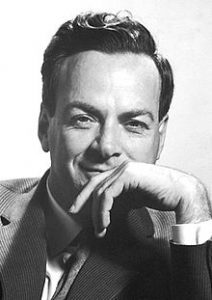 The past month has seen quite a few events and articles celebrating the 100th anniversary of Richard Feynman’s birth (see for example here, here, here and here). Feynman was one of the great figures of twentieth century physics, with a big intellectual influence on me and on many generations of particle theorists. In particular, his development of the path integral formulation of quantum mechanics and the Feynman diagram method for calculating and understanding what quantum field theories are telling us are at the center of how we have learned to think about fundamental physics and apply it to the real world.
When I first started studying physics, in the seventies, Feynman was a major figure to physicists, but not that well-known outside the subject. After the 1985 appearance of the book of anecdotes “Surely You’re Joking, Mr. Feynman!” and his 1986 role in the report on the Challenger disaster (followed by more anecdotes in the 1988 “What Do You Care What Other People Think?”) Feynman became a huge public figure. The Physics section of any book store that carried science books would often have nearly a whole shelf of books by and about him, with the only competition the shelf of books about Einstein (the Hawking shelf didn’t get going until a bit later).
I avidly read the Feynman anecdote books when they came out and was suitably entertained, but I also found them a bit disturbing.
More here.
 When will Muslims step up and reform Islam?” asked the self-identified “progressive and intersectional” college student, following a presentation of my book,
 It’s not possible to justify my liaisons with married men; I won’t even try. I’m not proud that, for a few years while living near London, I entered into casual relationships with married men. But I don’t regret it. What I learnt from these men warrants discussion, even though I’ve recently been publicly condemned for doing so in The New York Times.
 “Of man’s first disobedience, and the fruit of that forbidden tree,” John Basinger said aloud to himself, as he walked on a treadmill. “Of man’s first disobedience…” In 1992, at the age of 58, Basinger decided to memorize Paradise Lost, John Milton’s epic poem, as a form of mental activity while he was working out at the gym. An actor, he’d memorized shorter poems before, and he wanted to see how much of the epic he could remember. “As I finished each book,” he wrote, “I began to perform it and keep it alive in repertory while committing the next to memory.” The 12 books of Paradise Lost contain over 60,000 words; it took Basinger about 3,000 hours to learn them by rote. He did so by reciting the piece, line-by-line out loud, for about an hour a day for nine years. When he memorized all 12 books, in 2001, Basinger performed the masterpiece in a live recital that lasted three days. Since then, he’s performed smaller sections for various audiences, eventually attracting the attention of John Seamon, a psychologist at Wesleyan University, in Connecticut. In 2008, “He recited for an hour in the Wesleyan library,” says Seamon. “He’d given out copies of Milton’s book so we could follow along. At the end of the talk I introduced myself and said ‘I’d love to study your memory.’” Basinger agreed, and so Seamon devised a test.
 Once there was a mutant worm in an experiment. It lived for 46 days. This was much longer than the oldest normal worm, which lived just 22. Researchers



 30 years ago I moved from the UK to New York City and I gave up my car. I had mixed feelings about doing so at the time – I was only 21 and driving was still a novelty and an expression of independence. When I moved out of New York City to upstate 13 years later, I again became a car owner and regular driver. After my divorce, when I moved back to New York City, I once again gave up my car, this time happily. I would honestly be thrilled if I never had to get behind the wheel of a car again. I don’t enjoy driving, I’m not the most confident driver (I cannot reverse to save my life even after over 30 years of driving) and I generally would prefer to be driven. My transportation needs are now taken care of by a combination of public transport, ride sharing services and a boyfriend with a car who is very good about driving me around. And thanks to online shopping, the retail convenience of a car ownership has almost totally disappeared. As far as I’m concerned, this is a perfect state of affairs.
 The freer the market, the more people suffer.
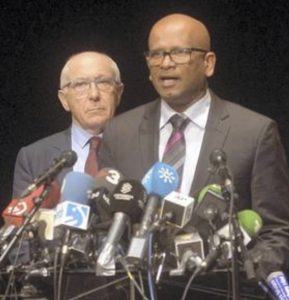 Four years ago, I was in a hideout of the Basque separatist group Eta in southern France, surrounded by explosives, revolvers, grenades and rocket launchers. I was present as the chief of the commission to verify a ceasefire and begin the group’s disarmament. It followed more than three years of difficult discussions with Eta leaders, Basque politicians and Basque civil society. We convinced Eta’s leaders that clinging to weapons was going to help neither themselves nor the Basque people.
 About a year ago I met up for the first time with a woman I knew only online. Articulate and funny, she is a brilliant writer who studied literature in graduate school. So I was surprised that, when I mentioned a recent novel I liked, my new friend responded with head-shaking resignation. “I can’t see how anyone justifies talking about books anymore,” she said. Our nation was so overwhelmed with causes demanding attention and action, she suggested, that it had entered a state of constant emergency, whereby pursuits both personal and political must be pitted against one another to determine which are essential.
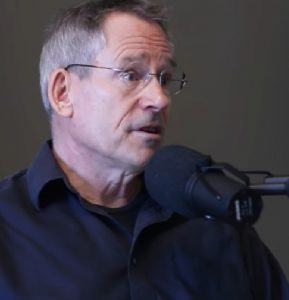 John Preskill
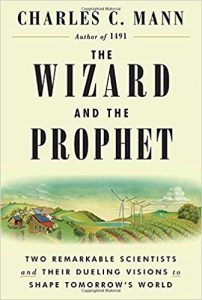 In
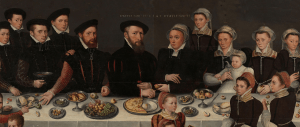 To pick up on almost any story in the news these days—political, financial, sexual, or environmental—is to be informed in the opening monologue that the rule of law is vanished from the face of the American earth. So sayeth