The dangerous ideas of Hans Abendroth

Cynthia Haven in The Book Haven:

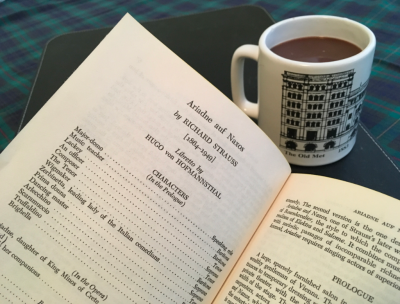
RubyA month ago, I received a package from Berlin with a note from Ryan Ruby, author of The Zero and the One. Our point of connection was the French theorist René Girard: “In a pivotal scene, one character discusses an interpretation of Dostoevskys Demons in terms that were largely influenced by Girard’s reading of that book in Deceit, Desire, and the Novel.” According to the book jacket, Ruby’s novel about a friendship at Oxford that takes a dark turn, and considers “the power of dangerous ideas.” From the book itself:

From the earliest days of our friendship, Zach and I sought out philosophers whose names would never have appeared on the reading lists we received before the beginning of each term. To our tutors, such thinkers did not merit serious consideration. Our tutors were training us to weigh evidence, parse logic, and refuse counter-examples; they encouraged us to but more stock in the rule than the exception and to put our trust in modest truths that could be easily verified and plainly expressed. Whereas the philosophers who interested us were the ones who would step right to the edge of the abyss – and jump to conclusions; the ones who wagered their sanity when they spun the wheel of thought; the ones, in short, who wrote in blood. In counter-intuitiveness we saw profundity and in obfuscation, poetry. With wide eyes, we plucked paperback after paperback from the shelves at Reservoir, the used bookshop opposite the entrance to Christ Church Meadow, our own personal Nag Hammadi, hunting for insights into the hermetic nature of the universe and ourselves.

I used to frequent that bookshop, though my visits were too brief to consider the place a hotbed of a “dangerous ideas.” And I’m not sure that René’s ideas can be considered “dangerous” ones – we’ll see what you think next spring when my Evolution of Desire: A Life of René Girard is out with Michigan State University Press. But Hans Abendroth?

More here.

Stars orbiting supermassive black hole show Einstein was right again

From Phys.org:

ScreenHunter_2793 Aug. 18 22.34At the center of our galaxy, roughly 26,000 light years from Earth, lies the supermassive black hole (SMBH) known as Sagittarius A*. Measuring 44 million km across, this object is roughly 4 million times as massive as our Sun and exerts a tremendous gravitational pull. Since astronomers cannot detect black holes directly, its existence has been determined largely from the effect it has on the small group of stars orbiting it.

In this respect, scientists have found that observing Sagittarius A* is an effective way of testing the physics of gravity. For instance, in the course of observing these stars, a team of German and Czech astronomers noted subtle effects caused by the black hole's gravity. In so doing, they were able to yet again confirm some of the predictions made by Einstein's famous Theory of General Relativity.

Their study, titled "Investigating the Relativistic Motion of the Stars Near the Supermassive Black Hole in the Galactic Center", was recently published in the Astrophysical Journal. As is indicated in the course of it, the team applied new analysis techniques to existing observations that were made by European Southern Observatory's (ESO) Very Large Telescope (VLT) and other telescopes over the course of the past 20 years.

From this, they measured the orbits of the stars that orbit Sagittarius A* to test predictions made by classical Newtonian physics (i.e. universal gravitation), as well as predictions based on general relativity. What they found was that one of the stars (S2) showed deviations in its orbit which were defied the former, but were consistent with the latter.

More here.

Scott Adams: How To Know You’re In a Mass Hysteria Bubble

This is another of my posts with which I attempt to bring our readers opinions usually outside their comfort zone. Please read it charitably and if you respond, do so in a civil and thoughtful manner or risk getting banned from commenting on 3QD. If nothing else, let it be a way to understand how almost half of America thinks. This is Scott Adams in his own blog:

Tumblr_inline_ouubplXnqe1t63ajm_500A mass hysteria happens when the public gets a wrong idea about something that has strong emotional content and it triggers cognitive dissonance that is often supported by confirmation bias. In other words, people spontaneously hallucinate a whole new (and usually crazy-sounding) reality and believe they see plenty of evidence for it. The Salem Witch Trials are the best-known example of mass hysteria. The McMartin Pre-School case and the Tulip Bulb hysteria are others. The dotcom bubble probably qualifies. We might soon learn that the Russian Collusion story was mass hysteria in hindsight. The curious lack of solid evidence for Russian collusion is a red flag. But we’ll see how that plays out.

The most visible Mass Hysteria of the moment involves the idea that the United States intentionally elected a racist President. If that statement just triggered you, it might mean you are in the Mass Hysteria bubble. The cool part is that you can’t fact-check my claim you are hallucinating if you are actually hallucinating. But you can read my description of the signs of mass hysteria and see if you check off the boxes.

If you’re in the mass hysteria, recognizing you have all the symptoms of hysteria won’t help you be aware you are in it. That’s not how hallucinations work. Instead, your hallucination will automatically rewrite itself to expel any new data that conflicts with its illusions.

But if you are not experiencing mass hysteria, you might be totally confused by the actions of the people who are. They appear to be irrational, but in ways that are hard to define. You can’t tell if they are stupid, unscrupulous, ignorant, mentally ill, emotionally unstable or what. It just looks frickin’ crazy.

The reason you can’t easily identify what-the-hell is going on in the country right now is that a powerful mass hysteria is in play. If you see the signs after I point them out, you’re probably not in the hysteria bubble. If you read this and do NOT see the signs, it probably means you’re trapped inside the mass hysteria bubble.

More here.

The Viral Vice Documentary Was the Perfect Rebuke to Trump’s Charlottesville Remarks

Leon Neyfakh in Slate:

ImagesOver the past few days, a short documentary film about what happened in Charlottesville, Virginia, last weekend has become a viral phenomenon. Produced by HBO’s Vice News Tonight and hosted by journalist Elle Reeve, “Charlottesville: Race and Terror” is restrained and understated. But viewed in light of Donald Trump’s repeated defense of white nationalist protesters, it decisively punctures the cloud of moral equivocation that’s been so petulantly conjured over the past several days by the president. Whereas Trump thinks the events of the weekend should be considered in myopic isolation—tallying up the number of blows that were landed by each of the “two sides” and assigning blame accordingly—the Vice documentary vividly shows that the white nationalists who came to Charlottesville did so in ravenous pursuit of violence. It was the whole point of “Unite the Right,” not an unfortunate side effect. Violence was the reason these people showed up, and it provided the animating logic that held together their otherwise incoherent ideas.

The first glimpse of this can be seen during the Vice doc’s bracing first scene, shot on Friday night on the campus of the University of Virginia. Against a pitch-black sky, hundreds of young white men—and a few women—march in formation while holding torches, many of them chanting “Jews will not replace us,” “White lives matter,” and the Nazi-era slogan “blood and soil.” They look enraged and determined, and also like people you wouldn’t know were white supremacists if you saw them in the street. These are the people Trump said were “very fine,” were “protesting very quietly the taking down of the statue of Robert E. Lee,” and “were there to innocently protest.” At one point Vice’s camera appears to capture one of these protesters using a torch to assault someone. (One counterprotester, Tyler Magill, suffered a stroke a couple days later apparently due to complications from injuries sustained during Friday night’s events.) At another point one white nationalist lunges at another in jubilation, sharply extending his hand and barreling into his comrade in a sort of cannonball bro hug. He puts all his muscle and all his aggression into this maneuver. Even the camaraderie between these men is violent.

More here.

Friday Poem

Akhmatova

That’s right! Now I remember. I was on the beach
looking at Haystack Rock,
putting my finger into the mouths of sea anemones,
their tentacles sweeping over my knuckles, I was whispering
the word brother
to one, and the word sister to the other
though maybe they were both. I wanted to be close
to another species. I had been reading about the dark windows
Akhmatova looked through
to see if her son had been let out of prison. As I walked around
the shallow pools
feeling like I had done a good job being myself
I heard my third-grade teacher
whisper into my ear
what’s wrong with you? You want to be stupid your whole life?
She was a nun and wore, I imagined,
a rosary of barbed wire underneath her white blouse.
No matter how long I put my finger into the natural world,
no matter how often I mistake the flies
above the trash for stars, Akhmatova’s son will still be chained
against a wall, the sea will still push
against the rock, and a part of me will be sitting near
a window in homeroom, my head lowered, my skeleton warm
inside my body, my brothers and sisters alive in the salty pools of
the world.

by Matthew Dickman
from Mayakovsky's Revolver
publisher: Norton

Anna Akhmatova

Two-step process leads to cell immortalization and cancer

From Phys.Org:

TelomeresA mutation that helps make cells immortal is critical to the development of a tumor, but new research at the University of California, Berkeley suggests that becoming immortal is a more complicated process than originally thought. The key to immortalization is an enzyme called telomerase, which keeps chromosomes healthy in cells that divide frequently. The enzyme lengthens the caps, or telomeres, on the ends of chromosomes, which wear off during each cell division.

…Hockemeyer and his UC Berkeley colleagues, in collaboration with dermatopathologistBoris Bastian and his colleagues at UCSF, found that immortalization is a two-step process, driven initially by a mutation that turns telomerase on, but at a very low level. That mutation is in a promoter, a region upstream of the telomerase gene – referred to as TERT – that regulates how much telomerase is produced. Four years ago, researchers reported that some 70 percent of malignant melanomas have this identical mutation in the TERT promoter. The TERT promoter mutation does not generate enough telomerase to immortalize the pre-cancerous cells, but does delay normal cellular aging, Hockemeyer said, allowing more time for additional changes that turns telomerase up. He suspects that the telomerase levels are sufficient to lengthen the shortest telomeres, but not keep them all long and healthy. If cells fail to turn up telomerase, they also fail to immortalize, and eventually die from short telomeres because chromosomes stick together and then shatter when the cell divides. Cells with the TERT promoter mutation are more likely to up-regulate telomerase, which allows them to continue to grow despite very short telomeres. Yet, Hockemeyer says, telomerase levels are marginal, resulting is some unprotected chromosome ends in the surviving mutant cells, which could cause mutations and further fuel tumor formation. "Before our paper, people could have assumed that the acquisition of just this one mutation in the TERT promoter was sufficient to immortalize a cell; that any time when that happens, the telomere shortening is taken out of the equation," Hockemeyer said. "We are showing that the TERT promoter mutation is not immediately sufficient to stop telomeres from shortening." It is still unclear, however, what causes the eventual up-regulation of telomerase that immortalizes the cell. Hockemeyer says that it's unlikely to be another mutation, but rather an epigenetic change that affects expression of the telomerase gene, or a change in the expression of a transcription factor or other regulatory proteins that binds to the promoter upstream of the telomerase gene.

More here.

Thursday, August 17, 2017

Going Nowhere: Daniel Judt on Tony Judt’s love of trains

Daniel Judt in The Point:

ScreenHunter_2792 Aug. 17 21.29Before my dad died in August 2010, he had begun work on his next book. “The time has come,” he had decided, “to write about more than just the things one understands; it is just as important if not more so to write about the things one cares about.” The thing my dad understood was twentieth-century European history. The thing he cared about—more than almost anything or anyone—was trains. His next book would be titled Locomotion: a history of the railway.

He spent his Putney, London childhood riding trains to nowhere in particular, just for the sake of riding. On summer days, he took the quaint suburban electric railway around suburbs and lumpy British hills, then back to Clapham Junction, where he picked his ride home from a row of grunting diesels and majestic old steamers that shuffled along nineteen different platforms. I spent my childhood listening to these wistful remembrances, trying to imagine eight-year-old Tony peering out onto a dark and smoggy London.[1]

Whenever he could, Dad took us railroading through Europe. We would board at the Gare du Nord, with its serpentine TGVs, or the Gare du Midi, with its blue and yellow boxy Belgian locals, or Paddington, with its rows of channel-hopping Eurostars. We always arrived early so Dad could sip a double-espresso in the main hall.

If stations were his “cathedrals,” as my dad once wrote, timetables were his Bible.

More here.

New Shapes Solve Infinite Pool-Table Problem

Kevin Hartnett in Quanta:

ScreenHunter_2791 Aug. 17 21.21Strike a billiard ball on a frictionless table with no pockets so that it never stops bouncing off the table walls. If you returned years later, what would you find? Would the ball have settled into some repeating orbit, like a planet circling the sun, or would it be continually tracing new paths in a ceaseless exploration of its felt-covered plane?

These kinds of questions occurred to mathematical minds centuries ago, in relation to the long-term trajectories of real objects in outer space, and for nearly that long they’ve seemed impossible to determine exactly. What will a bouncing ball be up to a billion years from now? It’s as hard to answer as it sounds.

More recently, though, mathematicians have achieved a succession of stunning breakthroughs. One of the latest results, yet to be published, describes a new category of what are known as “optimal” billiard tables — shapes whose particular angles make it possible to understand every billiard path that could occur within them. The newfound shapes are among a handful of optimal billiard tables ever discovered, and part of an even more select group of quadrilaterals with that property.

More here.

The Eclipse Conspiracy

James Hamblin in The Atlantic:

Lead_960 (2)The scientists are all talking like it’s a sure thing.

On August 21, the “moon” will pass between the Earth and the sun, obscuring the light of the latter. The government agency NASA says this will result in “one of nature’s most awe-inspiring sights.” The astronomers there claim to have calculated down to the minute exactly when and where this will happen, and for how long. They have reportedly known about this eclipse for years, just by virtue of some sort of complex math.

This seems extremely unlikely. I can’t even find these eclipse calculations on their website to check them for myself.

Meanwhile the scientists tell us we can’t look at it without special glasses because “looking directly at the sun is unsafe.”

That is, of course, unless we wear glasses that are on a list issued by these very same scientists. Meanwhile, corporations like Amazon are profiting from the sale of these eclipse glasses. Is anyone asking how many of these astronomers also, conveniently, belong to Amazon Prime?

More here.

Beard vs Taleb: Scientism and the Nature of Historical Inquiry

Massimo Pigliucci at the Institute of Art and Ideas:

SetWidth592-pigliucciarticleBefore reading this essay, you may want to watch this short BBC cartoon, aimed at an audience of children, and explaining basic facts about Ancient Roman life in Britain. Done? Okay, what did you think of it?

This 5’30” video sparked a really nasty Twitter war (okay, “nasty” and “Twitter” may be slightly redundant, but still) involving two high caliber academics: historian Mary Beard (author of the highly readable and engaging SPQR) and statistician Nassim Taleb (author of the best selling and controversial The Black Swan). We’ll take a look at the exchange in a moment, but first — if you can stomach it — check out this “commentary” (I’m using the word very generously) by alt-right celebrity Alex Jones, who rails against the BBC for having succumbed to political correctness, on the grounds that one of the characters in the video is a young boy with a darker-than-white skin.

The kerfuffle began in earnest when Beard tweeted that the video was “indeed pretty accurate, there’s plenty of firm evidence for ethnic diversity in Roman Britain.” Which I would have imagined is uncontroversially the case, since it is well known that the Roman Empire as a whole was highly diverse, and we have direct historical record of, for instance, one Governor of Britannia — Quintus Lollius Urbicus — who likely was a Berber from North Africa (specifically, modern Algeria). And Urbicus, based again on historical documents, was not an isolated case.

(As a side note, I did find the BBC video just slightly too informed by modern sensibilities, as for instance in the scene, at 1'50", where a Patrician girl expresses the desire to one day become a military commander, only to be rebuked by her mother who explains that women are not allowed in the Roman military. Then again, it is a video meant to teach an audience of modern children. And if one wishes to be picky then one would also have to point out that the Ancient Romans did not speak modern English with a British accent either…)

More here.

Flights of fancy: expensive playthings can sometimes give birth to important technologies

Tom Standage in More Intelligent Life:

ToyAs a fan of new technology, I’m often at the front of the queue to buy the latest gadgets. But even I draw the line somewhere. Consider the HTC Vive, for example, the state of the art in virtual-reality headsets. Using an awesome trick called “volumetric” or “room-scale” VR, it doesn’t just transport you to another world: its position-tracking system means you can walk around in it too. There’s just one problem: the Vive costs £750, and you also need a £1,000 PC to power it. And a spare room. All this makes for a pricey toy, which is why I have not bought one. Then there’s the DJI Mavic, an insect-like quadcopter drone that can fold up to fit in a backpack. Normally when I try to fly drones they crash into the wall, the ceiling or the cat, and I am ordered to go outside and crash them into trees instead. But the Mavic is idiot-proof. If you try to crash it into a wall (and I tried) it beeps and refuses to go any farther. If you hold up your arms to make a Y shape, it follows you around. Make a square shape with your hands and it snaps a selfie. It lands automatically too. It’s great fun, but it costs £999, so I have not bought one of these, either. Yet despite being expensive toys – or, rather, precisely because they are expensive toys – these are both technologies worth watching. History shows that contraptions built to amuse the wealthy can go on to become world-changing tools. Rich technophiles often provide the initial demand for a complex, untested technology – and, as a consequence, the funding and the motivation to improve and develop it.

Automata offer the most striking historical example. These philosophical toys became popular in the 18th century, as an offshoot of elaborate mechanical clocks. Automaton-makers such as Jacques de Vaucanson and Pierre Jaquet-Droz built lifelike mechanical figures that could dance or write sentences. At the time they were the most complex pieces of machinery ever built, yet their chief use was to amaze the courts of Europe. Though they seemed frivolous, their construction spurred innovations in precision machinery that went on to find much wider use during the Industrial Revolution. Jaquet-Droz’s writing automaton pioneered the use of cams to preprogram complex, synchronised movements; de Vaucanson created the first flexible tubing for his famous automaton duck, and later built an early mechanical weaving machine. Rivalry between automaton-makers also led to new tools such as the milling machine.

More here. (Warning: Abbas likely to get ideas from this post and possibly add to his expensive collection of gadgets)

Democrats in Congress Explore Creating an Expert Panel on Trump’s Mental Health

Sharon Begley in Scientific American:

TrumpThree congressional Democrats have asked a psychiatrist at Yale School of Medicine to consult with them about forming an expert panel to offer the legislators advice on assessing President Trump’s mental health. Yale’s Dr. Bandy Lee told STAT that over the last few weeks members of Congress or their staff have asked her to discuss how members might convene psychiatrists, psychologists, and other mental health professionals “to review the president’s mental health, and review it on a periodic basis.” The closed meeting is expected to take place in September, she said. The request came from three current congressmen and one former member, she said. She declined to name them, saying they told her they did not wish to be publicly identified yet. The invitation comes as 27 representatives, all Democrats, have co-sponsored a bill to establish “a commission on presidential capacity.” The commission would carry out a provision of the 25th Amendment, which gives Congress the authority to establish “a body” with the power to declare a president “unable to discharge the powers and duties of his office.” Under the bill, H.R. 1987, eight of the 11 members of the commission would be physicians, including four psychiatrists. STAT contacted the sponsors’ offices, which either did not respond or declined to comment.

Trump has not released his medical records beyond a brief summary from his physician last year. He has said he never sought or received a mental health evaluation or therapy. But since his election and, increasingly, his inauguration, a number of mental health experts have spoken or written about what Trump’s behavior and speech suggest about his cognitive and emotional status, including impulsivity and paranoia, with some offering formal diagnoses, such as narcissistic personality disorder. In a book scheduled for publication in October that was edited by Lee, 27 experts offer their views of what Lee calls “Trump’s mental symptoms,” including his impulsivity, “extreme present focus,” pathological levels of narcissism, and an apparent lack of trust that is a sign of deep paranoia. The book is based on a small meeting Lee organized at Yale in April on whether psychiatrists have a “duty to warn” about any dangers Trump poses because of his psychological make-up.

More here.

Thursday Poem

My Papa's Waltz

The whiskey on your breath
Could make a small boy dizzy;
But I hung on like death:
Such waltzing was not easy.

We romped until the pans
Slid from the kitchen shelf;
My mother’s countenance
Could not unfrown itself.

The hand that held my wrist
Was battered on one knuckle;
At every step you missed
My right ear scraped a buckle.

You beat time on my head
With a palm caked hard by dirt,
Then waltzed me off to bed
Still clinging to your shirt.
.

by Theodore Roethke
from Collected Poems of Theodore Roethke
Penguin Random House
.

Wednesday, August 16, 2017

Punching Down

Justin E. H. Smith in The Point:

ScreenHunter_2790 Aug. 16 22.11I recently found myself at an academic conference that featured a presentation by graduate students on “combating racism with humor.” We were made to watch a video clip of a theater piece they had performed in connection with an anti-racism event. The skit depicted corporate executives planning an ad campaign associating the efficacy of soap products with their power to make people of color white. I found myself pitying the students. They had obviously overestimated their ability to change the world. But they were also, it seemed to me, tragically unaware of what humor is. They were mistaking it for a tool to be deployed in the pursuit of real-world ends: closing the gap between the powerful and the powerless, ensuring payback time for the fat cats, sticking it to the man.

It is hard to blame them. They were under the grip of a widespread illusion, expressed by Garry Trudeau along with countless others after the murder of the Charlie Hebdo cartoonists in 2015, that humor only achieves its highest purpose when it “punches up”—that is, when it involves the powerless kicking back against the powerful. But to insist that a joke is not funny because it punches down is a category mistake. It is to deploy standards of justice where justice is not at issue. We see an analogous mistake when philistines judge that, say, a crucifix photographed in a jar of urine is, to the extent that it is offensive, not art. “That’s not funny” is the comedic equivalent of “that’s not art”—both are statements that can be made only by people who don’t understand the thing they are talking about.

More here.

Don’t just denounce radicalized youth, engage with them

Scott Atran in the Washington Post:

Z_82A2092The violence in Charlottesville last weekend may seem new to some Americans: A white supremacist terrorizing protesters with his car, killing and maiming nearly at random. But in fact, the scene is painfully familiar, recalling recent attacks by vehicles in London, Nice and Berlin — all inspired by the Islamic State.

In the days since, members of the Charlottesville community have grappled with what could have been done to prevent the incident. As the attacker’s former high school teacher said: “I admit I failed. I tried my best. But this is definitely a teachable moment and something we need to be vigilant about, because this stuff is tearing up our country.”

Indeed, the values of liberal and open democracy increasingly appear to be losing ground around the world to those of narrow, xenophobic ethno-nationalisms and radical Islam — similar to attacks on republican values by fascists and communists in the 1920s and 1930s.

More here.

Trump set them free

14charlottesvilleroundup-1a-videoSmall-v5

Adam Shatz in LRB:

The ‘Unite the Right’ protest was a reminder that the dream of the Confederacy has never died: the vision of Herrenvolk democracy has continued to smoulder since Union troops left the vanquished but still defiant South, scarcely a decade after the end of the war. Eric Foner has described the Reconstruction era, when ex-slaves became citizens and the first biracial southern governments were elected to power, as America’s ‘unfinished revolution’. The battle over Reconstruction never ended; it has simply changed forms. And the struggle to achieve full enfranchisement for black people in the South has produced many martyrs: Medgar Evers and Martin Luther King; James Chaney, Michael Schwerner and Andrew Goodman. And now Heather Heyer, the 32-year-old paralegal killed in Emancipation Park.

It is true, as some have sanctimoniously pointed out on Twitter, that even in her death, Heyer was a beneficiary of white privilege, remembered as a ‘strong woman’, rather than subjected to the invasive background check typically meted out to unarmed black people killed by the police. But her biography suggests that she would have been the first to object to any special treatment. ‘If you’re not outraged, you’re not paying attention,’ she wrote in her last Facebook post. She broke up with a boyfriend who expressed unease over her friendship with a black man, her manager at work. White supremacists have reserved a particular loathing for white women in the civil rights struggle: ‘nigger lovers’, they call them. One white woman at the counter-demonstration reported a jeering fascist as saying to her: ‘I hope you are raped by a nigger’; Heyer is likely to have heard similar things. For white supremacists, the end of white rule has always meant the conquest of white women by men of colour, from the rapacious emancipated slaves in Birth of a Nation to Trump’s immigrant ‘rapists’.

The man charged with Heyer’s murder, James Alex Fields Jr, a 20-year-old from Ohio, fits the usual terrorist profile: a radical loser without a father, intelligent but semi-educated and isolated, drunk on visions of grandeur on the stage of history. His murder weapon was a car, rather than a gun, but he was cut from the same cloth as Dylann Roof, who shot dead nine worshippers at a church in Charleston two years ago. Fields wrote school papers celebrating the Third Reich and shouted racist curses at home, but neither his teacher nor his mother thought to report on his ‘radicalisation’. Even if they had, the government is unlikely to have cared.

More here.

FIRE, FURY, AND AMERICA’S FAILURE TO LEARN FROM THE PAST

CeEVN8D2QQicIDavid L. Ulin at Literary Hub:

What Hiroshima has to tell us is that words make a difference, that they can not only illuminate our situation, but also help us frame a response. For that to happen, though, we need to be clear about what we are facing, clear about what we see.

I didn’t awaken on Wednesday intending to re-read Hersey’s book, and I wouldn’t describe the experience as a consoling one. But then, consolation is not what we need. More important is inevitability, the notion that certain acts, certain decisions, once undertaken, can never be undone. Despite (or perhaps because of) all our rhetoric, we remain the only nation ever to use atomic weapons on another; the morning I spent with Hiroshima was the 72nd anniversary of the second bomb to fall on Japan, the Nagasaki bomb, which killed another 80,000, a third of the people who lived there. Think about that, wherever you are standing: Look to your right and to your left and do the human math.

I live in Los Angeles, one of the cities said to be targeted if the situation with North Korea escalates. As to what this means, who’s to say? Hersey, for his part, suggests the only answer that matters: the human answer. Fire and fury? There’s nothing heroic about a nuclear strike; even the survivors are condemned. “A year after the bomb was dropped,”

more here.