
Nick Hunt at Noema Magazine:
 MIZDARKHAN, Uzbekistan — On a hill at the edge of the desert stands a wooden edifice above a simple tomb. It consists of four slanting poles that come together in a frame, inside of which are bundled sticks that resemble kindling. It seems a puzzling marker for a grave until you learn the legend of whose body lies inside: Gayōmart, the first human, neither woman nor man, who was created from mud by the Zoroastrian god Ahura Mazda. Zoroastrians venerate fire, so the structure makes sense. It is a symbolic beacon waiting for its flame.
Not far away, past crumbling graves and cairns of mud bricks stacked in sevens — an auspicious number in the comparatively recent religion of Islam — stands another monument, a ruined mausoleum. Its roof long ago collapsed, and only three slumped walls remain. According to tradition, one brick falls from it every year. It is dedicated to Khalif Erejep, a medieval Sufi saint, but pious Muslims believe it is built on top of Adam’s grave, a cosmological rival to the tomb of Gayōmart.
more here.
Enjoying the content on 3QD? Help keep us going by donating now.
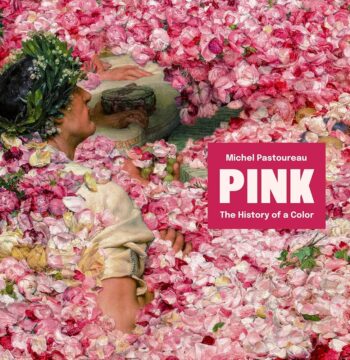 Michel Pastoureau began his wonderful and widely translated series on the history of colours with Blue a quarter of a century ago. Black, Green, Red, Yellow and White followed and now here is a history of pink, which may not be ‘a color in its own right’ and for which neither Latin nor ancient Greek has a standard word (it was long regarded as a shade of red). Nevertheless, Pink is as sumptuous as its predecessors, printed on gorgeous glossy paper and written with impassioned scholarship.
 For the family, withdrawing or withholding life-sustaining treatments from a dying loved one, even if doctors advise that the treatment is unlikely to succeed or benefit the patient, can be overwhelming and painful. Studies show that their stress can be at the
  D
D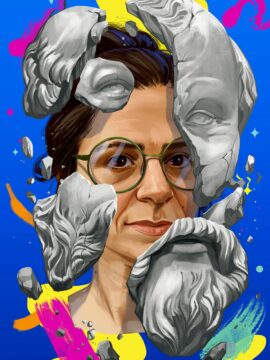 The non-modest mission of her sprightly
  During the last year of his life, Malcolm organized and spoke with increasing clarity on questions that remain central for working people today.
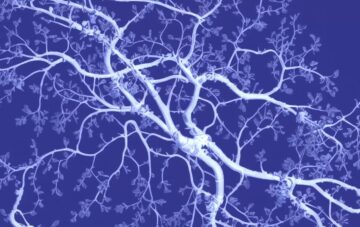 Tobias Rees, founder of an AI studio located at the intersection of philosophy, art and technology, sat down with Noema Editor-in-Chief Nathan Gardels to discuss the philosophical significance of generative AI.
 In “Seven Deadly Sins,” Leschziner, a neurologist and sleep physician, interrogates the evolutionary, neurological, and psychological underpinnings of the seven greatest transgressions in Dante’s “Inferno”: wrath, lust, pride, greed, envy, sloth, and gluttony. He concludes that these so-called sins are inextricably interwoven with the experience of being a person, and that to understand them is “to gain insights into why we do what we do: the biology of being human.”
 It is a multipolar world, with China, Russia, India, Turkey, Brazil, South Africa, and the Gulf states challenging the old order, alongside other emerging powers demanding a greater voice in shaping the rules of the international system. Meanwhile, belief in “universal values” and the idea of an “international community” has waned, as many point to the hypocrisy of rich countries hoarding vaccines during the COVID-19 pandemic and the response to the Ukraine war compared to the failures to act in response to humanitarian crises in Gaza, Sudan, and many other places.