
by Brooks Riley
Category: Recommended Reading
Wine and Food: Are They Craft or Art?
by Dwight Furrow

Unfortunately, traditional ways of drawing the distinction between craft and the fine arts are inadequate. In fact, a too sharply drawn distinction between art and craft will mischaracterize both. Nevertheless, I think there is a distinction to be made between art and craft and at least some wines and culinary preparations are best viewed as works of art.
As Larry Shiner has pointed out, both the term "fine art" and the term "craft" are relatively recent inventions. ""Craft" as the name of a category of disciplines only goes back to the late nineteenth century when it emerged partly in reaction to machine production, and partly in reaction to the fine art academies' exclusion of the "minor," "decorative," or "applied" arts." Fine art, according to Shiner, was a phrase used to market works of art to the emerging middle class marking off craftwork, works that are merely useful, from works that were "the appropriate object of refined taste."
In the past we might have used the type of material being worked on to distinguish art from craft. Paint on canvas, words on a page, notes played by instruments were candidates for works of art. The transformation of wood, clay, metals or fabric was craft. But since the birth of installations and the expansion of materials used for artistic expression, artists today work in media such as textiles, plastics, metals and wood. So the type of material will no longer suffice to mark the distinction. Why then not food or wine as candidates for artistic expression?
Making it up at MoMA
by Katrin Trüstedt

The title of this film The Rest I Make Up seems to perfectly capture a feature of her art essential to this relation. It points to a making up of stories and theater worlds that was the work of this writer, as well as to a practice as part of her now dealing with dementia: If she can't remember, she makes it up. Behind the charm and nonchalance with which she graces the screen, one senses an abyss of an unknown, terrifying darkness. It makes its presence felt in silences, glances, or the state that her kitchen is in. When Michelle and Irene return from their visit in Cuba, they stop in Miami to see Irene's sister; Irene cannot tell her about having just visited their family. She does not remember. But the title also seems to address the way Fornes's avant-garde theater used to work in the niche of the Off-Off-Broadway scene (and "Off-Off-MoMA," if you will): improvised and without support, institutionally or financially, it was experimentally "made up" as the productions moved along. Besides writing and directing the plays, Fornes would, for instance, also often do the costumes, with whatever happened to be there. And ultimately, the title also seems to speak to the filmmaking project itself. When I first met Michelle in Berlin about 15 years ago, she was not sure what exactly to do with her life. How to make money. Where to go. What to make. But she knew she was captivated by this playwright Irene Fornes (it was how I learned about her), and wanted to, in some way, do something with her, about her, for her. The rest she was going to make up "as we went along". It turned out to be this film, and she turned out to be a filmmaker in the process.
Sunday, February 25, 2018
Race, Religion and Radicalism: King and Du Bois
Edward Carlson in Black Perspectives:
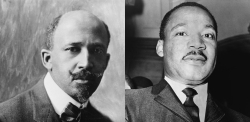
King is largely remembered for having a dream. And while his “I Have a Dream” speech and other rhetorical flourishes stand at the pinnacle of what Americans know about him, his objectives remain unrealized. King articulated a radical socialist message, still unheard and often disputed, due to his anti-poverty, anti-materialism, and anti-war convictions, perspectives shaped within the framework of challenging American capitalism. Like Socrates, King’s teachings threatened the ruling class and the pervasive comfort of liberals. Today’s proclamation of King, witnessed recently in the appropriation of his words for a Super Bowl LII commercial, presents a revisionary tale. Months before King’s assassination, his assault on capitalism earned him a rebuke by many Black folks, who did not care for his evolving vision in challenging the economic inequalities promulgated by capitalism, and still more white folks, who expressed a disdain toward him.
Du Bois, on the other hand, was a global intellectual within a radical leftist framework; he fought for the liberation of peoples in the darker lands, as well as those occupied by the oppressive forces of capitalism. Du Bois persistently juxtaposed the American race problem with the endemic forces of global imperialism and capitalism. “The problem of the twentieth century is the problem of the color line”: a recasting of that sentence’s inaugural iteration—most famously published in The Souls of Black Folk, but also the concluding sentence of the “To the Nations of the World,” collectively constructed by those attending the Pan-African Congress of 1900. We must also recognize that Du Bois’s radical evolution started with the Russian Revolution (1917). In seeking a solution to Black oppression, he became aware of his inner Bolshevism when and proclaimed, “I am a Bolshevik” after a 1926 visit to the Soviet Union. One must not attempt to recount Du Bois’s life and legacy just as a Pan-Africanist or civil rights activist, which society has done to King, but measure Du Bois and his internal struggles and maturation as an evolving radical and eventual member of the Communist Party USA (CPUSA). While King and Du Bois shared much in working for a reconfiguration of society, only Du Bois proclaimed in a pronounced fashion his full radicalness, leaving questions about King up for interpretation. Yet, both men had a dream and that dream was a society removed from capitalism’s despair.
More here. (Note: Throughout February, at least one post will be dedicated to honor Black History Month)
The gardener of Aden
Nicolas Pelham in More Intelligent Life:

Tucked in Wadi Hadramawt, a broad canyon that cuts 200km across the east of Yemen, Seiyun is half an hour’s drive from Osama bin Laden’s ancestral home. Seiyun itself has come under repeated attack from al-Qaeda in the Arabian Peninsula (AQAP), the jihadists’ most lethal affiliate. Over the past four years, it has raided the town’s central bank, stormed the airport, triggered car bombs outside its governorate and army bases, and driven 30-car convoys flying black ensigns through its streets. It has chased away foreign oil companies with a spate of kidnappings, assassinated several local officials and published manuals for lone wolves on how to sew suicide vests.
More here.
A Typical Day
Zack Bornstein in The New Yorker:

8-8:05 a.m.: A small plastic box generates fast-moving vibrations strong enough for my eardrums to register them and communicate to my brain that it is time to switch from a hallucinating state to a state of gathering food and information. I smack the box.
8:05-8:15 a.m.: Spin a dial to release water that has travelled from the top of a mountain through a maze of lead pipes onto my outermost epidermal layer in order to rinse away the salty liquid that my body secreted through thousands of holes while I was hallucinating.
8:15-8:17 a.m.: Agitate a brush created by children halfway around the world to remove minuscule invisible creatures from the bones in my mouth that I use to turn all my food into soup before swallowing it. Spit out excess soap that is chemically designed to taste like food, but isn’t. “Forget” to floss.
8:17-8:20 a.m.: Tunnel my body into shapes made from interwoven threads of dyed plant refuse which have been pieced together by poor people a third of the way around the world to match the shapes of my limbs and my trunk.
8:20-8:23 a.m.: Tunnel my body into a different set of interwoven threads because the first one didn’t satisfactorily create the illusion that my body is desirably healthy for copulation as judged by a theoretical stranger whom I may encounter during the day.
8:23-8:25 a.m.: Look for my wallet.
8:25-9 a.m.: Strap myself into a small rocket-room that is powered by the burnt remains of prehistoric kelp, in which I avoid dying by spinning a plastic circle wrapped in optional cow skin.
More here. [Thanks to Elizabeth Cornell.]
Comfort history
David Wootton in the Times Literary Supplement:
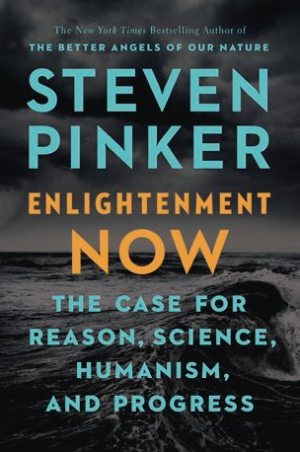
Since the argument of the book is almost entirely contained in the graphs, those who want to attack the argument are going to attack the figures on which the graphs are based. Good luck to them: arguments based on statistics, like all interesting arguments, should be tested and tested again. Better Angels caused a vitriolic dispute between Pinker and Nassim Nicholas Taleb as to whether major wars are becoming less frequent. In Taleb’s view the question is a bit like asking whether major earthquakes are getting less frequent or not: they happen so rarely, and so randomly, that you would need records going back over a vast stretch of time to reach any meaningful conclusion; a graph showing falling death rates in wars over the past seventy years won’t do the job. But it certainly will tell you that lots of generalizations about modern war are wrong. Much, indeed most, of Pinker’s argument survived Taleb’s attack, which in any case was directed at only one graph among many.
More here.
Science’s Inference Problem: When Data Doesn’t Mean What We Think It Does
James Ryerson in the New York Times:
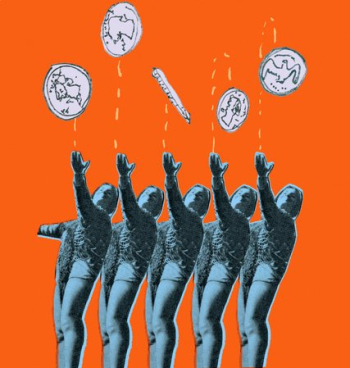
In their book TEN GREAT IDEAS ABOUT CHANCE (Princeton University, $27.95), a historical and philosophical tour of major insights in the development of probability theory, the mathematician Persi Diaconis and the philosopher Brian Skyrms emphasize another possible cause of the so-called replication crisis: the tendency, even among “working scientists,” to equate probability with frequency. Frequency is a measure of how often a certain event occurs; it concerns facts about the empirical world. Probability is a measure of rational degree of belief; it concerns how strongly we should expect a certain event to occur. Linking frequency and probability is hardly an error. (Indeed, the notion that in large enough numbers frequencies can approximate probabilities is Diaconis and Skyrms’s fourth “great idea” about chance.) But failing to distinguish the two concepts when testing hypotheses, they warn, “can have pernicious effects.”
More here.
All About Obama
Mark Schmitt in the Boston Review:

The issue fell flat on the newsstand, and the Prospect’s board of directors was apoplectic about the cover. Even if my colleagues and I were right, the publisher complained, the cover “wasn’t appropriate to the moment.”
We were right, as it turns out. But it’s also true that it wasn’t an appropriate moment to make that point, because no one wanted to hear it. Remember when all we could talk about was the possibility of a “transformational president”? In the thrill of what was, for many of us, the first decisive Democratic victory in our lifetimes, and what seemed to be—and probably is—a demographic shift in the electorate toward the younger, the nonwhite, and the socially tolerant, it was too easy to imagine that the 30-year conservative era dating from roughly halfway through the Carter administration had ended with a bang and that change on the scale of an FDR or a Reagan was possible.
In that moment, many liberals forgot an insight that they had painstakingly learned—or should have learned—in the Bush era: conservative dominance was not just a matter of electing a president, but of building, in the words of former Senator Bill Bradley, “a stable pyramid” of organizations focused on policy development, grass-roots mobilization, and media, “at the top of which you’ll find the president.” That president could be almost anyone—even, as if to prove the point, George W. Bush—because the ideological and organizational infrastructure is more important. Democrats, Bradley argued in a 2005 New York Times op-ed, “invert the pyramid,” vesting all hope in individual presidential candidates, who are expected to build their entire infrastructure from scratch. Three years later Obama did exactly that.
More here.
nini theilade (1915 – 2018)
idrissa ouedraogo (1954 – 2018)
nanette fabray (1920 – 2018)
Sunday Poem
The Lamentation of the Old Pensioner
Although I shelter from the rain
Under a broken tree,
My chair was nearest to the fire
In every company
That talked of love or politics,
Ere time transfigured me.
Though lads are making pikes again
For some conspiracy,
And crazy rascals rage their fill
At human tyranny,
My contemplations are of Time
That has transfigured me.
There's not a woman turns her face
Upon a broken tree,
And yet the beauties that I loved
Are in my memory,
I spit into the face of Time
That has transfigured me.
W.B. Yeats
from The Last Romantic
publisher: Clarkson N. Potter, 1990
Saturday, February 24, 2018
Ta-Nehisi Coates on race, hope and speaking out
More here. (Note: Throughout February, at least one post will be dedicated to honor Black History Month)
‘The Exploded View’ by Ivan Vladislavić
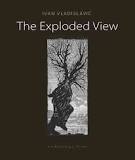
Whether The Exploded View is a novel in four parts or a collection of four longish stories is a question akin to whether South Africa is a nation of peoples or a collection of nations. The four parts of The Exploded View are indeed linked, through setting and theme, but it doesn’t have the marked through-line of the short story cycles that so often come out of MFA programs here in the U.S. For one thing, the links between stories are underplayed, their fragmentation being essential to the structure as well as the governing visual and epistemological theme. Vladislavić’s reluctance to give a whole and holistic image of post-apartheid South African society has earned him some critics. As the idiom has it, “when Johannesburg catches a cold, South Africa sneezes.” So a representation of the fractured, divided city, with little cause for optimism about those divisions being overcome, has been sometimes read as a sign of Afro-pessimism and willful naysaying of the entire national project. Now, in 2017, not only do these critiques seem quaint and outdated, stemming as they do from a moment of unfounded optimism when the “Rainbow Nation” and the “African Renaissance” seemed plausible projects, but The Exploded View also seems more globally relevant than ever. The world is sneezing, and while Johannesburg’s cold is not the cause, it is certainly one of the clearest presentations of the symptoms.
more here.
Steve Coll investigates America’s longest war
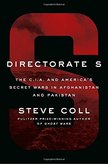
Steve Coll is the closest thing American journalism has to a High Priest of Foreign Correspondence. Two-time Pulitzer Prize winner, former managing editor of the Washington Post, former president of the New America Foundation, staff writer for the New Yorker, and current dean of the Columbia School of Journalism, Coll still manages to practice high-minded reportage, the species now maladroitly branded “fact-based.” Coll began his rise nearly thirty years ago in New Delhi, as “a wide-eyed rookie newspaper correspondent” for the Post. In 1993, after jihadists detonated a truck bomb beneath the World Trade Center, his editors called. Posted to London, Coll caught wind of a “wealthy Saudi exile in Sudan,” Osama Bin Laden. Not many had yet heard of Al Qaeda. In Ghost Wars, Coll’s acclaimed 2004 history “of the often-secret actions, debates, and policies that had led to Al Qaeda’s rise amid Afghanistan’s civil wars and finally to the September 11 attacks,” he returned to the region. Now, after a decade of research and 550 interviews, he offers Directorate S, an epic sequel that picks up on the eve of Massoud’s assassination.
Coll has proven himself an obsessive devotee of geopolitical catastrophe of the Central Asian variety. He is also a deft guide to the shadow world. Few books delve as deeply into the personnel of the CIA and the Taliban, offering a daunting array of characters (the cast list alone runs five pages).
more here.
‘Building and Dwelling’ by Richard Sennett

According to the Dutch architect Reinier de Graaf, the people – planners, utopian environmentalists, sociologists, quango soldiers, free-range urbanists, demographic strategists, “place makers”, soi-disant visionaries, soothsayers and, of course, architects – who attend portentously entitled, quasi-academic conferences on, say, The Final Favela, The Shapes of Sprawl to Come or Agglomerative Control Theory are “united through the frank admission that we do not have a clue”.
Cluelessness has done nothing to inhibit a thriving cottage industry publishing countless tracts and manifestos wrought in the deadening locutions of conference-speak. Urbanist shall speak unto urbanist. And only unto urbanist, because any passing civvy or “lay person” can only improbably be bothered to decipher what’s being said. The ideal of the open city is described in closed terms that unwittingly emphasise the gulf between those who confer and the overwhelming majority who don’t, between those who build or, more likely, try to influence what is built, and those who dwell – whether as passive patients or as engaged participants.
more here.
Why the Myth of Meritocracy Hurts Kids of Color
Melinda D. Anderson in The Atlantic:

Recognizing the vast economic and racial inequalities his students faced, he chose what some might consider a radical approach for his writing and social-studies classes, weaving in concepts such as racism, classism, oppression, and prejudice. Barrett said it was vital to reject the oft-perpetuated narrative that society is fair and equal to address students’ questions and concerns about their current conditions. And Brighton Elementary’s seventh- and eighth-graders quickly put the lessons to work—confronting the school board over inequitable funding, fighting to install a playground, and creating a classroom library focused on black and Latino authors.
“Students who are told that things are fair implode pretty quickly in middle school as self-doubt hits them,” he said, “and they begin to blame themselves for problems they can’t control.”
Barrett’s personal observation is validated by a newly published study in the peer-reviewed journal Child Development that finds traditionally marginalized youth who grew up believing in the American ideal that hard work and perseverance naturally lead to success show a decline in self-esteem and an increase in risky behaviors during their middle-school years.
More here.
Delia Graff Fara: She philosophized about vagueness — and lived with it too
James Ryerson in the New York Times:

Start with a heap of sand. If you remove a single grain, it remains a heap. Repeat this process enough times, however, and you have a heap of sand that contains, say, one grain. This is absurd: One grain is not a heap. Something has gone wrong, but it is not obvious what. Either there is a precise number of grains at which point a heap becomes a nonheap, or there is no such thing as a heap, or classical logic is flawed (perhaps it is only ever sort of true that something is a heap). Which bullet to bite?
This paradox, which originated with the ancient Greeks, is troubling because it is ubiquitous. It applies not just to being a heap but also to being tall, or red, or bald, or soft — or any other gradient-like property. When Fara began working on this paradox as a graduate student at the Massachusetts Institute of Technology in the 1990s, philosophers had come to view it as an instance of a larger problem: vagueness. We want to take seriously our talk of hot and cold weather, bald and full-haired men, day and night, but the boundaries that distinguish such things can seem blurry to the point of incoherence.
More here.