
Lauren Oyler in the New York Times:
 About a year ago I met up for the first time with a woman I knew only online. Articulate and funny, she is a brilliant writer who studied literature in graduate school. So I was surprised that, when I mentioned a recent novel I liked, my new friend responded with head-shaking resignation. “I can’t see how anyone justifies talking about books anymore,” she said. Our nation was so overwhelmed with causes demanding attention and action, she suggested, that it had entered a state of constant emergency, whereby pursuits both personal and political must be pitted against one another to determine which are essential.
A turn toward socially conscious criticism, ushered in by the internet’s amplification of previously ignored perspectives, has meant that culture now tends to be evaluated as much for its politics as for its aesthetic successes (or failures). Certain works — usually those that highlight the experiences of marginalized groups, or express some message or moral about the dangers of prejudice — have been elevated in stature. It’s an overdue correction that brings with it an imposition: No longer just illuminating, instructive, provocative or a way to waste a few hours on a Saturday, these works have become “necessary.” The word is a discursive crutch for describing a work’s right-minded views, and praise that is so distinct from aesthetics it can be affixed to just about anything, from two-dimensional romantic comedies to a good portion of the forthcoming books stacked beside my desk. Necessary for what is always left to the imagination — the continuation of civilization, maybe.
More here.
 John Preskill
 In
In  To pick up on almost any story in the news these days—political, financial, sexual, or environmental—is to be informed in the opening monologue that the rule of law is vanished from the face of the American earth. So sayeth
  Marco Roth in n+1:
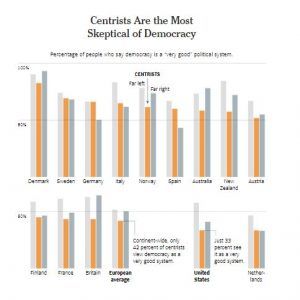 David Adler in the NYT:
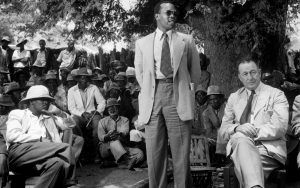 Andreas Wimmer in Aeon:
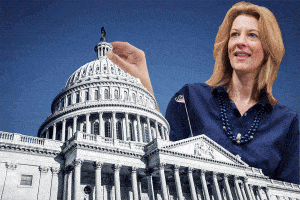 Zach Carter in The Huffington Post:
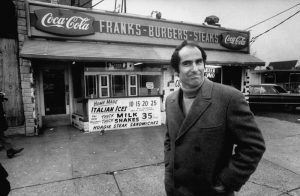
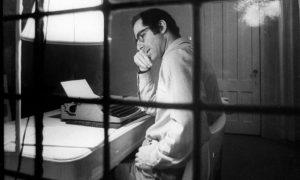 Writers of genuine originality are always divisive. Roth alienated not just the occasional reader but entire communities, reviled, first, by world Jewry, and later by world feminism. This choric hostility was in both cases essentially socio-cultural, and not literary. You can understand the historical uneasiness, but World Jewry got it wrong about Roth, a proud Jew as well as a proud American. And the feminist objection is impetuously sweeping; it detects no distance between Roth and his (often deplorable) narrators. Besides, if you outlaw misogyny as a subject, then you outlaw King Lear, and much else.
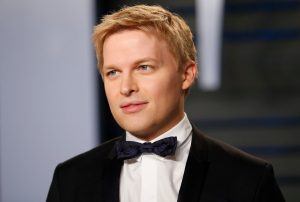 In 2010, just before Thanksgiving, American foreign-policy makers flew into a panic. The United States government had gotten word that an outfit called WikiLeaks was preparing to release an enormous cache of secret diplomatic cables, in coordination with teams of journalists from this and other newspapers. At the time, I was a policy hand in the State Department. It fell to me and my colleagues to dutifully craft apologies on behalf of our bosses, whose sensitive communications and private insults — speculation about, say, a foreign leader’s mental aptitude or mysterious wealth — were about to become public. They, meanwhile, confronted weightier concerns, scrambling to anticipate the coming fallout. Would missions and sources be compromised? Would activists be exposed to persecution? Would anyone ever talk to American officials again? Almost no one, however, anticipated what would prove to be one of the more lasting consequences of the leak: surprised admiration for American diplomats. “My personal opinion of the State Department has gone up several notches,” the British historian and journalist
  TAO LIN’S EIGHTH BOOK, Trip, is his best yet, and it’s all thanks to drugs. Well, perhaps not entirely thanks to drugs. With exercise comes mastery, or at least competence, and Lin has been practicing his idiosyncratic craft for over a decade. His first book was published in 2006, when he was twenty-three; improvement during the intervening years may have been inevitable. But Lin—whose authorial voice, notoriously, is so assiduously literal that it sometimes seems transcribed from a robot failing a Turing test—has never been more creative, precise, or inspired than when he details psychedelics-begotten behavior and theories. The behavior is mostly his own, while the theories are often borrowed from Terence McKenna, the late psilocybin advocate whose YouTube videos started Lin down the path to revitalization. While studying McKenna, Lin began to make radical adjustments to his daily drug routines, which in turn radically affected his mind-set.
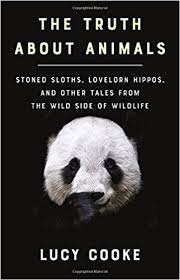 Humans have long trapped animals in cages, nets and snares, but the tangled webs of vanity, curiosity, cruelty and fear we cast over other creatures may be even more perilous. We see our virtues and vices reflected in animals — hardworking beavers, indolent sloths, innocent lambs, greedy vultures — through a glass darkly. But these well-worn clichés blind us to a world far more dazzling and varied, according to Lucy Cooke, the acclaimed zoology-trained author and documentary filmmaker, in her new book, “The Truth About Animals.” As she writes, “Painting the animal kingdom with our artificial ethical brush denies us the astonishing diversity of life, in all of its blood-drinking, sibling-eating, corpse-shagging glory.” (Yes, corpse shagging. The penguin portion is not for the faint of heart.)
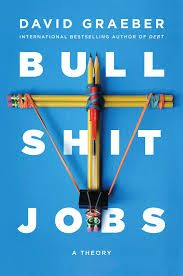 As well as documenting personal misery, this book is a portrait of a society that has forgotten what it is for. Our economies have become “vast engines for producing nonsense”. Utopian ideals have been abandoned on all sides, replaced by praise for “hardworking families”. The rightwing injunction to “get a job!” is mirrored by the leftwing demand for “more jobs!”
 Ethics today is in a curious state. There is no shortage of people telling us that Western civilization is facing a moral crisis, that the old foundation of Christianity has been removed but nothing has been put in its place. Christian writers such as Alister McGrath and Nick Spencer have warned that we’re running on the moral capital of a religion we’ve long abandoned. It’s only a matter of time before, like Wile E. Coyote, we realize we’ve run off a moral cliff, impossibly suspended in mid-air only as long as we fail to realize there’s nothing under our feet.
 It was bound to happen eventually. A group of researchers that may actually be competent and well-funded is investigating