Annabella Byron is rescued from more than a century of bad press

5166Kathryn Hughes at The Guardian:

“Oh! What an instrument of torture I have acquired in you,” Byronfamously exclaimed on first beholding his baby daughter Ada, leaving it unclear whether he saw himself as the scourger or the scourged. In truth, it was probably a bit of both. Within six months the poet had left Britain and would never see either his daughter or his wife Annabella again. He spent the next decade racketing around the continent writing verse that was beautiful and scabrous by turns, and intervening in foreign conflicts that were actually none of his business. Annabella Byron, meanwhile, morphed from wretched bride into a queenly philanthropist, who was equally certain that she knew what was best for other people. Baby Ada, by contrast, grew up to be mostly interested in herself. She was, she announced proudly, a genius.

The story of this unhappy trio has been told before, but seldom with as much brio as it is here. Miranda Seymour’s particular aim is to rescue Annabella from over a century’s worth of bad press. Everyone, detractors and advocates alike, agrees that at the age of 22 she was too naive to see how stupid it was to pester Byron into marrying her when he was clearly only after her fortune. She’d always had a thing about Jane Austen’s Mr Darcy and thought Byron was cut from the same cloth.

more here.

Saturday Poem

the other nils

the hand in the mirror moved a
fraction of a second before his
own . his hand followed as
if drawn to scratch his nose where
the mirror hand already gave relief
the mirror eye began to wink and
his own eyelids slid together
in conspiracy . he left the bathroom
quickly, closed the door, wondering
if the other nils were walking down
the other hall and if those dark shoes
touched the carpet just ahead of his own

by Nils Peterson

Saturday Poem

the other nils

the hand in the mirror moved a 
fraction of a second before his 
own . his hand followed as 
if drawn to scratch his nose where
the mirror hand already gave relief
the mirror eye began to wink and 
his own eyelids slid together
in conspiracy . he left the bathroom
quickly, closed the door, wondering
if the other nils were walking down
the other hall and if those dark shoes

touched the carpet just ahead of his own

by Nils Peterson

The Literature of Mars: A Brief History

1555975844.01.MZZZZZZZJohn Tuttle at The Millions:

It was really not until the ’90s when quality literature about Mars and Martians became popular again. This is because it was in the 1990s that high-tech probes like Mars Global Surveyor, Pathfinder, and Sojourner landed on the planet, giving us new, more detailed imagery of the Martian surface. The Mars Society was also founded in the late 1990s. In this decade, astronomer and astrobiologist Carl Sagansaid, “Because of the historic romance of the general public with Mars (consider even today the associations of the word ‘martian’), the exploration of Mars has a public resonance and support that probably no other goal of the space program can claim.”

In 1993, Greg Bear published his award-winning novel Moving Mars, a futuristic story that discusses many political themes. Kim Stanley Robinson also published numerous Martian novels throughout this decade. Dr. John Gray published a book entitled Men Are from Mars, Women Are from Venus (1992), which covered topics about the psychological differences between men and women. It employed the metaphor of the title to get its point across, picturing that the two sexes originated from two different planets of drastically different societies. Apparently, it was the longest-running nonfiction bestseller of the ’90s. And in 1999, bringing the decade to a close, the novel The Martian Race by Gregory Benford was released.

more here.

The IQ trap: how the study of genetics could transform education

Philip Ball in New Statesman:

IqResearchers are now becoming confident enough to claim that the information available from sequencing a person’s genome – the instructions encoded in our DNA that influence our physical and behavioural traits – can be used to make predictions about their potential to achieve academic success. “The speed of this research has surprised me,” says the psychologist Kathryn Asbury of the University of York, “and I think that it is probable that pretty soon someone – probably a commercial company – will start to try to sell it in some way.” Asbury believes “it is vital that we have regulations in place for the use of genetic information in education and that we prepare legal, social and ethical cases for how it could and should be used.” If that sounds frightening, however, it might be because of a wide misapprehension about what genes are and what they do.

It’s sometimes said that the whole notion that intelligence has a genetic component is anathema to the liberals and left-wingers who dominate education. Young reliably depicts the extreme version here, saying “liberal educationalists… reject the idea that intelligence has a genetic basis [and] prefer to think of man as a tabula rasa, forged by society rather than nature”. He’s not alone, though. The psychologist Jill Boucher of City, University of London has lambasted what she calls “the unthinkingly self-righteous, hypocritical and ultimately damaging political correctness of those who deny that genetic inheritance contributes to academic achievement and hence social status”. Teach First’s suppression of Young’s article contributed to that impression: it was a clumsy and poorly motivated move. (The organisation has since apologised to Young.)

Despite this rhetoric, however, you’d be hard pushed to find a teacher who would question that children arrive at school with differing intrinsic aptitudes and abilities. Some kids pick things up in a flash, others struggle with the basics. This doesn’t mean it’s all in their genes: no one researching genes and intelligence denies that a child’s environment can play a big role in educational attainment. Of course kids with supportive, stimulating families and motivated peers have an advantage, while in some extreme cases the effects of trauma or malnutrition can compromise brain development. But the idea of the child as tabula rasa seems to be something of a straw man.

More here.

The IQ trap: how the study of genetics could transform education

Philip Ball in New Statesman:

IqResearchers are now becoming confident enough to claim that the information available from sequencing a person’s genome – the instructions encoded in our DNA that influence our physical and behavioural traits – can be used to make predictions about their potential to achieve academic success. “The speed of this research has surprised me,” says the psychologist Kathryn Asbury of the University of York, “and I think that it is probable that pretty soon someone – probably a commercial company – will start to try to sell it in some way.” Asbury believes “it is vital that we have regulations in place for the use of genetic information in education and that we prepare legal, social and ethical cases for how it could and should be used.” If that sounds frightening, however, it might be because of a wide misapprehension about what genes are and what they do.

It’s sometimes said that the whole notion that intelligence has a genetic component is anathema to the liberals and left-wingers who dominate education. Young reliably depicts the extreme version here, saying “liberal educationalists… reject the idea that intelligence has a genetic basis [and] prefer to think of man as a tabula rasa, forged by society rather than nature”. He’s not alone, though. The psychologist Jill Boucher of City, University of London has lambasted what she calls “the unthinkingly self-righteous, hypocritical and ultimately damaging political correctness of those who deny that genetic inheritance contributes to academic achievement and hence social status”. Teach First’s suppression of Young’s article contributed to that impression: it was a clumsy and poorly motivated move. (The organisation has since apologised to Young.)

Despite this rhetoric, however, you’d be hard pushed to find a teacher who would question that children arrive at school with differing intrinsic aptitudes and abilities. Some kids pick things up in a flash, others struggle with the basics. This doesn’t mean it’s all in their genes: no one researching genes and intelligence denies that a child’s environment can play a big role in educational attainment. Of course kids with supportive, stimulating families and motivated peers have an advantage, while in some extreme cases the effects of trauma or malnutrition can compromise brain development. But the idea of the child as tabula rasa seems to be something of a straw man.

More here.

Friday, April 27, 2018

The History of the Shariʿa

Mohammad Fadel in Lapham’s Quarterly:

What is shariʿa? It is often translated as “Islamic law,” as if it represented the law in its entirety. It is also commonly thought to be a rigid set of practices and punishments inherited directly from early Islam that are meant to be applied in a single inflexible manner. But none of this is accurate.
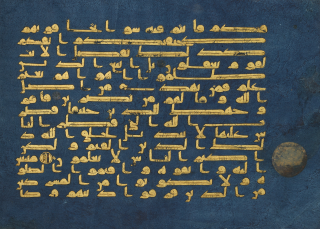
Shariʿa is best understood as Islam’s specifically divine law, virtually synonymous with revelation. Muslims believe it to have been revealed to the Prophet Muhammad and principally transmitted through the Quran and his own teachings. But it was not itself the letter of the law followed by early Muslims. Acceding to the commands of revelation required further human interpretation, and this effort to use shariʿa toward the establishment of rules for a moral life has a different name: fiqh (literally “understanding”).

Muhammad died in 632, and shariʿa and fiqh developed in the following years, as his community needed to figure out how to proceed without his personal authority—especially as his successors, known as the caliphs, soon expanded his Islamic state beyond the Arabian Peninsula. They consolidated control over the Near East by driving out the Byzantine Empire from North Africa and the Levant and completely destroying the Sasanian Empire in Mesopotamia, Iran, and Central Asia. Islam then spread through the region.

More here.

The History of the Shariʿa

Mohammad Fadel in Lapham's Quarterly:

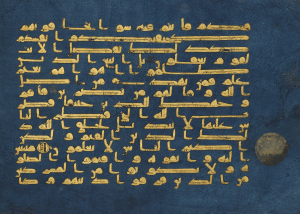
Blue_quranWhat is shariʿa? It is often translated as “Islamic law,” as if it represented the law in its entirety. It is also commonly thought to be a rigid set of practices and punishments inherited directly from early Islam that are meant to be applied in a single inflexible manner. But none of this is accurate.
Shariʿa is best understood as Islam’s specifically divine law, virtually synonymous with revelation. Muslims believe it to have been revealed to the Prophet Muhammad and principally transmitted through the Quran and his own teachings. But it was not itself the letter of the law followed by early Muslims. Acceding to the commands of revelation required further human interpretation, and this effort to use shariʿa toward the establishment of rules for a moral life has a different name: fiqh (literally “understanding”).

Muhammad died in 632, and shariʿa and fiqh developed in the following years, as his community needed to figure out how to proceed without his personal authority—especially as his successors, known as the caliphs, soon expanded his Islamic state beyond the Arabian Peninsula. They consolidated control over the Near East by driving out the Byzantine Empire from North Africa and the Levant and completely destroying the Sasanian Empire in Mesopotamia, Iran, and Central Asia. Islam then spread through the region.

More here.

Since 2016, Half of All Coral in the Great Barrier Reef Has Died

Robinson Meyer in The Atlantic:

Lead_960_540Once upon a time, there was a city so dazzling and kaleidoscopic, so braided and water-rimmed, that it was often compared to a single living body. It clustered around a glimmering emerald spine, which astronauts could glimpse from orbit. It hid warm nooks and crannies, each a nursery for new life. It opened into radiant, iris-colored avenues, which tourists crossed oceans to see. The city was, the experts declared, the planet’s largest living structure.

Then, all at once, a kind of invisible wildfire overran the city. It consumed its avenues and neighborhoods, swallowed its canyons and branches. It expelled an uncountable number of dwellers from their homes. It was merciless: Even those who escaped the initial ravishment perished in the famine that followed.

Many people had loved the city, but none of them could protect it. No firefighters, no chemicals, no intervention of any kind could stop the destruction. As the heat plundered the city of its wealth, the experts could only respond with careful, mournful observation.

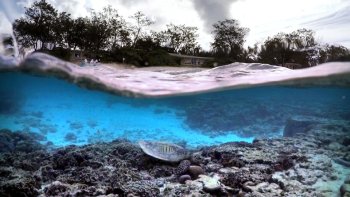
All of this recently happened, more or less, off the east coast of Australia. The Great Barrier Reef—which, at 1,400 miles long, is the longest and largest coral reef in the world—was blanketed by dangerously hot water in the summer of 2016. This heat strangled and starved the corals, causing what has been called “an unprecedented bleaching event.”

Though that bleaching event was reported at the time, scientists are just starting to understand how catastrophically transformative it was.

More here.

Leaving Herland

Nora Caplan-Bricker in The Point:

ScreenHunter_3069 Apr. 27 19.15Imagine a world without men. Imagine it occurred as a natural experiment. Imagine, for example, a valley cupped by high mountains, accessible by only a single, narrow pass. Imagine that, thousands of years ago, the people of this valley found themselves at war when an unlucky tremor from a distant volcano sealed the pass shut with a shower of rocks. Most of the people who’d stayed back from battle died fighting among themselves in the weeks after the cataclysm, leaving only a small group of women behind to despair that without men there’d be no children, and without children, no future. This is a fantastical premise requiring a fantastical twist. So say the women’s bodies adapted to the absence of mates. They became capable of asexual reproduction, previously the province of invertebrates and plants. From there, the society developed between the cliffs of its petri dish. That this could never happen is beside the point—the important question is: What would come next?

This is the setting for the 1915 novel Herland, by the first-wave feminist Charlotte Perkins Gilman, and what comes next in her book is utopia: women solving humanity’s problems without men getting in the way. I loved this strange novel when I read it in college, though I couldn’t say why. It’s earnest, even dopey, and, inevitably, outdated. Yet I found myself thinking about it after the Harvey Weinstein revelations this fall, and during the reckoning that followed.

From the start, the #MeToo moment seemed to rest on a utopianism that no one had named. “Don’t harass” is a simple demand, but envisioning a world without sexual harassment—without its many tendrils invading every corner of our lives—is not a simple act of imagination.

More here.

Did Neanderthals Go Extinct Because of the Size of Their Brains?

George Dvorsky in Gizmodo:

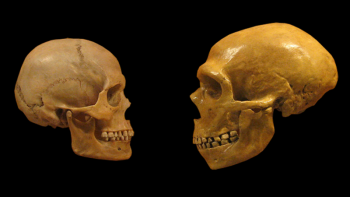
Oywiapxvhst8q0t2pqgxUsing computers and MRI scans, researchers have created the most detailed reconstruction of a Neanderthal brain to date, offering new insights into the social and cognitive abilities of these extinct humans. But as to whether these characteristics were responsible for their ultimate demise remains an open question.

New research published today in Scientific Reports suggests important differences in cognitive and neural function between Homo sapiens and Neanderthals led to differences in behavior that may have resulted in the conditions under which anatomically modern humans succeeded and Neanderthals failed some 45,000 years ago. To reach this conclusion—and in one of the first studies of its kind—scientists conducted a comparative analysis of Neanderthal and early modern human skulls to infer brain function. But because no other archaeological evidence was provided to bolster the case, and because the shape and size of brains cannot be definitively tied to cognitive capacity and behavior, the question of what caused Neanderthal extinction remains very much unsettled.

The story of the Neanderthals has puzzled archaeologists and anthropologists ever since the first skeleton of this species was uncovered in 1829. Despite years of research and speculation, we’re still not sure what went wrong for the Neanderthals, who lived in Europe and Asia for a whopping 200,000 years, much of it during the Ice Age. At the same time, scientists aren’t entirely sure what went right for Homo sapiens. So when it comes to explaining their failure and our success, it’s fair to ask: What were the differences that made the difference?

More here.

Friday Poem

The Language Issue

I place my hope on the water
in this little boat
of the language, the way a body might put
an infant

in a basket of intertwined
iris leaves,
its underside proofed
with bitumen and pitch,

then set the whole thing down amidst
the sedge
and bulrushes by the edge
of a river

only to have it borne hither and thither,
not knowing where it might end up;
in the lap, perhaps,
of some Pharaoh’s daughter.

by Nuala Ní Dhomhnaill
from Pharao’s Daughter
Wake Forest University Press, 1988
translated from Irish by Medbh McGuckian

Friday Poem

The Language Issue

I place my hope on the water
in this little boat
of the language, the way a body might put
an infant

in a basket of intertwined
iris leaves,
its underside proofed
with bitumen and pitch,

then set the whole thing down amidst
the sedge
and bulrushes by the edge
of a river

only to have it borne hither and thither,
not knowing where it might end up;
in the lap, perhaps,
of some Pharaoh’s daughter.
.

by Nuala Ní Dhomhnaill
from Pharao's Daughter
Wake Forest University Press, 1988
translated from Irish by Medbh McGuckian

Donald Britton died young but left behind poetry of secretive beauty

Donald-britton-bwPeter Moskowitz at Poetry Magazine:

Britton’s single volume of poetry, Italy, was published by Little Caesar Press in 1981. The book probably wouldn’t have reached beyond Britton’s small coterie of friends were it not for support from a few devotees of gay poetry. As it was, his friends recall that Italy sold only about 750 copies and got a negative review in the Village Voice. In the early 2000s, the poet Reginald Shepherdbegan collecting Britton’s unpublished works, some of which existed as letters to friends. When Shepherd died in 2008, leaving the book unfinished, poet and editor Philip Clark took up the project. In 2016, he published a second volume of Britton’s work, In the Empire of the Air, which includes Italy and dozens of unpublished works. The book is slim, a little over 100 pages, and most of the poems in it are less than a page long.

Britton’s poems are tight and neat, as if edited with a scalpel. He told friends he wanted his work to be universal and to speak to anyone. In contrast to the sometimes flamboyant self-disclosure of many of his contemporaries, his poems offer little insight into his life, who he was, or what made him tick.

more here.

Jon Hopkins makes gentle music with hidden depths

180430_r31963Kalefa Sanneh at The New Yorker:

Hopkins is now thirty-eight, and one of the most celebrated electronic musicians of his generation. He has a paradoxical ability to make obsessively engineered tracks that sound friendly and generous; his sensibility is openhearted and sometimes sentimental—an approach that can make him seem like an outlier in the world of electronic music. Hopkins is known for his collaborations and soundtracks and, above all, his own albums, which appear every five years or so and then reappear on innumerable best-of lists. Next month, he will release “Singularity,” ending a quiet but dramatic period in his life, during which he recovered from the rigors of touring by subjecting his body to other kinds of stress: desert treks, controlled breathing, freezing baths. Apparently, these exertions had an effect, because the new album is both the gentlest and the most epic of Hopkins’s career.

“Singularity” is an hour-long ode to spiritual transcendence that also resembles pleasant background noise—at least, it does at first. The album includes a handful of wispy, beatless tracks that might be considered ambient music, a genre that Eno invented. In the liner notes to “Ambient 1: Music for Airports,” from 1978, Eno wrote that ambient music “must be as ignorable as it is interesting.” Hopkins has been pleased to learn that his albums have generally failed to meet this exacting standard. “Someone will say, I went to do some cooking and put it on, and ended up sitting down and listening to the whole thing,” he says. “Obviously, that’s what you want—you’ve captured them.”

more here.

Mary Cassatt

Barn02_4008_01Julian Barnes at the LRB:

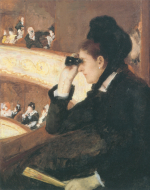
Now, with time and a shift of art-historical wind, we may see Cassatt a little more clearly, and a little more as herself. She is, largely, a painter of the great indoors, the here and now, and of women’s space within it. She does not do landscape or nature – the urban park and the boating lake are as far as that goes; nor does she give us action, history, myth, still life, houses, horses, sunsets or those forbidden parts of the Opéra. She does not do men much, though her double portrait of her brother Alexander with his son Robert, the boy sitting on the arm of his father’s armchair, their black suits blending into one and their button-black eyes popping in parallel towards some unknown object (a joint-television gaze from pre-television times) makes us wish she had portrayed the opposite sex more. She does mothers and babies with an acute eye for the weight and fall of an infant’s flesh, and an acute sense of the weight and fall of an infant’s mood. She made a series of colour prints whose limpidity, grace and line echo and learn from the Japanese without appearing in any way subservient (though it would be good to know what the Japanese thought, and think, about them). She did some rather weak pictures of the big-hatted daughters of friends. And she did several one-off paintings – like Little Girl in a Blue Armchair and In the Loge – whose power has never faded. It is an indicator of Cassatt’s return to wider fashion that Simon Schama included two of her ‘Japanese’ prints in an episode of the TV show Civilisations, while in a later one David Olusoga brought In the Loge to his argument.

more here.

Another Side of Feynman

Freeman Dyson in Nautilus:

DysonAll through a long life I had three main concerns, with a clear order of priority. Family came first, friends second, and work third.” So writes the pioneering theoretical physicist Freeman Dyson in the introduction to his newly published collection of letters, Maker of Patterns. Spanning about four decades, the collection presents a first-person glimpse into a life that witnessed epochal changes both in world history and in physics. Here, we present short excerpts from nine of Dyson’s letters, with a focus on his relationship with the physicist Richard Feynman. Dyson and Feynman had both professional and personal bonds: Dyson helped interpret and draw attention to Feynman’s work—which went on to earn a Nobel Prize—and the two men traveled together and worked side by side. Taken together, these letters present a unique perspective of each man. Feynman’s effervescent energy comes through, as does Dyson’s modesty and deep admiration for his colleague. So too does the excitement each scientist felt for his role in uncovering some of the foundations of modern-day theoretical physics.

March 8, 1948

Yesterday I went for a long walk in the spring sunshine with Trudy Eyges and Richard Feynman. Feynman is the young American professor, half genius and half buffoon, who keeps all physicists and their children amused with his effervescent vitality. He has, however, as I have recently learned, a great deal more to him than that, and you may be interested in his story. The part of it with which I am concerned began when he arrived at Los Alamos; there he found and fell in love with a brilliant and beautiful girl, who was tubercular and had been exiled to New Mexico in the hope of stopping the disease. When Feynman arrived, things had got so bad that the doctors gave her only a year to live, but he determined to marry her, and marry her he did; and for a year and a half, while working at full pressure on the project, he nursed her and made her days cheerful. She died just before the end of the war.

More here.

Another Side of Feynman

Freeman Dyson in Nautilus:

DysonAll through a long life I had three main concerns, with a clear order of priority. Family came first, friends second, and work third.” So writes the pioneering theoretical physicist Freeman Dyson in the introduction to his newly published collection of letters, Maker of Patterns. Spanning about four decades, the collection presents a first-person glimpse into a life that witnessed epochal changes both in world history and in physics. Here, we present short excerpts from nine of Dyson’s letters, with a focus on his relationship with the physicist Richard Feynman. Dyson and Feynman had both professional and personal bonds: Dyson helped interpret and draw attention to Feynman’s work—which went on to earn a Nobel Prize—and the two men traveled together and worked side by side. Taken together, these letters present a unique perspective of each man. Feynman’s effervescent energy comes through, as does Dyson’s modesty and deep admiration for his colleague. So too does the excitement each scientist felt for his role in uncovering some of the foundations of modern-day theoretical physics.

March 8, 1948

Yesterday I went for a long walk in the spring sunshine with Trudy Eyges and Richard Feynman. Feynman is the young American professor, half genius and half buffoon, who keeps all physicists and their children amused with his effervescent vitality. He has, however, as I have recently learned, a great deal more to him than that, and you may be interested in his story. The part of it with which I am concerned began when he arrived at Los Alamos; there he found and fell in love with a brilliant and beautiful girl, who was tubercular and had been exiled to New Mexico in the hope of stopping the disease. When Feynman arrived, things had got so bad that the doctors gave her only a year to live, but he determined to marry her, and marry her he did; and for a year and a half, while working at full pressure on the project, he nursed her and made her days cheerful. She died just before the end of the war.

More here.

Thursday, April 26, 2018

Hisham Matar: International literature is hugely underrated, while English books are often overrated

The British-Libyan writer on an uncensored Arabian Nights, why Proust makes you feel smarter – and the diaries of a pianist that changed his life.

Hisham Matar in The Guardian:

3000The book I am currently reading
I have been reading one poem from On Balance, Sinéad Morrissey’s excellent new collection, every night before falling asleep. I have only recently come across the work of the Moroccan essayist Abdelfattah Kilito. I am now on Thou Shall Not Speak My Language. He is marvellously intelligent and witty.

The book that changed my life
The uncensored version of The Arabian Nights, with all its sex and strangeness and horrible intrigue, was read to me when I was too young to understand much of it and so it bled into my consciousness, which is perhaps why I am as suspicious of it as I am trusting. I have since found its ghost lurking in Don Quixote, Tristram Shandy, the works of Robert Louis Stevenson, Joseph Conrad and Jorge Louis Borges, among others.

The book I wish I’d written
I have studied with covetous admiration In Search of Lost Time, a book that has expanded my sense of the world and did so in ways that did not seem to bring me out of myself but rather deeper into it. One of Proust’s many gifts is to make you feel smarter, finer and capable of greater sensitivities than you perhaps ever assumed. For me, no novel contains as many ideas or as much pleasure and delight.

More here.