Why America’s 2-party system is on a collision course with our constitutional democracy

Lee Drutman in Vox:

There was a time, several decades ago, when America’s two-party system was praised for its moderation. Unlike European parliamentary democracies where “dogmatic ideological parties” of Europe thrived, America’s winner-take-all electoral system seemed to reward and therefore encourage parties and candidates with broad national appeal. No party, it was argued, could simply give up on half of the electorate. Similarly, no party could convincingly win a majority by putting forward extremist anti-system candidates far outside the mainstream.

Obviously something has gone wrong with this theory. Instead of being rejected as outside the mainstream, Donald Trump, an extremist anti-system candidate, simply redefined what “mainstream” is for almost half of the electorate.

And today, both American parties regularly forsake about half the electorate. Or even more than half, really.

Consider some basic numbers: Trump was the choice of 14 million people who voted in the Republican primaries. But in a nation where 230.6 million Americans are eligible to vote, that’s 6 percent of eligible voters. In the 2017 German election, the far-right populist Alternative for Germany (AfD) won 5.9 million votes. In a nation of 61.5 eligible voters, that’s almost 10 percent.

In short, when voters in both countries were given the full range of options, Donald Trump was less popular in the United States than the AfD was in Germany.

But in the German system, AfD can be kept out of power by other parties forming a coalition. In the United States, Trump’s 6 percent support gave him a major party’s nomination, which gave him instant legitimacy. And because he was a Republican candidate and because he wasn’t Hillary Clinton, 63 million Americans cast a vote for him — enough to catapult him to the presidency.

More here.

Why we should bulldoze the business school

Martin Parker in The Guardian:

Visit the average university campus and it is likely that the newest and most ostentatious building will be occupied by the business school. The business school has the best building because it makes the biggest profits (or, euphemistically, “contribution” or “surplus”) – as you might expect, from a form of knowledge that teaches people how to make profits.

Business schools have huge influence, yet they are also widely regarded to be intellectually fraudulent places, fostering a culture of short-termism and greed. (There is a whole genre of jokes about what MBA – Master of Business Administration – really stands for: “Mediocre But Arrogant”, “Management by Accident”, “More Bad Advice”, “Master Bullshit Artist” and so on.) Critics of business schools come in many shapes and sizes: employers complain that graduates lack practical skills, conservative voices scorn the arriviste MBA, Europeans moan about Americanisation, radicals wail about the concentration of power in the hands of the running dogs of capital. Since 2008, many commentators have also suggested that business schools were complicit in producing the crash.

Having taught in business schools for 20 years, I have come to believe that the best solution to these problems is to shut down business schools altogether. This is not a typical view among my colleagues. Even so, it is remarkable just how much criticism of business schools over the past decade has come from inside the schools themselves. Many business school professors, particularly in north America, have argued that their institutions have gone horribly astray. B-schools have been corrupted, they say, by deans following the money, teachers giving the punters what they want, researchers pumping out paint-by-numbers papers for journals that no one reads and students expecting a qualification in return for their cash (or, more likely, their parents’ cash). At the end of it all, most business-school graduates won’t become high-level managers anyway, just precarious cubicle drones in anonymous office blocks.

More here.

The Creepy Genetics Behind The Golden State Killer Case

Megan Molteni in Wired:

For the dozen years between 1974 and 1986, he rained down terror across the state of California. He went by many names: the East Side Rapist, the Visalia Ransacker, the Original Night Stalker, the Golden State Killer. And on Wednesday, law enforcement officials announced they think they finally have his real name: Joseph James DeAngelo. Police arrested the 72-year-old Tuesday; he’s accused of committing more than 50 rapes and 12 murders.

In the end, it wasn’t stakeouts or fingerprints or cell phone records that got him. It was a genealogy website.

Lead investigator Paul Holes, a retired Contra Costa County District Attorney inspector, told the Mercury News late Thursday night that his team used GEDmatch, a no-frills Florida-based website that pools raw genetic profiles shared publicly by their owners, to find the man believed to be one of California’s most notorious criminals. A spokeswoman for the Sacramento County District Attorney’s Office reached Friday morning would not comment or confirm the report.

GEDmatch—a reference to the data file format GEDCOM, developed by the Mormon church to share genealogical information—caters to curious folks searching for missing relatives or filling in family trees. The mostly volunteer-run platform exists “to provide DNA and genealogy tools for comparison and research services,” the site’s policy page states. Most of its tools for tracking down matches are free; users just have to register and upload copies of their raw DNA files exported from genetic testing services like 23andMe and Ancestry. These two companies don’t allow law enforcement to access their customer databases unless they get a court order. Neither 23andMe nor Ancestry was approached by investigators in this case, according to spokespeople for the companies.

But no court order would be needed to mine GEDmatch’s open-source database of more than 650,000 genetically connected profiles.

More here.

Welcome to 3 Quarks Daily Version 5.0

Dear Reader,

As you can see, we have made some big changes here at 3 Quarks Daily. I have been working with the supremely talented and competent Dumky de Wilde on this new version for some months now and here are some of the improvements and changes:

  • We have moved from Typepad to the much-more-powerful and efficient WordPress platform.
  • There is a clean, contemporary new look (please give it a chance, sometimes it takes a while to get used to something new).
  • The page should load much faster than before; in some cases, more than 10 times faster.
  • For a small monthly payment or a one-time donation, you need not see ads at all on the new 3QD. Existing monthly subscribers will be imported to the new site and should not see any advertising.
  • The “About Us” and “Monday Magazine” pages have been cleaned up and redesigned, as have all other pages too.
  • One may click on any author’s name to see a short bio of that person as well as all their posts on 3QD. (We are still putting in the bios of some of the writers.)
  • Wider main column and better readability of text everywhere.
  • The site works much better now on phones and tablets, as well as full-screen browsers.
  • We are still working on a few things, such as: getting old posts from October 2017 up until last week imported into the archives; fixing some issues with images not displaying correctly in old posts; problems with the daily emails not showing all posts; and a couple of other small issues.
  • You can easily provide valuable feedback to us about any aspect of the site by clicking the red “Feedback” tab in the middle-right of the screen. Or just comment on this post so I can reply to you more quickly.

We are excited to hear about what you think! Please do tell us in the comments to this post and/or by using the Feedback tab. And please do click “Support 3QD” on the main menu, will you? Thanks for all your generous support.

New posts are below this one for a few days!

Best wishes,

Abbas

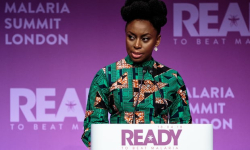
Chimamanda Ngozi Adichie: ‘This could be the beginning of a revolution’

Lisa Allardice in The Guardian:

At a PEN lecture in Manhattan last weekend, the novelist Chimamanda Ngozi Adichie took Hillary Clinton to task for beginning her Twitter biowith “Wife, mom, grandma”. Her husband’s account, it will surprise no one to know, does not begin with the word “husband”. “When you put it like that, I’m going to change it,” promised the 2016 presidential candidate. Adichie is an international bestseller and about as starry as a writer can be (when we meet she chats casually about recently meeting Oprah Winfrey, who made a little bow to her). Her first novel, Purple Hibiscus, published when she was only 26, was longlisted for the 2004 Man Booker; she won the 2006 Orange prize for Half of a Yellow Sun; was awarded a MacArthur fellowship – the so-called genius grant – and her work is now a fixture on American school reading lists. Following her sensational 2013 TED talk, We Should All Be Feminists(sampled by Beyoncé, used by Dior for a series of slogan T-shirts and distributed in book format to every 16-year-old in Sweden) the 40-year-old has become something of a public feminist: hence scolding the former US secretary of state.

The atmosphere at a recent event with Reni Eddo-Lodge (author of Why I Am No Longer Talking to White People About Race), part of the Southbank’s WOW: Women of the World festival in London, was more like a party than a books evening. The excitement among the audience of largely young women was as striking as the amazing hair and outfits (“That will be the Nigerians,” Adichie says proudly). The two writers received a riotous standing ovation before they had even sat down. As festival founder Jude Kelly said in her whoop-inducing introduction, “The world is changing very fast, and we intend to accelerate it.”

…But now in Dear Ijeawele: A Feminist Manifesto in Fifteen Suggestions (just published in paperback), she writes that she is angrier about sexism than she is about racism. “I don’t think sexism is worse than racism, it’s impossible even to compare,” she clarifies. “It’s that I feel lonely in my fight against sexism, in a way that I don’t feel in my fight against racism. My friends, my family, they get racism, they get it. The people I’m close to who are not black get it. But I find that with sexism you are constantly having to explain, justify, convince, make a case for.” Written just before the birth of her own daughter, the manifesto began as a letter to her friend, who had asked for advice about how she might raise her baby girl as a feminist. “Teach her to love books”; “it is important to be able to fend for herself”.

More here.

Chimamanda Ngozi Adichie: ‘This could be the beginning of a revolution’

Lisa Allardice in The Guardian:

ChinAt a PEN lecture in Manhattan last weekend, the novelist Chimamanda Ngozi Adichie took Hillary Clinton to task for beginning her Twitter biowith “Wife, mom, grandma”. Her husband’s account, it will surprise no one to know, does not begin with the word “husband”. “When you put it like that, I’m going to change it,” promised the 2016 presidential candidate. Adichie is an international bestseller and about as starry as a writer can be (when we meet she chats casually about recently meeting Oprah Winfrey, who made a little bow to her). Her first novel, Purple Hibiscus, published when she was only 26, was longlisted for the 2004 Man Booker; she won the 2006 Orange prize for Half of a Yellow Sun; was awarded a MacArthur fellowship – the so-called genius grant – and her work is now a fixture on American school reading lists. Following her sensational 2013 TED talk, We Should All Be Feminists, (sampled by Beyoncé, used by Dior for a series of slogan T-shirts and distributed in book format to every 16-year-old in Sweden) the 40-year-old has become something of a public feminist: hence scolding the former US secretary of state.

The atmosphere at a recent event with Reni Eddo-Lodge (author of Why I Am No Longer Talking to White People About Race), part of the Southbank’s WOW: Women of the World festival in London, was more like a party than a books evening. The excitement among the audience of largely young women was as striking as the amazing hair and outfits (“That will be the Nigerians,” Adichie says proudly). The two writers received a riotous standing ovation before they had even sat down. As festival founder Jude Kelly said in her whoop-inducing introduction, “The world is changing very fast, and we intend to accelerate it.”

…But now in Dear Ijeawele: A Feminist Manifesto in Fifteen Suggestions (just published in paperback), she writes that she is angrier about sexism than she is about racism. “I don’t think sexism is worse than racism, it’s impossible even to compare,” she clarifies. “It’s that I feel lonely in my fight against sexism, in a way that I don’t feel in my fight against racism. My friends, my family, they get racism, they get it. The people I’m close to who are not black get it. But I find that with sexism you are constantly having to explain, justify, convince, make a case for.” Written just before the birth of her own daughter, the manifesto began as a letter to her friend, who had asked for advice about how she might raise her baby girl as a feminist. “Teach her to love books”; “it is important to be able to fend for herself”.

More here.

Sunday Poem

Lying in a Hammock at William Duffy’s Farm
in Pine Island, Minnesota

Over my head, I see the bronze butterfly,
Asleep on the black trunk,
Blowing like a leaf in green shadow.   
Down the ravine behind the empty house,   
The cowbells follow one another   
Into the distances of the afternoon.   
To my right,

In a field of sunlight between two pines
The droppings of last year’s horses   
Blaze up into golden stones.
I lean back, as the evening darkens and comes on.   
A chicken hawk floats over, looking for home.
I have wasted my life.

by James Wright
from 
Above the River: The Complete Poems and Selected Prose.
Wesleyan University Press

Sunday Poem

Lying in a Hammock at William Duffy’s Farm
in Pine Island, Minnesota

Over my head, I see the bronze butterfly,
Asleep on the black trunk,
Blowing like a leaf in green shadow.
Down the ravine behind the empty house,
The cowbells follow one another
Into the distances of the afternoon.
To my right,

In a field of sunlight between two pines
The droppings of last year’s horses
Blaze up into golden stones.
I lean back, as the evening darkens and comes on.
A chicken hawk floats over, looking for home.
I have wasted my life.

by James Wright
from
Above the River: The Complete Poems and Selected Prose.
Wesleyan University Press

Saturday, April 28, 2018

Why Only Art Can Save Us: An Interview with Santiago Zabala

Leonardo Franceschini in Arcade:

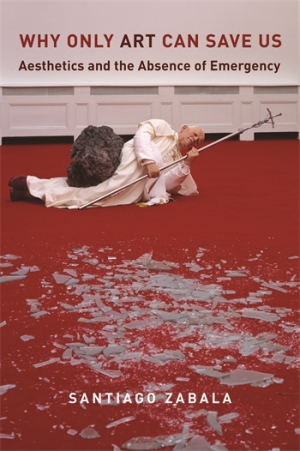
WOACSY.SantiagoZabalaQ: Recently Donald and Melania Trump requested a Vincent van Gogh painting from the Guggenheim, but the museum responded with a counteroffer, Maurizio Cattelan’s America, a gold toilet. I wonder if your book, which also features a work by the Italian artist in the cover, should also be interpreted as a move similar to Nancy Spector’s (the museum’s chief curator), a provocation and intervention in the public sphere. After all, you call for “existential interventions” through art.

SZ: I’m not certain whether Cattelan and Spector wanted to provoke or educate the Trump family. Either way, Cattelan’s America is a serious work of art that, as we can see, has managed to intervene in the public sphere. The sculpture on the cover of my book is called The NinthHour (1999) and depicts Pope John Paul II lying on the ground after being struck by a meteorite. Recently, Paolo Sorrentino used it in the opening credits of his TV series The Young Pope. The sculpture’s title alludes to the ninth hour of darkness that fell upon all the land when Christ cried out, “Eli, Eli, lema sabachthani?”—“My God, my God, why have you forsaken me?”—but the book’s title paraphrases Martin Heidegger’s famous response when he was asked whether we could still have any influence now that we are so overpowered by technology: “only a God can still save us.” My intention is to point out, now that God is dead and we are even more overpowered, perhaps it's art’s time to save us. The intervention you refer to has to do with demands of art in the twenty-first century, which are linked to our continued existence, that is, our salvation.

More here.

Cell by Cell, Scientists Map the Genetic Steps as Eggs Become Animals

Jordana Cepelewicz in Quanta:

ScreenHunter_3070 Apr. 28 19.23

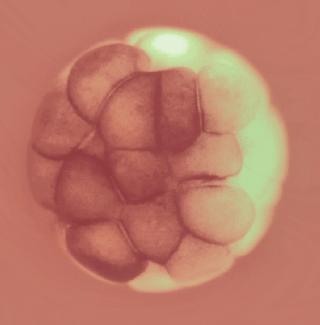
A fertilized egg divides first into two cells, then four, then eight and so on. Meanwhile, those cells progress from undifferentiated blobs in a cluster to more diverse identities associated with heart, brain, muscle, blood, bone and other tissues. Though the overall process is familiar, scientists have not understood it in much detail.

But three papers appearing today in Science are changing that, as they unveil work with major significance for the field of developmental biology. Using a combination of gene sequencing and mathematical methods, the researchers traced the patterns of gene expression in every cell in embryos of zebra fish and of Western clawed frogsthrough many stages of development during their first 24 hours.

The results revealed, at a previously impossible resolution and scale, the genetic and developmental trajectories that embryonic cells follow to their eventual fates in fully differentiated tissues. Surprising new insights emerged as well: Many biologists, for example, believed that embryonic cells always followed branching paths toward maturity that committed them irrevocably to certain fates. But the new data indicates that cells can, in effect, sometimes “loop back” to follow a different path, and that cells with different developmental histories can sometimes end up as the same type of cell.

More here. [Thanks to Stefan Saal.]

The Islamic State’s Lingering Legacy among Young Men from the Mosul Area

Scott Atran, Hoshang Waziri, Ángel Gomez, Hammad Sheikh, Lucia Lopez-Rodriguez, Charles Rogan, and Richard Davis at the Combating Terrorism Center:

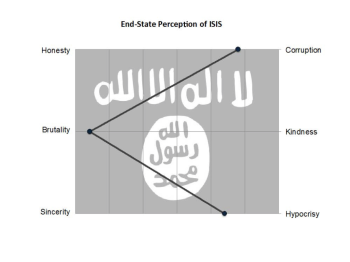
Atran_Figure-1From July to October 2017, the authors conducted in-depth, one-on-one interviews, including evaluation on a series of psychological measures, with young Sunni men just coming out from under Islamic State rule in Mosul, Iraq, and the surrounding region. To a significant degree men like this are likely to shape and be affected by the post Islamic State political and security landscape in the region. The goal was to better understand how people who had lived under the Islamic State perceived: 1) the Islamic State’s rule; 2) the Islamic State’s political and insurrectional prospects following military defeat by the Iraqi Army and allied militia with aid from an international coalition dominated by the United States and Iran; 3) their own political future; and 4) their willingness to make costly sacrifices for their primary reference groups and for political and religious ideals.

The multidisciplinary and multinational team of researchers has been working on the frontlines of the fight against the Islamic State since the beginning of 2015.a In their research with frontline combatants in Iraq (peshmerga, Iraqi Army, Sunni Arab militia, Kurdistan’s Workers’ Party (PKK), and captured Islamic State fighters), the authors employed an initial set of psychological measures to gauge willingness to make costly sacrifices.1 In these frontline studies, whose results the authors’ replicated in more than a dozen online studies among thousands of Western Europeans outside the conflict zone, the authors investigated two key components of a theoretical framework they termed “The Devoted Actor” to better understand people’s willingness to make costly sacrifices.2

The Devoted Actor framework integrates research on “sacred values” that are immune to material tradeoffs—whether religious or secular, as when land or law become holy or hallowed—and “identity fusion,” which gives individuals a visceral feeling of oneness and invulnerability to a primary reference group to which they belong.

More here.

Where the wild tales are: how stories teach kids to nurture nature

S. F. Said in Nature:

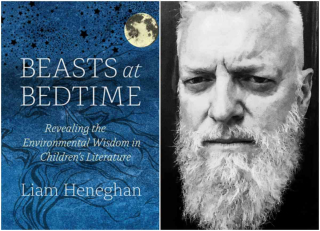
Heneghan_CollageToday’s children will face huge environmental challenges, from climate change to oceanic pollution. The International Union for Conservation of Nature, for instance, has noted that nearly one-quarter of mammals are globally threatened or extinct. In Beasts at Bedtime, ecologist Liam Heneghan argues that books can help children deal with these grim eventualities.

Heneghan’s assertion is partly a response to the ‘No Child Left Inside’ movement, sparked by journalist Richard Louv’s 2005 Last Child in the Woods. Heneghan supports Louv’s aim of re-introducing today’s digital-drenched children to outdoor life. But he also believes that reading and being read to help children gain environmental literacy, enabling them to engage with nature in profound ways. To make his case, Heneghan discusses around 20 children’s books in detail, and analyses their environmental themes.

His focus is on classics such as Beatrix Potter’s Tale of Peter Rabbit (1902) and L. Frank Baum’s The Wonderful Wizard of Oz (1900): British and North American texts that have found a global readership. The selection is drawn from his experiences as a parent and reader, and from recommendations. In lists provided by US professional teachers’ organization the National Education Association, for example, he finds that every book recommended for preschoolers is environmentally themed. Meanwhile, 60% of those recommended for 4- to 8-year-olds “feature animals or are in other ways concerned with nature”, as do 50% for 9- to 12-year-olds.

More here.

The Endless Summer by Madame Nielsen

Endless-summerJoseph Schreiber at The Quarterly Conversation:

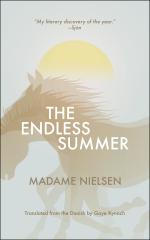
The Danish transgender performance artist, has, over the course of her career, presented, masqueraded, invented, and re-invented herself many times, even having her birth-identified self, Claus Beck-Nielsen, declared dead along the way. (He was ultimately revived when the lack of any identity altogether proved too difficult to sustain.) The multi-faceted Madame Nielsen is a novelist, poet, artist, performer, stage director, composer, and singer. With The Endless Summer, newly released from Open Letter Books in a translation by Gaye Kynoch, Nielsen weaves a tale that sidesteps the common expectations of narrative progress and character development. Rather, an odd cast of characters is choreographed through a shifting, dreamlike landscape openly reminiscent of David Lynch, complete with digressions into side stories, tales from the past, and glances into the future. The stories are continually being started, interrupted, and resumed again. The influence of Proust and other French novelists is evident, but Nielsen’s wistful narrator, who will ultimately become an actor, demonstrates a strong theatrical sensibility throughout.

The novel opens with a simple statement, the oddly incomplete sentence: “The young boy, who is perhaps a girl, but does not know it yet.” This phrase will be echoed, with slightly different shades, gradation, and detail, throughout the text. Likewise, the other main characters’ defining characteristics or curious features will be continually evoked, elaborated, and elegized as the tale unwinds.

more here.