
Dominion
God separated the light from the darkness,
but I have a light switch.
Once there was morning and evening,
but now someone has torn the heart out of a mountain,
and they’re burning it for me.God gave every green and growing thing,
every seed and every fruiting tree,
to all the beasts and birds for food,
but my desire sets the market price.
The patents are in my name.If Noah had known what I know
about ventilated barns and gestation crates
he could have fit more than two of every animal in that ark.
He could have made them forget
they were animals at all.I surveyed creation. I saw that it was profitable.
My ads fall from satellites like doves.
You’d be surprised what I can turn into a weapon.
You’d be surprised how many people
will wave my flag as they die.God divided the light from the darkness,
but I have a light switch, a patent, a nation, a bomb,
I have mountains to burn and rivers to dye red and gray.
The old world has passed away. This is my new heaven and new earth.
Let all the people say “Amen.”
by Claire Hermann
from Split This Rock

 There is a dial in front of you, and if you turn it, a stranger who is in mild pain from being shocked will experience a tiny increase in the amount of the shock, so slight that he doesn’t even notice it. You turn it and leave. And then hundreds of people go up to the dial and each also turns it, so that eventually the victim is screaming in agony.
 As
As  ‘The Divine Comedy is a book that everyone ought to read,’ according to Jorge Luis Borges, and every Italian has read it. Dante’s midlife crisis in the dark wood, his journey down the circles of hell, up the ledges of Purgatory and into the arms of Beatrice is mother’s milk to Italian schoolchildren. Today lines from La divina commediaare printed on T-shirts; before the war, as Primo Levi recalled, there were ‘Dante tournaments’ on the streets of Turin, where one boy would recite the start of a canto and his rival would try to complete it. I had two Italian students in an English literature seminar last year who sniggered when I mentioned the once standard Penguin translation of the Comedy by Dorothy L. Sayers, inventor of the Dante-loving Lord Peter Wimsey. ‘Dante in translation,’ they explained, ‘isn’t the real Dante.’ But, as Ian Thomson shows, the real Dante is hard to find even in Italian. Over 800 pre-Gutenberg editions of La divina commedia are known to exist, most marred by errors and nibbled by rats, but because none is in Dante’s hand we can’t be sure what he actually wrote. An example of the way his poem was doctored by the copiers can be seen by the fact that it was Boccaccio (author of The Decameron and Dante’s first biographer) who added the divina to what Dante had simply called La commedia.
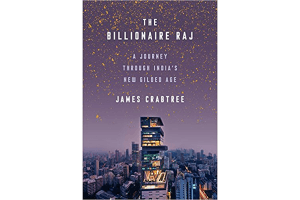 James Crabtree’s The Billionaire Raj: A Journey Through India’s New Gilded Age devotes the bulk of its length to the new cadre of super-rich that has arisen in India’s newly resurgent economy, but it opens with an important point: India is still an intensely poor country. The average citizen earns less than $2,000 a year, and the low-end of what constitutes the richest one percent of the country is only around $33,000. The richest one percent of the country owns more than half the nation’s wealth; it’s a starker income disparity than virtually any other country on Earth.
 In his new book, In Defense of Public Lands: The Case against Privatization and Transfer (Temple University Press), Steven Davis, political science professor at Edgewood College in Madison, Wisconsin, takes on the “privatizers.” His book is an even-handed and thorough look at public lands in the United States. Although public support for wilderness, national parks, and other public lands
  Cordelia Fine in the Financial Times:
 Richard V Reeves at Aeon:
 Eric Levitz in NY Magazine [h/t: Leonard Benardo]:
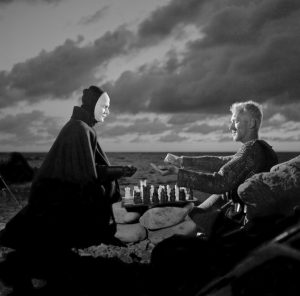 A common argument against Bergman is that he is fated for oblivion because his movies did not advance the art of film; they were

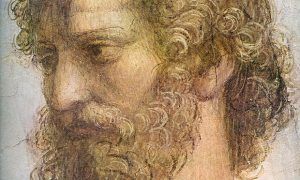 It’s hard to imagine, at this distance, how it must have been to be Aristotle in his own time: cutting-edge rather than foundational. We see him standing at the beginning of western philosophy and surveying something like virgin territory. Did it feel like that at the time? He didn’t know, obviously, that he was an Ancient – at the start of things, as we now see it, rather than, say, at their end. He was interdisciplinary before there were really disciplines to worry about. Look at him, romping across the territory of possible human knowledge like a big dog snapping at butterflies, or
 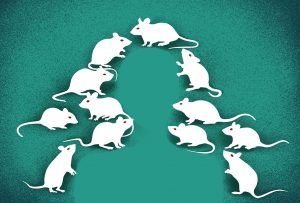 Lindsey Abel takes an anaesthetized mouse from a plastic container and lays it on the lab bench. With a syringe, she injects a slurry of pink cancer cells under the skin of the animal’s right flank. These cells once belonged to a person with tongue cancer, a former smoker whose disease recurred despite radiation and surgery. The mouse is the second rodent to harbour them, creating a model for cancer known as a patient-derived xenograft (PDX). The tumour that grows inside will provide cells that can be transferred to more mice. Abel has performed this procedure hundreds of time since she joined Randall Kimple’s lab at the University of Wisconsin–Madison. Kimple, a radiation oncologist, uses PDX mice to carry out experiments on human tumours that would be impractical in people, such as testing new drugs and identifying factors that predict a good response to treatment. His lab has created more than 50 PDX mice since 2011. Kimple’s lab is not the only one doing this; PDX mice have exploded in popularity over the past decade and are beginning to supplant other techniques for modelling cancer in research and drug development, such as mice implanted with cancer cell lines. Because the models use fresh human tumour fragments rather than cells grown in a Petri dish, researchers have long hoped that PDXs would model tumour behaviour more accurately, and perhaps
 When the European Union slapped Google with a $5 billion antitrust fine recently, President Trump readied his exclamation points,