
by Carl Pierer
Socialism is in crisis. Until a few years ago, this mantra kept being repeated and a terminally ill  sickness was constantly diagnosed for the once powerful idea. And still, after the impressive Sanders campaign of 2016, the electoral success of Jeremy Corbyn in the 2017 general election, as well as the – for many – surprising victory of Alexandria Ocasio-Cortez in the democratic primary in New York, writers continue to assure us that the idea is, if not dead, having serious problems. In any case, the idea of socialism seemed until recently a relic of the industrial past with little to say about contemporary society.
In his brief book “The Idea of Socialism: Towards a Renewal”, which first appeared in its German version in 2015 and then again in 2017, appended with 2 talks given during award ceremonies, Axel Honneth attempts to update socialist ideas for the 21st century. Honneth observes that what once was an idea to inspire enormous popular movements and demanded to be taken seriously even by its most ardent detractors, has lost almost all of its force. The formulation of socialist utopias, if it has not ceased to exist entirely, has become rarer and their attraction diminished. To cite Jameson: “(…) it is easier to imagine the end of the world than to imagine the end of capitalism”[i]. Honneth, a current descendent of the Frankfurt School and drawing inspiration from Hegel, Dewey, and Habermas, thus raises the question of why the idea of socialism has lost its ability to unveil the reification of the status quo. Read more »
 First came the books describing just how much worse economic inequality had become over the past 20 years, with all the dramatic political implications now impossible to ignore. Then there were the tomes about globalization (including my own, I admit), detailing the West’s unfettered pursuit of neoliberal policies that abetted all this unfairness.
 In a paper published today in the journal
  When I got to Walter Benjamin Platz, I figured I was in the wrong place. It wasn’t that I was lost, or had failed to follow the map correctly—it was that the place was wrong.
 It is Friday afternoon and a lively and diverse crowd starts to gather under a blazing August sun on the banks of the Tigris River, just metres away from al-Mutanabi Street, the Iraqi capital’s historic bookselling centre.
 One day in March 2010, Isak McCune started clearing his throat with a forceful, violent sound. The New Hampshire toddler was 3, with a Beatles mop of blonde hair and a cuddly, loving personality. His parents had no idea where the guttural tic came from. They figured it was springtime allergies. Soon after, Isak began to scream as if in pain and grunt at his parents and peers. When he wasn’t throwing hours-long tantrums, he stared vacantly into space. By the time he was 5, he was plagued by insistent, terrifying thoughts of death. “He would smash his head into windows and glass whenever the word ‘dead’ came into his head. He was trying to drown out the thoughts,” says his mother, Robin McCune, a baker in Goffstown, a small town outside Manchester, New Hampshire’s largest city. Isak’s parents took him to pediatricians, therapy appointments, and psychiatrists. He was diagnosed with a host of disorders: sensory processing disorder, oppositional defiance disorder, and obsessive-compulsive disorder (OCD). At 5, he spent a year on Prozac, “and seemed to get worse on it,” says Robin McCune. The McCunes tried to make peace with the idea that their son might never come back. In kindergarten, he grunted and screamed, frightening his teachers and classmates. “He started hearing voices, thought he saw things, he couldn’t go to the bathroom alone,” Robin McCune says. “His fear was immense and paralyzing.”
 In
In  Is capitalism immoral? Bill Gates, the second-richest man in the world, doesn’t believe that it has to be. In a recent interview, Gates argued that anyone with money has an ethical responsibility to do something positive with it. “Once you’ve taken care of yourself and your children, the best use of extra wealth is to give it back to society.” Gates himself lives this approach, recently giving away $4.6 billion in Microsoft shares to his philanthropic organization, the Bill and Melinda Gates Foundation. “We are impatient optimists,” its webpage declares, “working to reduce inequity.”
 The awful news that all but two penguin chicks have starved to death out of a
  Arguably the most alarming thing about the war against Jones is the fact that media leftists have been so quick to boast about the activist role they played in getting him silenced. In years past, the “mainstream” press always took a position of “We just report, we don’t influence,” like they’re bound by Jor-El’s stern proscription against influencing human history. And sure, they “influenced,” they just never admitted it. But these days, “respectable” journos are openly
 That an author whose chosen pseudonym is a conscious inversion of Napoleon Bonaparte would have a fondness for provocation is no real surprise. Malaparte’s work falls uneasily in the gulf between fiction and nonfiction: 1957’s The Kremlin Ball, newly translated into English by Jenny McPhee, is subtitled (Material For a Novel), and its opening pages set out exactly how fiction and nonfiction will intermingle. “The characters did not originate in the author’s imagination, but were drawn from life, each with his own name, face, words, and actions,” Malaparte writes.
 For readers not of a nautical persuasion, knowing that Captain James Cook’s famous expedition of 1768–71 took place aboard the Endeavour, and that the Endeavour was a type of vessel known as a Whitby collier, probably marks the limit of their interest in the ship that took him to the South Seas. (The really well informed may also know that the Resolution, the flagship for Cook’s second voyage to the South Seas, was the same type of vessel.) While the town of Whitby makes some capital out of its linkage with Cook via a museum, and while maritime historians and enthusiasts have researched the Endeavour exhaustively, the general reader has had no further reason to consider Cook’s ship. Until now, that is. Peter Moore’s elegant and entertaining new book offers us a fascinating biography of the Endeavour, using it as a window onto the broader world of the mid-18th-century English Enlightenment.
 V
V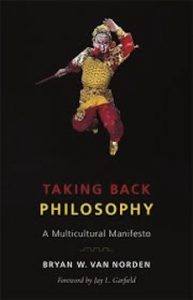 “IT’S HARDER to get two philosophers to agree,” says the ancient savant, “than two water-clocks.” Philosophers love to disagree, and disagreement is the lifeblood of philosophy. The tools and techniques of philosophy — debate, reasoned deliberation, weighing of evidence, clarification of concepts, consideration of consequences — are all instruments in the management of disagreement. And there is disagreement whenever there is reflection — whenever, that is to say, people think about things, and seek to comprehend and make sense of what is going on in the world around them, or between themselves and others, or inside their own minds. Then the question arises: who is right? Which brings in its train further reflection on who has the better evidence and the sounder arguments and so, inevitably, still more reflection on what it is that counts as good or bad in matters of evidence and argument. Even before the times of Socrates and the Buddha, in the oldest of the surviving Upanishads, we find these questions, and they have been asked ever since by people everywhere.