
Evan Goldstein in the Chronicle of Higher Education:
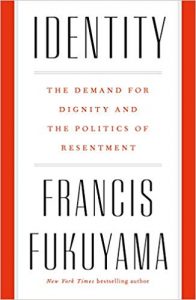 Francis Fukuyama is tired of talking about the end of history. Thirty years ago, he published a wonky essay in a little-read policy journal and became an overnight intellectual sensation. His argument, that the triumph of Western-style liberal democracy marked “the end point of mankind’s ideological evolution,” remains an iconic declaration of the post-Cold War world. He’s been defending it ever since. He’s regularly asked if some event — September 11, the 2008 financial crisis, Donald Trump’s election — has invalidated his thesis. His answer is no.
As Fukuyama sees it, the confusion stems from a misreading (or a failure to read) the last few chapters of his 1992 book, The End of History and the Last Man (Free Press). It was there that he fretted about the ability of liberal democracies and market economies to satisfy the human desire for recognition. Liberal democracy can deliver peace and prosperity, but what happens if peace and prosperity aren’t enough?
It’s a question Fukuyama returns to in a new book, Identity: The Demand for Dignity and the Politics of Resentment (Farrar, Straus and Giroux). The answer, he suggests, is all around us: A global surge of identity politics, which has in turn fueled populist nationalism, authoritarianism, religious conflict, and democratic decline.
More here.
 AMERICAN POETRY IS thriving. American poetry is in decline. The poetry audience has never been bigger. The audience has dropped to historic lows. The mass media ignores poetry. The media has rediscovered it. There have never been so many opportunities for poets. American poets find fewer options each year. The university provides a vibrant environment for poets. Academic culture has become stagnant and remote. Literary bohemias have been destroyed by gentrification and rising real estate prices. New bohemias have emerged across the nation. All of these contradictory statements are true, and all of them are false, depending on your point of view. The state of American poetry is a tale of two cities.
 Why, then, should we take a new look at Fabro? In my opinion, it is because of what he can tell us about the possibilities of sculpture.
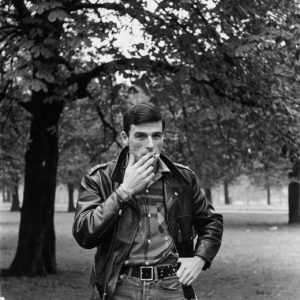 The accepted view of Gunn, as Kleinzahler sums it up, was that in 1954 he ‘had removed himself to California where he would, as was alleged over and over, begin his long decline, undone by sunshine, LSD, queer sex and free verse’. Kleinzahler sought to challenge this idea of the softening of Gunn’s brain in California. ‘The city,’ he wrote, ‘will become his central theme, character and event being played out on its street corners, in its rooms, bars, bathhouses, stairwells, taxis.’ Kleinzahler also notes that, even when the poems became more relaxed and contemporary, ‘the “I” of the poetry’ carried ‘almost no tangible personality. This can be upsetting or disappointing to the contemporary reader, especially the American reader, accustomed to the dramatic personalities behind the voices in recent poetry: Lowell, Berryman, Sexton, Ginsberg, Plath, Hughes, et al. Even in Larkin there exists a strong, identifiable persona, no matter how recessive the tone.’
 In the middle of the day on 11 April 2014, a hooded gunman ambushed Gakirah Barnes on the streets of Chicago’s South Side. A volley of bullets struck her in the chest, jaw and neck. The 17-year-old died in a hospital bed two hours later. To many, her death was just another grim statistic from a city that has been struggling with gun violence. Last year, around 3,500 people were shot in Chicago, Illinois, of which 246 were aged 16 or younger; 38 of those children never celebrated another birthday. But Barnes’s death was unusual for several reasons. She was a young woman in an epidemic of violence that largely affects black men. She also had an Internet following. Barnes had a reputation as a ‘hitta’ — or killer — with rumours of at least two dead bodies to her credit. Although never charged with murder, she embraced the persona, posing in photos and videos with guns in her hands and making threats against rival gangs on Twitter. In a morbid modern irony, it’s likely that she revealed her location in real time to her killer through a tweet. Police have yet to charge anyone in connection with her murder.
 What are the limits of freedom of speech? It is a pressing question at a moment when conspiracy theories help to fuel fascist politics around the world. Shouldn’t liberal democracy promote a full airing of all possibilities, even false and bizarre ones, because the truth will eventually prevail?
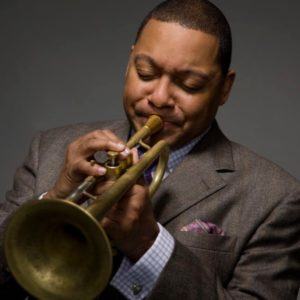 Jazz occupies a special place in the American cultural landscape. It’s played in elegant concert halls and run-down bars, and can feature esoteric harmonic experimentation or good old-fashioned foot-stomping swing. Nobody embodies the scope of modern jazz better than Wynton Marsalis. As a trumpet player, bandleader, composer, educator, and ambassador for the music, he has worked tirelessly to keep jazz vibrant and alive. In this bouncy conversation, we talk about various kinds of music, how they might relate to physics, and some of the greater challenges facing the United States today.
 When people ask about my religion I usually just say I’m an atheist and I have no religion. If they continue, I usually give them what they want, and state my parents are Muslim, or I am from a Muslim background (most of the time the people asking for what it’s worth are themselves Muslims, or from a Muslim background, or, not American). I never say that I used to be a Muslim because that’s really not true.
 Book Six brings My Struggle, after 3,600 pages, to an end. And so it has been subtitled, ominously—“The End.” Here, the writer who writes (and writes) about himself must write about that experience, too, and we duly find out what dinner-table conversation was like at the home of that very determined Norwegian who, between 2007 and 2011, got up at 4:30 am every weekday, sat down to his desktop computer in Malmö, Sweden, and for a few hours did his best to mention in print all that was unmentionable about his life, stopping only when his three small children woke up and demanded he make them breakfast. Book Six tells this story: the struggle behind the Struggle. No one will be shocked to discover that all the prizes and praise have only brought Karl Ove more pain. There’s also the small problem of having linked his name for all time with you-know-who. “Turns out he’s read Mein Kampf,” as his then-wife, Linda Boström, tells him of a new friend. “Hitler’s, that is.” She met her friend at the Malmö mental hospital. She went there voluntarily not long after reading Book Two, among whose radical aesthetic moves was a scene recalling the time Karl Ove got drunk and tried to cheat on her. “It’s always struck me that I was a sailor’s wife,” she tells him. “But now it’s the other way around. Now I’m the sailor.”
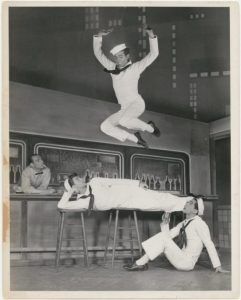 At the tender age of 25, Robbins made his first splash as a choreographer with a story ballet about three sailors on shore leave. The thirst for beer, adventure, and women brings out the primal urges of youth. Aptly titled
 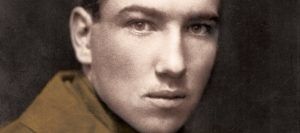 “My experiences in the First World War have haunted me all my life,” Edmund Blunden confessed the year before he died, “and for many days I have, it seemed, lived in that world rather than this.” Siegfried Sassoon felt much the same, and despite producing many volumes of verse on other topics both men would continue to be fêted as war poets.
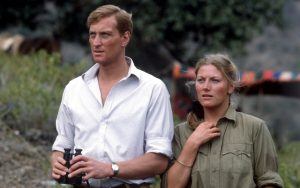 Paul Scott, author of The Jewel in the Crown (1966), said of India: “It was mysteriously in our blood and perhaps still is.” Despite the comparatively small number of British who actually went there – in 1901, at the height of the Raj, there were only about 155,000 in the subcontinent – there was an extraordinary bond. Some families didn’t come home for centuries, but stayed in India “generation after generation, as dolphins follow in line across the open sea,” as Kipling put it. David Gilmour, author of Curzon (1994) and The Ruling Caste (2005), has tackled this rich history in The British in India, from the granting of the East India Company’s charter in 1600 to the mid-1960s, when the hippy invasion began. Although the chronology is never in doubt, his treatment is grouped by topic – intimacies, formalities, voyages, working life, and so on. The result is somewhat like a tapestry.
 In a study carried out over the summer, a group of volunteers drank a white, peppermint-ish concoction laced with billions of bacteria. The microbes had been engineered to break down a naturally occurring toxin in the blood. The vast majority of us can do this without any help. But for those who cannot, these microbes may someday become a living medicine. The trial marks an important milestone in a promising scientific field known as synthetic biology. Two decades ago, researchers started to tinker with living things the way engineers tinker with electronics. They took advantage of the fact that genes typically don’t work in isolation. Instead, many genes work together, activating and deactivating one another. Synthetic biologists manipulated these communications, creating cells that respond to new signals or respond in new ways.
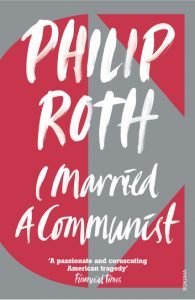 The link to Charles McGrath’s ‘No Longer Writing, Philip Roth Still Has Plenty to Say’ which appeared in the New York Times in January, only a few months prior to Roth’s death in May this year, was forwarded to me by a friend who thought I might find the article interesting. How indebted I am to my friend that he thought of me in those terms, for the sending of that article rekindled my acquaintance with Roth; life’s events and circumstances had left my reading of his work to the margins.
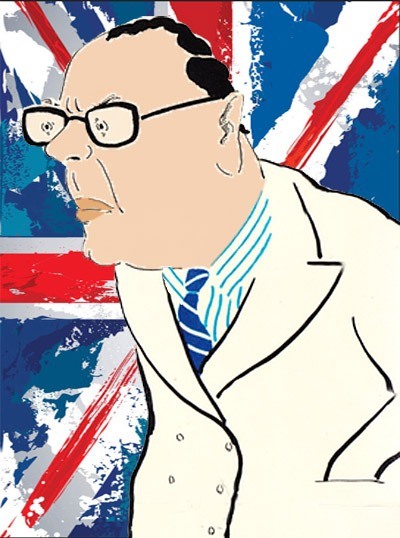 The career of Kenneth Widmerpool defined an era of British social and cultural life spanning most of the 20th century. He is fictional – a character in