
Paul Krugman in his newsletter:
Everyone loves enshittification. Not the thing itself, of course. But Cory Doctorow’s neologism was an instant hit, neatly encapsulating the public’s growing disappointment, sometimes bordering on rage, with what was happening to internet platforms. His pithy summary of the process was also brilliant:
Here is how platforms die: first, they are good to their users; then they abuse their users to make things better for their business customers; finally, they abuse those business customers to claw back all the value for themselves. Then, they die.
I argued earlier this week that enshittification has a lot to do with the way the tech industry has fallen out of public favor:

Source: Gallup
And the increasingly anti-democratic rage of tech bros is, I’d argue, in part driven by their awareness that people don’t love and admire them the way they used to, and their belief that they should still be the culture heroes they once were.
But without detracting from the brilliance of Doctorow’s discussion, I’ve become convinced that his analysis is too narrow, focusing only on certain kinds of social platforms. In fact, the basic logic of enshittification — in which businesses start out being very good to their customers, then switch to ruthless exploitation — applies to any business characterized by network effects.
More here.
Enjoying the content on 3QD? Help keep us going by donating now.
 In the weeks and months
 When Katie Thurston was diagnosed with Stage IV metastatic breast cancer earlier this year, at age 34, people kept telling her they knew someone with the same diagnosis. Solidarity, you might think. A helpful way to relate. Not exactly: Their friend or family member had died. This scenario is “pretty recurring,” says Thurston, who starred on season 17 of The Bachelorette, and while people have good intentions—they want you to know they have experience with what you’re going through—the remark doesn’t land well. “We understand that death is a possibility in this diagnosis,” she says. “I don’t need to hear that.”
 Many people sense that the United States is undergoing an
 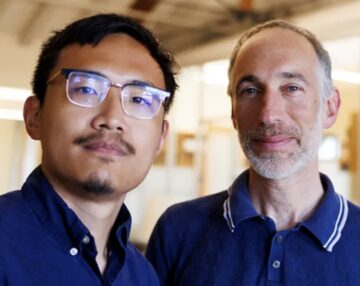 Where did Europe’s distinct Uralic family of languages — which includes Hungarian, Finnish, and Estonian — come from? New research puts their origins a lot farther east than many thought.
 My colleague Joseph Lowndes and I have been
  Put a bagel in a toaster oven and push a button. In a few seconds, heating elements inside the oven glow red and heat the bagel. The action seems simple — after all, ten-year-olds routinely toast bagels without adult supervision. Matters look different if you inquire into what must happen to make the oven work. Pushing the button engages the mechanism of an incomprehensibly vast multinational network: the North American electrical grid.
 Less than two hours after sunrise, with the shadows still blue and slanting hard in a dense growth of balsam firs and spruces, the baby bird blundered into a fine black net strung along the ridgeline of Mount Mansfield, at 4,393 feet Vermont’s tallest mountain.
 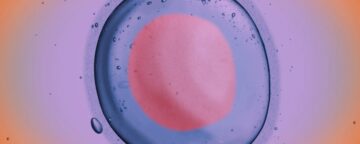 A human female is born with all the egg cells she will ever have. The possibility for the development of new oocytes is zero. Given this constraint, it is crucial that these gametes remain healthy and viable for decades until they are needed to form an embryo. Irrespective of the ‘age’ of the fertilized oocyte, the resulting embryo has the characteristics of a freshly born cell, indicating the existence of mechanisms that counteract accrued cellular damage and keep the egg fresh. What are these processes that drive the prolonged life of human egg cells?
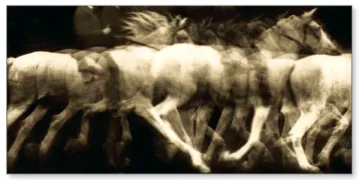 I begin this chapter with three outrageous facts: