
Sam Wineburg in Slate:
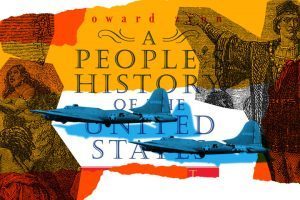 With more than 2 million copies in print, Howard Zinn’s A People’s History of the United Statesis more than a book. It is a cultural icon. “You wanna read a real history book?” Matt Damon asks his therapist in the 1997 movie Good Will Hunting. “Read Howard Zinn’s People’s History of the United States. That book’ll … knock you on your ass.” The book’s original gray cover was painted red, white, and blue in 2003 and is now marketed with special displays in suburban megastores. Once considered radical, A People’s History has gone mainstream. By 2002, Will Hunting had been replaced by A. J. Soprano of the HBO hit The Sopranos. Doing his homework at the kitchen counter, A. J. tells his parents that his history teacher compared Christopher Columbus to Slobodan Milošević. When Tony fumes, “Your teacher said that?” A. J. responds, “It’s not just my teacher—it’s the truth. It’s in my history book.” The camera pans to A. J. holding a copy of A People’s History.
History, for Zinn, is looked at from “the bottom up”: a view “of the Constitution from the standpoint of the slaves, of Andrew Jackson as seen by the Cherokees, of the Civil War as seen by the New York Irish, of the Mexican war as seen by the deserting soldiers of Scott’s army.” Decades before we thought in such terms, Zinn provided a history for the 99 percent. Many teachers view A People’s History as an anti-textbook, a corrective to the narratives of progress dispensed by the state. This is undoubtedly true on a topical level.
More here.
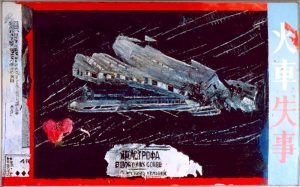 Some memories spring into focus with the unimpeachable clarity of first-hand experience and others flicker around the edges of such clarity in such a manner as to suggest that they aren’t really one’s own recollections but rather variable mental reconstructions of things one has heard, things that however second hand nonetheless made so deep an impression that they feel first hand, earned. Years ago, when I was teaching at the Studio School on Eighth Street, I seem to recall having crossed Washington Square and noticing a man intently making $10 sketch portraits on a French easel of any and all comers.
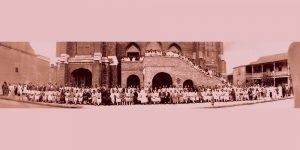 Ten days after a white supremacist carried a gun into a black Charleston church, I was in Los Angeles, listening to a black minister preach about the end of the world. A coincidence of timing, maybe, although the message seemed apt. What could be more apocalyptically evil than a racist massacre within the hallowed walls of a church, an angry young man sitting through a Bible study before slaughtering the nine strangers who had invited him in to pray? Yet on that Sunday, when the pastor talked about the end, he did not mention Charleston or the seven black churches that had been burned throughout the South in the immediate aftermath. Instead, he spoke about fornication. “M-hm,” a woman behind me chimed in, “and gay marriage.” The ladies beside her murmured their assent. Just the day before, the Supreme Court had legalized same-sex marriage, a decision that seemed to disturb the congregation more than anything that had happened in Charleston. I didn’t understand it. How could marriage equality be a sign of the impending apocalypse, but not a church shooting? How could the evils of fornication be a more pressing topic than the wave of racial violence affecting the very congregation sitting in the pews?
 One of the pleasures of reading critic and fiction writer Yahya Haqqi’s essays in Arabic is that I am always astonished by the breadth of his knowledge, the depth of his experience, the nimbleness of his mind and his eloquence. In the collection Crying, Then Smiling, he has a number of eulogies, one of which is for his uncle, Mahmoud Taher Haqqi, who wrote the first Egyptian novel, The Maidens of Denshawi, about the tragedy of Denshawi in 1906 where British soldiers carelessly killed a villager while they were shooting pigeons—the incident ended tragically when villagers were rounded up and executed by the British. Haqqi points out that it was the first novel to focus on fellaheen, peasants, and their problems and opened the way for Mohamed Hussein Haykal’s novel, Zeyneb (1913). Haqqi wrote that his heart trembled when he read The Maidens of Denshawi—which is what good stories should bring about. Haqqi deserves a eulogy, much like the ones he so generously wrote for others, about his place in Egyptian literary heritage. This seems appropriate in light of the recent celebration of the classic black and white film Al-Bostagy, or The Postman, directed by Husayn Kamal (1968), featuring Shukry Sarhan, based on Haqqi’s novella. But one cannot write about this poignant film without mentioning Sabri Moussa, the talented novelist who translated the spirit of Yahya Haqqi’s novella into a suspenseful screenplay. (He also wrote the screenplay for Yahya Haqqi’s Om Hashem’s Lamp.) Sabri Moussa, who died recently, January 2018, deserves a eulogy as well for his film scripts, short fiction, and novels—the unusual sci-fi tale The Man Arrived from the Spinach Field, the mythic fable
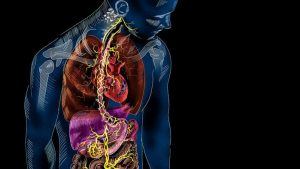 The human gut is lined with more than 100 million nerve cells—it’s practically a brain unto itself. And indeed, the gut actually talks to the brain, releasing hormones into the bloodstream that, over the course of about 10 minutes, tell us how hungry it is, or that we shouldn’t have eaten an entire pizza. But a new study reveals the gut has a much more direct connection to the brain through a neural circuit that allows it to transmit signals in mere seconds. The findings could lead to new treatments for obesity, eating disorders, and even depression and autism—all of which have been linked to a malfunctioning gut. The study reveals “a new set of pathways that use gut cells to rapidly communicate with … the brain stem,” says Daniel Drucker, a clinician-scientist who studies gut disorders at the Lunenfeld-Tanenbaum Research Institute in Toronto, Canada, who was not involved with the work. Although many questions remain before the clinical implications become clear, he says, “This is a cool new piece of the puzzle.”
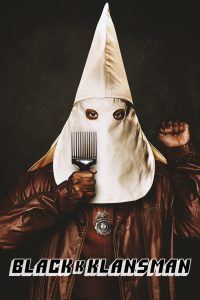 Spike Lee
 Stephen Hawking sadly
  The word “Chinko” means nothing. It is the name given to a river in a place where the river gets lost in thick brush and fields of termite mounds. Chinko Park, established to protect what little is left, is called a national park, but there is nothing national in a place without the rule of law. Chinko’s only defense is a handful of well-trained rangers who spend weeks at a time in the wild, waiting for poachers or armed groups to emerge from the thick bush and attack. This is a dangerous part of the world—everyone knows at least that much.
 On December 31,
 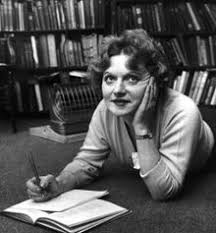 The
The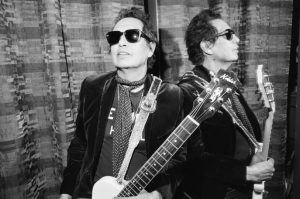 Alejandro Escovedo, the singer and songwriter, likes to have a proper Mexican breakfast before a long drive. “Let’s go here,” he said. He pulled into the back lot of a restaurant called El Pueblo, across from the Tornado bus terminal on East Jefferson Boulevard, in the Oak Cliff section of Dallas. El Pueblo, he said, is where travellers arriving by bus from Mexico often go to eat and to get their bearings. He ordered in Spanish, then remarked that his Spanish was poor. The plates came quickly. Chorizo con huevos. “This is bad_ass_, man,” he said. An elderly vagrant looked in through the window and then walked in. Escovedo gave him a dollar. “When I was small, I used to be able to see the pain in people,” he said.
 When I was 11, I read Little
 Recently, CNN sent their reporter to cover yet another Trump rally (in Pennsylvania), but this time reporter Gary Tuchman was assigned the more specific task of interviewing Trump supporters who were carrying signs or large cardboard cut-outs of the letter “Q” and wearing T-shirts proclaiming “We are Q”.
 In the 1960s, in the sleepy little city of Sialkot, almost in no-man’s land between India and Pakistan and of little significance except for its large cantonment and its factories of surgical instruments and sports goods, there were two cinema houses, all within a mile of our house, No. 3 Kutchery Road. Well three to be exact, the third being an improvisation involving two tree trunks with a white sheet slung between them at the Services club and only on Saturday nights.