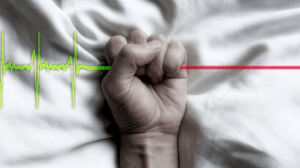
Three years ago I posted on this site “California Dying” about my experience in working for an assisted-dying bill in that state. That bill passed and while it has been involved in litigation by its opponents on a tactical issue of whether it was the right type of issue for a special session of the legislature, it is anticipated that it will survive intact. Since I have a residence in California I am eligible for such assistance should I need it.
Since I live the other six months in Illinois I am now working to achieve a similar result in that state. Medical Aid in dying is now legal in California, Oregon, Washington, Colorado, Vermont, Hawaii and DC. It is legal In Montana in the sense that physicians are immunized from prosecution as long as they have patient consent but there is no regulatory system in place. It is the law in all of Canada.
Another important development is that a number of state medical societies are shifting from the AMA’s stated opposition to assisted dying, to a neutral position.
In 2015 the California Medical Association shifted to a neutral position.
“CMA has removed policy that outright objects to physicians aiding terminally ill patients in end of life options. We believe it is up to the individual physician and their patient to decide voluntarily whether the End of Life Option Act is something in which they want to engage.”Read more »
Lincoln, McClernand, and Allan Pinkerton, Chief of the Secret Service of the United States, at Secret Service Department, Headquarters Army of the Potomac, near Antietam, Maryland, October 4, 1862. Photograph by Alexander Gardner. Albumen silver print from glass negative.
One of life’s great and illicit pleasures is spying on others. Put it on the list with smoking, gossiping, flirting with a stranger, ordering a cocktail at noon, calling in sick to lie abed for the day—all those small and tasty morsels we surreptitiously nibble when no one is looking that satisfy hidden and obscure appetites. Who does not remember creeping around as a child, poking into the corners of mother’s closet, uncovering brother’s stash of candy, cracking sister’s diary, the thrill of anticipation while easing open father’s desk drawer, the jolt of discovering a secret that someone we know has secreted away? Almost from the moment we realize how strange and foreign others are, especially those to whom we live in closest proximity, we peek and we prod and we dig. We spy on them. We know we shouldn’t, it’s wrong to sneak around, to rifle through papers, to examine dirty laundry, but…let’s take a peek. A small peek. Just a quick peek. It is an undeniable and delicious indulgence to do so.
The pleasure of spying is an erotic one, and not because it is prohibited or because the secrets one learns are sexual in nature. Recall that pornographic sex becomes boring the moment it has penetrated the last crevice, fleshed out the last secret, and left nothing to the imagination. There is no writer that will put you to sleep faster than the Marquis de Sade. Trust me. Spying, like knowledge, is erotic, precisely because it is always unfulfilled. One never actually gains the knowledge that would satisfy the appetite that seeks it. The pleasure lies in the expectation of discovery, not the thing discovered. How quickly one finds that, having reached over the wall and plucked a secret from someone else’s garden, the secret begins to wither and dry, to lose its luster and allure.
Spying, intelligence gathering, learning, gaining knowledge—these are not only synonymous acts. The charge they deliver is the same, and it is erotic. This is why the popular imagination so willingly and uncritically associates Commander James Bond, secret agent, with beautiful and accommodating women, even though we know that most spies are probably flabby, paper-shuffling, number-crunching geeks. Bond is a spy, so he knows things, and his job is to learn more things, and that’s what’s sexy about him. The job itself is sexy because the job is never finished; there is always another secret to be discovered, a mission to be undertaken. It’s not about the running and the jumping and the fighting, the fast cars, the good suits and the fancy gadgets. It’s not the tools that get the girls. It’s the trade.
The artist takes part in this trade too. Read more »
Democracy is many things: a form of constitutional republic, a system of government, a procedure for collective decision, a method for electing public officials, a collection of processes by which conflicts among competing preferences are domesticated, a means for creating social stability, and so on. But underneath all of these common ways of understanding democracy lies a commitment to the distinctively moral ideal of collective self-government among political equals. And this commitment to the political equality of citizens is what explains the familiar mechanisms of democratic government. Our elections, representative bodies, constitution, and system of law and rights of redress are intended to preserve individual political equality in the midst of large-scale government. Absent the presumption of political equality, much of what goes on in a democracy would be difficult to explain. Why else would we bother with the institutional inefficiency, the collective irrationality, and the noise of democracy, but for the commitment to the idea that government must be of, for, and by the People, understood as political equals?
To be clear, the democrat’s commitment to the political equality of the citizens does not amount to the idea that all citizens are the same, or equally good and admirable, or equal in every respect. Political equality is the commitment to the idea that in politics, no one is another’s subordinate. Put differently, among political equals, all political power is accountable to those over whom it is exercised. Accordingly, although in a democracy there are laws and rules of other kinds that all citizens are obligated to obey, no one is ever reduced to being a mere subject of legislation. In a democracy, even when a law has been produced by impeccably democratic processes, citizens who nonetheless oppose it may still enact various forms of protest, critique, and resistance. Under certain conditions, citizens may also be permitted to engage in civil disobedience. Once again, the democratic thought is that where citizens have rights to object, oppose, and criticize exercises of political power under conditions where government is accountable to its citizens, they retain their status as political equals even while being subject to the law. In this way, democracy is commonly thought to be the only viable response to the moral problem of reconciling the political power with the fundamental equality of those over whom power is exercised. Read more »
Like twins, light and heat are born from the same flame. Each has an attractive and destructive force. For light, it’s illumination and blindness. For heat, warmth and burning.
What you experience when you approach a flame is a matter of proximity and duration. How long will you keep your eyes there, keep your hand there? To be a guest in this house means to know your place.
Yet like moths, we cannot help but be drawn in. It sounds hedonistic, but oftentimes it’s sacrificial, to throw ourselves so passionately at what can enlighten or smite us.
Perhaps self-indulgence and self-sacrifice are of the same coin. Perhaps we transgress what nature warns us because it’s what our nature instructs us to do. Maybe we dream of limitlessness, to benefit ourselves or others. The sun spots, the burn blisters, melanoma down the line – mere slaps on the wrist, limitations of our anatomy. We need not be bound by that! We watch Icarus drown – even chide him while he’s sinking – and continue to play with fire.
It’s an endearing foolishness. The philosopher Arthur Schopenhauer established what we call today the porcupine dilemma: we want to huddle closely in winter, but can’t because of our quills.
It’s frankly a miracle that on an interpersonal level we still attempt to fan each other’s inner flames, even with the risk of getting singed. Or that we cuddle at night when there’s nails and fists and teeth and kitchen knives and drawer guns and just the right words to end each other in a heartbeat. But that’s the point, isn’t it? That all that is possible… and yet we still. It wouldn’t be worth it if it weren’t really worth it. Read more »
I wanted to transform The way people sometimes change Into birds or trees— Their skin begins to ripple Like a current is Bodying through them— It puckers into stems That feather out, or drip Down into rust-colored leaves.
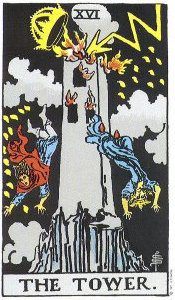
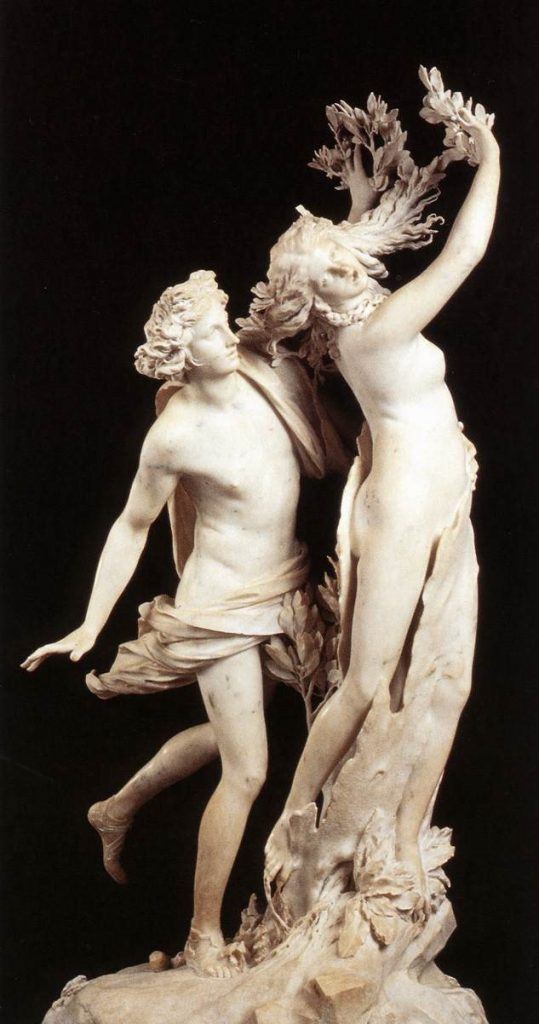
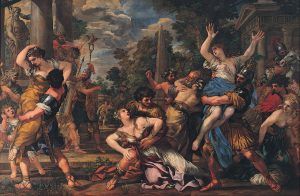
I write this as Saturday begins to wane on the long Columbus Day weekend while I listen on the radio to the speeches given by senator after senator prior to the final confirmation vote for Bret Kavanaugh as Associate Justice on the Supreme Court of the United States of America. The vote is scheduled for 3.30 p.m. October 6, 2016. I listen to their conflicted words in the Senate of the United States pleading yes or no, or yes and no. Conjuring images, I am reminded of that Roman mythology and the artists’ rendition of it, of the Rape of the Sabine Women.
The idea and basis of the State is illustrated by artists through a rendition of this mythology for its first founding. The idea of State as we know it is based on this concept and definition of family and marriage in which there are unequal members: some to be served and others to serve; some to consume while others to produce; some to own and others to be owned; some to rule and others to be ruled; some to be strong and continuously strengthened by all means necessary and others to be weak and be weakened by all means necessary. All this a must for the good of the State—and the spirit vested into it through this definition of family. Read more »
Recently the person whom I had been in a serious cohabiting relationship with for the past few years disappeared. Not in the Unsolved Mysteries kind of way, but in the “I just ghosted you because I can’t deal with breaking up with you in person” kind of way. She was spending a month working at an artisan’s residency in Seattle, when, one week in, she suddenly stopped responding to any correspondence. After a few weeks I finally spoke on the phone with R and she said that she simply had a change of heart and was now going to be living with her sister, shortly afterward arranging to have her belongings packed and moved by professionals. I didn’t see this coming – R never let on that anything was amiss, going so far as to mailing me a letter during that first week at the residency declaring her love and desire for marriage, kids, the whole nine yards. We rarely had arguments, everything was good. She had simply changed her mind. I was surprised.
Now I’m sure this sort of thing happens all the time. And it’s reasonable that she wanted something else out of life, something that I could not offer. But allow me to ruminate on this surprise for a moment. I was surprised because I had assigned my highest subjective commitment of trust to her, beyond anybody else. After all, you place trust in someone that you deem trustworthy. Trustworthiness is not an inherent quality to any given person, it is an evaluation that you yourself make about the apparent reasons for why you ought to trust another. But it is not without risk: whenever you choose to trust someone you take a gamble on whether or not your trust will be broken, which can result in being hurt emotionally or otherwise. Read more »
Here are some well-known facts. Human beings are limited beings. We take up a limited amount of space, we exist for a limited amount of time, and, in that time, we move around in a relatively confined area. When it comes to the substance of our lives we constantly make choices that limit our options going forward, and we must often choose one path over another in a way that sometimes (maybe, often) forecloses the other path forever. It’s hard to even conceive of what it could mean for us to not be limited in these ways. But here’s one conceivable way we could be less limited. What if there could be numerically more of us? What if, for example, instead of choosing between paths we could make copies of ourselves and go both ways?
Since we can’t do that, we might wonder why the question is even worth asking. I am tempted to say it’s because we might be able to do that one day (or that it may, in fact, be happening to us right now, though we don’t know it) – but, of course, that’s not why. It may not be worth asking such a question. But if it is, it will be because it tells us something about ourselves right now.
So, would it be better if there were more of you?
That’s not quite the question I want to answer. It seems clear to me that the world would be a better place if there more Shakespeare’s and more Virginia Wolff’s, more Ada Lovelace’s and more Einstein’s, more Gandhi’s and more Ruth Bader Ginsburg’s – not to mention more Denis Johnsons’. I don’t mean that it would be better if there more people like, for other examples, Mac McCaughan’s or Martin Luther King, I mean the world would be better if there were numerically more of these particular people – or, if you prefer, if there were more (initially) exact copies thereof. Read more »
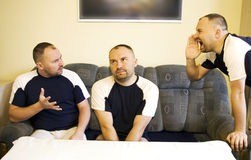
A rather ambitious campaign of academic hoaxing has been in the news over the past week. The hoaxers claim to be “liberals.” The online nonacademic right is gleeful in its celebration of the hoaxers’ purported accomplishments, and in its denunciation of what they call “postmodernism” (I prefer the alternative term “grievance studies,” as I take it that this relatively new sort of agenda-driven “me-search” holds to a naive and basically premodern realism about its categories; the proliferation of new pseudospecies and the tracking of their “intersections” looks much more like the “analogism” that characterises Italian Renaissance cosmology than it looks like, say, Baudrillard’s theory of simulacra or Lyotard’s critique of metanarratives). The academic left has taken its familiar posture of preening defensiveness, denying that there’s any distinct problem at all in the scholarly standards governing the publication of articles in the various “theory” fields that do not also show up in, say, psychology or political science.
Whatever. Everyone’s playing their assigned roles. But what I wanted to speak to here is the question of hoaxes in general. Quite apart from whether I think “Sokal Squared” has accomplished what its authors claim, I confess I am astounded, though I really should not be by now, by the moralism and the piety about rules and procedures that so many academics are expressing, as if hoaxing were always unethical and lacking in any potential salutary effects. These academics seem entirely unaware of the distinguished history of hoaxing, and to assume that it dates back no earlier than Sokal.
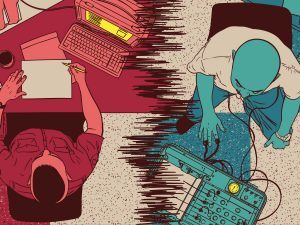
CHRISTOPHER TALBOT THOUGHT he would make a great police officer. He was 29 years old, fit, and had a clean background record. Talbot had military experience, including a tour of Iraq as a US Marine, and his commanding officer had written him a glowing recommendation. In 2014, armed with an associate degree in criminal justice, he felt ready to apply to become an officer with the New Haven Police Department, in his home state of Connecticut.
Talbot sailed through the department’s rigorous physical and mental tests, passing speed and agility trials and a written examination—but there was one final test. Like thousands of other law enforcement, fire, paramedic, and federal agencies across the country, the New Haven Police Department insists that each applicant take an assessment that has been rejected by almost every scientific authority: the polygraph test.
Commonly known as lie detectors, polygraphs are virtually unused in civilian life. They’re largely inadmissible in court and it’s illegal for most private companies to consult them. Over the past century, scientists have debunked the polygraph, proving again and again that the test can’t reliably distinguish truth from falsehood. At best, it is a roll of the dice; at worst, it’s a vessel for test administrators to project their own beliefs.
It was the autumn of 1868, and for the samurai warriors of the Aizu clan in northern Japan, battle was on the horizon. Earlier in the year, the Satsuma samurai had staged a coup, overthrowing the Shogunate government and handing power to a new emperor, 15-year-old Mutsuhito, who was wasting no time in replacing the feudal ways of the ruling Tokugawa with a radically modern state. After a long summer of fighting, imperial forces reached the gates of Wakamatsu castle in October to quash the resistance, besieging the stronghold with 30,000 troops. Beyond its walls, 3,000 defiant warriors readied themselves for the final stand.
As the Aizu fought valiantly from the towers and trenches, most women remained behind the scenes, ploughing their energies into cooking, bandaging, and extinguishing cannonballs that pounded the castle day and night. But for Nakano Takeko, an onna-bugeisha woman warrior, front line defense was the only course of action. Faced with the mighty gun-power of the imperial army, Takeko led an unofficial unit of 20-30 women in a counter-attack against the enemy, felling at least five opponents with her naginata blade before taking a fatal bullet to the chest. With her dying breaths, Takeko asked her sister to behead her, so that her body wouldn’t be taken as a trophy. She was buried under a tree in the courtyard of the Aizu Bangmachi temple, where a monument now stands in her honor.
IT’S PROVING DIFFICULT TO STOP THINKING about the testimonies last week. Four hours of questions to a citizen named Christine Blasey Ford. Four hours of questions, of a sort, to Judge Brett Kavanaugh of the second highest court in the United States. The woman lives quietly as a professor of psychology and surfer in Northern California. The man has never left Washington, DC, and helps decide the law of the land. The miserable anticipation before last Thursday depended on the “impression” Ford would make in repeating, before the country, the assertion that this judge—nominated to the Supreme Court—had once confined and sexually assaulted her when she was 15 and he was 17. The abyss we’ve dwelt in since is the result of the impression from his testimony. I still don’t know how to assimilate it all. The mirrored sessions reversed the conventional meanings and assignment of shame and pity, then of impartiality and knowledge.
The one thing certain following both testimonies was that Christine Blasey Ford had shown herself qualified by temperament and character to ascend to the open seat on the Supreme Court. Alas this was not the arrangement being considered.
A vagueness comes over everything, as though proving color and contour alike dispensable: the lighthouse extinct, the islands’ spruce-tips drunk up like milk in the universal emulsion; houses reverting into the lost and forgotten; granite subsumed, a rumor in a mumble of ocean. Tactile definition, however, has not been totally banished: hanging tassel by tassel, panicled foxtail and needlegrass, dropseed, furred hawkweed, and last season’s rose-hips are vested in silenced chimes of the finest, clearest sea-crystal. Opacity opens up rooms, a showcase for the hueless moonflower corolla, as Georgia O’Keefe might have seen it, of foghorns; the nodding campanula of bell buoys; the ticking, linear filigree of bird voices.
by Amy Clampitt from The Collected Poems of Amy Clampitt published by Alfred A. Knopf, 1997.
When working with people in other disciplines – whether surgeons, fellow engineers, nurses or cardiologists – it can sometimes seem like everyone is speaking a different language. But collaboration between disciplines is crucial for coming up with new ideas.
I first became fascinated with the workings of the heart years ago, during a summer research project on the aortic valve. And as a bioengineer, I recently worked with an artist, a psychologist, a producer, a literature scholar and a whole interdisciplinary team to understand even more about the heart, its function and its symbolism. We began to see the heart in completely different ways. The project, The Heart of the Matter, also involved something that is often missing from discussions purely centred around research: stories from the patients themselves. The Heart of the Matter originally came out of artist Sofie Layton’s residency at Great Ormond Street Hospital for Children in London a couple of years ago, before the project grew into a wider collaborative effort. For the project, patient groups were engaged in creative workshops that explored how they viewed their hearts. Stories that emerged from these sessions were then translated into a series of original artworks that allow us to reflect on the medical and metaphorical dimensions of the heart, including key elements of cardiovascular function and patient experience.
People too often forget that IQ tests haven’t been around that long. Indeed, such psychological measures are only about a century old. Early versions appeared in France with the work of Alfred Binet and Theodore Simon in 1905. However, these tests didn’t become associated with genius until the measure moved from the Sorbonne in Paris to Stanford University in Northern California. There Professor Lewis M. Terman had it translated from French into English, and then standardized on sufficient numbers of children, to create what became known as the Stanford-Binet Intelligence Scale. That happened in 1916. The original motive behind these tests was to get a diagnostic to select children at the lower ends of the intelligence scale who might need special education to keep up with the school curriculum. But then Terman got a brilliant idea: Why not study a large sample of children who score at the top end of the scale? Better yet, why not keep track of these children as they pass into adolescence and adulthood? Would these intellectually gifted children grow up to become genius adults?
Terman subjected hundreds of school kids to his newfangled IQ test. Obviously, he didn’t want a sample so large that it would be impractical to follow their intellectual development. Taking the top 2 percent of the population would clearly yield a group twice as large as the top 1 percent. Moreover, a less select group might be less prone to become geniuses. So why not catch the crème de la crème? The result was a group of 1,528 extremely bright boys and girls who averaged around 11 years old. And to say they were “bright” is a very big understatement. Their average IQ was 151, with 77 claiming IQs between 177 and 200. These children were subjected to all sorts of additional tests and measures, repeatedly so, until they reached middle age. The result was the monumental Genetic Studies of Genius, five volumes appearing between 1925 and 1959, although Terman died before the last volume came out. These highly intelligent people are still being studied today, or at least the small number still alive. They have also become affectionately known as “Termites”—a clear contraction of “Termanites.”
“Many of the problems our government grapples with aren’t particularly ideological,” Lewis writes, by way of moseying into what his book is about. He identifies these problems as the “enduring technical” variety, like stopping a virus or taking a census. Lewis is a supple and seductive storyteller, so you’ll be turning the pages as he recounts the (often surprising) experiences of amiable civil servants and enumerating risks one through four (an attack by North Korea, war with Iran, etc.) before you learn that the scary-sounding “fifth risk” of the title is — brace yourself — “project management.”
It will mean fewer jobs. That was the chorus from many on the right, from Tej Parikh of the Institute of Directors to the chancellor, Philip Hammond, in response to proposals from the shadow chancellor, John McDonnell, to improve conditions for gig economy workers. Such workers, he insisted, should be given similar rights to those in permanent work, including eligibility for sick pay, maternity pay and similar benefits. He promised to ban zero-hours contracts and introduce a “real living wage” of £10 an hour.
So what does it mean for Parikh and Hammond to insist that if gig workers are given decent benefits, jobs will be lost? Unpacked, what that suggests is that employers are willing, or able, to provide jobs only if workers accept low pay and poor conditions.
Put like that, few people would accept the moral logic of the argument. But it is rarely put like that. We take for granted that businesses create jobs and so have the right to dictate on what conditions jobs are created.
This is one reason that we have come to accept, with little political debate or fury, the existence of the “working poor”. Almost 60% of the poor now live in households where at least one person has a job, a figure more than 20% higher than in 1995. Few are stereotypical gig economy workers such as Uber drivers or fruit pickers. They are cleaners and call centre workers, waiters and shelf stackers, childminders and rubbish collectors, workers whose labour is essential to society but whose pay and conditions push them to the margins.
Poverty is often seen as a problem of worklessness. Today, though, it is a problem of being in work.

 Three years ago I posted on this site “California Dying” about my experience in working for an assisted-dying bill in that state. That bill passed and while it has been involved in litigation by its opponents on a tactical issue of whether it was the right type of issue for a special session of the legislature, it is anticipated that it will survive intact. Since I have a residence in California I am eligible for such assistance should I need it.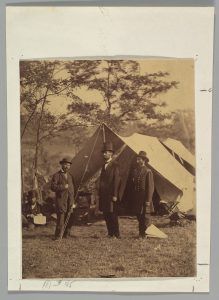

 I write this as Saturday begins to wane on the long Columbus Day weekend while I listen on the radio to the speeches given by senator after senator prior to the final confirmation vote for Bret Kavanaugh as Associate Justice on the Supreme Court of the United States of America. The vote is scheduled for 3.30 p.m. October 6, 2016. I listen to their conflicted words in the Senate of the United States pleading yes or no, or yes and no. Conjuring images, I am reminded of that Roman mythology and the artists’ rendition of it, of the Rape of the Sabine Women.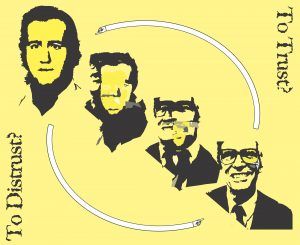
 A rather ambitious
  CHRISTOPHER TALBOT THOUGHT
  It was the autumn of 1868, and for the samurai warriors of the Aizu clan in northern Japan, battle was on the horizon. Earlier in the year, the Satsuma samurai had staged a coup, overthrowing the Shogunate government and handing power to a new emperor, 15-year-old
  IT’S PROVING DIFFICULT TO STOP THINKING
 When working with people in other disciplines – whether surgeons, fellow engineers, nurses or cardiologists – it can sometimes seem like everyone is speaking a different language. But collaboration between disciplines is crucial for coming up with new ideas.
 People too often forget that IQ tests haven’t been around that long. Indeed, such psychological measures are only about a century old. Early versions appeared in France with the work of Alfred Binet and Theodore Simon in 1905. However, these tests didn’t become associated with genius until the measure moved from the Sorbonne in Paris to Stanford University in Northern California. There Professor Lewis M. Terman had it translated from French into English, and then standardized on sufficient numbers of children, to create what became known as the Stanford-Binet Intelligence Scale. That happened in 1916. The original motive behind these tests was to get a diagnostic to select children at the lower ends of the intelligence scale who might need special education to keep up with the school curriculum. But then Terman got a brilliant idea: Why not study a large sample of children who score at the top end of the scale? Better yet, why not keep track of these children as they pass into adolescence and adulthood? Would these intellectually gifted children grow up to become genius adults?
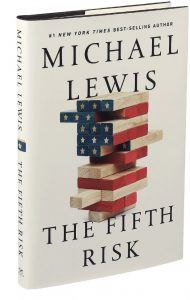 “Many of the problems our government grapples with aren’t particularly ideological,” Lewis writes, by way of moseying into what his book is about. He identifies these problems as the “enduring technical” variety, like stopping a virus or taking a census. Lewis is a supple and seductive storyteller, so you’ll be turning the pages as he recounts the (often surprising) experiences of amiable civil servants and enumerating risks one through four (an attack by North Korea, war with Iran, etc.) before you learn that the scary-sounding “fifth risk” of the title is — brace yourself — “project management.”
 It will mean fewer jobs. That was the chorus from many on the right, from Tej Parikh of the Institute of Directors to the chancellor, Philip Hammond, in response to proposals from the shadow chancellor,