by Bill Benzon
“We’re in one of those great historic periods…when people don’t understand the world anymore…when the past is not sufficient to explain the future.”
–Peter Drucker
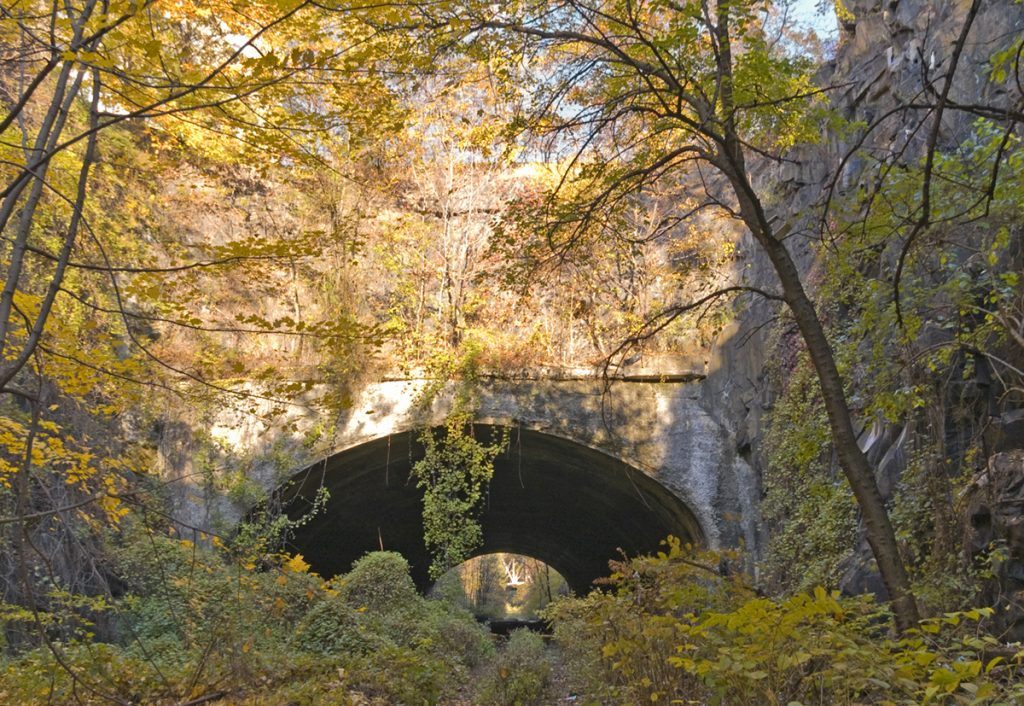
Fasten your seatbelts, we’re going for a ride. We start over 300 million years ago and arrive at the present in a mere six paragraphs. We remain here for the rest of the tour, looking at pictures and talking about a strange urban paradise situated in the middle of one of the most densely populated areas on the planet.
From Pangea to Hurricane Sandy
Roughly 335 million years ago, during the late Paleozoic and early Mesozoic eras, the Earth’s existing continental masses formed themselves into the supercontinent Pangea. Pangea began to breakup roughly 175 million years ago giving rise to the Palisades Sill, most visible as a series of cliffs running 50 miles along the west bank of the Hudson River in New York and New Jersey. The Palisades tapers down to sea level in what is now Jersey City.
Roughly 14,000 years ago the first humans settled in North America, spreading quickly across the continent and south through Central to South America. In 1609 the Lenape greeted Henry Hudson when he set foot in that area on his search for a Northwest Passage to China. Two centuries later railroads began emerging in North America. In the second quarter of the 19th Century and Camden and Amboy Railroad became the first in New Jersey, completing its first line in 1834. In the middle of the century the Erie and the Delaware-Lackawanna railroads completed the Long Dock Tunnel in 1861. It conveyed freight trains from the Meadowlands through the Palisades Sill to freight terminals on the Hudson River. By the early 20th century Jersey City had become a bustling port.
In 1906 the Erie Railroad began blasting a cut through the Palisades less than a football field’s width south of the Long Dock Tunnel. The Erie Cut was completed in 1910. It is between, say, 50 and 80 feet deep and 70 to 100 feet wide at the bottom. In four places the cut becomes short tunnels so that roads and buildings could go atop it; short bridges cross the cut at three other points. Collectively these are the Bergen Arches, the name by which this feature is known today. Read more »


 The Pioneer Valley in western Massachusetts is a cradle of social progress — a place where L.G.B.T.Q. is often followed by I.A. (for intersex and asexual), there’s a Stonewall Center (now 33 years old), and gender-nonconforming parents have a nickname of choice (it’s “Baba”).
 In a publication
 On the evening of 28 October, as they absorbed the election of far-right Brazilian president Jair Bolsonaro, British leftists declared “socialism or barbarism”. The slogan was assumed by some to be a Corbynite coinage. But it was first popularised more than a century ago in war-ravaged Europe.
 The Incas left no doubt that theirs was a sophisticated, technologically savvy civilisation. At its height in the 15th century, it was the largest empire in the Americas, extending almost 5000 kilometres from modern-day Ecuador to Chile. These were the people who built Machu Picchu, a royal estate perched in the clouds, and an extensive network of paved roads complete with suspension bridges crafted from woven grass. But the paradox of the Incas is that despite all this sophistication they never learned to write.
 Before ancient humans
 Men of action present a problem for decent modern democrats. For the very term “men of action” is a euphemism for men accomplished in war, and no public figure is more suspect these days than the warlike man. When Winston Churchill called Napoleon Bonaparte (1769-1821) “the greatest man of action born in Europe since Julius Caesar,” he meant to praise Napoleon in the highest terms, but for many, such praise is fraught with peril. After all, Julius Caesar, named dictator in perpetuity, placed the Roman Republic in mortal danger and died a tyrant’s death; the most famous of his assassins, Marcus Junius Brutus, is remembered as a paragon of republican virtue, though it proved impossible to restore the Republic after Caesar’s day.
 Paul Krugman, blogger, fiat-currency enthusiast and winner of the Nobel Prize in Economics earlier this year justified his scepticism about cryptocurrencies in the New York Times. He asked readers to give him a clear answer to the question: what is the problem cryptocurrency solves? He wrote: ‘Governments have occasionally abused the privilege of creating fiat money, but for the most part governments and central banks exercise restraint.’ He added that, unlike bitcoin, ‘fiat currencies have underlying value because men with guns say they do. And this means that their value isn’t a bubble that can collapse if people lose faith.’
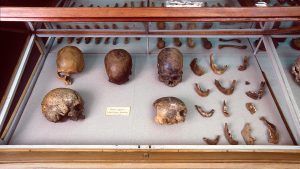 It’s a huge day for archaeologists and anyone interested in the history of America’s first settlers. Findings from three new genetics studies—all released today—are presenting a fascinating, yet complex, picture of the first people in North and South America, and how they spread and diversified across two continents.
 It’s fun to be in the exciting, chaotic, youthful days of the podcast, when anything goes and experimentation is the order of the day. So today’s show is something different: a solo effort, featuring just me talking without any guests to cramp my style. This won’t be the usual format, but I suspect it will happen from time to time. Feel free to chime in below on how often you think alternative formats should be part of the mix.
 In the 2016 presidential election, 55 percent of white women voted for Republicans. And this year, the group backed Democrats and Republicans evenly.