
Kendall Powell in Nature:
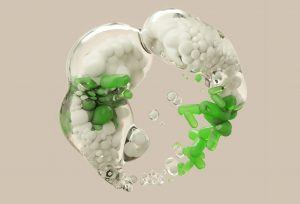 There were just eight ingredients: two proteins, three buffering agents, two types of fat molecule and some chemical energy. But that was enough to create a flotilla of bouncing, pulsating blobs — rudimentary cell-like structures with some of the machinery necessary to divide on their own. To biophysicist Petra Schwille, the dancing creations in her lab represent an important step towards building a synthetic cell from the bottom up, something she has been working towards for the past ten years, most recently at the Max Planck Institute of Biochemistry in Martinsried, Germany. “I have always been fascinated by this question, ‘What distinguishes life from non-living matter?’” she says. The challenge, according to Schwille, is to determine which components are needed to make a living system. In her perfect synthetic cell, she’d know every single factor that makes it tick.
Researchers have been trying to create artificial cells for more than 20 years — piecing together biomolecules in just the right context to approximate different aspects of life. Although there are many such aspects, they generally fall into three categories: compartmentalization, or the separation of biomolecules in space; metabolism, the biochemistry that sustains life; and informational control, the storage and management of cellular instructions. The pace of work has been accelerating, thanks in part to recent advances in microfluidic technologies, which allow scientists to coordinate the movements of minuscule cellular components. Research groups have already determined ways of sculpting cell-like blobs into desired shapes; of creating rudimentary versions of cellular metabolism; and of transplanting hand-crafted genomes into living cells. But bringing all these elements together remains a challenge.
More here.
 Global migration is triggering the sort of existential questions advanced nations haven’t had to bother with very much. Aside from lines on a map and a shared language, what makes Denmark Denmark, or Canada Canada? When does citizen-feeling for national culture and identity — not to mention budget concerns — veer into xenophobia? How much should a modern, secular nation tolerate the illiberal customs of newcomers from traditional cultures? As a “nation of immigrants,” one with a relatively modest welfare state, the United States should be safe from these prickly questions. After all, we have long been a hyphenated citizenry; our children are tutored — or are supposed to be — in E pluribus unum.
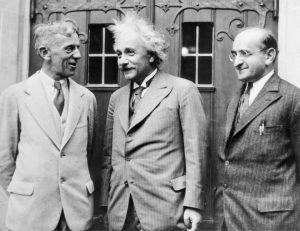 Throughout the 20th century and into the 21st, America emerged at the pre-eminent place to be for physics research in the world. Of the 209 people to ever win the Nobel Prize in Physics, a whopping 93 of them claimed United States citizenship: triple that of Germany, the next-closest country. This was reflected not only at the highest levels of prestige and accomplishment in research, but also in education.
 There is nothing
 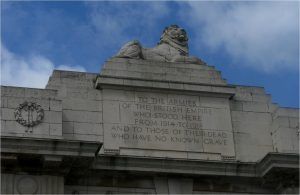 Ypres swarms with somber British tourists, who disembark from buses to walk its cobblestone paths, view its seemingly centuries-old shops, homes, and churches, and wander its 175 cemeteries, located outside town amid the famous poppy fields. The ancient architecture and ambience are an illusion. The entire town was destroyed in World War I. Not a single home or tree survived. Churchill argued that Ypres should not be rebuilt: “A more sacred place for the British race does not exist in the world,” he thundered. But the residents of Ypres who survived the war insisted on rebuilding.
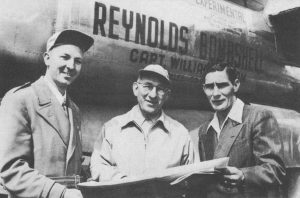 The odyssey, at times hilarious, of the ballpoint pen is a window into entrepreneurship and America’s consumer mentality at the start of the postwar (post WWII) period.
 Saul Bellow had what one of his characters in Ravelstein calls ‘a gift for reading reality – the impulse to put your loving face to it and press your hands against it’. Bellow seems to outstrip other novelists in his unembarrassed wish to get as close as possible to the reality of people – their faces, clothes, bodies, speech, gestures. If Bellow’s love for his characters was often contentious and double-edged, well what is love if not the highest form of contention?
 P
P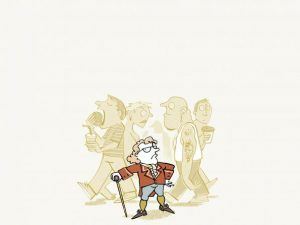 In his new book, “In Pursuit of Civility”, British historian Keith Thomas tells the story of the most benign developments of the past 500 years: the spread of civilised manners. In the 16th and 17th centuries many people behaved like barbarians. They delighted in public hangings and torture. They stank to high heaven. Samuel Pepys defecated in a chimney. Josiah Pullen, vice-principal of Magdalen Hall, Oxford, urinated while showing a lady around his college, “still holding the lady fast by the hand”. It took centuries of painstaking effort – sermons, etiquette manuals and stern lectures – to convert them into civilised human beings.
 Whatever else it will be, Tuesday will be a relief. We will finally find out where we are in the surreal dystopia of the last two years. We will see, in a tangible way, what America now is.
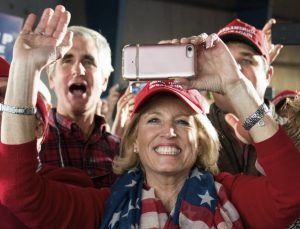 How could this man have been elected to the highest office in the land? And how can Trump not only remain in office but, for the moment at least, appear to stand a reasonable chance of being renominated and even re-elected?
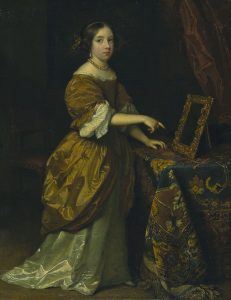 The two women who inflicted the Myers-Briggs Type Indicator on the world were less concerned with fighting evil than with optimizing daily life, according to Emre. There is Katharine, the Briggs in the equation. Unlike the men who worked in academic laboratories on both coasts, Katharine worked in “a cosmic laboratory of baby training”: her own home. She took meticulous notes on the training of her only child, Isabel (later the Myers of the MBTI), a girl who would read Pilgrim’s Progress by five despite rarely attending school. When one neighbor criticized her methods, Katharine, who wrote about child-rearing for magazines, included the neighbor’s daughter Mary in an article called “Ordinary Theodore and Stupid Mary.”
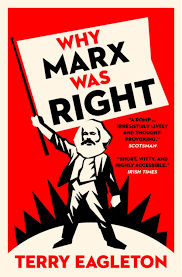 As Allen W. Wood observed in 1981, while it is easy to write an above-average book on
 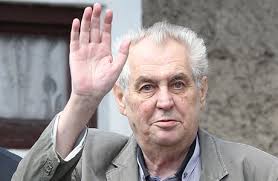 Czechoslovakia would have been a hundred years old last Sunday, and Prague spent the weekend celebrating. I’ve been to better birthday parties. The gloomy weather didn’t help – it didn’t just rain on the parades, it poured – and the centennial narratives, never simple, were complicated further by the fact they were commemorating a state that dissolved itself in 1993.
 In the winter of 1994, a young man in his early twenties named Tim was a patient in a London psychiatric hospital. Despite a happy and energetic demeanour, Tim had bipolar disorder and had recently attempted suicide. During his stay, he became close with a visiting US undergraduate psychology student called Matt. The two quickly bonded over their love of early-nineties hip-hop and, just before being discharged, Tim surprised his friend with a portrait that he had painted of him. Matt was deeply touched. But after returning to the United States with portrait in hand, he learned that Tim had ended his life by jumping off a bridge.